
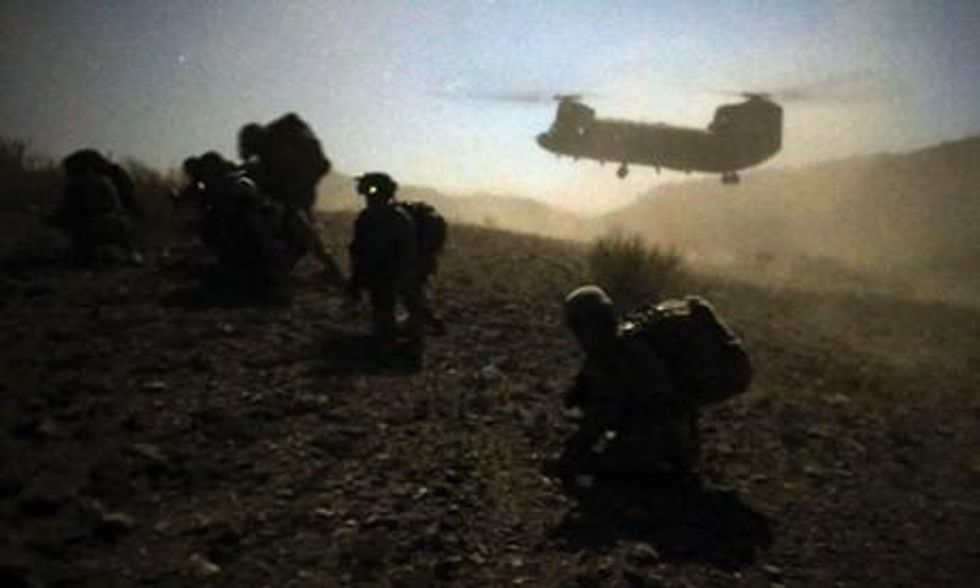
Several months later, however, the tide had turned: the government's authority was strengthened, rebel forces were repelled, and control over the country's major economic assets was restored. Executive Outcomes, a private military contractor armed with helicopters and state of the art artillery, helped change the course of the war.
Nearly every tool necessary to wage war can now be purchased: combat support, including the ability to conduct large-scale operations and surgical strikes; operational support, like training and intelligence gathering; and general support, like transportation services and paramedical assistance. The demand for these services, in turn, has ballooned: the gross revenue for the private military contractor industry is now in excess of $100bn a year.
The privatization of conflict is no longer a trend. It's the norm.
The United States relied so heavily on contractors during the recent Iraq war that no one knows with certainty how many were on the ground. In late 2010, the United Arab Emirates, fearful that the Arab uprisings might spread to the Gulf, paid Erik Prince, the founder of Blackwater Worldwide, $529m to create an elite force to safeguard the emirate. And today, Russia is openly considering forming a cadre of private military contractors to further its interests abroad.
Yet, the laws that govern this industry tell a different story. Instead of a transnational system with meaningful collaboration, we have a patchwork of state laws that allow companies to forum-shop and circumvent regulations. Contractors can likewise relocate, as they typically rent the equipment necessary to complete their contracts; their primary source of capital is human, not physical.
In addition to closing loopholes, states must monitor contractors, and prosecute them when they commit crimes. To this day, not a single contractor has been successfully prosecuted for its role in the Abu Ghraib prison atrocities or the Nisour Square massacre, in which 17 Iraqi civilians were killed.
Contractors claim that their services are market- and self-regulated. They contend that wanton violence would stop governments from seeking their assistance. Yet, the theatre of war often obscures their activities.
In its final report to the US Congress, the Commission on Wartime Contracting found that the US government lost more than $30bn to contractor waste and fraud in Afghanistan and Iraq. Also, corporations can rename and rebrand, thereby mitigating reputational harm. Consider Blackwater USA, which changed its name to Xe Services LLC, and then to Academi - all in the last four years.
The UN working group on the use of mercenaries has suggested that certain military functions, like combat services and interrogation, not be outsourced to private contractors. Its guidelines should be followed. Outsourcing foreign policy goals undermines democratic oversight because contractor activities, including casualties, typically escape public scrutiny. It can also allow states to evade legislative oversight.
The greatest check against war is the horror of war itself. Yet, as the physical distance between warring states grows, so does the temptation to loosen our moral compass. Violence that lacks immediacy is easier to ignore. Permitting third parties to wage war for profit risks a world in which war is not the last resort but an economic transaction in which the victims are faceless and nameless.
And so, we return to Sierra Leone. Although the intervention by Executive Outcomes is sometimes touted as illustrating the viability of military contractors, history suggests otherwise. The contractor was later accused of interfering in domestic politics to pursue financial gain, and an associated firm received payment through diamond mine concessions, which compromised the country's economic future.
Moreover, violence resumed after Executive Outcomes left Sierra Leone. It became clear that the government had over-relied on the contractor and undercut its own institutions.
The fog of war is hazy enough. We don't need additional, unregulated cloud cover.
Several months later, however, the tide had turned: the government's authority was strengthened, rebel forces were repelled, and control over the country's major economic assets was restored. Executive Outcomes, a private military contractor armed with helicopters and state of the art artillery, helped change the course of the war.
Nearly every tool necessary to wage war can now be purchased: combat support, including the ability to conduct large-scale operations and surgical strikes; operational support, like training and intelligence gathering; and general support, like transportation services and paramedical assistance. The demand for these services, in turn, has ballooned: the gross revenue for the private military contractor industry is now in excess of $100bn a year.
The privatization of conflict is no longer a trend. It's the norm.
The United States relied so heavily on contractors during the recent Iraq war that no one knows with certainty how many were on the ground. In late 2010, the United Arab Emirates, fearful that the Arab uprisings might spread to the Gulf, paid Erik Prince, the founder of Blackwater Worldwide, $529m to create an elite force to safeguard the emirate. And today, Russia is openly considering forming a cadre of private military contractors to further its interests abroad.
Yet, the laws that govern this industry tell a different story. Instead of a transnational system with meaningful collaboration, we have a patchwork of state laws that allow companies to forum-shop and circumvent regulations. Contractors can likewise relocate, as they typically rent the equipment necessary to complete their contracts; their primary source of capital is human, not physical.
In addition to closing loopholes, states must monitor contractors, and prosecute them when they commit crimes. To this day, not a single contractor has been successfully prosecuted for its role in the Abu Ghraib prison atrocities or the Nisour Square massacre, in which 17 Iraqi civilians were killed.
Contractors claim that their services are market- and self-regulated. They contend that wanton violence would stop governments from seeking their assistance. Yet, the theatre of war often obscures their activities.
In its final report to the US Congress, the Commission on Wartime Contracting found that the US government lost more than $30bn to contractor waste and fraud in Afghanistan and Iraq. Also, corporations can rename and rebrand, thereby mitigating reputational harm. Consider Blackwater USA, which changed its name to Xe Services LLC, and then to Academi - all in the last four years.
The UN working group on the use of mercenaries has suggested that certain military functions, like combat services and interrogation, not be outsourced to private contractors. Its guidelines should be followed. Outsourcing foreign policy goals undermines democratic oversight because contractor activities, including casualties, typically escape public scrutiny. It can also allow states to evade legislative oversight.
The greatest check against war is the horror of war itself. Yet, as the physical distance between warring states grows, so does the temptation to loosen our moral compass. Violence that lacks immediacy is easier to ignore. Permitting third parties to wage war for profit risks a world in which war is not the last resort but an economic transaction in which the victims are faceless and nameless.
And so, we return to Sierra Leone. Although the intervention by Executive Outcomes is sometimes touted as illustrating the viability of military contractors, history suggests otherwise. The contractor was later accused of interfering in domestic politics to pursue financial gain, and an associated firm received payment through diamond mine concessions, which compromised the country's economic future.
Moreover, violence resumed after Executive Outcomes left Sierra Leone. It became clear that the government had over-relied on the contractor and undercut its own institutions.
The fog of war is hazy enough. We don't need additional, unregulated cloud cover.
Several months later, however, the tide had turned: the government's authority was strengthened, rebel forces were repelled, and control over the country's major economic assets was restored. Executive Outcomes, a private military contractor armed with helicopters and state of the art artillery, helped change the course of the war.
Nearly every tool necessary to wage war can now be purchased: combat support, including the ability to conduct large-scale operations and surgical strikes; operational support, like training and intelligence gathering; and general support, like transportation services and paramedical assistance. The demand for these services, in turn, has ballooned: the gross revenue for the private military contractor industry is now in excess of $100bn a year.
The privatization of conflict is no longer a trend. It's the norm.
The United States relied so heavily on contractors during the recent Iraq war that no one knows with certainty how many were on the ground. In late 2010, the United Arab Emirates, fearful that the Arab uprisings might spread to the Gulf, paid Erik Prince, the founder of Blackwater Worldwide, $529m to create an elite force to safeguard the emirate. And today, Russia is openly considering forming a cadre of private military contractors to further its interests abroad.
Yet, the laws that govern this industry tell a different story. Instead of a transnational system with meaningful collaboration, we have a patchwork of state laws that allow companies to forum-shop and circumvent regulations. Contractors can likewise relocate, as they typically rent the equipment necessary to complete their contracts; their primary source of capital is human, not physical.
In addition to closing loopholes, states must monitor contractors, and prosecute them when they commit crimes. To this day, not a single contractor has been successfully prosecuted for its role in the Abu Ghraib prison atrocities or the Nisour Square massacre, in which 17 Iraqi civilians were killed.
Contractors claim that their services are market- and self-regulated. They contend that wanton violence would stop governments from seeking their assistance. Yet, the theatre of war often obscures their activities.
In its final report to the US Congress, the Commission on Wartime Contracting found that the US government lost more than $30bn to contractor waste and fraud in Afghanistan and Iraq. Also, corporations can rename and rebrand, thereby mitigating reputational harm. Consider Blackwater USA, which changed its name to Xe Services LLC, and then to Academi - all in the last four years.
The UN working group on the use of mercenaries has suggested that certain military functions, like combat services and interrogation, not be outsourced to private contractors. Its guidelines should be followed. Outsourcing foreign policy goals undermines democratic oversight because contractor activities, including casualties, typically escape public scrutiny. It can also allow states to evade legislative oversight.
The greatest check against war is the horror of war itself. Yet, as the physical distance between warring states grows, so does the temptation to loosen our moral compass. Violence that lacks immediacy is easier to ignore. Permitting third parties to wage war for profit risks a world in which war is not the last resort but an economic transaction in which the victims are faceless and nameless.
And so, we return to Sierra Leone. Although the intervention by Executive Outcomes is sometimes touted as illustrating the viability of military contractors, history suggests otherwise. The contractor was later accused of interfering in domestic politics to pursue financial gain, and an associated firm received payment through diamond mine concessions, which compromised the country's economic future.
Moreover, violence resumed after Executive Outcomes left Sierra Leone. It became clear that the government had over-relied on the contractor and undercut its own institutions.
The fog of war is hazy enough. We don't need additional, unregulated cloud cover.