

President Obama is the first sitting president in recent history to speak out against criminal justice policies that hurt inner city and rural communities. This is a big deal.
With state budgets and vulnerable communities crippled by misguided criminal justice policies, the president is certainly right that the time for reform has come.
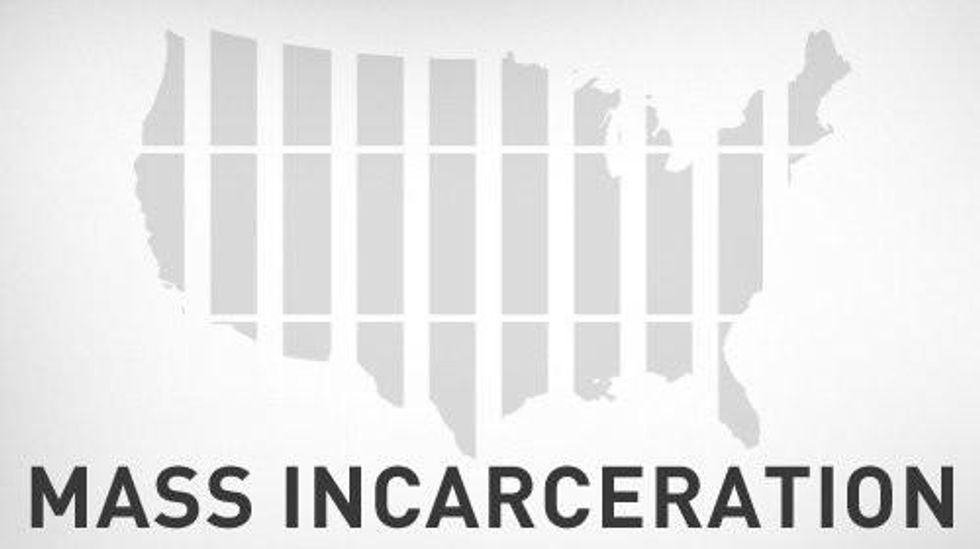
The myriad ways in which our criminal justice system is unwieldy, expensive, and damaging to vulnerable populations can be traced to one glaring issue: the U.S. has the world's highest incarceration rate. With many of these people serving time for low-level, non-violent offenses, there is simply no justification for keeping such a large segment of our population behind bars. And of course most people affected by this national embarrassment are poor people and people of color.
How did we get into this mess?
Over the last 40 years, our American criminal justice system has been brutally damaged by politicians' commitment to misguided "tough-on-crime" policies. It started in the 1970s, on the heels of a major uptick in crime rates, but our obsession with incarceration quickly surpassed its utility. Since the 1990s crime has steadily decreased, and most researchers believe incarceration was only responsible for a small percentage of the decline. Yet American incarceration rates continued to climb through the 1990s and 2000s--not in response to crime, but in response to absurdly harsh policies--and have just recently begun to flatten. And all this incarceration has come at exorbitant cost to U.S. taxpayers.
The president can begin to solve these problems immediately. In the first 100 days of his second term, he should accomplish three important goals: (1) adjust the unduly harsh crack cocaine sentences meted out before enactment of the Fair Sentencing act; (2) bar racial profiling in federal law enforcement; and (3) remove restrictions on communications between federal prisoners and their attorneys.
But we can go further. Over the long term, we must reduce our incarceration rates.
The only way to lower prison and jail populations is to reduce the number of people who enter the system and the amount of time they spend there. We're going to have to stop arresting so many people for petty crimes and get rid of our punitive mandatory sentencing laws - particularly for non-violent offenses. There's really no other choice.
Also, the president should put an end to incentives that stand in the way of reform. For example, the federal government contracts with private companies to house prisoners. These companies only get paid as long as they have prisoners to house, so they push for tough sentencing laws designed to keep people locked up. This creates a perverse incentive for lawmakers who receive support from private prison companies; they're lobbied to enact ever-tougher laws, without any evidence to suggest that those laws protect public safety.
Another example is the billions of dollars the U.S. Department of Justice awards to local police, which reward officers for the number of low-level arrests they make. Incentivizing arrests for petty crimes only serves to keep more people locked up needlessly. Police should be rewarded for the number of violent crimes they resolve, not the number of people they unnecessarily arrest.
The president is right--we need to get smart about how the criminal justice system operates. People have suffered tremendously under the tough-on-crime policies of the last several decades. We know what we need to do to improve the system, and officials across the country have begun to make changes. Leadership from the president could bring national attention to what has become a national problem, accelerating needed reform of a broken system.
President Obama is the first sitting president in recent history to speak out against criminal justice policies that hurt inner city and rural communities. This is a big deal.
With state budgets and vulnerable communities crippled by misguided criminal justice policies, the president is certainly right that the time for reform has come.
The myriad ways in which our criminal justice system is unwieldy, expensive, and damaging to vulnerable populations can be traced to one glaring issue: the U.S. has the world's highest incarceration rate. With many of these people serving time for low-level, non-violent offenses, there is simply no justification for keeping such a large segment of our population behind bars. And of course most people affected by this national embarrassment are poor people and people of color.
How did we get into this mess?
Over the last 40 years, our American criminal justice system has been brutally damaged by politicians' commitment to misguided "tough-on-crime" policies. It started in the 1970s, on the heels of a major uptick in crime rates, but our obsession with incarceration quickly surpassed its utility. Since the 1990s crime has steadily decreased, and most researchers believe incarceration was only responsible for a small percentage of the decline. Yet American incarceration rates continued to climb through the 1990s and 2000s--not in response to crime, but in response to absurdly harsh policies--and have just recently begun to flatten. And all this incarceration has come at exorbitant cost to U.S. taxpayers.
The president can begin to solve these problems immediately. In the first 100 days of his second term, he should accomplish three important goals: (1) adjust the unduly harsh crack cocaine sentences meted out before enactment of the Fair Sentencing act; (2) bar racial profiling in federal law enforcement; and (3) remove restrictions on communications between federal prisoners and their attorneys.
But we can go further. Over the long term, we must reduce our incarceration rates.
The only way to lower prison and jail populations is to reduce the number of people who enter the system and the amount of time they spend there. We're going to have to stop arresting so many people for petty crimes and get rid of our punitive mandatory sentencing laws - particularly for non-violent offenses. There's really no other choice.
Also, the president should put an end to incentives that stand in the way of reform. For example, the federal government contracts with private companies to house prisoners. These companies only get paid as long as they have prisoners to house, so they push for tough sentencing laws designed to keep people locked up. This creates a perverse incentive for lawmakers who receive support from private prison companies; they're lobbied to enact ever-tougher laws, without any evidence to suggest that those laws protect public safety.
Another example is the billions of dollars the U.S. Department of Justice awards to local police, which reward officers for the number of low-level arrests they make. Incentivizing arrests for petty crimes only serves to keep more people locked up needlessly. Police should be rewarded for the number of violent crimes they resolve, not the number of people they unnecessarily arrest.
The president is right--we need to get smart about how the criminal justice system operates. People have suffered tremendously under the tough-on-crime policies of the last several decades. We know what we need to do to improve the system, and officials across the country have begun to make changes. Leadership from the president could bring national attention to what has become a national problem, accelerating needed reform of a broken system.
President Obama is the first sitting president in recent history to speak out against criminal justice policies that hurt inner city and rural communities. This is a big deal.
With state budgets and vulnerable communities crippled by misguided criminal justice policies, the president is certainly right that the time for reform has come.
The myriad ways in which our criminal justice system is unwieldy, expensive, and damaging to vulnerable populations can be traced to one glaring issue: the U.S. has the world's highest incarceration rate. With many of these people serving time for low-level, non-violent offenses, there is simply no justification for keeping such a large segment of our population behind bars. And of course most people affected by this national embarrassment are poor people and people of color.
How did we get into this mess?
Over the last 40 years, our American criminal justice system has been brutally damaged by politicians' commitment to misguided "tough-on-crime" policies. It started in the 1970s, on the heels of a major uptick in crime rates, but our obsession with incarceration quickly surpassed its utility. Since the 1990s crime has steadily decreased, and most researchers believe incarceration was only responsible for a small percentage of the decline. Yet American incarceration rates continued to climb through the 1990s and 2000s--not in response to crime, but in response to absurdly harsh policies--and have just recently begun to flatten. And all this incarceration has come at exorbitant cost to U.S. taxpayers.
The president can begin to solve these problems immediately. In the first 100 days of his second term, he should accomplish three important goals: (1) adjust the unduly harsh crack cocaine sentences meted out before enactment of the Fair Sentencing act; (2) bar racial profiling in federal law enforcement; and (3) remove restrictions on communications between federal prisoners and their attorneys.
But we can go further. Over the long term, we must reduce our incarceration rates.
The only way to lower prison and jail populations is to reduce the number of people who enter the system and the amount of time they spend there. We're going to have to stop arresting so many people for petty crimes and get rid of our punitive mandatory sentencing laws - particularly for non-violent offenses. There's really no other choice.
Also, the president should put an end to incentives that stand in the way of reform. For example, the federal government contracts with private companies to house prisoners. These companies only get paid as long as they have prisoners to house, so they push for tough sentencing laws designed to keep people locked up. This creates a perverse incentive for lawmakers who receive support from private prison companies; they're lobbied to enact ever-tougher laws, without any evidence to suggest that those laws protect public safety.
Another example is the billions of dollars the U.S. Department of Justice awards to local police, which reward officers for the number of low-level arrests they make. Incentivizing arrests for petty crimes only serves to keep more people locked up needlessly. Police should be rewarded for the number of violent crimes they resolve, not the number of people they unnecessarily arrest.
The president is right--we need to get smart about how the criminal justice system operates. People have suffered tremendously under the tough-on-crime policies of the last several decades. We know what we need to do to improve the system, and officials across the country have begun to make changes. Leadership from the president could bring national attention to what has become a national problem, accelerating needed reform of a broken system.