

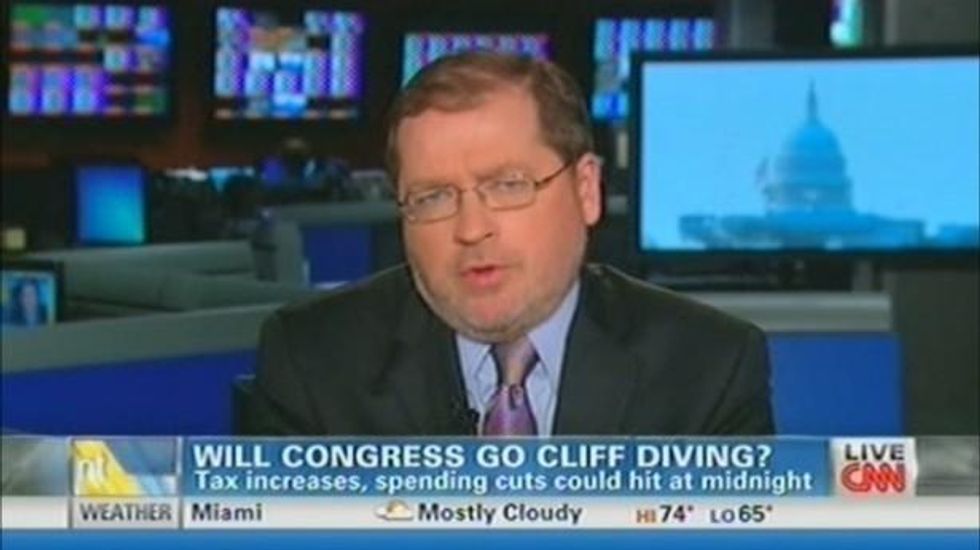
If anyone outside the Beltway was paying attention (a big "if"), they probably thought the title referred to an old episode of "Cheers" in which the goofy mailman does his taxes. After all, replaying reruns would have been more compelling content than this latest installment of "Real World: U.S. Capitol."
Reality TV, of course, is this moment's perfect metaphor. That schlocky format's foundational oxymoron - it is "real" but not real - also defines contemporary politics.
Think about it: we understand "Keeping Up with the Kardashians" as "real" only in the sense that the characters use their own names. But we also understand that most of Kim and Chloe's strife is manufactured. It's the same for Washington - in the fiscal cliff melodrama, we heard that Speaker John Boehner dropped the f-bomb on Senate Majority Leader Harry Reid and we saw Democratic lawmakers perform maudlin to-camera testimonies about their supposed loyalty to the middle class. Yet, those few watching at home almost certainly sensed that it was all a scripted production - one whose outcome was predetermined.
To appreciate how the kabuki theater works, consider three big outcomes of the fiscal cliff legislation that the attendant reality TV show never highlighted:
1. Bush defeats Clinton: President Clinton's tax rates delivered big budget surpluses and one of history's strongest rates of economic growth. By contrast, President Bush's cuts to those tax rates birthed massive deficits and the slowest rate of economic growth in modern history. Yet, faced with the fiscal cliff's choice between Clinton and Bush tax rates, both parties agreed to ratify almost all of the latter.
For Republicans, this victory was summed up by Bush's former spokesman, Ari Fleischer, who said simply, "it's fantastic." For Democrats, their triumphant rhetoric about their one small win - restoring Clinton rates on income above $400,000 - obscures a humiliating truth. Essentially, the party that spent so much political capital to modestly raise taxes and restore fiscal sanity after the Reagan binge was bullied into undoing much of its own fiscal legacy.
2. Nobody in Washington cares about deficits: During December's "fiscal cliff" TV show, D.C.'s reality stars told us that they were focused on reducing the budget deficit. But, according to the Congressional Budget Office, the final bill will increase the budget deficit by $4 trillion.
3. Corporate welfare is sacrosanct: For all the effort to make wasteful spending the villain in the "fiscal cliff" TV show, Congress ultimately refused to touch that spending. Somehow, defense contractor largesse in the bloated Pentagon budget was off the table. Somehow, subsidies to corporate agribusiness were separated from the negotiations and then extended. Meanwhile, as the Roosevelt Institution's Matt Stoller documented, the final "fiscal cliff" bill included taxpayer handouts for everything from NASCAR racetracks, to Hollywood studios, to a new Goldman Sachs headquarters.
If you find these facts more depressing than the fantasies that dominated the public version of the "fiscal cliff" drama, then you appreciate why so many Americans prefer reality TV over genuine documentaries. A shrink-wrapped "reality" hyped for maximum titillation is, indeed, more pleasant to watch than actual reality. Congress and the political media know this, so they give viewers what they think we want.
The problem is that the real story gets lost in translation, leaving us at once totally disgusted, occasionally entertained and permanently fleeced ... just as Washington wants.
If anyone outside the Beltway was paying attention (a big "if"), they probably thought the title referred to an old episode of "Cheers" in which the goofy mailman does his taxes. After all, replaying reruns would have been more compelling content than this latest installment of "Real World: U.S. Capitol."
Reality TV, of course, is this moment's perfect metaphor. That schlocky format's foundational oxymoron - it is "real" but not real - also defines contemporary politics.
Think about it: we understand "Keeping Up with the Kardashians" as "real" only in the sense that the characters use their own names. But we also understand that most of Kim and Chloe's strife is manufactured. It's the same for Washington - in the fiscal cliff melodrama, we heard that Speaker John Boehner dropped the f-bomb on Senate Majority Leader Harry Reid and we saw Democratic lawmakers perform maudlin to-camera testimonies about their supposed loyalty to the middle class. Yet, those few watching at home almost certainly sensed that it was all a scripted production - one whose outcome was predetermined.
To appreciate how the kabuki theater works, consider three big outcomes of the fiscal cliff legislation that the attendant reality TV show never highlighted:
1. Bush defeats Clinton: President Clinton's tax rates delivered big budget surpluses and one of history's strongest rates of economic growth. By contrast, President Bush's cuts to those tax rates birthed massive deficits and the slowest rate of economic growth in modern history. Yet, faced with the fiscal cliff's choice between Clinton and Bush tax rates, both parties agreed to ratify almost all of the latter.
For Republicans, this victory was summed up by Bush's former spokesman, Ari Fleischer, who said simply, "it's fantastic." For Democrats, their triumphant rhetoric about their one small win - restoring Clinton rates on income above $400,000 - obscures a humiliating truth. Essentially, the party that spent so much political capital to modestly raise taxes and restore fiscal sanity after the Reagan binge was bullied into undoing much of its own fiscal legacy.
2. Nobody in Washington cares about deficits: During December's "fiscal cliff" TV show, D.C.'s reality stars told us that they were focused on reducing the budget deficit. But, according to the Congressional Budget Office, the final bill will increase the budget deficit by $4 trillion.
3. Corporate welfare is sacrosanct: For all the effort to make wasteful spending the villain in the "fiscal cliff" TV show, Congress ultimately refused to touch that spending. Somehow, defense contractor largesse in the bloated Pentagon budget was off the table. Somehow, subsidies to corporate agribusiness were separated from the negotiations and then extended. Meanwhile, as the Roosevelt Institution's Matt Stoller documented, the final "fiscal cliff" bill included taxpayer handouts for everything from NASCAR racetracks, to Hollywood studios, to a new Goldman Sachs headquarters.
If you find these facts more depressing than the fantasies that dominated the public version of the "fiscal cliff" drama, then you appreciate why so many Americans prefer reality TV over genuine documentaries. A shrink-wrapped "reality" hyped for maximum titillation is, indeed, more pleasant to watch than actual reality. Congress and the political media know this, so they give viewers what they think we want.
The problem is that the real story gets lost in translation, leaving us at once totally disgusted, occasionally entertained and permanently fleeced ... just as Washington wants.
If anyone outside the Beltway was paying attention (a big "if"), they probably thought the title referred to an old episode of "Cheers" in which the goofy mailman does his taxes. After all, replaying reruns would have been more compelling content than this latest installment of "Real World: U.S. Capitol."
Reality TV, of course, is this moment's perfect metaphor. That schlocky format's foundational oxymoron - it is "real" but not real - also defines contemporary politics.
Think about it: we understand "Keeping Up with the Kardashians" as "real" only in the sense that the characters use their own names. But we also understand that most of Kim and Chloe's strife is manufactured. It's the same for Washington - in the fiscal cliff melodrama, we heard that Speaker John Boehner dropped the f-bomb on Senate Majority Leader Harry Reid and we saw Democratic lawmakers perform maudlin to-camera testimonies about their supposed loyalty to the middle class. Yet, those few watching at home almost certainly sensed that it was all a scripted production - one whose outcome was predetermined.
To appreciate how the kabuki theater works, consider three big outcomes of the fiscal cliff legislation that the attendant reality TV show never highlighted:
1. Bush defeats Clinton: President Clinton's tax rates delivered big budget surpluses and one of history's strongest rates of economic growth. By contrast, President Bush's cuts to those tax rates birthed massive deficits and the slowest rate of economic growth in modern history. Yet, faced with the fiscal cliff's choice between Clinton and Bush tax rates, both parties agreed to ratify almost all of the latter.
For Republicans, this victory was summed up by Bush's former spokesman, Ari Fleischer, who said simply, "it's fantastic." For Democrats, their triumphant rhetoric about their one small win - restoring Clinton rates on income above $400,000 - obscures a humiliating truth. Essentially, the party that spent so much political capital to modestly raise taxes and restore fiscal sanity after the Reagan binge was bullied into undoing much of its own fiscal legacy.
2. Nobody in Washington cares about deficits: During December's "fiscal cliff" TV show, D.C.'s reality stars told us that they were focused on reducing the budget deficit. But, according to the Congressional Budget Office, the final bill will increase the budget deficit by $4 trillion.
3. Corporate welfare is sacrosanct: For all the effort to make wasteful spending the villain in the "fiscal cliff" TV show, Congress ultimately refused to touch that spending. Somehow, defense contractor largesse in the bloated Pentagon budget was off the table. Somehow, subsidies to corporate agribusiness were separated from the negotiations and then extended. Meanwhile, as the Roosevelt Institution's Matt Stoller documented, the final "fiscal cliff" bill included taxpayer handouts for everything from NASCAR racetracks, to Hollywood studios, to a new Goldman Sachs headquarters.
If you find these facts more depressing than the fantasies that dominated the public version of the "fiscal cliff" drama, then you appreciate why so many Americans prefer reality TV over genuine documentaries. A shrink-wrapped "reality" hyped for maximum titillation is, indeed, more pleasant to watch than actual reality. Congress and the political media know this, so they give viewers what they think we want.
The problem is that the real story gets lost in translation, leaving us at once totally disgusted, occasionally entertained and permanently fleeced ... just as Washington wants.