SUBSCRIBE TO OUR FREE NEWSLETTER
Daily news & progressive opinion—funded by the people, not the corporations—delivered straight to your inbox.
5
#000000
#FFFFFF
To donate by check, phone, or other method, see our More Ways to Give page.
He was "an ascetic who... usually eats just one meal a day, in the evening, to avoid sluggishness. He is known for operating on a few hours' sleep and for running to and from work while listening to audio books on an iPod... [He has] an encyclopedic, even obsessive, knowledge about the lives of terrorists... [He is] a warrior-scholar, comfortable with diplomats, politicians..." Those were just the descriptions New York Times reporters Elisabeth Bumiller and Mark Mazzetti themselves bestowed on General Stanley McChrystal in May 2009 soon after he had been appointed the new U.S. Afghan War commander. They had no trouble finding interviewees saying even more extravagant things.
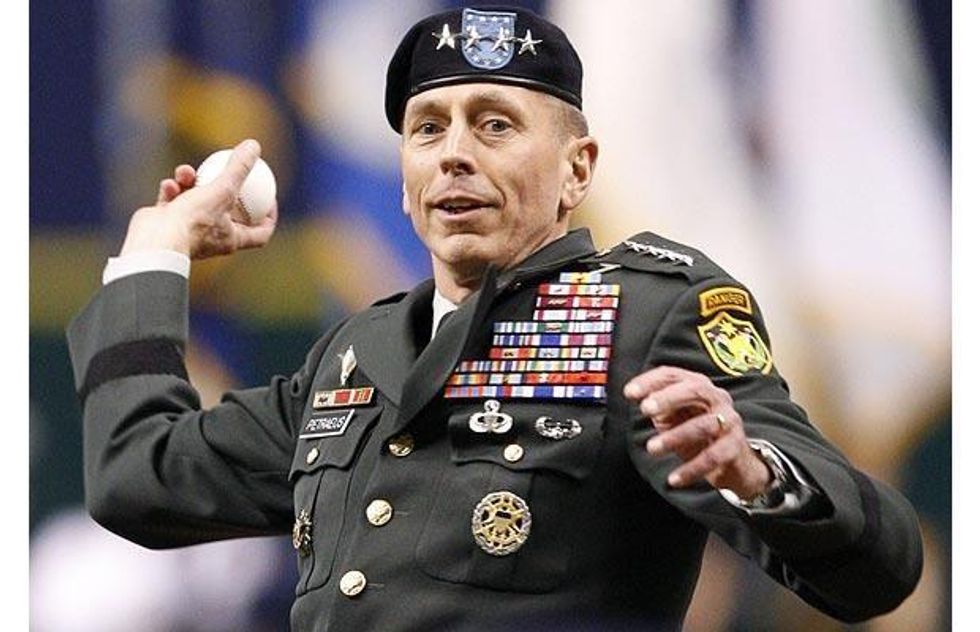
He was "the most influential general of his generation," "a celebrated soldier with extensive knowledge of intelligence gathering in both Afghanistan and Iraq... [with a] reputation... so formidable, officials said, that it was difficult to rotate him to another military post" and a "biographer who is keeping his name in lights." That was Bumiller on General (later CIA Director) David Petraeus and, given the press he ordinarily got in Washington, her reportage could almost be considered downbeat.
For both men, though, those were the glory days when things were going spectacularly. Okay, maybe not in the wars they were directing, but in the personal image-making campaigns both were waging in Washington. What about after both went down in flames and shame, though? Once a "celebrated soldier," it seems, always a celebrated something or other.
As Bumiller had been on the generals beat in the good times, she evidently ended up on the generals-in-shame beat as well. And you know what? They turn out to be whizzes at shame, too. In May, she found McChrystal teaching a course on "leadership" at Yale. He was, she reported in a charmingly soft focus piece, a spellbinding professor (willing to go out and drink with his students, just as he had with his military colleagues). Judging by her article, the former "warrior-scholar" had held onto the "scholar" part of the label -- and a knack for (self-)image making, too.
As for Petraeus, on November 20th, the Times' Scott Shane reported that almost all the main figures in the ever-expanding scandal around him had hired "high-profile, high-priced" image managers. That included the general himself who had, in the past, proved the most celebrated military image-manager of his generation -- until, of course, he managed himself into bed with his "biographer." Petraeus, Shane noted, had hired Robert Barnett, "a superlawyer whose online list of clients begins with the last three presidents. Though he is perhaps best known for negotiating book megadeals for the Washington elite, his focus this time is said to be steering Mr. Petraeus's future career, not his literary life." Curiously, Barnett had represented Stanley McChrystal, too, when the axed war commander sold a memoir in 2010.
It's rare that a newspaper lays out the mechanics of elite image-making and then so visibly engages in it, but the next day Bumiller weighed in with the first peek behind the scenes at a Petraeus at military dusk. But it wasn't taps playing; it was -- thank you (perhaps) Robert Barnett -- opportunity knocking. The general, reported Bumiller via various unnamed "friends" and "close friends," was dealing with a "furious" wife, but already fielding "offers to teach from four universities, a grab bag of book proposals from publishers in New York, and an interest in speaking and serving on corporate boards." He hadn't, she informed Times' readers, even ruled out becoming a TV news "talking head" like so many of his retired compatriots.
While both men evidently continue to engage in the sort of take-no-prisoners PR campaigning they know how to do best, the rest of us should be blinking in stunned wonder and asking ourselves: Just what are we to make of the decade of military hagiography we've just passed through? What did it mean for two generals to soar to media glory while the wars they commanded landed in the nearest ditch? Someday, historians are going to have a field day with our "embedded" American world in the twilight years of our glory, the celebrated era when, wartime victories having long since faded away, the image of triumph became what really mattered in Washington.
He was "an ascetic who... usually eats just one meal a day, in the evening, to avoid sluggishness. He is known for operating on a few hours' sleep and for running to and from work while listening to audio books on an iPod... [He has] an encyclopedic, even obsessive, knowledge about the lives of terrorists... [He is] a warrior-scholar, comfortable with diplomats, politicians..." Those were just the descriptions New York Times reporters Elisabeth Bumiller and Mark Mazzetti themselves bestowed on General Stanley McChrystal in May 2009 soon after he had been appointed the new U.S. Afghan War commander. They had no trouble finding interviewees saying even more extravagant things.
He was "the most influential general of his generation," "a celebrated soldier with extensive knowledge of intelligence gathering in both Afghanistan and Iraq... [with a] reputation... so formidable, officials said, that it was difficult to rotate him to another military post" and a "biographer who is keeping his name in lights." That was Bumiller on General (later CIA Director) David Petraeus and, given the press he ordinarily got in Washington, her reportage could almost be considered downbeat.
For both men, though, those were the glory days when things were going spectacularly. Okay, maybe not in the wars they were directing, but in the personal image-making campaigns both were waging in Washington. What about after both went down in flames and shame, though? Once a "celebrated soldier," it seems, always a celebrated something or other.
As Bumiller had been on the generals beat in the good times, she evidently ended up on the generals-in-shame beat as well. And you know what? They turn out to be whizzes at shame, too. In May, she found McChrystal teaching a course on "leadership" at Yale. He was, she reported in a charmingly soft focus piece, a spellbinding professor (willing to go out and drink with his students, just as he had with his military colleagues). Judging by her article, the former "warrior-scholar" had held onto the "scholar" part of the label -- and a knack for (self-)image making, too.
As for Petraeus, on November 20th, the Times' Scott Shane reported that almost all the main figures in the ever-expanding scandal around him had hired "high-profile, high-priced" image managers. That included the general himself who had, in the past, proved the most celebrated military image-manager of his generation -- until, of course, he managed himself into bed with his "biographer." Petraeus, Shane noted, had hired Robert Barnett, "a superlawyer whose online list of clients begins with the last three presidents. Though he is perhaps best known for negotiating book megadeals for the Washington elite, his focus this time is said to be steering Mr. Petraeus's future career, not his literary life." Curiously, Barnett had represented Stanley McChrystal, too, when the axed war commander sold a memoir in 2010.
It's rare that a newspaper lays out the mechanics of elite image-making and then so visibly engages in it, but the next day Bumiller weighed in with the first peek behind the scenes at a Petraeus at military dusk. But it wasn't taps playing; it was -- thank you (perhaps) Robert Barnett -- opportunity knocking. The general, reported Bumiller via various unnamed "friends" and "close friends," was dealing with a "furious" wife, but already fielding "offers to teach from four universities, a grab bag of book proposals from publishers in New York, and an interest in speaking and serving on corporate boards." He hadn't, she informed Times' readers, even ruled out becoming a TV news "talking head" like so many of his retired compatriots.
While both men evidently continue to engage in the sort of take-no-prisoners PR campaigning they know how to do best, the rest of us should be blinking in stunned wonder and asking ourselves: Just what are we to make of the decade of military hagiography we've just passed through? What did it mean for two generals to soar to media glory while the wars they commanded landed in the nearest ditch? Someday, historians are going to have a field day with our "embedded" American world in the twilight years of our glory, the celebrated era when, wartime victories having long since faded away, the image of triumph became what really mattered in Washington.
He was "an ascetic who... usually eats just one meal a day, in the evening, to avoid sluggishness. He is known for operating on a few hours' sleep and for running to and from work while listening to audio books on an iPod... [He has] an encyclopedic, even obsessive, knowledge about the lives of terrorists... [He is] a warrior-scholar, comfortable with diplomats, politicians..." Those were just the descriptions New York Times reporters Elisabeth Bumiller and Mark Mazzetti themselves bestowed on General Stanley McChrystal in May 2009 soon after he had been appointed the new U.S. Afghan War commander. They had no trouble finding interviewees saying even more extravagant things.
He was "the most influential general of his generation," "a celebrated soldier with extensive knowledge of intelligence gathering in both Afghanistan and Iraq... [with a] reputation... so formidable, officials said, that it was difficult to rotate him to another military post" and a "biographer who is keeping his name in lights." That was Bumiller on General (later CIA Director) David Petraeus and, given the press he ordinarily got in Washington, her reportage could almost be considered downbeat.
For both men, though, those were the glory days when things were going spectacularly. Okay, maybe not in the wars they were directing, but in the personal image-making campaigns both were waging in Washington. What about after both went down in flames and shame, though? Once a "celebrated soldier," it seems, always a celebrated something or other.
As Bumiller had been on the generals beat in the good times, she evidently ended up on the generals-in-shame beat as well. And you know what? They turn out to be whizzes at shame, too. In May, she found McChrystal teaching a course on "leadership" at Yale. He was, she reported in a charmingly soft focus piece, a spellbinding professor (willing to go out and drink with his students, just as he had with his military colleagues). Judging by her article, the former "warrior-scholar" had held onto the "scholar" part of the label -- and a knack for (self-)image making, too.
As for Petraeus, on November 20th, the Times' Scott Shane reported that almost all the main figures in the ever-expanding scandal around him had hired "high-profile, high-priced" image managers. That included the general himself who had, in the past, proved the most celebrated military image-manager of his generation -- until, of course, he managed himself into bed with his "biographer." Petraeus, Shane noted, had hired Robert Barnett, "a superlawyer whose online list of clients begins with the last three presidents. Though he is perhaps best known for negotiating book megadeals for the Washington elite, his focus this time is said to be steering Mr. Petraeus's future career, not his literary life." Curiously, Barnett had represented Stanley McChrystal, too, when the axed war commander sold a memoir in 2010.
It's rare that a newspaper lays out the mechanics of elite image-making and then so visibly engages in it, but the next day Bumiller weighed in with the first peek behind the scenes at a Petraeus at military dusk. But it wasn't taps playing; it was -- thank you (perhaps) Robert Barnett -- opportunity knocking. The general, reported Bumiller via various unnamed "friends" and "close friends," was dealing with a "furious" wife, but already fielding "offers to teach from four universities, a grab bag of book proposals from publishers in New York, and an interest in speaking and serving on corporate boards." He hadn't, she informed Times' readers, even ruled out becoming a TV news "talking head" like so many of his retired compatriots.
While both men evidently continue to engage in the sort of take-no-prisoners PR campaigning they know how to do best, the rest of us should be blinking in stunned wonder and asking ourselves: Just what are we to make of the decade of military hagiography we've just passed through? What did it mean for two generals to soar to media glory while the wars they commanded landed in the nearest ditch? Someday, historians are going to have a field day with our "embedded" American world in the twilight years of our glory, the celebrated era when, wartime victories having long since faded away, the image of triumph became what really mattered in Washington.