
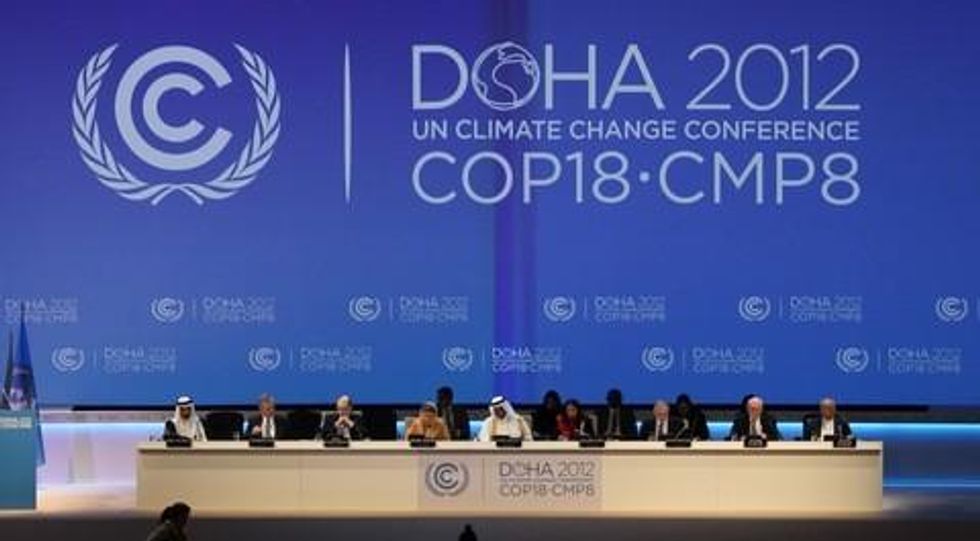
Today is the start of the latest UN Climate Conference in Doha. The Doha conference is the 18th meeting of the parties to the UN Framework Convention on Climate Change and comes at a time when greenhouse gas emissions continue to rise and the Kyoto Protocol, the only binding treaty to limit greenhouse gases, is set to expire at the end of the year. Hopes for an extension of Kyoto are slim with support from only a few countries for a second commitment period with new emissions targets. The climate stalemate is particularly distressing given the increasing likelihood of extreme weather events and their resulting economic impact.
One of the sticking points in the climate negotiations is the divide between rich and poor countries. The U.S. has justified not joining Kyoto because it does not cover emerging economies that are big emitters, like India and China. Another divisive issue between developed and developing countries is climate financing. A new report from Oxfam shows that the lack of climate financing is akin to a looming "climate fiscal cliff." Despite a commitment by developed countries to pay $100 billion per year by 2020 with $30 billion for 2010-2012 ("Fast Start Finance), the financing has fallen short.
Oxfam's report found that only 33 percent of the Fast Start Finance was new monies, the rest of money having been pledged previously . Furthermore, most of the money has been given as loans with varying levels of interest instead of straight up grants. The lack of proper financing is what is driving developing countries to the climate fiscal cliff with great uncertainty about how they will adapt to climate change after 2012.
Developing countries need international support for several reasons. One, they contribute far fewer emissions than developed countries yet will suffer greatly from the impacts of climate change. Nations like Kiribati will need to relocate their entire population. The world's poorest populations will struggle the most with increases in food prices that will result from climate change. Second, it is in every country's interest that developing countries are able to successfully adapt to climate change. Climate change could create 150 million climate refugees by 2050. Absorbing that many refugees will strain economies across the world.
Moreover, adaptation money needs to be given as grants and not loans. Developing countries have been crippled by the amount of debt they owe to outside institutions, like the World Bank or IMF. Any income generated by developing countries often goes to servicing their debts, which leaves little revenue for necessary development projects like infrastructure expansion or workforce training. Often, the debt burdens are so large that there is little hope for repayment so countries are doomed to stay in poverty, working to pay off an insurmountable burden.
Combatting climate change will take a global effort. We'll have to wait to see how successful the talks in Doha are but one thing is for certain, we are running out of time.
Today is the start of the latest UN Climate Conference in Doha. The Doha conference is the 18th meeting of the parties to the UN Framework Convention on Climate Change and comes at a time when greenhouse gas emissions continue to rise and the Kyoto Protocol, the only binding treaty to limit greenhouse gases, is set to expire at the end of the year. Hopes for an extension of Kyoto are slim with support from only a few countries for a second commitment period with new emissions targets. The climate stalemate is particularly distressing given the increasing likelihood of extreme weather events and their resulting economic impact.
One of the sticking points in the climate negotiations is the divide between rich and poor countries. The U.S. has justified not joining Kyoto because it does not cover emerging economies that are big emitters, like India and China. Another divisive issue between developed and developing countries is climate financing. A new report from Oxfam shows that the lack of climate financing is akin to a looming "climate fiscal cliff." Despite a commitment by developed countries to pay $100 billion per year by 2020 with $30 billion for 2010-2012 ("Fast Start Finance), the financing has fallen short.
Oxfam's report found that only 33 percent of the Fast Start Finance was new monies, the rest of money having been pledged previously . Furthermore, most of the money has been given as loans with varying levels of interest instead of straight up grants. The lack of proper financing is what is driving developing countries to the climate fiscal cliff with great uncertainty about how they will adapt to climate change after 2012.
Developing countries need international support for several reasons. One, they contribute far fewer emissions than developed countries yet will suffer greatly from the impacts of climate change. Nations like Kiribati will need to relocate their entire population. The world's poorest populations will struggle the most with increases in food prices that will result from climate change. Second, it is in every country's interest that developing countries are able to successfully adapt to climate change. Climate change could create 150 million climate refugees by 2050. Absorbing that many refugees will strain economies across the world.
Moreover, adaptation money needs to be given as grants and not loans. Developing countries have been crippled by the amount of debt they owe to outside institutions, like the World Bank or IMF. Any income generated by developing countries often goes to servicing their debts, which leaves little revenue for necessary development projects like infrastructure expansion or workforce training. Often, the debt burdens are so large that there is little hope for repayment so countries are doomed to stay in poverty, working to pay off an insurmountable burden.
Combatting climate change will take a global effort. We'll have to wait to see how successful the talks in Doha are but one thing is for certain, we are running out of time.
Today is the start of the latest UN Climate Conference in Doha. The Doha conference is the 18th meeting of the parties to the UN Framework Convention on Climate Change and comes at a time when greenhouse gas emissions continue to rise and the Kyoto Protocol, the only binding treaty to limit greenhouse gases, is set to expire at the end of the year. Hopes for an extension of Kyoto are slim with support from only a few countries for a second commitment period with new emissions targets. The climate stalemate is particularly distressing given the increasing likelihood of extreme weather events and their resulting economic impact.
One of the sticking points in the climate negotiations is the divide between rich and poor countries. The U.S. has justified not joining Kyoto because it does not cover emerging economies that are big emitters, like India and China. Another divisive issue between developed and developing countries is climate financing. A new report from Oxfam shows that the lack of climate financing is akin to a looming "climate fiscal cliff." Despite a commitment by developed countries to pay $100 billion per year by 2020 with $30 billion for 2010-2012 ("Fast Start Finance), the financing has fallen short.
Oxfam's report found that only 33 percent of the Fast Start Finance was new monies, the rest of money having been pledged previously . Furthermore, most of the money has been given as loans with varying levels of interest instead of straight up grants. The lack of proper financing is what is driving developing countries to the climate fiscal cliff with great uncertainty about how they will adapt to climate change after 2012.
Developing countries need international support for several reasons. One, they contribute far fewer emissions than developed countries yet will suffer greatly from the impacts of climate change. Nations like Kiribati will need to relocate their entire population. The world's poorest populations will struggle the most with increases in food prices that will result from climate change. Second, it is in every country's interest that developing countries are able to successfully adapt to climate change. Climate change could create 150 million climate refugees by 2050. Absorbing that many refugees will strain economies across the world.
Moreover, adaptation money needs to be given as grants and not loans. Developing countries have been crippled by the amount of debt they owe to outside institutions, like the World Bank or IMF. Any income generated by developing countries often goes to servicing their debts, which leaves little revenue for necessary development projects like infrastructure expansion or workforce training. Often, the debt burdens are so large that there is little hope for repayment so countries are doomed to stay in poverty, working to pay off an insurmountable burden.
Combatting climate change will take a global effort. We'll have to wait to see how successful the talks in Doha are but one thing is for certain, we are running out of time.