Today, 3 Israelis were killed as a result of rocket fire from Gaza.
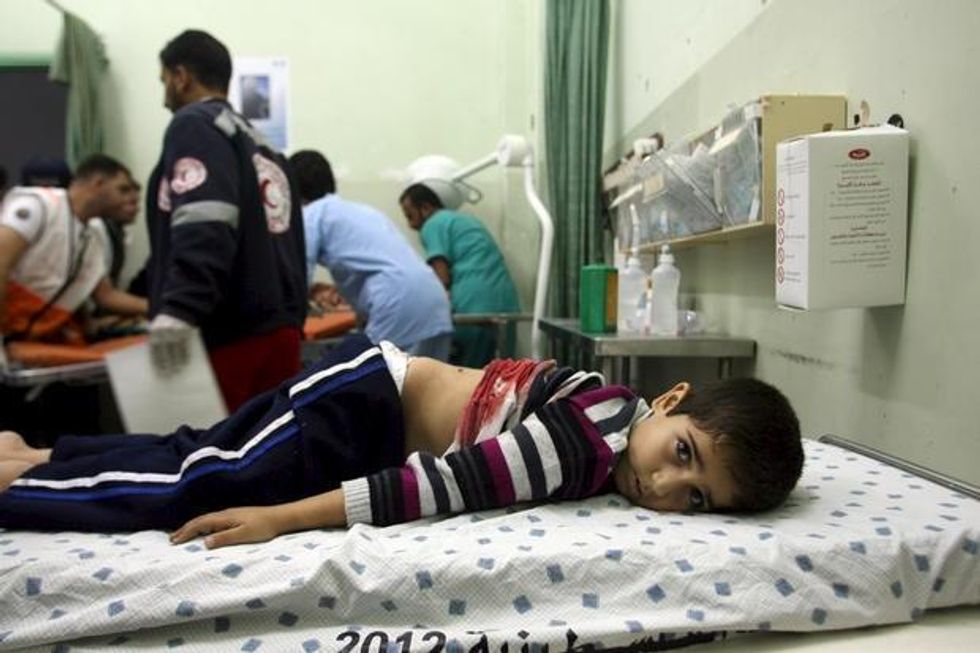
This came after Israel had killed 13 Palestinians, including 3 children and a woman, and injured 115, including 26 children and 25 women since yesterday, 14 November.
This will be presented by Israel - and sympathetic or careless world media - as another justification for Israel's attacks on Gaza to stop rocket fire. But this narrative is false.
Where there was calm and an effective truce, Israel chose to shatter it, bringing about the current deadly escalation.
In general, Palestinians fired rockets, or attacked the Israeli army, as a response to Israeli attacks, seeking to avoid escalation and publicly embracing a truce. Take a look at the sequence:
- On 29 October the BBC reported that "Militants in Gaza have fired 26 rockets into Israel, officials say, amid a flare-up in fighting which shattered a brief ceasefire between the two sides. No injuries were reported from the barrage, in the south of the country." The BBC said that, "It came hours after Israeli aircraft hit targets in Gaza, after militants fired rockets following the killing by Israel of a Gazan who Israel said fired mortars at its troops."
BBC reporter Jon Donnison said, "It is often difficult to pinpoint when a specific escalation in violence started - both sides will always remember what they see as a previous act of aggression by the other which enables them to justify their attacks as retaliation." But we can do better than that.
On 4 November, Israeli forces shot dead "an unarmed, mentally unfit man" walking near an Israeli-imposed "buffer" area inside the occupied Gaza Strip.
Yet, after the 28-29 October "flare-up" reported by the BBC, the Israel-based Twitter account @qassamcount, which catalogues projectiles fired from Gaza toward Israel recorded almost no rocket fire. Qassam Count tweeted at 23:56 UTC on 5 November about just one rocket.
They leveled areas of Palestinian land amidst indiscriminate shooting. A few hours later, they moved southwards to 'Abassan village. They opened fire indiscriminately and leveled areas of Palestinian land. An Israeli helicopter gunship also opened fire at the area. At approximately 16:30, as a result of the indiscriminate shooting by IOF [Israeli occupation forces] military vehicles, 13-year-old Ahmed Younis Khader Abu Daqqa was seriously wounded by a bullet to the abdomen. At the time he was shot, Ahmed had been playing football with his friends in front of his family's house, located nearly 1,500 meters away from the area where the IOF were present.
Ahmad Abu Daqqa, profiled by The Electronic Intifada's Rami Almeghari, died of his injuries.
- On 9 November, the day after the killing of Ahmad Abu Daqqa:
Palestinians attack Israeli army, Israeli army kills civilians
- On 10 November, Palestinian resistance fighters attacked an Israeli army jeep near the boundary with Gaza, injuring 4 Israeli occupation soldiers.
Following this, Israel attacked civilian neighborhoods in Gaza. In the ensuing 72 hour period, Israeli forced killed 7 Palestinians. According to PCHR, five of the dead were civilians, including 3 children. Fifty-two others, including 6 women and 12 children were wounded.
"Four of these deaths and 38 of the injuries resulted from an Israeli attack on a football playground in al-Shoja'iya neighborhood east of Gaza City," PCHR reported.
Not surprisingly, Palestinians fired rockets into Israel, as recorded by "Qassam Count":
Truce talks
Qassam Count records no rockets on 11 November. This can perhaps be explained by the fact that Palestinian factions were in talks over a truce and were keen to see calm restored.
Israel's Ynet reported on 11 November:
Egyptian Intelligence officials have successfully brokered an end to the current round of escalation in the south, Ynet learned Sunday. No Israeli source has corroborated the report.
The Ynet reported added:
According to senior Egyptian sources, both Hamas and Islamic Jihad have agreed to hold their fire if Israel suspends its airstrike on Gaza. > > Cairo-based sources said that Israel reportedly agreed not to retaliate over sporadic rocket fire from Gaza, as long as it was sans casualties
- Yet on 12 November, two rockets were fired into Israel according to Qassam Count. This came amid two days of air attacks by Israel on the Gaza Strip.
Truce takes hold
Reuters reported on 13 November:
After five days of mounting violence, Israel and the Palestinians stepped back from the brink of a new war in the Gaza Strip on Tuesday, sending signals to each other via Egypt that they would hold their fire unless attacked.
The report added:
Ismail Haniyeh, prime minister of Gaza's Hamas government, praised the main armed factions in the enclave for agreeing on Monday night to a truce. "They showed a high sense of responsibility by saying they would respect calm should the Israeli occupation also abide by it," he said.
Israel destroys the truce
Yet Israel was not interested in calm.
- On 14 November Israel carried out the extrajudicial killing of Hamas military chief Ahmad al-Jabari.
Reuters noted that the Israeli attack "appeared to end a 24-hour lull in cross-border violence that surged this week."
The rest is tragic history, some undoubtedly yet to be written in innocent blood.
An Israeli pattern
Israel's contempt for truces and ceasefires is nothing new. In November 2008, Israel broke a months-long ceasefire, manufacturing a crisis that it then used to justify its December 2008-January 2009 massacre of 1,400 people in Gaza.
Israel has a long, well-documented history of breaking ceasefire after ceasefire, but you would never know it by watching the news or reading, say, The New York Times.
It is also important to keep in mind the context that Israel and Palestinians in Gaza are not symmetrical "sides." Gaza is a small, impoverished enclave, home to 1.6 million people, some 80 percent of whom are refugees. Gaza is under a tight siege and blockade by Israel, the occupying power.
- On 9 November, the day after the killing of Ahmad Abu Daqqa:
Today, 3 Israelis were killed as a result of rocket fire from Gaza.
This came after Israel had killed 13 Palestinians, including 3 children and a woman, and injured 115, including 26 children and 25 women since yesterday, 14 November.
This will be presented by Israel - and sympathetic or careless world media - as another justification for Israel's attacks on Gaza to stop rocket fire. But this narrative is false.
Where there was calm and an effective truce, Israel chose to shatter it, bringing about the current deadly escalation.
In general, Palestinians fired rockets, or attacked the Israeli army, as a response to Israeli attacks, seeking to avoid escalation and publicly embracing a truce. Take a look at the sequence:
- On 29 October the BBC reported that "Militants in Gaza have fired 26 rockets into Israel, officials say, amid a flare-up in fighting which shattered a brief ceasefire between the two sides. No injuries were reported from the barrage, in the south of the country." The BBC said that, "It came hours after Israeli aircraft hit targets in Gaza, after militants fired rockets following the killing by Israel of a Gazan who Israel said fired mortars at its troops."
BBC reporter Jon Donnison said, "It is often difficult to pinpoint when a specific escalation in violence started - both sides will always remember what they see as a previous act of aggression by the other which enables them to justify their attacks as retaliation." But we can do better than that.
On 4 November, Israeli forces shot dead "an unarmed, mentally unfit man" walking near an Israeli-imposed "buffer" area inside the occupied Gaza Strip.
Yet, after the 28-29 October "flare-up" reported by the BBC, the Israel-based Twitter account @qassamcount, which catalogues projectiles fired from Gaza toward Israel recorded almost no rocket fire. Qassam Count tweeted at 23:56 UTC on 5 November about just one rocket.
They leveled areas of Palestinian land amidst indiscriminate shooting. A few hours later, they moved southwards to 'Abassan village. They opened fire indiscriminately and leveled areas of Palestinian land. An Israeli helicopter gunship also opened fire at the area. At approximately 16:30, as a result of the indiscriminate shooting by IOF [Israeli occupation forces] military vehicles, 13-year-old Ahmed Younis Khader Abu Daqqa was seriously wounded by a bullet to the abdomen. At the time he was shot, Ahmed had been playing football with his friends in front of his family's house, located nearly 1,500 meters away from the area where the IOF were present.
Ahmad Abu Daqqa, profiled by The Electronic Intifada's Rami Almeghari, died of his injuries.
- On 9 November, the day after the killing of Ahmad Abu Daqqa:
Palestinians attack Israeli army, Israeli army kills civilians
- On 10 November, Palestinian resistance fighters attacked an Israeli army jeep near the boundary with Gaza, injuring 4 Israeli occupation soldiers.
Following this, Israel attacked civilian neighborhoods in Gaza. In the ensuing 72 hour period, Israeli forced killed 7 Palestinians. According to PCHR, five of the dead were civilians, including 3 children. Fifty-two others, including 6 women and 12 children were wounded.
"Four of these deaths and 38 of the injuries resulted from an Israeli attack on a football playground in al-Shoja'iya neighborhood east of Gaza City," PCHR reported.
Not surprisingly, Palestinians fired rockets into Israel, as recorded by "Qassam Count":
Truce talks
Qassam Count records no rockets on 11 November. This can perhaps be explained by the fact that Palestinian factions were in talks over a truce and were keen to see calm restored.
Israel's Ynet reported on 11 November:
Egyptian Intelligence officials have successfully brokered an end to the current round of escalation in the south, Ynet learned Sunday. No Israeli source has corroborated the report.
The Ynet reported added:
According to senior Egyptian sources, both Hamas and Islamic Jihad have agreed to hold their fire if Israel suspends its airstrike on Gaza. > > Cairo-based sources said that Israel reportedly agreed not to retaliate over sporadic rocket fire from Gaza, as long as it was sans casualties
- Yet on 12 November, two rockets were fired into Israel according to Qassam Count. This came amid two days of air attacks by Israel on the Gaza Strip.
Truce takes hold
Reuters reported on 13 November:
After five days of mounting violence, Israel and the Palestinians stepped back from the brink of a new war in the Gaza Strip on Tuesday, sending signals to each other via Egypt that they would hold their fire unless attacked.
The report added:
Ismail Haniyeh, prime minister of Gaza's Hamas government, praised the main armed factions in the enclave for agreeing on Monday night to a truce. "They showed a high sense of responsibility by saying they would respect calm should the Israeli occupation also abide by it," he said.
Israel destroys the truce
Yet Israel was not interested in calm.
- On 14 November Israel carried out the extrajudicial killing of Hamas military chief Ahmad al-Jabari.
Reuters noted that the Israeli attack "appeared to end a 24-hour lull in cross-border violence that surged this week."
The rest is tragic history, some undoubtedly yet to be written in innocent blood.
An Israeli pattern
Israel's contempt for truces and ceasefires is nothing new. In November 2008, Israel broke a months-long ceasefire, manufacturing a crisis that it then used to justify its December 2008-January 2009 massacre of 1,400 people in Gaza.
Israel has a long, well-documented history of breaking ceasefire after ceasefire, but you would never know it by watching the news or reading, say, The New York Times.
It is also important to keep in mind the context that Israel and Palestinians in Gaza are not symmetrical "sides." Gaza is a small, impoverished enclave, home to 1.6 million people, some 80 percent of whom are refugees. Gaza is under a tight siege and blockade by Israel, the occupying power.
- On 9 November, the day after the killing of Ahmad Abu Daqqa:
Today, 3 Israelis were killed as a result of rocket fire from Gaza.
This came after Israel had killed 13 Palestinians, including 3 children and a woman, and injured 115, including 26 children and 25 women since yesterday, 14 November.
This will be presented by Israel - and sympathetic or careless world media - as another justification for Israel's attacks on Gaza to stop rocket fire. But this narrative is false.
Where there was calm and an effective truce, Israel chose to shatter it, bringing about the current deadly escalation.
In general, Palestinians fired rockets, or attacked the Israeli army, as a response to Israeli attacks, seeking to avoid escalation and publicly embracing a truce. Take a look at the sequence:
- On 29 October the BBC reported that "Militants in Gaza have fired 26 rockets into Israel, officials say, amid a flare-up in fighting which shattered a brief ceasefire between the two sides. No injuries were reported from the barrage, in the south of the country." The BBC said that, "It came hours after Israeli aircraft hit targets in Gaza, after militants fired rockets following the killing by Israel of a Gazan who Israel said fired mortars at its troops."
BBC reporter Jon Donnison said, "It is often difficult to pinpoint when a specific escalation in violence started - both sides will always remember what they see as a previous act of aggression by the other which enables them to justify their attacks as retaliation." But we can do better than that.
On 4 November, Israeli forces shot dead "an unarmed, mentally unfit man" walking near an Israeli-imposed "buffer" area inside the occupied Gaza Strip.
Yet, after the 28-29 October "flare-up" reported by the BBC, the Israel-based Twitter account @qassamcount, which catalogues projectiles fired from Gaza toward Israel recorded almost no rocket fire. Qassam Count tweeted at 23:56 UTC on 5 November about just one rocket.
They leveled areas of Palestinian land amidst indiscriminate shooting. A few hours later, they moved southwards to 'Abassan village. They opened fire indiscriminately and leveled areas of Palestinian land. An Israeli helicopter gunship also opened fire at the area. At approximately 16:30, as a result of the indiscriminate shooting by IOF [Israeli occupation forces] military vehicles, 13-year-old Ahmed Younis Khader Abu Daqqa was seriously wounded by a bullet to the abdomen. At the time he was shot, Ahmed had been playing football with his friends in front of his family's house, located nearly 1,500 meters away from the area where the IOF were present.
Ahmad Abu Daqqa, profiled by The Electronic Intifada's Rami Almeghari, died of his injuries.
- On 9 November, the day after the killing of Ahmad Abu Daqqa:
Palestinians attack Israeli army, Israeli army kills civilians
- On 10 November, Palestinian resistance fighters attacked an Israeli army jeep near the boundary with Gaza, injuring 4 Israeli occupation soldiers.
Following this, Israel attacked civilian neighborhoods in Gaza. In the ensuing 72 hour period, Israeli forced killed 7 Palestinians. According to PCHR, five of the dead were civilians, including 3 children. Fifty-two others, including 6 women and 12 children were wounded.
"Four of these deaths and 38 of the injuries resulted from an Israeli attack on a football playground in al-Shoja'iya neighborhood east of Gaza City," PCHR reported.
Not surprisingly, Palestinians fired rockets into Israel, as recorded by "Qassam Count":
Truce talks
Qassam Count records no rockets on 11 November. This can perhaps be explained by the fact that Palestinian factions were in talks over a truce and were keen to see calm restored.
Israel's Ynet reported on 11 November:
Egyptian Intelligence officials have successfully brokered an end to the current round of escalation in the south, Ynet learned Sunday. No Israeli source has corroborated the report.
The Ynet reported added:
According to senior Egyptian sources, both Hamas and Islamic Jihad have agreed to hold their fire if Israel suspends its airstrike on Gaza. > > Cairo-based sources said that Israel reportedly agreed not to retaliate over sporadic rocket fire from Gaza, as long as it was sans casualties
- Yet on 12 November, two rockets were fired into Israel according to Qassam Count. This came amid two days of air attacks by Israel on the Gaza Strip.
Truce takes hold
Reuters reported on 13 November:
After five days of mounting violence, Israel and the Palestinians stepped back from the brink of a new war in the Gaza Strip on Tuesday, sending signals to each other via Egypt that they would hold their fire unless attacked.
The report added:
Ismail Haniyeh, prime minister of Gaza's Hamas government, praised the main armed factions in the enclave for agreeing on Monday night to a truce. "They showed a high sense of responsibility by saying they would respect calm should the Israeli occupation also abide by it," he said.
Israel destroys the truce
Yet Israel was not interested in calm.
- On 14 November Israel carried out the extrajudicial killing of Hamas military chief Ahmad al-Jabari.
Reuters noted that the Israeli attack "appeared to end a 24-hour lull in cross-border violence that surged this week."
The rest is tragic history, some undoubtedly yet to be written in innocent blood.
An Israeli pattern
Israel's contempt for truces and ceasefires is nothing new. In November 2008, Israel broke a months-long ceasefire, manufacturing a crisis that it then used to justify its December 2008-January 2009 massacre of 1,400 people in Gaza.
Israel has a long, well-documented history of breaking ceasefire after ceasefire, but you would never know it by watching the news or reading, say, The New York Times.
It is also important to keep in mind the context that Israel and Palestinians in Gaza are not symmetrical "sides." Gaza is a small, impoverished enclave, home to 1.6 million people, some 80 percent of whom are refugees. Gaza is under a tight siege and blockade by Israel, the occupying power.
- On 9 November, the day after the killing of Ahmad Abu Daqqa: