SUBSCRIBE TO OUR FREE NEWSLETTER
Daily news & progressive opinion—funded by the people, not the corporations—delivered straight to your inbox.
5
#000000
#FFFFFF
To donate by check, phone, or other method, see our More Ways to Give page.
President Obama last week addressed the growing problem of "green on blue" attacks in Afghanistan, in which members of Afghan security forces turn their guns on their Western partners. "We are concerned about this, from top to bottom," the president said. In the two weeks before he spoke, there were seven such attacks, killing nine Americans, and about 40 coalition troops have been killed by Afghan allies this year. The president went on to say, "We've got what's called the 'Guardian Angels' program," stationing armed NATO soldiers to monitor Afghans and protect Westerners.
This is not just another wrenching turn in a heartbreaking 11-year war. This month saw the 2,000th U.S. death; the coalition total is almost 3,000. A breakdown in trust between coalition troops and their Afghan partners cuts to the quick of the "surge" strategy Obama embraced in 2010.
The time-limited escalation of the American effort was supposed to help Afghans summon the competence and will to secure their own country, enabling the NATO withdrawal in 2014. "As Afghans stand up," Obama told the NATO gathering in May, "they will not stand alone."
Now, standing nearby will be a Guardian Angel - ready to shoot.
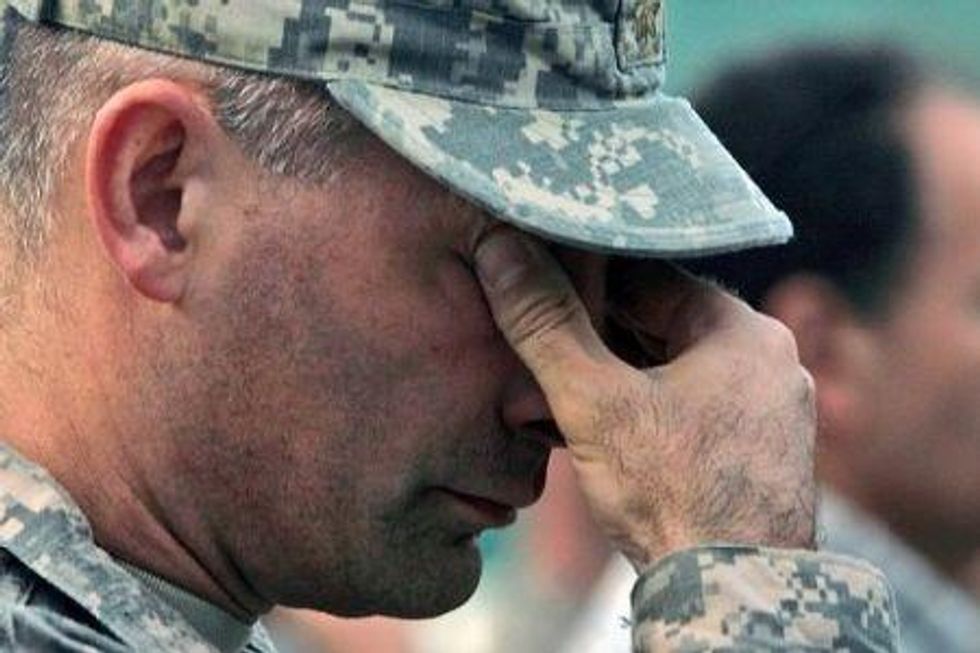
As the president spoke last week, news came of a Center for Army Leadership survey that showed three-fourths of U.S. soldiers think the Army is "headed in the wrong direction." Twenty percent of troops serving in Afghanistan reported serious psychological problems. This July, a record 26 active-duty soldiers committed suicide (plus another 11 National Guard or Reserve members). "That is an epidemic," Defense Secretary Leon Panetta told Congress.
Confronting such symptoms, the Army Chief of Staff, Gen. Raymond T. Odierno, said, "It is very important for us to be introspective." Yes, and with peer counseling and other psychological support, the Army tries to help individual sufferers through deployment stress, mission drift, economic hardship, and war-zone trauma. But an epidemic collapse of morale is rooted less in personal problems than in bankrupt policy - the same bankruptcy that is being laid bare by the murderous behavior of our Afghan allies.
What's needed is the opposite of introspection. We must look out at the shape of the world we are creating.
The broad American public can avert its eyes from this decade's historic catastrophe, but uniformed men and women forcibly stare into its abyss - the actuality of the two unnecessary and unwinnable wars that the military has been required to fight. The absurdity of the concluded Iraq war is on full display as Baghdad, through its banks and oil markets, helps Iran avoid international sanctions. Americans fought and died to help Iran get nukes?
What some 80,000 U.S. troops see up close in Afghanistan is not only the futility of this reconstruction and training mission, but its true character as a face-saving charade disguising blatant leadership mistakes - Bush's in starting the war, and Obama's in expanding it. Insider attacks puncture the fantasy that a stable, friendly Afghan government will ever "stand up." The rationale for Obama's war is phony, and the warriors know it.
Another profoundly upsetting phenomenon facing U.S. service members is our refusal to reckon with the abyss into which they have been dumped. Support the troops? Ha! That neither Republicans nor Democrats see the crisis in Afghanistan as a fit subject for election-year discussion is salt in the wound.
Obama wants no attention drawn to the greatest misjudgment of his presidency, while Romney seeks to exploit voters' subliminal unease about the war without offering an alternative strategy. In the face of this Democratic-Republican conspiracy of silence about the war, why shouldn't Army morale be dropping like a stone?
In biblical tradition, one function of guardian angels is to protect us from bad decisions. Any guardian angels deployed in Washington would surely decry two more years of this.
President Obama last week addressed the growing problem of "green on blue" attacks in Afghanistan, in which members of Afghan security forces turn their guns on their Western partners. "We are concerned about this, from top to bottom," the president said. In the two weeks before he spoke, there were seven such attacks, killing nine Americans, and about 40 coalition troops have been killed by Afghan allies this year. The president went on to say, "We've got what's called the 'Guardian Angels' program," stationing armed NATO soldiers to monitor Afghans and protect Westerners.
This is not just another wrenching turn in a heartbreaking 11-year war. This month saw the 2,000th U.S. death; the coalition total is almost 3,000. A breakdown in trust between coalition troops and their Afghan partners cuts to the quick of the "surge" strategy Obama embraced in 2010.
The time-limited escalation of the American effort was supposed to help Afghans summon the competence and will to secure their own country, enabling the NATO withdrawal in 2014. "As Afghans stand up," Obama told the NATO gathering in May, "they will not stand alone."
Now, standing nearby will be a Guardian Angel - ready to shoot.
As the president spoke last week, news came of a Center for Army Leadership survey that showed three-fourths of U.S. soldiers think the Army is "headed in the wrong direction." Twenty percent of troops serving in Afghanistan reported serious psychological problems. This July, a record 26 active-duty soldiers committed suicide (plus another 11 National Guard or Reserve members). "That is an epidemic," Defense Secretary Leon Panetta told Congress.
Confronting such symptoms, the Army Chief of Staff, Gen. Raymond T. Odierno, said, "It is very important for us to be introspective." Yes, and with peer counseling and other psychological support, the Army tries to help individual sufferers through deployment stress, mission drift, economic hardship, and war-zone trauma. But an epidemic collapse of morale is rooted less in personal problems than in bankrupt policy - the same bankruptcy that is being laid bare by the murderous behavior of our Afghan allies.
What's needed is the opposite of introspection. We must look out at the shape of the world we are creating.
The broad American public can avert its eyes from this decade's historic catastrophe, but uniformed men and women forcibly stare into its abyss - the actuality of the two unnecessary and unwinnable wars that the military has been required to fight. The absurdity of the concluded Iraq war is on full display as Baghdad, through its banks and oil markets, helps Iran avoid international sanctions. Americans fought and died to help Iran get nukes?
What some 80,000 U.S. troops see up close in Afghanistan is not only the futility of this reconstruction and training mission, but its true character as a face-saving charade disguising blatant leadership mistakes - Bush's in starting the war, and Obama's in expanding it. Insider attacks puncture the fantasy that a stable, friendly Afghan government will ever "stand up." The rationale for Obama's war is phony, and the warriors know it.
Another profoundly upsetting phenomenon facing U.S. service members is our refusal to reckon with the abyss into which they have been dumped. Support the troops? Ha! That neither Republicans nor Democrats see the crisis in Afghanistan as a fit subject for election-year discussion is salt in the wound.
Obama wants no attention drawn to the greatest misjudgment of his presidency, while Romney seeks to exploit voters' subliminal unease about the war without offering an alternative strategy. In the face of this Democratic-Republican conspiracy of silence about the war, why shouldn't Army morale be dropping like a stone?
In biblical tradition, one function of guardian angels is to protect us from bad decisions. Any guardian angels deployed in Washington would surely decry two more years of this.
President Obama last week addressed the growing problem of "green on blue" attacks in Afghanistan, in which members of Afghan security forces turn their guns on their Western partners. "We are concerned about this, from top to bottom," the president said. In the two weeks before he spoke, there were seven such attacks, killing nine Americans, and about 40 coalition troops have been killed by Afghan allies this year. The president went on to say, "We've got what's called the 'Guardian Angels' program," stationing armed NATO soldiers to monitor Afghans and protect Westerners.
This is not just another wrenching turn in a heartbreaking 11-year war. This month saw the 2,000th U.S. death; the coalition total is almost 3,000. A breakdown in trust between coalition troops and their Afghan partners cuts to the quick of the "surge" strategy Obama embraced in 2010.
The time-limited escalation of the American effort was supposed to help Afghans summon the competence and will to secure their own country, enabling the NATO withdrawal in 2014. "As Afghans stand up," Obama told the NATO gathering in May, "they will not stand alone."
Now, standing nearby will be a Guardian Angel - ready to shoot.
As the president spoke last week, news came of a Center for Army Leadership survey that showed three-fourths of U.S. soldiers think the Army is "headed in the wrong direction." Twenty percent of troops serving in Afghanistan reported serious psychological problems. This July, a record 26 active-duty soldiers committed suicide (plus another 11 National Guard or Reserve members). "That is an epidemic," Defense Secretary Leon Panetta told Congress.
Confronting such symptoms, the Army Chief of Staff, Gen. Raymond T. Odierno, said, "It is very important for us to be introspective." Yes, and with peer counseling and other psychological support, the Army tries to help individual sufferers through deployment stress, mission drift, economic hardship, and war-zone trauma. But an epidemic collapse of morale is rooted less in personal problems than in bankrupt policy - the same bankruptcy that is being laid bare by the murderous behavior of our Afghan allies.
What's needed is the opposite of introspection. We must look out at the shape of the world we are creating.
The broad American public can avert its eyes from this decade's historic catastrophe, but uniformed men and women forcibly stare into its abyss - the actuality of the two unnecessary and unwinnable wars that the military has been required to fight. The absurdity of the concluded Iraq war is on full display as Baghdad, through its banks and oil markets, helps Iran avoid international sanctions. Americans fought and died to help Iran get nukes?
What some 80,000 U.S. troops see up close in Afghanistan is not only the futility of this reconstruction and training mission, but its true character as a face-saving charade disguising blatant leadership mistakes - Bush's in starting the war, and Obama's in expanding it. Insider attacks puncture the fantasy that a stable, friendly Afghan government will ever "stand up." The rationale for Obama's war is phony, and the warriors know it.
Another profoundly upsetting phenomenon facing U.S. service members is our refusal to reckon with the abyss into which they have been dumped. Support the troops? Ha! That neither Republicans nor Democrats see the crisis in Afghanistan as a fit subject for election-year discussion is salt in the wound.
Obama wants no attention drawn to the greatest misjudgment of his presidency, while Romney seeks to exploit voters' subliminal unease about the war without offering an alternative strategy. In the face of this Democratic-Republican conspiracy of silence about the war, why shouldn't Army morale be dropping like a stone?
In biblical tradition, one function of guardian angels is to protect us from bad decisions. Any guardian angels deployed in Washington would surely decry two more years of this.