
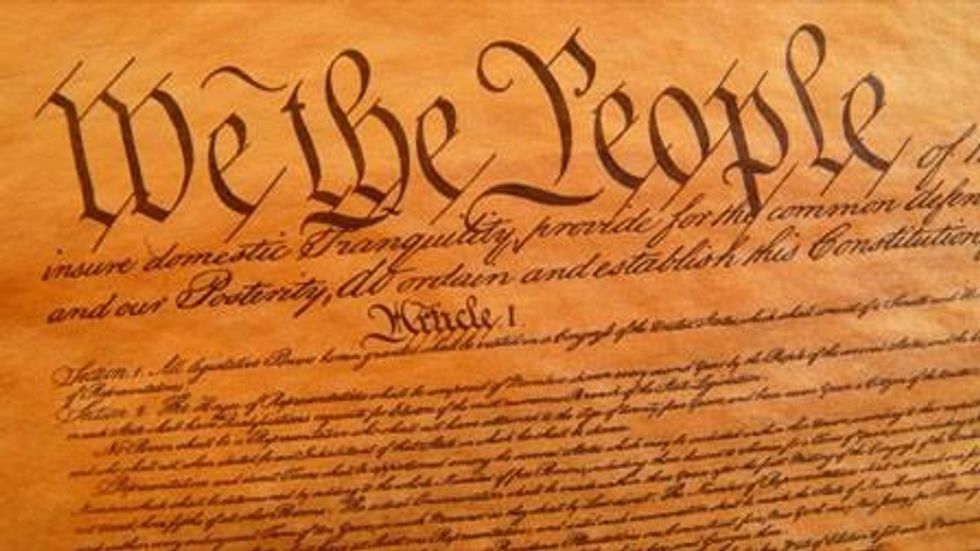
Among Americans there remains strong pride about the US Constitution, even though there is widespread support for creating reform amendments to it. Globally, however, what should surprise Americans is a significant loss of respect for it. Other nations, especially those creating new democracies, see better constitutions elsewhere. This is not opinion. It is fact. And it is important to understand this historic shift.
A new university study sends a disturbing message to all Americans that want to hang on to the fiction that the US constitution is not only the world's best one, but does not need to be improved. Do not mentally block this finding: "The U.S. Constitution appears to be losing its appeal as a model for constitutional drafters elsewhere," according to the study by David S. Law of Washington University in St. Louis and Mila Versteeg of the University of Virginia.
What exists today is far different than what was proudly proclaimed in 1987, on the Constitution's bicentennial, by Time magazine which calculated that "of the 170 countries that exist today, more than 160 have written charters modeled directly or indirectly on the U.S. version."
Why has the US Constitution lost standing abroad even though Americans cling to their belief that it is sacred and the world's best constitution?
The new study examined the provisions of 729 constitutions adopted by 188 countries from 1946 to 2006, and they considered 237 variables regarding various rights and ways to enforce them. This is what they found: "Among the world's democracies constitutional similarity to theUnited States has clearly gone into free fall. Over the 1960s and 1970s, democratic constitutions as a whole became more similar to the U.S. Constitution, only to reverse course in the 1980s and 1990s. ... the constitutions of the world's democracies are, on average, less similar to the U.S. Constitution now than they were at the end of World War II."
Professor Law identified a central reason for the trend: the availability of newer, sexier and more powerful operating systems in the constitutional marketplace. "Nobody wants to copy Windows 3.1," he said. In other words, the US Constitution is old and out of date.
A Supreme Court Justice has also weighed in. In a television interview during a recent visit to Egypt, Justice Ruth Bader Ginsburg said. "I would not look to the United States Constitution if I were drafting a constitution in the year 2012." She recommended, instead, the South African Constitution, the Canadian Charter of Rights and Freedoms or the European Convention on Human Rights. Such a view should be respected.
Should Americans disregard these findings and perspectives? Absolutely not. Only if more people pay attention to this global trend will they better see the need to seriously consider constitutional amendments to improve American democracy. The core problem, however, is one shortcoming of the US Constitution: the great difficulty in amending it. In this regard, noted legal authority Sanford Levinson wrote in 2006 in his book "Our Undemocratic Constitution" that "the U.S. Constitution is the most difficult to amend of any constitution currently existing in the world today."
All over the country diverse people and groups on the right and left are advocating for reform amendments, such as getting all private money out of politics, creating term limits for Congress, removing personhood for corporations, and imposing a balanced budget requirement on Congress.
The problem is that Congress is quite unlikely to propose serious reform amendments, which means that the option in the Constitution for an Article V convention of state delegates must be used. But Congress refuses to obey the Constitution by ignoring the hundreds of state applications for a convention from 49 states, more than the single requirement of two-thirds of states in Article V. Learn more at the website of Friends of the Article V Convention, the nonpartisan national group advocating for the first convention.
Consider this: Other nations routinely trade in their constitutions wholesale, replacing them on average every 19 years. But it would be silly to propose a totally new US Constitution; that is too radical an idea. However, it is amazing that Thomas Jefferson, in a 1789 letter to James Madison, noted that every constitution "naturally expires at the end of 19 years" because "the earth belongs always to the living generation." Too bad the Constitution gives Congress the power to convene an Article V convention.
Americans should wake up, stop their delusional thinking and recognize that the US Constitution needs to be updated through reform amendments. We the people must pressure Congress to convene the first Article V convention. Otherwise the Supreme Court will continue to make interpretations that are more political than legal in nature and the federal government will continue to erode personal freedoms and liberties. And more and more other democracies will operate under better constitutions.
Among Americans there remains strong pride about the US Constitution, even though there is widespread support for creating reform amendments to it. Globally, however, what should surprise Americans is a significant loss of respect for it. Other nations, especially those creating new democracies, see better constitutions elsewhere. This is not opinion. It is fact. And it is important to understand this historic shift.
A new university study sends a disturbing message to all Americans that want to hang on to the fiction that the US constitution is not only the world's best one, but does not need to be improved. Do not mentally block this finding: "The U.S. Constitution appears to be losing its appeal as a model for constitutional drafters elsewhere," according to the study by David S. Law of Washington University in St. Louis and Mila Versteeg of the University of Virginia.
What exists today is far different than what was proudly proclaimed in 1987, on the Constitution's bicentennial, by Time magazine which calculated that "of the 170 countries that exist today, more than 160 have written charters modeled directly or indirectly on the U.S. version."
Why has the US Constitution lost standing abroad even though Americans cling to their belief that it is sacred and the world's best constitution?
The new study examined the provisions of 729 constitutions adopted by 188 countries from 1946 to 2006, and they considered 237 variables regarding various rights and ways to enforce them. This is what they found: "Among the world's democracies constitutional similarity to theUnited States has clearly gone into free fall. Over the 1960s and 1970s, democratic constitutions as a whole became more similar to the U.S. Constitution, only to reverse course in the 1980s and 1990s. ... the constitutions of the world's democracies are, on average, less similar to the U.S. Constitution now than they were at the end of World War II."
Professor Law identified a central reason for the trend: the availability of newer, sexier and more powerful operating systems in the constitutional marketplace. "Nobody wants to copy Windows 3.1," he said. In other words, the US Constitution is old and out of date.
A Supreme Court Justice has also weighed in. In a television interview during a recent visit to Egypt, Justice Ruth Bader Ginsburg said. "I would not look to the United States Constitution if I were drafting a constitution in the year 2012." She recommended, instead, the South African Constitution, the Canadian Charter of Rights and Freedoms or the European Convention on Human Rights. Such a view should be respected.
Should Americans disregard these findings and perspectives? Absolutely not. Only if more people pay attention to this global trend will they better see the need to seriously consider constitutional amendments to improve American democracy. The core problem, however, is one shortcoming of the US Constitution: the great difficulty in amending it. In this regard, noted legal authority Sanford Levinson wrote in 2006 in his book "Our Undemocratic Constitution" that "the U.S. Constitution is the most difficult to amend of any constitution currently existing in the world today."
All over the country diverse people and groups on the right and left are advocating for reform amendments, such as getting all private money out of politics, creating term limits for Congress, removing personhood for corporations, and imposing a balanced budget requirement on Congress.
The problem is that Congress is quite unlikely to propose serious reform amendments, which means that the option in the Constitution for an Article V convention of state delegates must be used. But Congress refuses to obey the Constitution by ignoring the hundreds of state applications for a convention from 49 states, more than the single requirement of two-thirds of states in Article V. Learn more at the website of Friends of the Article V Convention, the nonpartisan national group advocating for the first convention.
Consider this: Other nations routinely trade in their constitutions wholesale, replacing them on average every 19 years. But it would be silly to propose a totally new US Constitution; that is too radical an idea. However, it is amazing that Thomas Jefferson, in a 1789 letter to James Madison, noted that every constitution "naturally expires at the end of 19 years" because "the earth belongs always to the living generation." Too bad the Constitution gives Congress the power to convene an Article V convention.
Americans should wake up, stop their delusional thinking and recognize that the US Constitution needs to be updated through reform amendments. We the people must pressure Congress to convene the first Article V convention. Otherwise the Supreme Court will continue to make interpretations that are more political than legal in nature and the federal government will continue to erode personal freedoms and liberties. And more and more other democracies will operate under better constitutions.
Among Americans there remains strong pride about the US Constitution, even though there is widespread support for creating reform amendments to it. Globally, however, what should surprise Americans is a significant loss of respect for it. Other nations, especially those creating new democracies, see better constitutions elsewhere. This is not opinion. It is fact. And it is important to understand this historic shift.
A new university study sends a disturbing message to all Americans that want to hang on to the fiction that the US constitution is not only the world's best one, but does not need to be improved. Do not mentally block this finding: "The U.S. Constitution appears to be losing its appeal as a model for constitutional drafters elsewhere," according to the study by David S. Law of Washington University in St. Louis and Mila Versteeg of the University of Virginia.
What exists today is far different than what was proudly proclaimed in 1987, on the Constitution's bicentennial, by Time magazine which calculated that "of the 170 countries that exist today, more than 160 have written charters modeled directly or indirectly on the U.S. version."
Why has the US Constitution lost standing abroad even though Americans cling to their belief that it is sacred and the world's best constitution?
The new study examined the provisions of 729 constitutions adopted by 188 countries from 1946 to 2006, and they considered 237 variables regarding various rights and ways to enforce them. This is what they found: "Among the world's democracies constitutional similarity to theUnited States has clearly gone into free fall. Over the 1960s and 1970s, democratic constitutions as a whole became more similar to the U.S. Constitution, only to reverse course in the 1980s and 1990s. ... the constitutions of the world's democracies are, on average, less similar to the U.S. Constitution now than they were at the end of World War II."
Professor Law identified a central reason for the trend: the availability of newer, sexier and more powerful operating systems in the constitutional marketplace. "Nobody wants to copy Windows 3.1," he said. In other words, the US Constitution is old and out of date.
A Supreme Court Justice has also weighed in. In a television interview during a recent visit to Egypt, Justice Ruth Bader Ginsburg said. "I would not look to the United States Constitution if I were drafting a constitution in the year 2012." She recommended, instead, the South African Constitution, the Canadian Charter of Rights and Freedoms or the European Convention on Human Rights. Such a view should be respected.
Should Americans disregard these findings and perspectives? Absolutely not. Only if more people pay attention to this global trend will they better see the need to seriously consider constitutional amendments to improve American democracy. The core problem, however, is one shortcoming of the US Constitution: the great difficulty in amending it. In this regard, noted legal authority Sanford Levinson wrote in 2006 in his book "Our Undemocratic Constitution" that "the U.S. Constitution is the most difficult to amend of any constitution currently existing in the world today."
All over the country diverse people and groups on the right and left are advocating for reform amendments, such as getting all private money out of politics, creating term limits for Congress, removing personhood for corporations, and imposing a balanced budget requirement on Congress.
The problem is that Congress is quite unlikely to propose serious reform amendments, which means that the option in the Constitution for an Article V convention of state delegates must be used. But Congress refuses to obey the Constitution by ignoring the hundreds of state applications for a convention from 49 states, more than the single requirement of two-thirds of states in Article V. Learn more at the website of Friends of the Article V Convention, the nonpartisan national group advocating for the first convention.
Consider this: Other nations routinely trade in their constitutions wholesale, replacing them on average every 19 years. But it would be silly to propose a totally new US Constitution; that is too radical an idea. However, it is amazing that Thomas Jefferson, in a 1789 letter to James Madison, noted that every constitution "naturally expires at the end of 19 years" because "the earth belongs always to the living generation." Too bad the Constitution gives Congress the power to convene an Article V convention.
Americans should wake up, stop their delusional thinking and recognize that the US Constitution needs to be updated through reform amendments. We the people must pressure Congress to convene the first Article V convention. Otherwise the Supreme Court will continue to make interpretations that are more political than legal in nature and the federal government will continue to erode personal freedoms and liberties. And more and more other democracies will operate under better constitutions.