

SUBSCRIBE TO OUR FREE NEWSLETTER
Daily news & progressive opinion—funded by the people, not the corporations—delivered straight to your inbox.
5
#000000
#FFFFFF
To donate by check, phone, or other method, see our More Ways to Give page.
January 18, 2012 could prove to be an incredibly important day, and not just for copyright policy or the Internet. On that day, two critically important things happened: First, with its 6-2 decision in Golan v. Holder, the Supreme Court shut the door, finally and firmly, on any opportunity to meaningfully challenge a copyright statute constitutionally. Second, millions from the Internet opened the door, powerfully if briefly, on the powers that dominatepolicymaking in Washington, and effectively stopped Hollywood's latest outrage to address "piracy"--aka, the Stop Online Piracy Act (SOPA), and the Protect IP Act (PIPA).
The constitutional battle began over a decade ago. Conservatives on the Supreme Court had long rumbled about the need to respect the "original intent" of the "framers" of our Constitution by enforcing the affirmative limits of the Constitution. In 1995, a 5-4 Court decision shocked conventional wisdom by striking a law regulating commerce because, as the Court found, it exceeded those original limits. Three years later, the Court did the same, this time with a law regulating violence against women. The Court seemed eager to read the Constitution the way the framers wrote it, regardless of how the current Congress read it.
So beginning in 1999, copyright activists started to ask the Court to apply the same reasoning to copyright law. (Disclosure: I was one of those activists). In a challenge to the Sonny Bono Copyright Term Extension Act--a statute that extended the terms of existing copyrights by twenty years--the plaintiffs argued that the authors of the Copyright Clause, which expressly limited Congress's power to grant copyright terms for "limited times" only, would never have sanctioned Congress's current practice of extending terms again and again. The framers gave us a copyright term of fourteen years, renewable once. The current Hollywood-financed Congress has given us the term of life of the author plus seventy years.
The Court disagreed with activists, though the conservatives never explained why. The opinion in Eldred v. Ashcroft, however, contained an intriguing suggestion: While the Court refused to apply the method that had struck down the laws regulating commerce, it hinted that laws that violated the "traditional contours of copyright" might be subject to a more penetrating review.
That was the predicate for Golan v Holder, the case decided on January 18. In the 1990s, Congress began a practice of "restoring" copyright to works in the public domain. In Golan v. Holder the plaintiffs challenged that restoration as outside the "traditional contours of copyright protection." The 10th Circuit agreed and held that such statutes had to be tested under the First Amendment. The Supreme Court, however, reversed that finding, crafting an opinion that all but guarantees Congress a constitutional "free ride" within the copyright field. Only two justices dissented--Justice Breyer, who had dissented in Eldred, and Justice Alito, to his credit as a conservative originalist. The rest were happy to signal to the copyright bar: Constitution time is over. Pay no attention to that puzzling clause at the core of the Constitution's enumerated powers. The hint that it would be as vigorously defended as other clauses was now officially rejected. We had tried. And we had lost.
But the real significance in these cases, however, was outside the Court. For as these cases were litigated, they helped fuel a growing and broad-based movement that is extremely skeptical of what is viewed as copyright extremism. Students camped outside the Supreme Court to get seats to hear the argument in Eldred. Outrage about that decision only fueled the recognition that copyright law had gone too far. It helped build the activist organizations that would fight copyright extremism--from the Electronic Frontier Foundation to Public Knowledge--and it will be a constant source of education for a new generation just coming into the field.
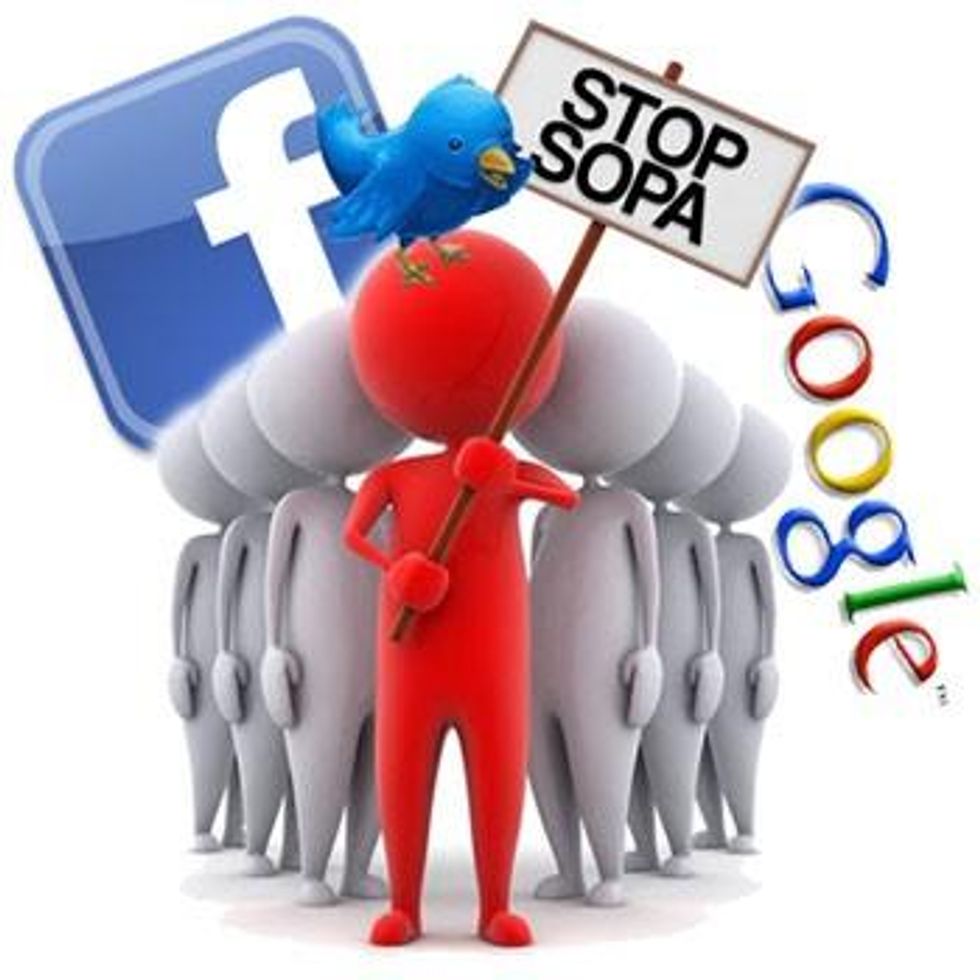
That new generation is now responsible for the extraordinary victory achieved on January 18. After months of rallying activists of all stripes, including liberals and conservatives, technology companies and free software activists, the protest against SOPA and PIPA achieved critical mass. With the support of the traditionally non-activist Wikipedia, the Internet community staged a powerful and effective shut down of critical parts of the web, awakening millions to the fight that had been brewing for almost a year. That fight didn't try to affirm any "right" to "pirate" anyone's work. Instead, the anger in this battle was about the extremism of Hollywood's response. It was fair and true to say that this statute would effect a kind of "censorship" unknown in the history of the Internet (at least in the US). That fact was a critical motivation to fight it.
And so to the surprise of many--not the least the lobbyists in DC and their clients in Hollywood--the activists succeeded. For the first time ever, the Internet had taken on Hollywood extremists and won. And not just in a close fight: The power demonstrated by Internet activists was wildly greater than the power Hollywood lobbyists could muster. They had awoken a giant. They had no clue about just how angry that giant could be.
The real question now, however, is whether this community recognizes the potential it has. Ours is not a Congress that has made just one mistake--almost passing SOPA/PIPA. Ours is a Congress that makes a string of mistakes. Those mistakes all come from a common source: the ability of lobbyists to leverage their power over campaign funds to achieve legislative results that make no public-good sense.
The (Internet) giant has stopped this craziness--here and now. But the challenge is for the giant to recognize the need to stop this craziness generally. We need a system that is not so easily captured by crony capitalists. We need a government that is not so easily bought. And if only the giant could be brought to demand this too, in the few moments we have before it falls back to sleep, then this war--this "copyright war," this war that Jack Valenti used to call his own "terrorist war," where apparently the "terrorists" are our children--will have been worth every bit of the battle.
I admit, today this hope seems like a pretty far-fetched dream. But I can assure you that a decade ago, the idea that millions would have rallied to stop Hollywood from pushing an "anti-piracy" bill through Congress was also little more than a dream.
January 18, 2012 could prove to be an incredibly important day, and not just for copyright policy or the Internet. On that day, two critically important things happened: First, with its 6-2 decision in Golan v. Holder, the Supreme Court shut the door, finally and firmly, on any opportunity to meaningfully challenge a copyright statute constitutionally. Second, millions from the Internet opened the door, powerfully if briefly, on the powers that dominatepolicymaking in Washington, and effectively stopped Hollywood's latest outrage to address "piracy"--aka, the Stop Online Piracy Act (SOPA), and the Protect IP Act (PIPA).
The constitutional battle began over a decade ago. Conservatives on the Supreme Court had long rumbled about the need to respect the "original intent" of the "framers" of our Constitution by enforcing the affirmative limits of the Constitution. In 1995, a 5-4 Court decision shocked conventional wisdom by striking a law regulating commerce because, as the Court found, it exceeded those original limits. Three years later, the Court did the same, this time with a law regulating violence against women. The Court seemed eager to read the Constitution the way the framers wrote it, regardless of how the current Congress read it.
So beginning in 1999, copyright activists started to ask the Court to apply the same reasoning to copyright law. (Disclosure: I was one of those activists). In a challenge to the Sonny Bono Copyright Term Extension Act--a statute that extended the terms of existing copyrights by twenty years--the plaintiffs argued that the authors of the Copyright Clause, which expressly limited Congress's power to grant copyright terms for "limited times" only, would never have sanctioned Congress's current practice of extending terms again and again. The framers gave us a copyright term of fourteen years, renewable once. The current Hollywood-financed Congress has given us the term of life of the author plus seventy years.
The Court disagreed with activists, though the conservatives never explained why. The opinion in Eldred v. Ashcroft, however, contained an intriguing suggestion: While the Court refused to apply the method that had struck down the laws regulating commerce, it hinted that laws that violated the "traditional contours of copyright" might be subject to a more penetrating review.
That was the predicate for Golan v Holder, the case decided on January 18. In the 1990s, Congress began a practice of "restoring" copyright to works in the public domain. In Golan v. Holder the plaintiffs challenged that restoration as outside the "traditional contours of copyright protection." The 10th Circuit agreed and held that such statutes had to be tested under the First Amendment. The Supreme Court, however, reversed that finding, crafting an opinion that all but guarantees Congress a constitutional "free ride" within the copyright field. Only two justices dissented--Justice Breyer, who had dissented in Eldred, and Justice Alito, to his credit as a conservative originalist. The rest were happy to signal to the copyright bar: Constitution time is over. Pay no attention to that puzzling clause at the core of the Constitution's enumerated powers. The hint that it would be as vigorously defended as other clauses was now officially rejected. We had tried. And we had lost.
But the real significance in these cases, however, was outside the Court. For as these cases were litigated, they helped fuel a growing and broad-based movement that is extremely skeptical of what is viewed as copyright extremism. Students camped outside the Supreme Court to get seats to hear the argument in Eldred. Outrage about that decision only fueled the recognition that copyright law had gone too far. It helped build the activist organizations that would fight copyright extremism--from the Electronic Frontier Foundation to Public Knowledge--and it will be a constant source of education for a new generation just coming into the field.
That new generation is now responsible for the extraordinary victory achieved on January 18. After months of rallying activists of all stripes, including liberals and conservatives, technology companies and free software activists, the protest against SOPA and PIPA achieved critical mass. With the support of the traditionally non-activist Wikipedia, the Internet community staged a powerful and effective shut down of critical parts of the web, awakening millions to the fight that had been brewing for almost a year. That fight didn't try to affirm any "right" to "pirate" anyone's work. Instead, the anger in this battle was about the extremism of Hollywood's response. It was fair and true to say that this statute would effect a kind of "censorship" unknown in the history of the Internet (at least in the US). That fact was a critical motivation to fight it.
And so to the surprise of many--not the least the lobbyists in DC and their clients in Hollywood--the activists succeeded. For the first time ever, the Internet had taken on Hollywood extremists and won. And not just in a close fight: The power demonstrated by Internet activists was wildly greater than the power Hollywood lobbyists could muster. They had awoken a giant. They had no clue about just how angry that giant could be.
The real question now, however, is whether this community recognizes the potential it has. Ours is not a Congress that has made just one mistake--almost passing SOPA/PIPA. Ours is a Congress that makes a string of mistakes. Those mistakes all come from a common source: the ability of lobbyists to leverage their power over campaign funds to achieve legislative results that make no public-good sense.
The (Internet) giant has stopped this craziness--here and now. But the challenge is for the giant to recognize the need to stop this craziness generally. We need a system that is not so easily captured by crony capitalists. We need a government that is not so easily bought. And if only the giant could be brought to demand this too, in the few moments we have before it falls back to sleep, then this war--this "copyright war," this war that Jack Valenti used to call his own "terrorist war," where apparently the "terrorists" are our children--will have been worth every bit of the battle.
I admit, today this hope seems like a pretty far-fetched dream. But I can assure you that a decade ago, the idea that millions would have rallied to stop Hollywood from pushing an "anti-piracy" bill through Congress was also little more than a dream.
January 18, 2012 could prove to be an incredibly important day, and not just for copyright policy or the Internet. On that day, two critically important things happened: First, with its 6-2 decision in Golan v. Holder, the Supreme Court shut the door, finally and firmly, on any opportunity to meaningfully challenge a copyright statute constitutionally. Second, millions from the Internet opened the door, powerfully if briefly, on the powers that dominatepolicymaking in Washington, and effectively stopped Hollywood's latest outrage to address "piracy"--aka, the Stop Online Piracy Act (SOPA), and the Protect IP Act (PIPA).
The constitutional battle began over a decade ago. Conservatives on the Supreme Court had long rumbled about the need to respect the "original intent" of the "framers" of our Constitution by enforcing the affirmative limits of the Constitution. In 1995, a 5-4 Court decision shocked conventional wisdom by striking a law regulating commerce because, as the Court found, it exceeded those original limits. Three years later, the Court did the same, this time with a law regulating violence against women. The Court seemed eager to read the Constitution the way the framers wrote it, regardless of how the current Congress read it.
So beginning in 1999, copyright activists started to ask the Court to apply the same reasoning to copyright law. (Disclosure: I was one of those activists). In a challenge to the Sonny Bono Copyright Term Extension Act--a statute that extended the terms of existing copyrights by twenty years--the plaintiffs argued that the authors of the Copyright Clause, which expressly limited Congress's power to grant copyright terms for "limited times" only, would never have sanctioned Congress's current practice of extending terms again and again. The framers gave us a copyright term of fourteen years, renewable once. The current Hollywood-financed Congress has given us the term of life of the author plus seventy years.
The Court disagreed with activists, though the conservatives never explained why. The opinion in Eldred v. Ashcroft, however, contained an intriguing suggestion: While the Court refused to apply the method that had struck down the laws regulating commerce, it hinted that laws that violated the "traditional contours of copyright" might be subject to a more penetrating review.
That was the predicate for Golan v Holder, the case decided on January 18. In the 1990s, Congress began a practice of "restoring" copyright to works in the public domain. In Golan v. Holder the plaintiffs challenged that restoration as outside the "traditional contours of copyright protection." The 10th Circuit agreed and held that such statutes had to be tested under the First Amendment. The Supreme Court, however, reversed that finding, crafting an opinion that all but guarantees Congress a constitutional "free ride" within the copyright field. Only two justices dissented--Justice Breyer, who had dissented in Eldred, and Justice Alito, to his credit as a conservative originalist. The rest were happy to signal to the copyright bar: Constitution time is over. Pay no attention to that puzzling clause at the core of the Constitution's enumerated powers. The hint that it would be as vigorously defended as other clauses was now officially rejected. We had tried. And we had lost.
But the real significance in these cases, however, was outside the Court. For as these cases were litigated, they helped fuel a growing and broad-based movement that is extremely skeptical of what is viewed as copyright extremism. Students camped outside the Supreme Court to get seats to hear the argument in Eldred. Outrage about that decision only fueled the recognition that copyright law had gone too far. It helped build the activist organizations that would fight copyright extremism--from the Electronic Frontier Foundation to Public Knowledge--and it will be a constant source of education for a new generation just coming into the field.
That new generation is now responsible for the extraordinary victory achieved on January 18. After months of rallying activists of all stripes, including liberals and conservatives, technology companies and free software activists, the protest against SOPA and PIPA achieved critical mass. With the support of the traditionally non-activist Wikipedia, the Internet community staged a powerful and effective shut down of critical parts of the web, awakening millions to the fight that had been brewing for almost a year. That fight didn't try to affirm any "right" to "pirate" anyone's work. Instead, the anger in this battle was about the extremism of Hollywood's response. It was fair and true to say that this statute would effect a kind of "censorship" unknown in the history of the Internet (at least in the US). That fact was a critical motivation to fight it.
And so to the surprise of many--not the least the lobbyists in DC and their clients in Hollywood--the activists succeeded. For the first time ever, the Internet had taken on Hollywood extremists and won. And not just in a close fight: The power demonstrated by Internet activists was wildly greater than the power Hollywood lobbyists could muster. They had awoken a giant. They had no clue about just how angry that giant could be.
The real question now, however, is whether this community recognizes the potential it has. Ours is not a Congress that has made just one mistake--almost passing SOPA/PIPA. Ours is a Congress that makes a string of mistakes. Those mistakes all come from a common source: the ability of lobbyists to leverage their power over campaign funds to achieve legislative results that make no public-good sense.
The (Internet) giant has stopped this craziness--here and now. But the challenge is for the giant to recognize the need to stop this craziness generally. We need a system that is not so easily captured by crony capitalists. We need a government that is not so easily bought. And if only the giant could be brought to demand this too, in the few moments we have before it falls back to sleep, then this war--this "copyright war," this war that Jack Valenti used to call his own "terrorist war," where apparently the "terrorists" are our children--will have been worth every bit of the battle.
I admit, today this hope seems like a pretty far-fetched dream. But I can assure you that a decade ago, the idea that millions would have rallied to stop Hollywood from pushing an "anti-piracy" bill through Congress was also little more than a dream.

