

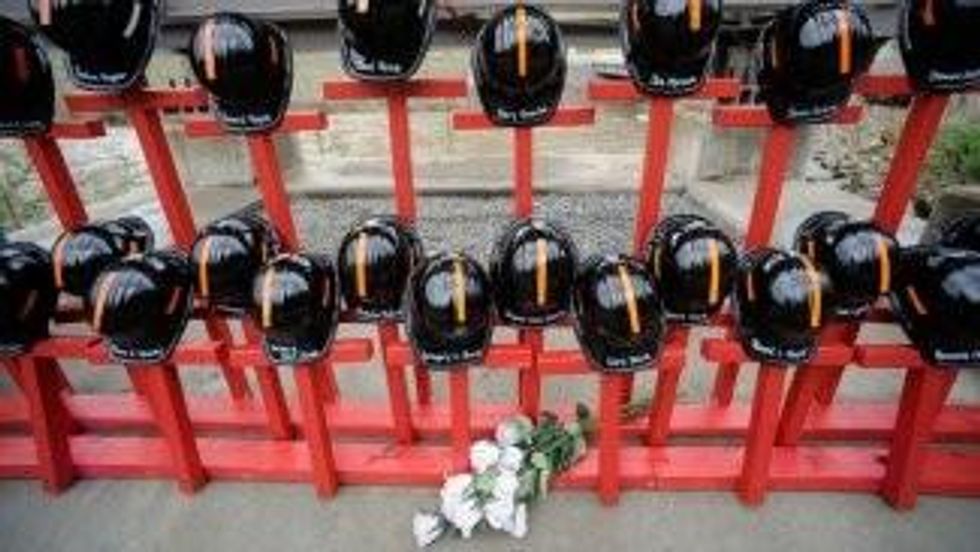
Early on April 5, 2010, in the heart of West Virginia country, a huge explosion killed 29 workers at 's Upper Big Branch Mine. Later that day, President Obama directed Labor Secretary Hilda L. Solis to conduct "the most thorough and comprehensive investigation possible" and to work with the Justice Department to investigate any criminal violations.
On Tuesday, the Labor Department issued a 972-page report on the calamity -- the nation's worst mining disaster in 40 years. It concluded that Massey's "unlawful policies and practices" were the "root cause of this tragedy." It identified over 300 violations of the Mine Safety and Health Act, including nine flagrant violations that contributed to the explosion.
The scathing findings probably came as no surprise in West Virginia, where Massey had a well-earned reputation for putting miners at risk, breaking unions and polluting the environment.
However, what jumped off the pages for me, as a former federal prosecutor, was the revelation that Massey had kept two sets of books at the mine: one for internal use, which recorded hazards, and a second for Mine Safety and Health Administration inspectors, which did not. In addition, Massey routinely gave its facilities advance notice of inspections, which is a crime under federal law, and intimidated its workers so that they would not report safety and health violations.
Based on the Labor Department's investigation, the Justice Department could have criminally prosecuted Massey under the Mine Safety and Health Act for the violations that caused the explosion. Prosecutors also could have charged the company with conspiracy and obstruction of justice for the ways it thwarted regulation.
Instead, on the same day the devastating report was released, the Justice Department announced that it would not criminally prosecute Massey. The news release issued by the United States attorney misleadingly described its nonprosecution agreement with Massey's new owners as "the largest ever criminal resolution in a mining investigation."
Let's be clear: this is not a criminal resolution. Massey will not be charged with any crimes and will not plead guilty before a federal judge. Nor will there be a sentencing hearing where Massey apologizes to the families of the victims and is punished for its crimes.
The deal with Massey continues a disturbing trend whereby corporations can avoid criminal prosecution by entering deferred prosecution or nonprosecution agreements. Often the terms of these agreements are no better than what could have been achieved in a criminal case; worse, they create the appearance that justice can be bought.
Moreover, there is less to this settlement than meets the eye. The $209 million settlement requires payment of $35 million in previously assessed administrative penalties, but that sum includes just $10.8 million for the Upper Big Branch Mine tragedy. The remaining $174 million is likely to be tax deductible, including $80 million for investments in safety and infrastructure at Massey mines and an additional $48 million to establish a mine health and safety trust fund.
Even the most laudable aspect of the deal -- the agreement to pay $46.5 million in restitution to the families of the victims -- is illusory. Massey already had agreed to pay $16.5 million to settle lawsuits brought by the families. The remaining $30 million will be paid into a fund for future settlements, which effectively caps the amount the families can recover. And, to add insult to injury, the Justice Department agreed that Massey would admit no wrongdoing.
So why did the Justice Department respond so timidly?
Perhaps it felt hamstrung by the weakness of the criminal provisions of the Mine Safety and Health Act, which are misdemeanors and cover only willful violations of health and safety standards. It is long past time for Congress to update our mine safety laws so that violations can be prosecuted as felonies, particularly in cases where miners are killed.
Maybe the Justice Department wanted to reward the new owners, who appear to have made a greater commitment to safety. It may also have felt it would be enough to criminally prosecute Massey officials, which it can and should do if there is sufficient evidence.
We should not underestimate, however, the difficulty of prosecuting high-ranking officials in large corporations. This case may be an exception, but senior corporate officers rarely have sufficient personal involvement to be charged with crimes. To reach the boardroom, where policies are formed that can lead to tragedy, we must be willing to hold corporations criminally responsible.
During my 17 years at the Justice Department, we prosecuted corporations criminally in hundreds of cases that, while serious, did not involve the tragic loss of life at the Upper Big Branch Mine. The Justice Department did not live up to its name in agreeing not to prosecute Massey for its crimes. We can only hope that when it comes to the other unfathomable disaster that took place in April 2010, the BP in the Gulf of Mexico, justice will be better served.
Early on April 5, 2010, in the heart of West Virginia country, a huge explosion killed 29 workers at 's Upper Big Branch Mine. Later that day, President Obama directed Labor Secretary Hilda L. Solis to conduct "the most thorough and comprehensive investigation possible" and to work with the Justice Department to investigate any criminal violations.
On Tuesday, the Labor Department issued a 972-page report on the calamity -- the nation's worst mining disaster in 40 years. It concluded that Massey's "unlawful policies and practices" were the "root cause of this tragedy." It identified over 300 violations of the Mine Safety and Health Act, including nine flagrant violations that contributed to the explosion.
The scathing findings probably came as no surprise in West Virginia, where Massey had a well-earned reputation for putting miners at risk, breaking unions and polluting the environment.
However, what jumped off the pages for me, as a former federal prosecutor, was the revelation that Massey had kept two sets of books at the mine: one for internal use, which recorded hazards, and a second for Mine Safety and Health Administration inspectors, which did not. In addition, Massey routinely gave its facilities advance notice of inspections, which is a crime under federal law, and intimidated its workers so that they would not report safety and health violations.
Based on the Labor Department's investigation, the Justice Department could have criminally prosecuted Massey under the Mine Safety and Health Act for the violations that caused the explosion. Prosecutors also could have charged the company with conspiracy and obstruction of justice for the ways it thwarted regulation.
Instead, on the same day the devastating report was released, the Justice Department announced that it would not criminally prosecute Massey. The news release issued by the United States attorney misleadingly described its nonprosecution agreement with Massey's new owners as "the largest ever criminal resolution in a mining investigation."
Let's be clear: this is not a criminal resolution. Massey will not be charged with any crimes and will not plead guilty before a federal judge. Nor will there be a sentencing hearing where Massey apologizes to the families of the victims and is punished for its crimes.
The deal with Massey continues a disturbing trend whereby corporations can avoid criminal prosecution by entering deferred prosecution or nonprosecution agreements. Often the terms of these agreements are no better than what could have been achieved in a criminal case; worse, they create the appearance that justice can be bought.
Moreover, there is less to this settlement than meets the eye. The $209 million settlement requires payment of $35 million in previously assessed administrative penalties, but that sum includes just $10.8 million for the Upper Big Branch Mine tragedy. The remaining $174 million is likely to be tax deductible, including $80 million for investments in safety and infrastructure at Massey mines and an additional $48 million to establish a mine health and safety trust fund.
Even the most laudable aspect of the deal -- the agreement to pay $46.5 million in restitution to the families of the victims -- is illusory. Massey already had agreed to pay $16.5 million to settle lawsuits brought by the families. The remaining $30 million will be paid into a fund for future settlements, which effectively caps the amount the families can recover. And, to add insult to injury, the Justice Department agreed that Massey would admit no wrongdoing.
So why did the Justice Department respond so timidly?
Perhaps it felt hamstrung by the weakness of the criminal provisions of the Mine Safety and Health Act, which are misdemeanors and cover only willful violations of health and safety standards. It is long past time for Congress to update our mine safety laws so that violations can be prosecuted as felonies, particularly in cases where miners are killed.
Maybe the Justice Department wanted to reward the new owners, who appear to have made a greater commitment to safety. It may also have felt it would be enough to criminally prosecute Massey officials, which it can and should do if there is sufficient evidence.
We should not underestimate, however, the difficulty of prosecuting high-ranking officials in large corporations. This case may be an exception, but senior corporate officers rarely have sufficient personal involvement to be charged with crimes. To reach the boardroom, where policies are formed that can lead to tragedy, we must be willing to hold corporations criminally responsible.
During my 17 years at the Justice Department, we prosecuted corporations criminally in hundreds of cases that, while serious, did not involve the tragic loss of life at the Upper Big Branch Mine. The Justice Department did not live up to its name in agreeing not to prosecute Massey for its crimes. We can only hope that when it comes to the other unfathomable disaster that took place in April 2010, the BP in the Gulf of Mexico, justice will be better served.
Early on April 5, 2010, in the heart of West Virginia country, a huge explosion killed 29 workers at 's Upper Big Branch Mine. Later that day, President Obama directed Labor Secretary Hilda L. Solis to conduct "the most thorough and comprehensive investigation possible" and to work with the Justice Department to investigate any criminal violations.
On Tuesday, the Labor Department issued a 972-page report on the calamity -- the nation's worst mining disaster in 40 years. It concluded that Massey's "unlawful policies and practices" were the "root cause of this tragedy." It identified over 300 violations of the Mine Safety and Health Act, including nine flagrant violations that contributed to the explosion.
The scathing findings probably came as no surprise in West Virginia, where Massey had a well-earned reputation for putting miners at risk, breaking unions and polluting the environment.
However, what jumped off the pages for me, as a former federal prosecutor, was the revelation that Massey had kept two sets of books at the mine: one for internal use, which recorded hazards, and a second for Mine Safety and Health Administration inspectors, which did not. In addition, Massey routinely gave its facilities advance notice of inspections, which is a crime under federal law, and intimidated its workers so that they would not report safety and health violations.
Based on the Labor Department's investigation, the Justice Department could have criminally prosecuted Massey under the Mine Safety and Health Act for the violations that caused the explosion. Prosecutors also could have charged the company with conspiracy and obstruction of justice for the ways it thwarted regulation.
Instead, on the same day the devastating report was released, the Justice Department announced that it would not criminally prosecute Massey. The news release issued by the United States attorney misleadingly described its nonprosecution agreement with Massey's new owners as "the largest ever criminal resolution in a mining investigation."
Let's be clear: this is not a criminal resolution. Massey will not be charged with any crimes and will not plead guilty before a federal judge. Nor will there be a sentencing hearing where Massey apologizes to the families of the victims and is punished for its crimes.
The deal with Massey continues a disturbing trend whereby corporations can avoid criminal prosecution by entering deferred prosecution or nonprosecution agreements. Often the terms of these agreements are no better than what could have been achieved in a criminal case; worse, they create the appearance that justice can be bought.
Moreover, there is less to this settlement than meets the eye. The $209 million settlement requires payment of $35 million in previously assessed administrative penalties, but that sum includes just $10.8 million for the Upper Big Branch Mine tragedy. The remaining $174 million is likely to be tax deductible, including $80 million for investments in safety and infrastructure at Massey mines and an additional $48 million to establish a mine health and safety trust fund.
Even the most laudable aspect of the deal -- the agreement to pay $46.5 million in restitution to the families of the victims -- is illusory. Massey already had agreed to pay $16.5 million to settle lawsuits brought by the families. The remaining $30 million will be paid into a fund for future settlements, which effectively caps the amount the families can recover. And, to add insult to injury, the Justice Department agreed that Massey would admit no wrongdoing.
So why did the Justice Department respond so timidly?
Perhaps it felt hamstrung by the weakness of the criminal provisions of the Mine Safety and Health Act, which are misdemeanors and cover only willful violations of health and safety standards. It is long past time for Congress to update our mine safety laws so that violations can be prosecuted as felonies, particularly in cases where miners are killed.
Maybe the Justice Department wanted to reward the new owners, who appear to have made a greater commitment to safety. It may also have felt it would be enough to criminally prosecute Massey officials, which it can and should do if there is sufficient evidence.
We should not underestimate, however, the difficulty of prosecuting high-ranking officials in large corporations. This case may be an exception, but senior corporate officers rarely have sufficient personal involvement to be charged with crimes. To reach the boardroom, where policies are formed that can lead to tragedy, we must be willing to hold corporations criminally responsible.
During my 17 years at the Justice Department, we prosecuted corporations criminally in hundreds of cases that, while serious, did not involve the tragic loss of life at the Upper Big Branch Mine. The Justice Department did not live up to its name in agreeing not to prosecute Massey for its crimes. We can only hope that when it comes to the other unfathomable disaster that took place in April 2010, the BP in the Gulf of Mexico, justice will be better served.