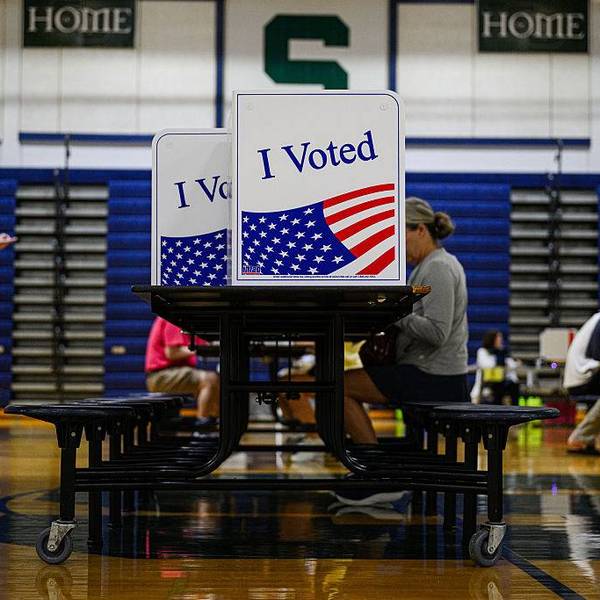
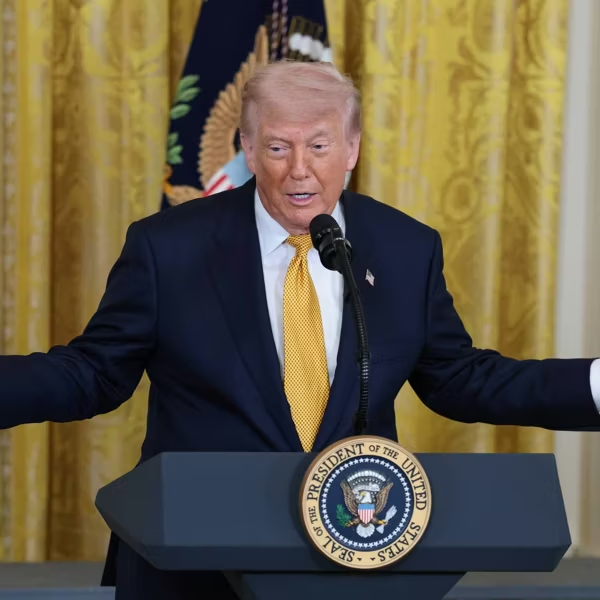
On Feb. 4, 2011 a joint declaration on border security perimeter was announced by Prime Minister Harper and President Obama. No debate took place in the House of Commons. There has been no public debate. So far, border security is not an election issue.
Yet the declaration on border security demands broader engagement. Not only will it reshape Canada-U.S. relations, but it will formalize Canada's deepening securitization.
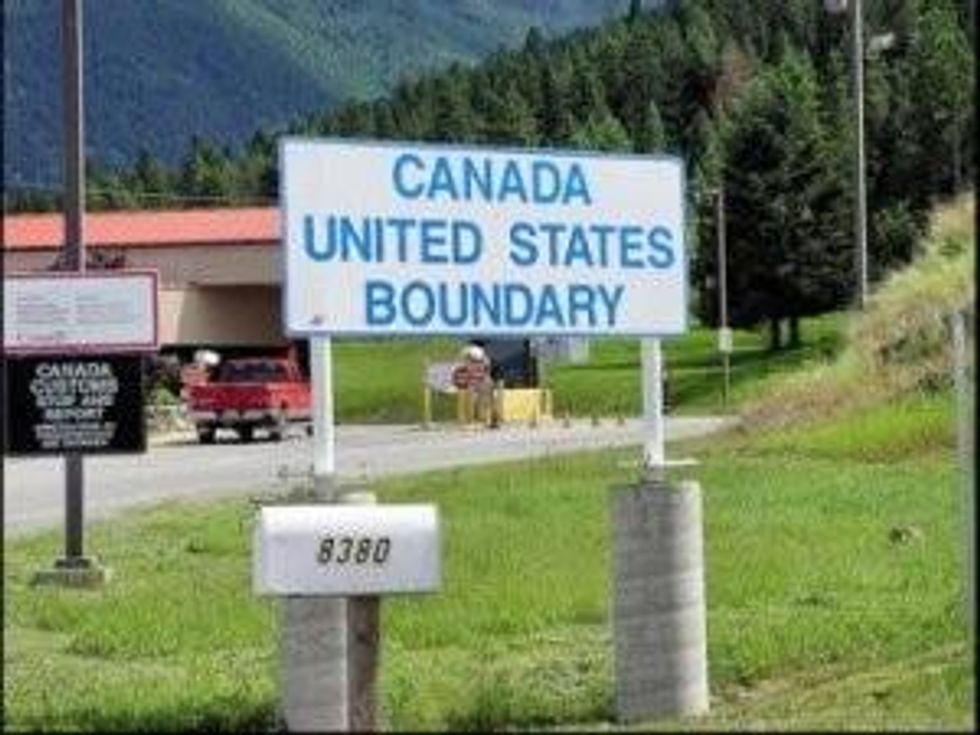
Already, numerous agreements have been signed between the U.S. and Canada that develop information-sharing and interoperability. The Canada-U.S. Smart Border Declaration of Dec. 2001 gave an official mandate to Integrated Border Enforcement Teams (IBET). IBETs provide coordinated security between U.S. and Canadian agencies: the RCMP, the Canadian Border Services Agency, the U.S. Coast Guard, U.S. Customs and Border Protection and U.S. Customs and Immigration Enforcement.
The Civil Assistance Plan of 2008 allows the military of one country to respond to a cross-border domestic civil emergency, at the request of the other country. The Shiprider Agreement of 2009 enables jointly-crewed RCMP and Coast Guard vessels to patrol shared waterways and seaways, with cross-border jurisdiction. Canada has even proposed Bill C-60: Keeping Canadians Safe (Protecting Borders) Act, which would bestow authority similar to the RCMP to all designated foreign officers, all across the
country.
We have ample evidence of the pernicious effects where there is interoperability of across police, military and private security forces. The brutal use of force against peaceful protesters at the G20 is a case in point.
When this interoperability crosses borders more questions are raised regarding legal jurisdiction, authority, accountability and transparency. Who is in charge? Who gets access? What if something goes wrong? When do the joint operations begin? Who decides when, and how, they end?
Interoperability also encourages a militarized approach to border crimes such as drug smuggling, contraband and the undocumented movement of people. Already, unmanned drones are patrolling the Canada-U.S. border. Since 9/11, five land and marine military based have been established close to the Canada-U.S. border as part of the U.S. Northern Border Air Wing. Unless immigration and criminal legislation is harmonized across the two countries, these initiatives will not disappear with a Canada-U.S. security perimeter.
Border controls will become more insidious as they are extended away from the border. Advanced passenger information will continue to be used to preemptively target foreign nationals who are deemed a potential risk. Biometrics such as fingerprinting and iris scans will be required to track the entry and exit of all visitors, regardless of privacy concerns regarding information-sharing. At the same time, pre-clearance programs such as NEXUS and CANPASS will be expanded to ensure the expedited movement of professional travellers.
In the U.S., foreign nationals are cast as potential security threats. Canada is moving in this direction, but has so far avoided some of the most vicious anti-immigration measures to the south, such as Arizona's new immigration legislation that targets and prosecutes undocumented migrants. The increased immigration harmonization of a security perimeter, however, will ensure a penal and punitive approach to migrants in Canada as well.
A security perimeter will thus be used to further differentiate between nationals and non-nationals, between privileged travellers and those deemed to be risky. The promise of a security perimeter is greater security. But a border security perimeter will create greater insecurities among targeted members of the population.
We have already seen a wholesale shift from social security to a security state under the tough-on-crime Harper government. Paula Mallea notes in a report for the Canadian Centre for Policy Alternatives, that one-third of the House of Commons government bills relate to crime. This includes building more prisons, even through statistics indicate that crime is on the decrease. Bill Robinson reports that there has also been an almost 50 per cent increase in Department of Defence spending under a Harper government. This includes new military investments, from the escalating costs of the controversial F-35 fighter jets, to military operations in Canada's North, to the high costs of event security, such as the G20 and the Vancouver Olympics. Even the costs for the RCMP who protect the prime minister and his family has skyrocketed to $47 million.
Fear mongering should not be used to undermine human rights. But this is precisely what a discourse of fear makes possible. It sidelines the slow process of deliberative democracy in the name of expediency and secrecy. It places limits on freedom of speech, criminalizes dissent, and targets unidentified and vague enemies. It directs public investment into security initiatives at the expense of social, economic and environmental programs. It makes possible the adoption of policies that might not otherwise gain public support.
It is time for the security perimeter and the increasing securitization of our country to be on the election agenda.
On Feb. 4, 2011 a joint declaration on border security perimeter was announced by Prime Minister Harper and President Obama. No debate took place in the House of Commons. There has been no public debate. So far, border security is not an election issue.
Yet the declaration on border security demands broader engagement. Not only will it reshape Canada-U.S. relations, but it will formalize Canada's deepening securitization.
Already, numerous agreements have been signed between the U.S. and Canada that develop information-sharing and interoperability. The Canada-U.S. Smart Border Declaration of Dec. 2001 gave an official mandate to Integrated Border Enforcement Teams (IBET). IBETs provide coordinated security between U.S. and Canadian agencies: the RCMP, the Canadian Border Services Agency, the U.S. Coast Guard, U.S. Customs and Border Protection and U.S. Customs and Immigration Enforcement.
The Civil Assistance Plan of 2008 allows the military of one country to respond to a cross-border domestic civil emergency, at the request of the other country. The Shiprider Agreement of 2009 enables jointly-crewed RCMP and Coast Guard vessels to patrol shared waterways and seaways, with cross-border jurisdiction. Canada has even proposed Bill C-60: Keeping Canadians Safe (Protecting Borders) Act, which would bestow authority similar to the RCMP to all designated foreign officers, all across the
country.
We have ample evidence of the pernicious effects where there is interoperability of across police, military and private security forces. The brutal use of force against peaceful protesters at the G20 is a case in point.
When this interoperability crosses borders more questions are raised regarding legal jurisdiction, authority, accountability and transparency. Who is in charge? Who gets access? What if something goes wrong? When do the joint operations begin? Who decides when, and how, they end?
Interoperability also encourages a militarized approach to border crimes such as drug smuggling, contraband and the undocumented movement of people. Already, unmanned drones are patrolling the Canada-U.S. border. Since 9/11, five land and marine military based have been established close to the Canada-U.S. border as part of the U.S. Northern Border Air Wing. Unless immigration and criminal legislation is harmonized across the two countries, these initiatives will not disappear with a Canada-U.S. security perimeter.
Border controls will become more insidious as they are extended away from the border. Advanced passenger information will continue to be used to preemptively target foreign nationals who are deemed a potential risk. Biometrics such as fingerprinting and iris scans will be required to track the entry and exit of all visitors, regardless of privacy concerns regarding information-sharing. At the same time, pre-clearance programs such as NEXUS and CANPASS will be expanded to ensure the expedited movement of professional travellers.
In the U.S., foreign nationals are cast as potential security threats. Canada is moving in this direction, but has so far avoided some of the most vicious anti-immigration measures to the south, such as Arizona's new immigration legislation that targets and prosecutes undocumented migrants. The increased immigration harmonization of a security perimeter, however, will ensure a penal and punitive approach to migrants in Canada as well.
A security perimeter will thus be used to further differentiate between nationals and non-nationals, between privileged travellers and those deemed to be risky. The promise of a security perimeter is greater security. But a border security perimeter will create greater insecurities among targeted members of the population.
We have already seen a wholesale shift from social security to a security state under the tough-on-crime Harper government. Paula Mallea notes in a report for the Canadian Centre for Policy Alternatives, that one-third of the House of Commons government bills relate to crime. This includes building more prisons, even through statistics indicate that crime is on the decrease. Bill Robinson reports that there has also been an almost 50 per cent increase in Department of Defence spending under a Harper government. This includes new military investments, from the escalating costs of the controversial F-35 fighter jets, to military operations in Canada's North, to the high costs of event security, such as the G20 and the Vancouver Olympics. Even the costs for the RCMP who protect the prime minister and his family has skyrocketed to $47 million.
Fear mongering should not be used to undermine human rights. But this is precisely what a discourse of fear makes possible. It sidelines the slow process of deliberative democracy in the name of expediency and secrecy. It places limits on freedom of speech, criminalizes dissent, and targets unidentified and vague enemies. It directs public investment into security initiatives at the expense of social, economic and environmental programs. It makes possible the adoption of policies that might not otherwise gain public support.
It is time for the security perimeter and the increasing securitization of our country to be on the election agenda.
On Feb. 4, 2011 a joint declaration on border security perimeter was announced by Prime Minister Harper and President Obama. No debate took place in the House of Commons. There has been no public debate. So far, border security is not an election issue.
Yet the declaration on border security demands broader engagement. Not only will it reshape Canada-U.S. relations, but it will formalize Canada's deepening securitization.
Already, numerous agreements have been signed between the U.S. and Canada that develop information-sharing and interoperability. The Canada-U.S. Smart Border Declaration of Dec. 2001 gave an official mandate to Integrated Border Enforcement Teams (IBET). IBETs provide coordinated security between U.S. and Canadian agencies: the RCMP, the Canadian Border Services Agency, the U.S. Coast Guard, U.S. Customs and Border Protection and U.S. Customs and Immigration Enforcement.
The Civil Assistance Plan of 2008 allows the military of one country to respond to a cross-border domestic civil emergency, at the request of the other country. The Shiprider Agreement of 2009 enables jointly-crewed RCMP and Coast Guard vessels to patrol shared waterways and seaways, with cross-border jurisdiction. Canada has even proposed Bill C-60: Keeping Canadians Safe (Protecting Borders) Act, which would bestow authority similar to the RCMP to all designated foreign officers, all across the
country.
We have ample evidence of the pernicious effects where there is interoperability of across police, military and private security forces. The brutal use of force against peaceful protesters at the G20 is a case in point.
When this interoperability crosses borders more questions are raised regarding legal jurisdiction, authority, accountability and transparency. Who is in charge? Who gets access? What if something goes wrong? When do the joint operations begin? Who decides when, and how, they end?
Interoperability also encourages a militarized approach to border crimes such as drug smuggling, contraband and the undocumented movement of people. Already, unmanned drones are patrolling the Canada-U.S. border. Since 9/11, five land and marine military based have been established close to the Canada-U.S. border as part of the U.S. Northern Border Air Wing. Unless immigration and criminal legislation is harmonized across the two countries, these initiatives will not disappear with a Canada-U.S. security perimeter.
Border controls will become more insidious as they are extended away from the border. Advanced passenger information will continue to be used to preemptively target foreign nationals who are deemed a potential risk. Biometrics such as fingerprinting and iris scans will be required to track the entry and exit of all visitors, regardless of privacy concerns regarding information-sharing. At the same time, pre-clearance programs such as NEXUS and CANPASS will be expanded to ensure the expedited movement of professional travellers.
In the U.S., foreign nationals are cast as potential security threats. Canada is moving in this direction, but has so far avoided some of the most vicious anti-immigration measures to the south, such as Arizona's new immigration legislation that targets and prosecutes undocumented migrants. The increased immigration harmonization of a security perimeter, however, will ensure a penal and punitive approach to migrants in Canada as well.
A security perimeter will thus be used to further differentiate between nationals and non-nationals, between privileged travellers and those deemed to be risky. The promise of a security perimeter is greater security. But a border security perimeter will create greater insecurities among targeted members of the population.
We have already seen a wholesale shift from social security to a security state under the tough-on-crime Harper government. Paula Mallea notes in a report for the Canadian Centre for Policy Alternatives, that one-third of the House of Commons government bills relate to crime. This includes building more prisons, even through statistics indicate that crime is on the decrease. Bill Robinson reports that there has also been an almost 50 per cent increase in Department of Defence spending under a Harper government. This includes new military investments, from the escalating costs of the controversial F-35 fighter jets, to military operations in Canada's North, to the high costs of event security, such as the G20 and the Vancouver Olympics. Even the costs for the RCMP who protect the prime minister and his family has skyrocketed to $47 million.
Fear mongering should not be used to undermine human rights. But this is precisely what a discourse of fear makes possible. It sidelines the slow process of deliberative democracy in the name of expediency and secrecy. It places limits on freedom of speech, criminalizes dissent, and targets unidentified and vague enemies. It directs public investment into security initiatives at the expense of social, economic and environmental programs. It makes possible the adoption of policies that might not otherwise gain public support.
It is time for the security perimeter and the increasing securitization of our country to be on the election agenda.