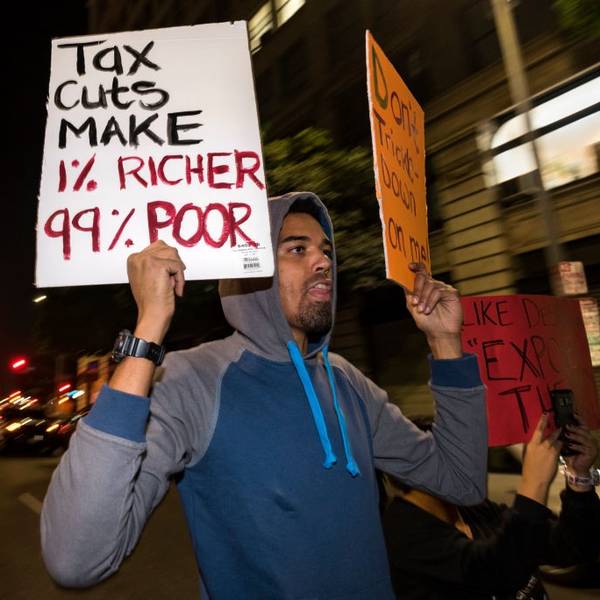

Patriotic Millionaires Explain That Tax Cuts for the Rich Don't Grow the Economy
Congressional Democrats have announced that they will organize votes during the lame-duck session on extending tax cuts for the 98 percent of American taxpayers who are not rich.
Congressional Republicans now face a choice.
Will they vote for tax cuts that just about everyone supports? Or
will they kill the initiative because it does not preserve tax breaks
for the 2 percent of Americans who are rich?
In the real world, that's not a tough call. Mainstream Republicans of
the previous generation would have voted with the Democrats.
Mainstream Republicans of the generation before that would have led the
charge. Remember that during the president of Dwight Eisenhower, a
Republican who frequently worked with a Republican Congress, the
highest marginal tax rate was 91 percent; most Republicans in those
days recognized that they represented Main Street not Wall Street.
It's different now.
There are still a few mainstream Republicans in the House and Senate.
But, for the most part, the new face of the Republican Party is much
richer-44 percent of members of Congress are millionaires-and much more
responsive to the rich.
So it probably won't help to simply suggest to the GOP that they
should side with the 98 percent majority of Americans whose tax cuts
could be preserved.
Fair enough.
Let's bring in some millionaires.
In a letter to President Obama, members of the group Patriotic Millionaires for Fiscal Strength argue that it is time, again, to tax the rich.
"We are writing to urge you to stand firm against those who would put politics ahead of their country. For the fiscal health of our nation and the well-being of our fellow citizens, we ask that you allow tax cuts on incomes over $1,000,000 to expire at the end of this year as scheduled," they write. "We make this request as loyal citizens who now or in the past earned an income of $1,000,000 per year or more.
We have done very well over the last several years. Now, during our
nation's moment of need, we are eager to do our fair share. We don't
need more tax cuts, and we understand that cutting our taxes will
increase the deficit and the debt burden carried by other taxpayers.
The country needs to meet its financial obligations in a just and
responsible way."
"Letting tax cuts for incomes over $1,000,000 expire, is an important
step in that direction," conclude the more than three dozen
millionaire signers of the letter, a group that includes a number of
Google executives, active CEOs and philanthropists such as Ben &
Jerry's co-founder Ben Cohen.
Millionaires know how to work with numbers. And the Patriotic Millionaires are sharing a few numbers with members of Congress who might be interested in making policy based on facts rather than a hunch. For instance:
- Only 375,000 Americans have incomes of over $1,000,000.
- Between 1979 and 2007, incomes for the wealthiest 1 percent of Americans rose by 281 percent.
- In the 1950s and early 1960s, a period when growth was high and
unemployment was low, millionaires had a top marginal tax rate of 91
percent. - In 1976, millionaires had a top marginal tax rate of 70 percent.
- Today, millionaires have a top marginal tax rate of 35 percent.
- Reducing the income tax on top earners is one of the most
inefficient ways to grow the economy, according to the nonpartisan
Congressional Budget Office. - Letting tax cuts for the top 2 percent-which were never meant to be
permanent-expire as scheduled would pay down the federal debt by $700
billion over the next ten years.
Those numbers of worthy of note. Worthy enough to suggest that
congressional Republicans would be well advised to take their cue from
the rich when it comes to tax policy-so long as the rich folks we're
talking about are Patriotic Millionaires.
An Urgent Message From Our Co-Founder
Dear Common Dreams reader, It’s been nearly 30 years since I co-founded Common Dreams with my late wife, Lina Newhouser. We had the radical notion that journalism should serve the public good, not corporate profits. It was clear to us from the outset what it would take to build such a project. No paid advertisements. No corporate sponsors. No millionaire publisher telling us what to think or do. Many people said we wouldn't last a year, but we proved those doubters wrong. Together with a tremendous team of journalists and dedicated staff, we built an independent media outlet free from the constraints of profits and corporate control. Our mission has always been simple: To inform. To inspire. To ignite change for the common good. Building Common Dreams was not easy. Our survival was never guaranteed. When you take on the most powerful forces—Wall Street greed, fossil fuel industry destruction, Big Tech lobbyists, and uber-rich oligarchs who have spent billions upon billions rigging the economy and democracy in their favor—the only bulwark you have is supporters who believe in your work. But here’s the urgent message from me today. It's never been this bad out there. And it's never been this hard to keep us going. At the very moment Common Dreams is most needed, the threats we face are intensifying. We need your support now more than ever. We don't accept corporate advertising and never will. We don't have a paywall because we don't think people should be blocked from critical news based on their ability to pay. Everything we do is funded by the donations of readers like you. When everyone does the little they can afford, we are strong. But if that support retreats or dries up, so do we. Will you donate now to make sure Common Dreams not only survives but thrives? —Craig Brown, Co-founder |
Congressional Democrats have announced that they will organize votes during the lame-duck session on extending tax cuts for the 98 percent of American taxpayers who are not rich.
Congressional Republicans now face a choice.
Will they vote for tax cuts that just about everyone supports? Or
will they kill the initiative because it does not preserve tax breaks
for the 2 percent of Americans who are rich?
In the real world, that's not a tough call. Mainstream Republicans of
the previous generation would have voted with the Democrats.
Mainstream Republicans of the generation before that would have led the
charge. Remember that during the president of Dwight Eisenhower, a
Republican who frequently worked with a Republican Congress, the
highest marginal tax rate was 91 percent; most Republicans in those
days recognized that they represented Main Street not Wall Street.
It's different now.
There are still a few mainstream Republicans in the House and Senate.
But, for the most part, the new face of the Republican Party is much
richer-44 percent of members of Congress are millionaires-and much more
responsive to the rich.
So it probably won't help to simply suggest to the GOP that they
should side with the 98 percent majority of Americans whose tax cuts
could be preserved.
Fair enough.
Let's bring in some millionaires.
In a letter to President Obama, members of the group Patriotic Millionaires for Fiscal Strength argue that it is time, again, to tax the rich.
"We are writing to urge you to stand firm against those who would put politics ahead of their country. For the fiscal health of our nation and the well-being of our fellow citizens, we ask that you allow tax cuts on incomes over $1,000,000 to expire at the end of this year as scheduled," they write. "We make this request as loyal citizens who now or in the past earned an income of $1,000,000 per year or more.
We have done very well over the last several years. Now, during our
nation's moment of need, we are eager to do our fair share. We don't
need more tax cuts, and we understand that cutting our taxes will
increase the deficit and the debt burden carried by other taxpayers.
The country needs to meet its financial obligations in a just and
responsible way."
"Letting tax cuts for incomes over $1,000,000 expire, is an important
step in that direction," conclude the more than three dozen
millionaire signers of the letter, a group that includes a number of
Google executives, active CEOs and philanthropists such as Ben &
Jerry's co-founder Ben Cohen.
Millionaires know how to work with numbers. And the Patriotic Millionaires are sharing a few numbers with members of Congress who might be interested in making policy based on facts rather than a hunch. For instance:
- Only 375,000 Americans have incomes of over $1,000,000.
- Between 1979 and 2007, incomes for the wealthiest 1 percent of Americans rose by 281 percent.
- In the 1950s and early 1960s, a period when growth was high and
unemployment was low, millionaires had a top marginal tax rate of 91
percent. - In 1976, millionaires had a top marginal tax rate of 70 percent.
- Today, millionaires have a top marginal tax rate of 35 percent.
- Reducing the income tax on top earners is one of the most
inefficient ways to grow the economy, according to the nonpartisan
Congressional Budget Office. - Letting tax cuts for the top 2 percent-which were never meant to be
permanent-expire as scheduled would pay down the federal debt by $700
billion over the next ten years.
Those numbers of worthy of note. Worthy enough to suggest that
congressional Republicans would be well advised to take their cue from
the rich when it comes to tax policy-so long as the rich folks we're
talking about are Patriotic Millionaires.
Congressional Democrats have announced that they will organize votes during the lame-duck session on extending tax cuts for the 98 percent of American taxpayers who are not rich.
Congressional Republicans now face a choice.
Will they vote for tax cuts that just about everyone supports? Or
will they kill the initiative because it does not preserve tax breaks
for the 2 percent of Americans who are rich?
In the real world, that's not a tough call. Mainstream Republicans of
the previous generation would have voted with the Democrats.
Mainstream Republicans of the generation before that would have led the
charge. Remember that during the president of Dwight Eisenhower, a
Republican who frequently worked with a Republican Congress, the
highest marginal tax rate was 91 percent; most Republicans in those
days recognized that they represented Main Street not Wall Street.
It's different now.
There are still a few mainstream Republicans in the House and Senate.
But, for the most part, the new face of the Republican Party is much
richer-44 percent of members of Congress are millionaires-and much more
responsive to the rich.
So it probably won't help to simply suggest to the GOP that they
should side with the 98 percent majority of Americans whose tax cuts
could be preserved.
Fair enough.
Let's bring in some millionaires.
In a letter to President Obama, members of the group Patriotic Millionaires for Fiscal Strength argue that it is time, again, to tax the rich.
"We are writing to urge you to stand firm against those who would put politics ahead of their country. For the fiscal health of our nation and the well-being of our fellow citizens, we ask that you allow tax cuts on incomes over $1,000,000 to expire at the end of this year as scheduled," they write. "We make this request as loyal citizens who now or in the past earned an income of $1,000,000 per year or more.
We have done very well over the last several years. Now, during our
nation's moment of need, we are eager to do our fair share. We don't
need more tax cuts, and we understand that cutting our taxes will
increase the deficit and the debt burden carried by other taxpayers.
The country needs to meet its financial obligations in a just and
responsible way."
"Letting tax cuts for incomes over $1,000,000 expire, is an important
step in that direction," conclude the more than three dozen
millionaire signers of the letter, a group that includes a number of
Google executives, active CEOs and philanthropists such as Ben &
Jerry's co-founder Ben Cohen.
Millionaires know how to work with numbers. And the Patriotic Millionaires are sharing a few numbers with members of Congress who might be interested in making policy based on facts rather than a hunch. For instance:
- Only 375,000 Americans have incomes of over $1,000,000.
- Between 1979 and 2007, incomes for the wealthiest 1 percent of Americans rose by 281 percent.
- In the 1950s and early 1960s, a period when growth was high and
unemployment was low, millionaires had a top marginal tax rate of 91
percent. - In 1976, millionaires had a top marginal tax rate of 70 percent.
- Today, millionaires have a top marginal tax rate of 35 percent.
- Reducing the income tax on top earners is one of the most
inefficient ways to grow the economy, according to the nonpartisan
Congressional Budget Office. - Letting tax cuts for the top 2 percent-which were never meant to be
permanent-expire as scheduled would pay down the federal debt by $700
billion over the next ten years.
Those numbers of worthy of note. Worthy enough to suggest that
congressional Republicans would be well advised to take their cue from
the rich when it comes to tax policy-so long as the rich folks we're
talking about are Patriotic Millionaires.