
Why Is Universal Health Care 'Un-American'?
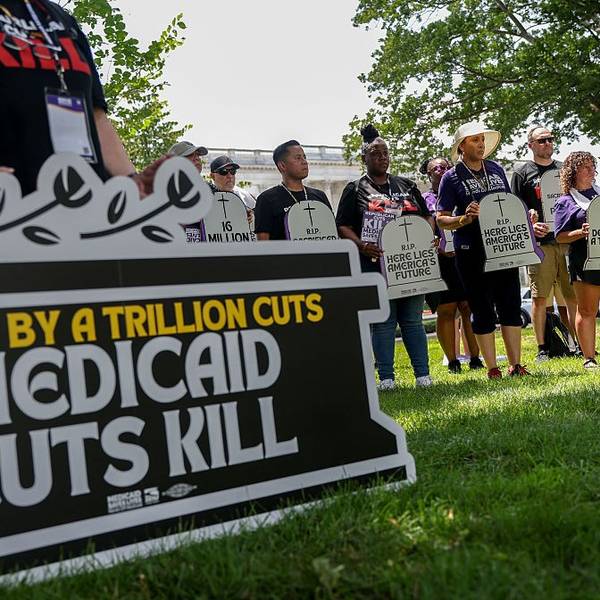
Last week supporters of health-care reform gathered around the country, including in Austin, TX, where 2,000 people crowded into a downtown church to hear speakers talk about different aspects of the issue. Asked to speak about the ethical dimensions of health care, I tried to go beyond short-term political strategizing and ask more basic questions. This is an edited version of what I said.
Is anyone else here having trouble with the fact that we are even having this conversation? Is anyone else having trouble believing this topic is really controversial? I have been asked to talk about the ethical dimension of health care. Here's one way to frame such a discussion:
If an infant is born to poor parents, would we be more ethical to give medicine to that child so he or she does not die prematurely of preventable diseases, or would we be more ethical if we let the child die screaming in his or her parent's arms so we can keep more of our money?
Or, let's say someone who worked for Enron, and now is penniless, contracted bone cancer. I've been asked to discuss whether we are more ethical if we provide such people medicine that lessens their pain. Or would we be more ethical to let them scream through the night in unbearable agony so we can pay lower taxes?
I can't believe I am standing today in a Christian church defending the proposition that we should lessen the suffering of those who cannot afford health care in an economic system that often treats the poor as prey for the rich. I cannot believe there are Christians around this nation who are shouting that message down and waving guns in the air because they don't want to hear it. But I learned along time ago that churches are strange places; charity is fine, but speaking of justice is heresy in many churches. The late Brazilian bishop Dom Helder Camara said it well: "When I give food to the poor, they call me a saint. When I ask why the poor have no food, they call me a Communist." Too often today in the United States, if you talk about helping the poor, they call you Christian, but if you actually try to do something to help the poor, they call you a socialist.
Some of the other speakers today have been asked to address what is possible in the current political climate. I have been asked to speak of our dreams. Let me ask a question. How many of you get really excited about tweaking the insurance system so we just get robbed a little less? (silence) How many of you want universal health care? (sustained applause) I realize that insurance reform is all that's on the table right now, and it can be important to choose the lesser of evils when that alone is within our power in the moment. But we also need to remember our dream. I believe the American dream is not about material success, not about being having the strongest military. The American dream is that every person might have a right to life, liberty and the pursuit of happiness.
It's amazing to hear Christians who talk about the right to life as though it ends at birth. They believe every egg has a right to hatch, but as soon as you're born, it's dog eat dog. We may disagree on when life begins, but if the right to life means anything it means that every person (anyone who has finished the gestation period) has a right to life. And if there is a right to life there must be a right to the necessities of life. Like health care.
I believe the American dream was not about property rights, but human rights. Consider the words of this national hymn:
"O beautiful for patriot's dream that sees beyond the years. Thine alabaster cities gleam, undimmed by human tears."
Doesn't that sound like someone cared about the poor? There are those who consider paying taxes an affront, but listen to these words:
"O Beautiful for heroes proved in liberating strife, who more than self their country loved and mercy more than life."
"Mercy more than life" -- have you ever noticed those words before? Supporting universal health care does not make you socialist or even a liberal, it makes you a human being. And it makes you an ambassador for the American dream which, in the mind of Thomas Paine, was a dream for every human being, not just Americans. As we struggle to get health care to all people, we may have to settle for the lesser of two evils, but remember your dream -- the true American dream, a human dream. Whatever we win through reform is just first step toward a day when every human being has a right to life, liberty and the pursuit of happiness.
An Urgent Message From Our Co-Founder
Dear Common Dreams reader, It’s been nearly 30 years since I co-founded Common Dreams with my late wife, Lina Newhouser. We had the radical notion that journalism should serve the public good, not corporate profits. It was clear to us from the outset what it would take to build such a project. No paid advertisements. No corporate sponsors. No millionaire publisher telling us what to think or do. Many people said we wouldn't last a year, but we proved those doubters wrong. Together with a tremendous team of journalists and dedicated staff, we built an independent media outlet free from the constraints of profits and corporate control. Our mission has always been simple: To inform. To inspire. To ignite change for the common good. Building Common Dreams was not easy. Our survival was never guaranteed. When you take on the most powerful forces—Wall Street greed, fossil fuel industry destruction, Big Tech lobbyists, and uber-rich oligarchs who have spent billions upon billions rigging the economy and democracy in their favor—the only bulwark you have is supporters who believe in your work. But here’s the urgent message from me today. It's never been this bad out there. And it's never been this hard to keep us going. At the very moment Common Dreams is most needed, the threats we face are intensifying. We need your support now more than ever. We don't accept corporate advertising and never will. We don't have a paywall because we don't think people should be blocked from critical news based on their ability to pay. Everything we do is funded by the donations of readers like you. When everyone does the little they can afford, we are strong. But if that support retreats or dries up, so do we. Will you donate now to make sure Common Dreams not only survives but thrives? —Craig Brown, Co-founder |
Last week supporters of health-care reform gathered around the country, including in Austin, TX, where 2,000 people crowded into a downtown church to hear speakers talk about different aspects of the issue. Asked to speak about the ethical dimensions of health care, I tried to go beyond short-term political strategizing and ask more basic questions. This is an edited version of what I said.
Is anyone else here having trouble with the fact that we are even having this conversation? Is anyone else having trouble believing this topic is really controversial? I have been asked to talk about the ethical dimension of health care. Here's one way to frame such a discussion:
If an infant is born to poor parents, would we be more ethical to give medicine to that child so he or she does not die prematurely of preventable diseases, or would we be more ethical if we let the child die screaming in his or her parent's arms so we can keep more of our money?
Or, let's say someone who worked for Enron, and now is penniless, contracted bone cancer. I've been asked to discuss whether we are more ethical if we provide such people medicine that lessens their pain. Or would we be more ethical to let them scream through the night in unbearable agony so we can pay lower taxes?
I can't believe I am standing today in a Christian church defending the proposition that we should lessen the suffering of those who cannot afford health care in an economic system that often treats the poor as prey for the rich. I cannot believe there are Christians around this nation who are shouting that message down and waving guns in the air because they don't want to hear it. But I learned along time ago that churches are strange places; charity is fine, but speaking of justice is heresy in many churches. The late Brazilian bishop Dom Helder Camara said it well: "When I give food to the poor, they call me a saint. When I ask why the poor have no food, they call me a Communist." Too often today in the United States, if you talk about helping the poor, they call you Christian, but if you actually try to do something to help the poor, they call you a socialist.
Some of the other speakers today have been asked to address what is possible in the current political climate. I have been asked to speak of our dreams. Let me ask a question. How many of you get really excited about tweaking the insurance system so we just get robbed a little less? (silence) How many of you want universal health care? (sustained applause) I realize that insurance reform is all that's on the table right now, and it can be important to choose the lesser of evils when that alone is within our power in the moment. But we also need to remember our dream. I believe the American dream is not about material success, not about being having the strongest military. The American dream is that every person might have a right to life, liberty and the pursuit of happiness.
It's amazing to hear Christians who talk about the right to life as though it ends at birth. They believe every egg has a right to hatch, but as soon as you're born, it's dog eat dog. We may disagree on when life begins, but if the right to life means anything it means that every person (anyone who has finished the gestation period) has a right to life. And if there is a right to life there must be a right to the necessities of life. Like health care.
I believe the American dream was not about property rights, but human rights. Consider the words of this national hymn:
"O beautiful for patriot's dream that sees beyond the years. Thine alabaster cities gleam, undimmed by human tears."
Doesn't that sound like someone cared about the poor? There are those who consider paying taxes an affront, but listen to these words:
"O Beautiful for heroes proved in liberating strife, who more than self their country loved and mercy more than life."
"Mercy more than life" -- have you ever noticed those words before? Supporting universal health care does not make you socialist or even a liberal, it makes you a human being. And it makes you an ambassador for the American dream which, in the mind of Thomas Paine, was a dream for every human being, not just Americans. As we struggle to get health care to all people, we may have to settle for the lesser of two evils, but remember your dream -- the true American dream, a human dream. Whatever we win through reform is just first step toward a day when every human being has a right to life, liberty and the pursuit of happiness.
Last week supporters of health-care reform gathered around the country, including in Austin, TX, where 2,000 people crowded into a downtown church to hear speakers talk about different aspects of the issue. Asked to speak about the ethical dimensions of health care, I tried to go beyond short-term political strategizing and ask more basic questions. This is an edited version of what I said.
Is anyone else here having trouble with the fact that we are even having this conversation? Is anyone else having trouble believing this topic is really controversial? I have been asked to talk about the ethical dimension of health care. Here's one way to frame such a discussion:
If an infant is born to poor parents, would we be more ethical to give medicine to that child so he or she does not die prematurely of preventable diseases, or would we be more ethical if we let the child die screaming in his or her parent's arms so we can keep more of our money?
Or, let's say someone who worked for Enron, and now is penniless, contracted bone cancer. I've been asked to discuss whether we are more ethical if we provide such people medicine that lessens their pain. Or would we be more ethical to let them scream through the night in unbearable agony so we can pay lower taxes?
I can't believe I am standing today in a Christian church defending the proposition that we should lessen the suffering of those who cannot afford health care in an economic system that often treats the poor as prey for the rich. I cannot believe there are Christians around this nation who are shouting that message down and waving guns in the air because they don't want to hear it. But I learned along time ago that churches are strange places; charity is fine, but speaking of justice is heresy in many churches. The late Brazilian bishop Dom Helder Camara said it well: "When I give food to the poor, they call me a saint. When I ask why the poor have no food, they call me a Communist." Too often today in the United States, if you talk about helping the poor, they call you Christian, but if you actually try to do something to help the poor, they call you a socialist.
Some of the other speakers today have been asked to address what is possible in the current political climate. I have been asked to speak of our dreams. Let me ask a question. How many of you get really excited about tweaking the insurance system so we just get robbed a little less? (silence) How many of you want universal health care? (sustained applause) I realize that insurance reform is all that's on the table right now, and it can be important to choose the lesser of evils when that alone is within our power in the moment. But we also need to remember our dream. I believe the American dream is not about material success, not about being having the strongest military. The American dream is that every person might have a right to life, liberty and the pursuit of happiness.
It's amazing to hear Christians who talk about the right to life as though it ends at birth. They believe every egg has a right to hatch, but as soon as you're born, it's dog eat dog. We may disagree on when life begins, but if the right to life means anything it means that every person (anyone who has finished the gestation period) has a right to life. And if there is a right to life there must be a right to the necessities of life. Like health care.
I believe the American dream was not about property rights, but human rights. Consider the words of this national hymn:
"O beautiful for patriot's dream that sees beyond the years. Thine alabaster cities gleam, undimmed by human tears."
Doesn't that sound like someone cared about the poor? There are those who consider paying taxes an affront, but listen to these words:
"O Beautiful for heroes proved in liberating strife, who more than self their country loved and mercy more than life."
"Mercy more than life" -- have you ever noticed those words before? Supporting universal health care does not make you socialist or even a liberal, it makes you a human being. And it makes you an ambassador for the American dream which, in the mind of Thomas Paine, was a dream for every human being, not just Americans. As we struggle to get health care to all people, we may have to settle for the lesser of two evils, but remember your dream -- the true American dream, a human dream. Whatever we win through reform is just first step toward a day when every human being has a right to life, liberty and the pursuit of happiness.