
SUBSCRIBE TO OUR FREE NEWSLETTER
Daily news & progressive opinion—funded by the people, not the corporations—delivered straight to your inbox.
5
#000000
#FFFFFF
To donate by check, phone, or other method, see our More Ways to Give page.


Daily news & progressive opinion—funded by the people, not the corporations—delivered straight to your inbox.
The legislative branch must stop dragging its heels and pass laws to ban partisan gerrymandering, bolster voting rights, and reform the Supreme Court.
The Supreme Court’s decision to destroy what remained of the Voting Rights Act in Louisiana v. Callais will take every element of our already broken political system and make it worse. It was not a surprise. But it shocked nonetheless.
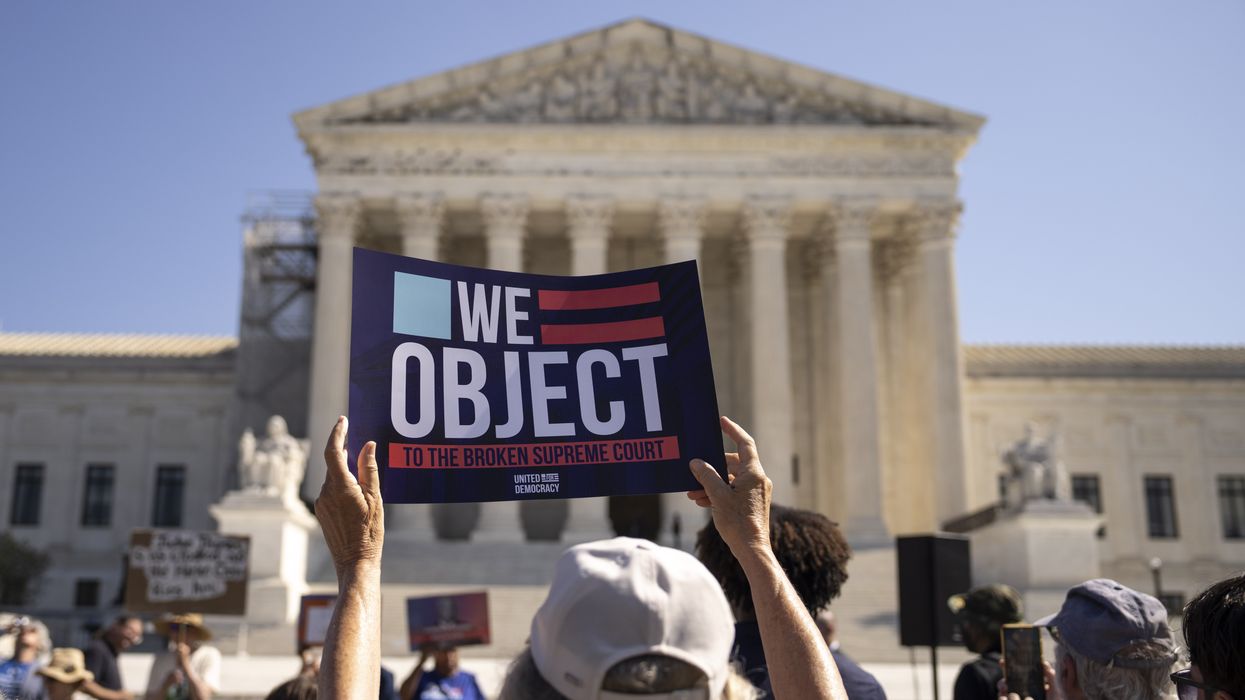
What should we do? Boil with fury at the ruling. Scoff at the justices who claim only to call “balls and strikes,” in a game they’ve fixed. But don’t stop there. Yell, loudly, for action by the one part of our government that can do something: Congress.
The Supreme Court’s ruling leaves the Voting Rights Act “all but a dead letter,” as Justice Elena Kagan put it. Callais is a grave blow to racial equality, especially in the South. Scholar Rick Hasen warned, “This decision will bleach the halls of Congress, state legislatures, and local bodies like city councils.” We may see the fastest rollback in representation since the end of Reconstruction after the Civil War. Even if it’s not as bad as that, it will be bad enough.
Arid legal abstractions can have harsh real-world consequences. After the 2013 Shelby County v. Holder ruling, which gutted the most important part of the Voting Rights Act, the gap between white and nonwhite voters’ turnout grew twice as fast in states that were once covered by the strong protections of the law, according to the Brennan Center’s research. Callais will only worsen this disparity, especially since the justices have agreed to rush the implementation of their decision so its effects will be felt as soon as possible.
In recent years, a paralyzed and polarized Congress has failed to do its job. This torpor created the opening for an imperial judiciary and an abusive executive.
To perfume its actions, the ruling glorifies, of all things, partisan gerrymandering. And this in the middle of a nationwide redistricting frenzy. Justice Samuel Alito explained that states can deflect even proof of a racially discriminatory map by simply claiming that the manipulative district lines aim to entrench a political party. We aren’t discriminating against Black people, you see. Just against Democrats. Case closed.
After this overt assault on our democracy, Congress has a duty to act.
First, it should ban partisan gerrymandering—immediately. Such a rule would apply to red states and blue states alike. A bill to do this has been introduced by Sens. Alex Padilla (D-Calif.), Raphael Warnock (D-Ga.), Angus King (I-Maine), and Adam Schiff (D-Calif.), building off language from the Freedom to Vote Act. Rep. Zoe Lofgren (D-Calif.) put forward the measure in the House.
Such a move is constitutional. None other than Chief Justice John Roberts wrote in 2019’s Rucho v. Common Cause ruling, “[The] Framers gave Congress the power to do something about partisan gerrymandering in the Elections Clause.” He even approvingly pointed to what became the Freedom to Vote Act, which would come very close to becoming law in 2022.
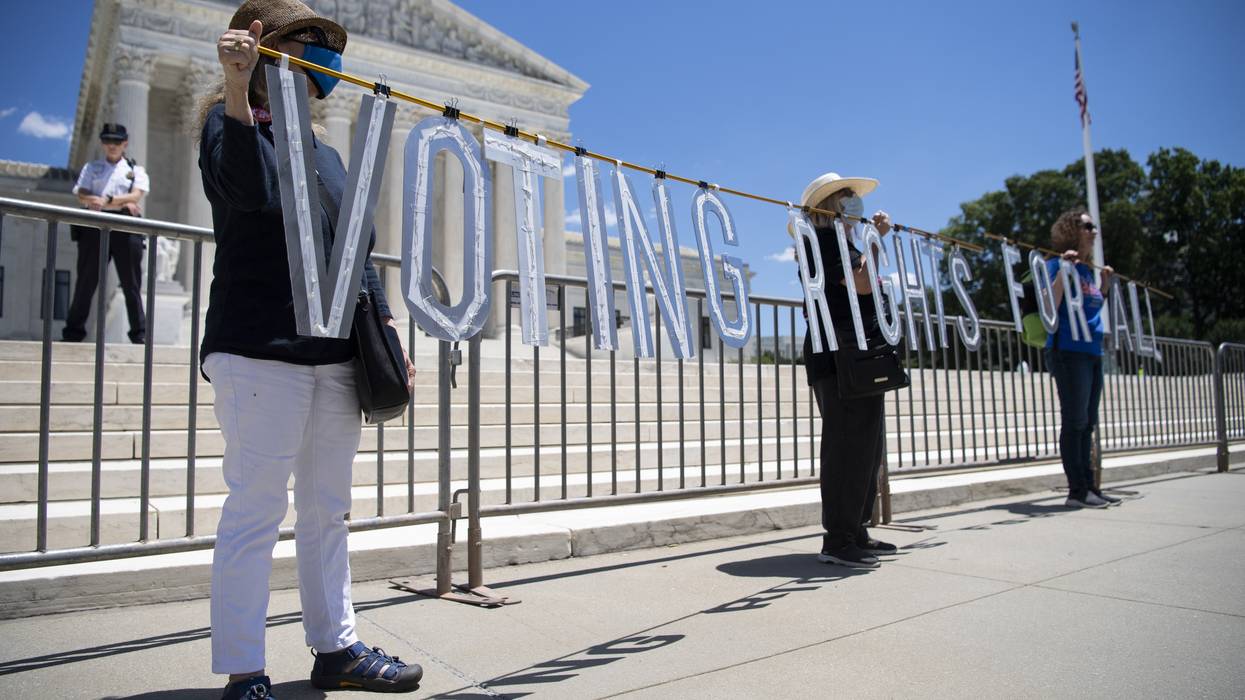
Second, Congress should enact new laws to give citizens a meaningful and robust right to vote, as well as a right to sue if their voting rights have been abridged, diluted, or denied. Judges should be charged with viewing any burden or dilution with extreme skepticism. It should be easier to prove discriminatory intent. And nationwide standards for elections would make them harder to manipulate.
Finally, Callais shows the urgent need for Supreme Court reform, starting with an 18-year term limit for justices. Judicial term limits would restore accountability. They would reflect the core value that nobody should hold too much power for too long. Term limits are broadly popular. The most recent Fox News poll on the issue showed that 78% of the public supports them. That’s an awful lot of Republicans, on top of Democrats and independents.
Momentum is growing. A Congressional Black Caucus (CBC) statement put it well. “Our nation’s highest court has been compromised,” it declared. “The CBC will make it our mission to aggressively advance Supreme Court reform. We will work to establish term limits for justices to help restore independence, neutrality, and legitimacy to the court.”
This kind of congressional pushback used to be common. But in recent years, a paralyzed and polarized Congress has failed to do its job. This torpor created the opening for an imperial judiciary and an abusive executive. As my colleagues Miriam Rosenbaum and Emily Whitehead noted, “In recent years, the court has repeatedly gutted landmark pieces of democratically enacted legislation that had earlier survived the court’s scrutiny.” Citizens United destroyed a century of campaign finance laws, just as Callais finished the job of demolishing the voting rights legislation overwhelmingly passed by Congress and signed into law by a Republican president. Yet Congress failed to restore the Voting Rights Act or repair campaign finance rules, even when Democrats controlled the White House and the legislature.
This year, Americans have been energized around voting issues in response to the egregious SAVE Act, now blocked in the Senate. But rhetoric is not enough, and playing defense surely is not enough. Lawmakers must put at the center of their agenda bold, tough, unflinching steps to restore the health of American democracy.
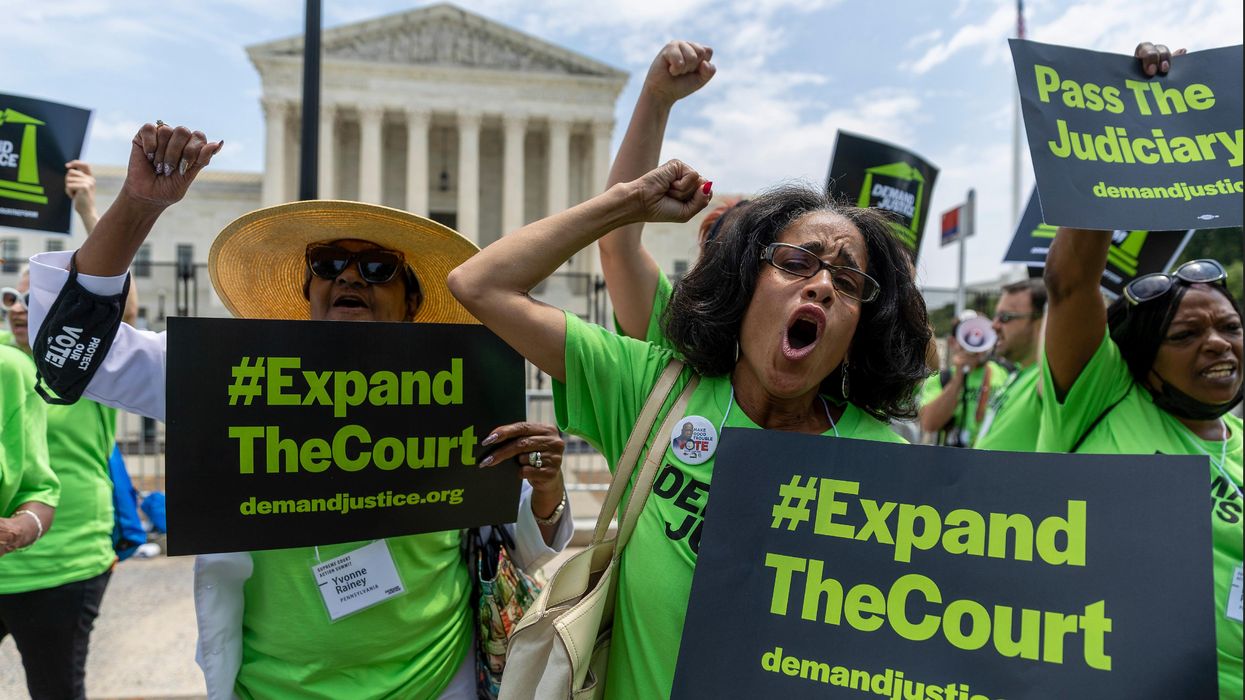
When they have the political power to do so, progressives must immediately expand the court to reflect the diverse backgrounds, experiences, and viewpoints of the nation, and impose term limits on justices.
As the dust continues to settle on the Supreme Court’s 2023-2024 term, the conservative majority’s existential threat to our democracy (and, in particular, our multiracial democracy) could not be clearer. But progressives have also enabled this threat by refusing to embrace the democratic reforms necessary to bring the court to heel.
Beyond the widely panned decision granting former U.S. President Donald Trump unprecedented immunity from prosecution, the court’s decisions have followed a clear trend of expanding power for the rich and connected (who will have new tools to challenge environmental and consumer protections), and diminishing it for people of color (who will have fewer tools to challenge racist gerrymanders), and the poor (who can now be incarcerated for sleeping outside even when no shelter is available).
Even in supposed bright spots, such as Rahimi, in which the court declined to overrule a federal law that bars anyone under a domestic violence restraining order from having a gun, its rulings have reified white supremacy. The court did not refrain from imposing its “history and tradition” test for gun laws, which Justice Sonia Sotomayor acknowledged privileges an era “predating the inclusion of women and people of color as full members of the polity.” The court also conspicuously declined to address whether its vision of originalism includes the history of Reconstruction, which fundamentally transformed race relations and laid the foundation for multiracial democracy in the United States.
Lasting protections for the most vulnerable must be won and defended through power building at all levels of society—not in the courts alone.
In the face of the court’s sustained attack on multiracial democracy, progressive responses have so far been ineffective. Progressives arguing before the court have relied on precedent only to see those precedents tossed away in cases ending the right to abortion and outlawing affirmative action. They have grounded their arguments in history only to see the court cherry-pick research to achieve its desired results in cases diminishing the power of federal agencies. And, outside the courtroom, progressives have shone spotlights on Justices Samuel Alito’s and Clarence Thomas’ numerous conflicts of interest, only to have calls for the pair’s recusal fall on deaf ears in cases related to the January 6 insurrection.
Yet in the wake of another devastating term, President Joe Biden has announced no plan for Supreme Court reform. Instead, he seems content to patiently await a vacancy that may never arise to make his next appointment.
Let’s be honest with ourselves—efforts to influence or reshape the court short of structural reform are doomed to fail. Because justices currently have lifetime tenure, and experience has demonstrated that they will time their departures to coincide with ideologically sympathetic presidential administrations, there is no guarantee that another progressive presidency will result in any shift in the court’s ideology.
Meanwhile, as the Court places its thumb on the scale in elections, whether directly, as in Bush v. Gore, or more indirectly by diluting the Voting Rights Act, and unleashing unlimited corporate spending in campaigns, democracy may continue to erode.
When they have the political power to do so, progressives must immediately expand the court to reflect the diverse backgrounds, experiences, and viewpoints of the nation, and impose term limits on justices (in line with other Western democracies).
Opposition to these straightforward ways to restore democratic accountability have laid bare progressive ambivalences about democracy itself. Some progressive elites, and particularly legal elites, who are wary of reigning in the court point to (supposedly) counter-majoritarian decisions like Brown, Roe, and Obergefell, which expanded rights for people of color, women, and LGBT people, as reasons to preserve the court’s power.
But an overly romantic view of the court risks breezing past the Supreme Court’s efforts to disempower vulnerable groups throughout its history in cases like Dred Scott, which held that Black people were not and could not be citizens, Plessy, which enshrined “separate but equal” for more than half a century, and Korematsu, which denied the constitutional rights of Japanese Americans interned during World War II, and throughout the anti-regulatory Lochner era. And it risks empowering a handful of unaccountable decision-makers above the true levers of social change—the people.
While the Supreme Court was a sometime ally to the movements of the 1950s, 60s, and 70s, the true heroes of change were civil rights organizers and feminist activists who dared to imagine a brighter future. They pushed the nation (kicking and screaming) closer toward equity as reflected in the enactment of landmark legislation like the Civil Rights Act of 1964 and the Voting Rights Act of 1965.
Meanwhile, as the demise of Roe and its aftermath has made clear, victories that rely on the Supreme Court alone are fragile. Lasting protections for the most vulnerable must be won and defended through power building at all levels of society—not in the courts alone. Continued progress is possible, but only if we restrain a court that is all too happy to defang or dismantle popularly enacted legislation.
We must continue to call out the court’s insidious efforts to undermine democracy. We must also hold progressive leaders, and especially the progressive bar, accountable for their role in enabling this erosion. And we must demand that the president and Congress take action to expand the court and impose term limits. If they do not, it’s difficult to see how the court’s future terms won’t be darker mirrors of this one.
The head of Fix the Court noted that "the two justices whose comings and goings are probably of the most interest to the general public appear to be shielding some of that travel."
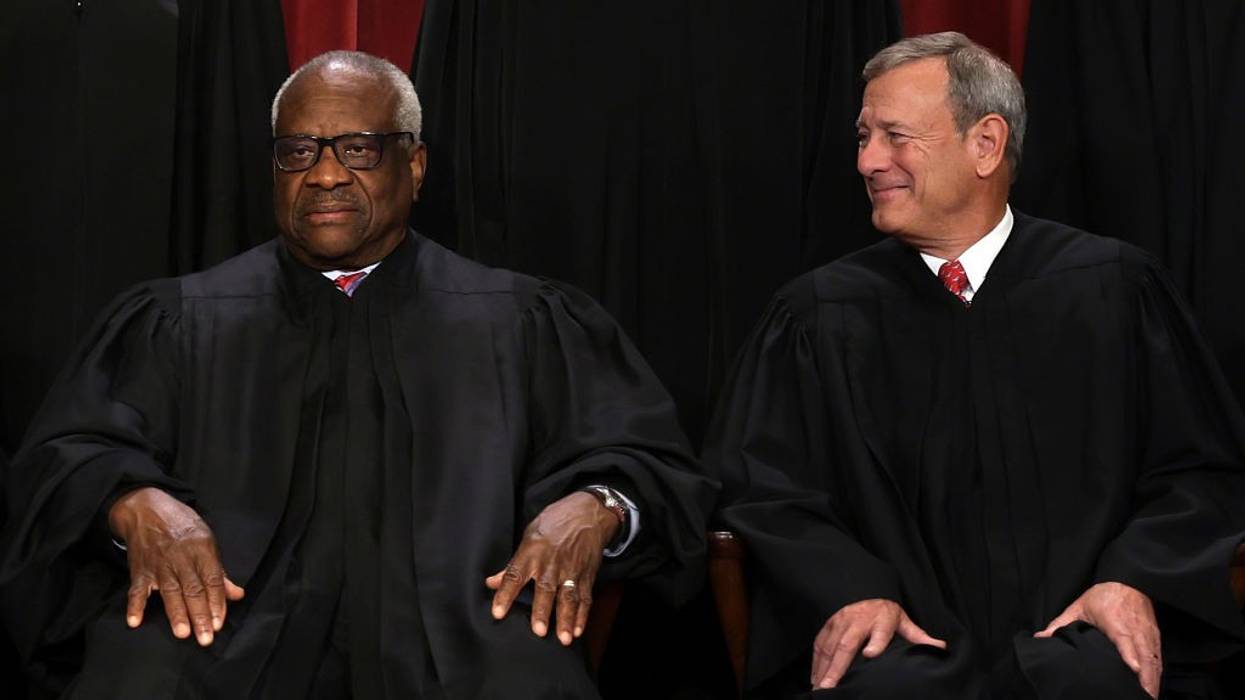
More than 4,000 pages of federal records turned over to Fix the Court and released by FTC on Thursday sparked fresh concerns about U.S. Supreme Court members' travel—particularly that of Chief Justice John Roberts and Justice Clarence Thomas.
FTC, which advocates for reforming the high court, submitted a Freedom of Information Act (FOIA) request to the U.S. Marshals Service for former and current members' activities covered by the USMS—which typically takes over security from Supreme Court Police when a justice leaves the Washington, D.C. area—from January 1, 2018 to September 30, 2022.
"From SCOTUSMap, press reports, our research, and USMS documents, the justices appear to have taken part in 644 activities during the nearly five years covered by the FOIA," the nonprofit noted. Liberal Justice Sonia Sotomayor's "name appears most often in the USMS documents, as the years of FTC's request coincided with a book tour that took her to a dozen states and several foreign countries."
"There remain a ton of justices' activities that the public does not know about or only learns about years after the fact. What are they trying to hide?"
The group put together a 38-page document detailing justices' activities, which included: "A trip to Bohemian Grove. A birthday party at Lincoln Center. Religious services at a Brooklyn theater. Annual vacations to Colorado. Dialing in to oral argument from Florida. 'Business meetings.' A meeting with a congressman."
While the total figure includes over 200 activities new to FTC, the group highlighted that it is "most definitely an undercount given the lack of USMS coverage for two of them—one of whom travels to Maine each summer and the other we're certain took several up-until-recently-unreported trips."
"Not one of the public or private engagements, vacations, or layovers described in the documents was a Justice Thomas event. None were Chief Justice Roberts events either," FTC explained. "It is unclear if the two justices' security details are being wholly provided by the exempt-from-FOIA Supreme Court Police... if they're employing private security; or if there's some combination thereof."
Courthouse News Service reported that "the Supreme Court's public information office did not respond to questions about Roberts' and Thomas' use of alternative security services."
Meanwhile, FTC executive director Gabe Roth sounded the alarm about the lack of information on the pair of conservatives.
"The two justices whose comings and goings are probably of the most interest to the general public appear to be shielding some of that travel by solely availing themselves of security resources not subject to open records requests," he said. "Maybe there's an innocuous explanation for this. But given the opacity we've seen from the court, especially when it comes to travel, maybe there's not."
Reporting in the past several months has shown how justices have benefited from rich friends. For example, last June, ProPublica exposed right-wing Justice Samuel Alito's undisclosed private jet flight to Alaska in 2008 with billionaire Paul Singer.
ProPublica also revealed in August that over the past few decades, Thomas has enjoyed at least "38 destination vacations, including a previously unreported voyage on a yacht around the Bahamas; 26 private jet flights, plus an additional eight by helicopter; a dozen VIP passes to professional and college sporting events, typically perched in the skybox; two stays at luxury resorts in Florida and Jamaica; and one standing invitation to an uber-exclusive golf club overlooking the Atlantic coast."
Recent exposés about the potential influence of wealthy individuals invested in the justices' decisions as well as low public trust in the high court—which has six right-wingers and three liberals—led to the creation of a voluntary Code of Conduct that critics called a "toothless PR stunt" and discussions of legislative reforms unlikely to advance in the divided Congress.
FTC advocates for "fixes" including "greater media and public access, Supreme Court term limits, new and robust ethics rules, stronger recusal rules, comprehensive online disclosures, and public appearance notifications."
As Roth said Thursday: "There remain a ton of justices' activities that the public does not know about or only learns about years after the fact. What are they trying to hide?"
"Some of them, like vacations or visiting family—have fun," he continued. "But when a justice is holding, per the marshals, an 'official event' or has seven consecutive protected nights of private 'dinner events,' it's understandable that the public would want more information."
"The pretense that we have a Supreme Court made up of nine above-reproach people doing their best free of corruption is utterly unsustainable."
Responding to the FOIA revelations in a Thursday statement, Revolving Door Project executive director Jeff Hauser and senior researcher Vishal Shankar also stressed the need for reforms at the nation's highest court.
"These bombshell findings from Fix the Court underscore an increasingly undeniable fact: The Supreme Court's right-wing justices have compromised the integrity of a critical public institution by accepting expensive handouts to enjoy secretive, luxurious lifestyles," said Shankar. "These revelations come as the court is hearing radical arguments attacking a functioning administrative state in a series of cases backed by the justices' billionaire benefactors, including Charles Koch."
"We cannot sit and wait for Justice Thomas and others to yet again gut the regulatory state in order to enrich their powerful friends," he added. "Any justice who has accepted luxury gifts or travel from these oligarchs must recuse from every case in which a party or amicus brief filer is connected to one or more of these oligarchs."
Hauser asserted that "the pretense that we have a Supreme Court made up of nine above-reproach people doing their best free of corruption is utterly unsustainable," and called for action by U.S. Sen. Dick Durbin (D-Ill.).
"If right-wing members of Congress will block serious unpacking of the courts or even ethics reform, then the least we can expect of Senate Judiciary Committee Chair Durbin is that his committee belatedly issued last fall to Harlan Crow and Leonard Leo," Hauser said, referring to men with ties to Thomas.