SUBSCRIBE TO OUR FREE NEWSLETTER
Daily news & progressive opinion—funded by the people, not the corporations—delivered straight to your inbox.
5
#000000
#FFFFFF
To donate by check, phone, or other method, see our More Ways to Give page.


Daily news & progressive opinion—funded by the people, not the corporations—delivered straight to your inbox.
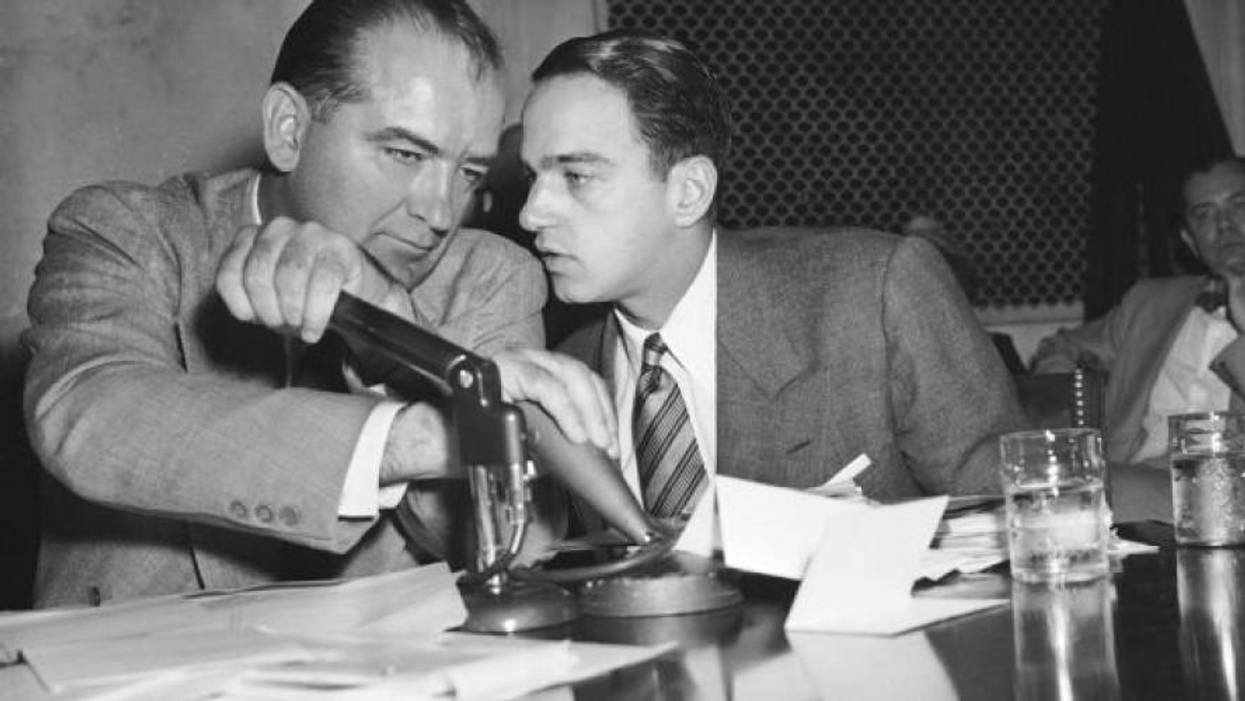
Last week, we learned more about the White House's smear campaign of U.S. Ambassador Marie Yovanovitch and other American public servants,whose only offense was to do their jobs as loyal Americans. While watching, I was reminded of the 1954 Senate Hearings undertaken to shine a public spotlight on Senator Joseph McCarthy's campaign to smear the reputation of the U.S. Army by accusing it of being "soft" on Communism and harboring "card carrying Communists" among its ranks. McCarthy launched an investigation and didn't care whether there was any factual basis for such an investigation or whether the investigation turned up anything. Similarly, Trump's bogus claims against the Bidens, and his attempts to destroy Ambassador Yovanovitch's reputation, and the reputation of the Ukrainian government, were strictly for purposes of his own personal and political aggrandizement. It didn't matter whether there was any real basis for these charges
The similarities continue. McCarthy had Roy Cohn by his side, a master in the black arts of smear campaigns who later would mentor the young Donald J. Trump in those same techniques. Now Trump has Rudy Giuliani who helped hold military aid to Ukraine hostage in order to win political points with the Kremlin by casting blame on Ukraine for Russia's interference in the 2016 elections. Giuliani and Trump's campaign would also get a boost from their extortion of Ukraine when it committed at the time to announce a bogus investigation of Trump's then-leading political adversary in the 2020 election.
Amazingly, the scheme would have succeeded but for the public disclosure of the Whistleblower's complaint, which caught Trump and his motley crew red-handed, forcing them to release the military aid. But despite The White House's cries of "no harm, no foul," America had one of its first-rate ambassadors, Marie Yovanovitch, thrown to the wolves and her reputation tarnished, all because Giuliani and his henchman Lev Parnas were telling Trump that she was one of the "deep state" enemies standing in their way.
On the tape recording recently released by Parnas' lawyer, Trump can be heard giving the order to fire Yovanovitch. But just recalling her from Kiev to Washington was not enough. Trump and Giuliani - like McCarthy and Cohen before them - have the inexorable impulse to try to humiliate and destroy anyone who has the audacity to stand up to them, or to stand up for what is right. Trump even felt compelled to go off-message in his fateful July 25th phone call with Ukraine President Zelensky to suggest that Ambassador Yovanovitch would be facing unspecified future penalties for her "disloyalty" to Trump.
In the end, it was Senator McCarthy's vindictiveness and gratuitous cruelty that led to his downfall. The dramatic climax of the 1954 hearing came when McCarthy turned his sights on the Army's counsel, Joseph N. Welch, accusing one of Welch's young lawyers of being a member of a Communist front organization. Welch interrupted McCarthy's attack, demanding that McCarthy "not assassinate this lad further." Welch added: "Senator, you've done enough. Have you no sense of decency, sir? At long last, have you left no sense of decency?" McCarthy never recovered, and he was eventually censured by the Senate for his destructive and irresponsible demagoguery.
The ongoing impeachment trial in the Senate is unlikely to result in any sudden break in the "Trump fever" that Senate Republicans seem to be suffering from. Since they are all reasonably intelligent men and women, these Senators must know in their hearts that Trump is completely guilty of charges set forth in the two Articles of Impeachment and deserves to be evicted from the White House. However, due to their misguided sense of "loyalty" or just as a reflexive act of political self-preservation, the Republican-controlled Senate will, in the end, give Trump a free pass to continue to do damage to our democratic institutions for the remainder of his term and, quite possibly, for the next four years.
But it is worth recalling that Senator McCarthy also survived the 1954 Senate hearings, although his reputation and standing were fatally tarnished in the process. It marked the beginning of the end for him, and McCarthy was censured by the Senate shortly thereafter. Since "past is prologue," will the current impeachment hearings also mark the beginning of the end in the curious case of Donald J. Trump? Only time will tell.
But just as Joseph Welch effectively called McCarthy out in 1954, so too did Chairman Adam Schiff late last Thursday night when he recalled how Colonel Vindman told House lawmakers that unlike in the former Soviet Union, "right matters" in the United States.
"If right doesn't matter," said Schiff, "it doesn't matter how good the Constitution is. It doesn't matter how brilliant the framers were. Doesn't matter how good or bad our advocacy in this trial is." If "right doesn't matter," he concluded, "we're lost."
Adam Schiff's electrifying words that Thursday night are the stuff of history. But the jury is out on whether his words - or the overwhelming case against Trump made by the House Managers--ends up making a difference. For our sake and that of our Republic, let's hope the answer is yes.
In a nearly 90-minute audio recording of a private dinner that took place with numerous individuals and President Donald Trump in 2018 was made public Saturday evening by the legal team of Lev Parnas, a close associate of the president's personal attorney Rudy Giuliani, the president can be heard saying "take her out" in reference to former U.S. Ambassador to Ukraine Marie Yovanovitch--a key witness in the impeachment trial now in the U.S. Senate.
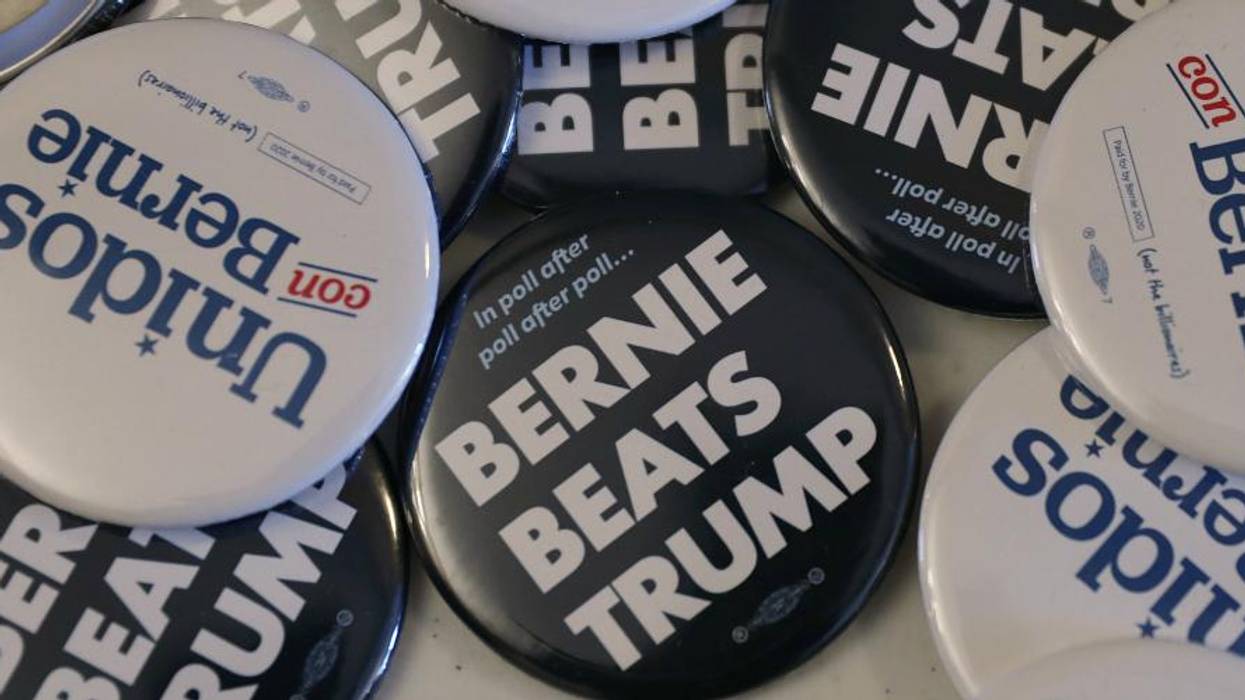
Trump also says in the recording that he was relieved that he didn't have to face off against Sen. Bernie Sanders (I-Vt.) in the 2016 election.
Listen to the audio recording, as released by VICE (Trump begins speaking at approximately 2:28):
The recording, according to CNN,
was made by another Giuliani associate, Igor Fruman, and shared with Parnas shortly after the dinner, according to Bondy. Fruman's attorney declined to comment.
Only the first three minutes of the tape include visuals, and Trump can be seen briefly when he approaches the rectangular dining table set with red bouquets of flowers. The remaining portion of the recording is only audio.
The conversation involving Ukraine begins about 40 minutes into the 1-hour-and-24-minute recording. During that discussion, Trump asks a person who appears to be Parnas how long Ukraine would "last in fight against Russia." Parnas says "without us, not very long," and another person chimes in, "about 30 minutes." Months later, Trump would try to cut off military aid to Ukraine.
In its reporting, VICE notes the "five wildest things" Trump had to say during the conversation--a discussion at one point he can clearly be heard saying is "off the record."
Among the items deemed the wildest was a comment Trump made about current 2020 Democratic candidate Sen. Bernie Sanders (I-Vt.). In the recording, Trump said he was glad former Secretary of State Hillary Clinton didn't pick Sanders as her 2020 running mate--citing his tough stance on U.S. trade policy.
"Because [Sanders'] a big trade guy," said Trump. "You know he basically says we're getting screwed on trade. And he's right."
"Had she picked Bernie Sanders it would've been tougher. He's the only one I didn't want her to pick," Trump told the people in the room.
An audio recording reviewed by ABC News captured President Donald Trump demanding the ouster of then-U.S. Ambassador to Ukraine Marie Yovanovitch during a 2018 dinner with a group of associates that included Lev Parnas, the indicted businessman Trump has repeatedly claimed not to know.
"Get rid of her!" Trump said in the recording, ABC reported Friday. "Get her out tomorrow. I don't care. Get her out tomorrow. Take her out. Okay? Do it."
"It's worth noting here how bat-bleep insane it is that Trump, who has the power to recall ambassadors, is talking with his goons about this."
--Greg Sargent, Washington Post
The president's outburst came after Parnas, an associate of Trump's personal attorney Rudy Giuliani, recommended that Trump fire Yovanovitch. Parnas, according to ABC, told Trump in the recording that the ambassdor was "basically walking around telling everybody, 'Wait, he's gonna get impeached, just wait.'"
"The biggest problem there, I think where we need to start is we gotta get rid of the ambassador," Parnas said. "She's still left over from the Clinton administration."
A copy of the recording is now in the possession of federal prosecutors in the Southern District of New York, ABC reported.
Trump eventually recalled Yovanovitch from her post in April of 2019. Yovanovitch told House impeachment investigators in sworn testimony last October that her firing was the result of a "concerted campaign" of smears directed by Giuliani.
In a column Friday, the Washington Post's Greg Sargent wrote that "it's worth noting here how bat-bleep insane it is that Trump, who has the power to recall ambassadors, is talking with his goons about this."
"Remember that Giuliani launched an epic smear campaign to hound her out of office," Sargent noted. "Trump finally did remove the ambassador, but if there were legitimate reasons to do so, why this secretive campaign against her?"
Former federal prosecutor Glenn Kirschner told Sargent that the Southern District of New York could be looking "into a conspiracy to do something to Yovanovitch."
"SDNY is or should be looking at all of this," Kirschner said.
Joseph Bondy, Parnas' attorney, told The Daily Beast Friday that the recording reviewed by ABC was made by Igor Fruman, another associate of Giuliani. Fruman and Parnas, who helped Giuliani pressure Ukraine to investigate former Vice President Joe Biden, were arrested and charged with campaign violations at the same time last October.
"Last year, before he was arrested, Mr. Parnas personally heard a recording of his April 30, 2018, dinner with the president and others, made by Mr. Fruman, at which the subject of Ambassador Yovanovitch was discussed," Bondy told The Daily Beast. "We have hoped that, to the extent this recording still existed, it would be released to Congress for use in the impeachment trial."
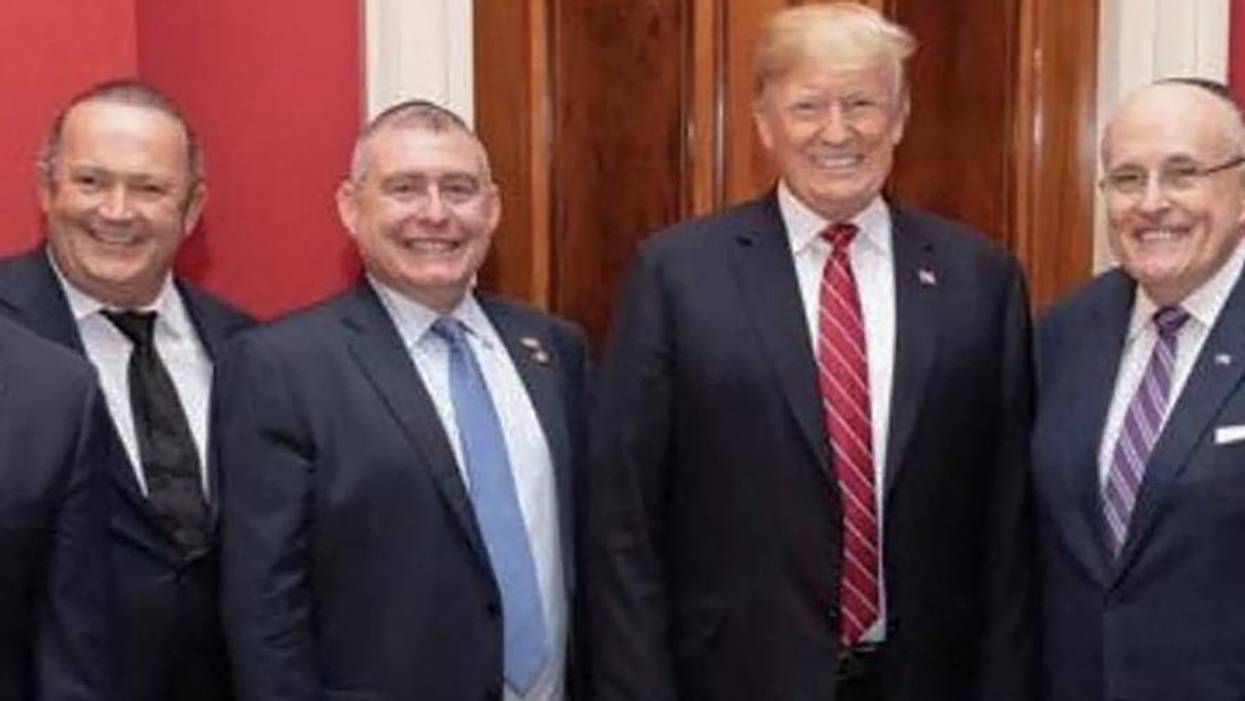
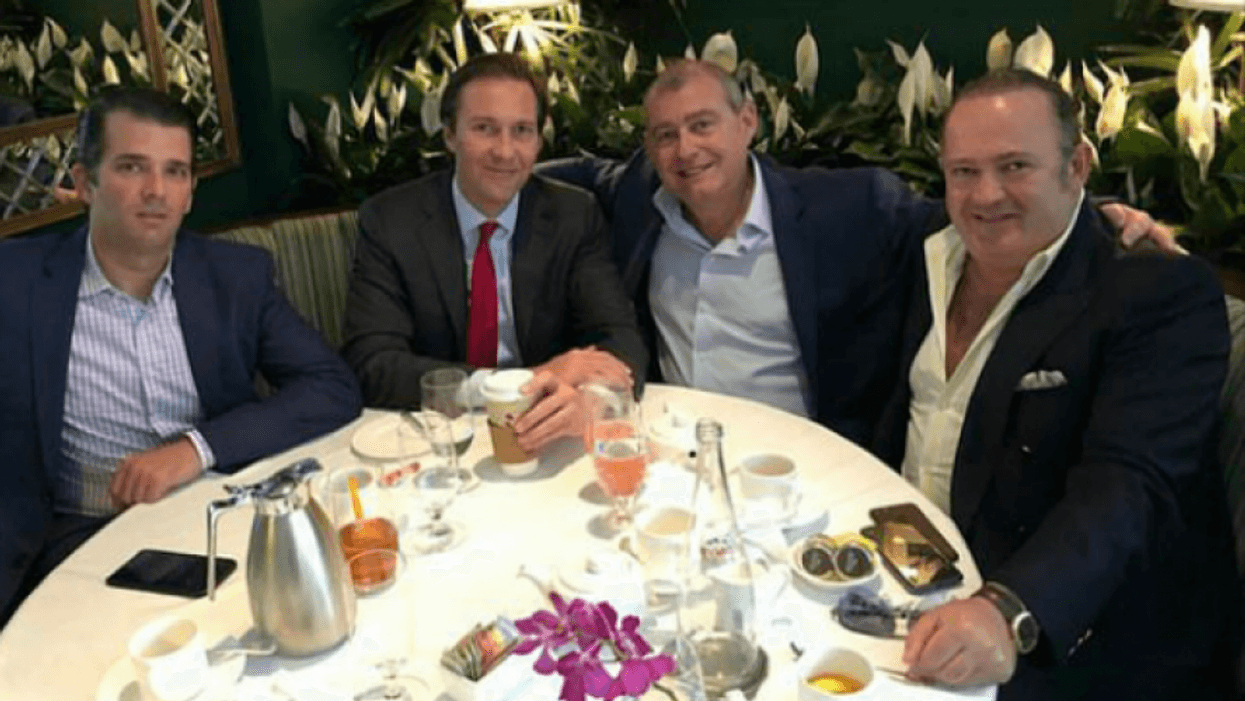
Trump has said he does not know Parnas or Fruman, a claim contradicted by the dinner recording and photos of the men together that have circulated in recent months.
"I don't know those gentlemen," Trump said of Parnas and Fruman last October following their arrest. "Now, it's possible I have a picture with them because I have a picture with everybody."
Just last week, Trump said "I don't even know who this man is," referring to Parnas.
In a series of explosive interviews with MSNBC that aired last week, Parnas disputed Trump's claim that his efforts in Ukraine were geared toward rooting out corruption rather than advancing his own personal political agenda.
"It was all about Joe Biden, Hunter Biden," Parnas said, referring to the former vice president's son. "President Trump knew exactly what was going on. He was aware of all of my movements. I wouldn't do anything without the consent of Rudy Giuliani or the president."
Lev Parnas, a close associate of President Donald Trump's personal lawyer Rudy Giuliani, claimed in a series of interviews that aired on Wednesday and Thursday that the president and top aides were aware of and on board with the plot to use Ukraine to torpedo former Vice President Joe Biden's chances in the 2020 election.
Parnas made the claims on MSNBC's Rachel Maddow Show, CNN's New Day, and to the New York Times.
"I am betting my whole life that Trump knew exactly everything that was going on that Rudy Giuliani was doing in Ukraine," Parnas told the Times.
Giuliani sent Parnas and Parnas' associate Igor Fruman to Ukraine in February 2019 to dig up dirt on Biden and his son Hunter and Hunter's role in Ukrainian gas firm Burisma. The pair collected as much information as they could for Giuliani and then returned to the U.S., Parnas said.
"It was all about Joe Biden, Hunter Biden," Parnas said in the MSNBC interview. "It was never about corruption. It was never--it was strictly about Burisma, which included Hunter Biden and Joe Biden."
As the Times reported, Parnas was certain that the president was on board with the scheme:
During the interview with the Times, as well as in a taped interview Mr. Parnas gave on Wednesday to the MSNBC host Rachel Maddow, Mr. Parnas emphasized that he was always acting on behalf of Mr. Trump and Mr. Giuliani.
When asked by the Times how he knew that Mr. Trump was aware of the pressure campaign, he said that Mr. Giuliani assured him that was the case.
"President Trump knew exactly what was going on," Parnas told MSNBC. "He was aware of all of my movements. I wouldn't do anything without the consent of Rudy Giuliani or the president."
Parnas also said that Attorney General Bill Barr, Vice President Mike Pence, and former National Security Advisor John Bolton were involved in and aware of the plot.
Rep. Devin Nunes (R-Calif.), one of the impeachment managers in the House, was also in on the scheme, Parnas said.
"He knew what was happening," said Parnas. "He knows who I am."
The White House has denied Parnas' allegations. That denial did not convince progressive advocacy group Indivisible.
"At this point, is there anyone we shouldn't impeach?" Indivisible tweeted.
Some observers, however, urged caution on taking Parnas' claims at face value.
"I would be skeptical of anything Parnas says that isn't substantiated with evidence," tweeted The Atlantic's Adam Serwer. "There appears to be a lot of it, though."
A trove of explosive and previously unseen documentary evidence related to the Trump impeachment inquiry released Tuesday by House Democrats has triggered a wave of new and serious questions about what President Donald Trump's personal attorney Rudy Giulani did in Ukraine last year to orchestrate a pressure campaign in Ukraine at the behest of his powerful client.
The documents--which can be viewed here and here--were handed over to the House Committee Intelligence by the legal team of Lev Parnas, an associate of Giuliani's, and as Vox notes, "boy, are they ugly."
The materials, as the New York Times reports,
include handwritten notes scrawled on a sheet of hotel paper at the Ritz-Carlton Hotel in Vienna that mention getting President Volodymyr Zelensky of Ukraine to announce an investigation of former Vice President Joseph R. Biden Jr. and his son.
House Democrats released the records even as Speaker Nancy Pelosi announced a Wednesday vote to name House prosecutors and send the articles of impeachment against Mr. Trump to the Senate to begin the trial. The material undergirds the accusations against Mr. Trump, and highlights how much is still to be learned about the scope of a scheme that the impeachment charges call a blatant effort to solicit foreign help in the 2020 election.
The documents, provided by Mr. Parnas, contain a series of exchanges between him and a Ukrainian prosecutor, Yuriy Lutsenko, who was helping Mr. Giuliani unearth damaging information about the Bidens.
In a joint statement by Democratic chairs of the several committees that released the documents, the lawmakers said the new documents "demonstrate that there is more evidence relevant to the president's scheme, but they have been concealed by the president himself."
The Democrats again called on the State Department and other executive branch offices to hand over relevant materials, including communications and other materials, so that senators in the pending trial have a fuller picture of what transpired. "There cannot be a full and fair trial in the Senate," they argued, "without the documents that President Trump is refusing to provide to Congress."
Among the "most disturbing" pieces of information included was the apparent focus that Giuliani, Parnas, and others involved put on then U.S. Ambassador to Ukraine Marie Yovanovitch, who they perceived as an obstacle to Trump's interests in the country. In a series of text message exchanges with a man named Robert F. Hyde, a Republican congressional candidate in Connecticut, Parnas indicated there was ongoing surveillance of Yovanovitch. Elsewhere, Hyde openly referred to the ambassador as "that bitch" and the language in the document even hinted that Yovanovitch could or would be harmed.
In one text, Hyde noted that Yonavitch was "under heavy protection outside Kiev," while elsewhere he told Parnas, "Guess you can do anything in Ukraine with money."
As independent journalist Judd Legum observed: "Wow. Texts from Giuliani cronies, just released by House, are incredibly disturbing."
Jim Scuitto, anchor and chief national security correspondent for CNN, wondered what the national reaction would be to what the documents appear to show:
Rep. Ted Lieu (D-Calif.) responded to the revelations by saying, "The new documents from Lev Parnas are chilling, and damning for [the president]. Is Donald Trump a thug? I don't know. But Trump certainly used thugs to help him abuse the power of his office."
In the wake of the documents, the demand for answers quickly escalated:
In a statement late Tuesday night, a lawyer representing Yovanovitch called for a formal investigation. "The notion that American citizens and others were monitoring Amb. Yovanovitch's movements is disturbing," her attorney Lawrence Robbins said. "We trust that the appropriate authorities will conduct an investigation to determine what happened."
For their part, Democratic lawmakers on the relevant committees said they would "continue our investigative work and will make available to the Senate and the American people any additional evidence of the President's misconduct as it is revealed."
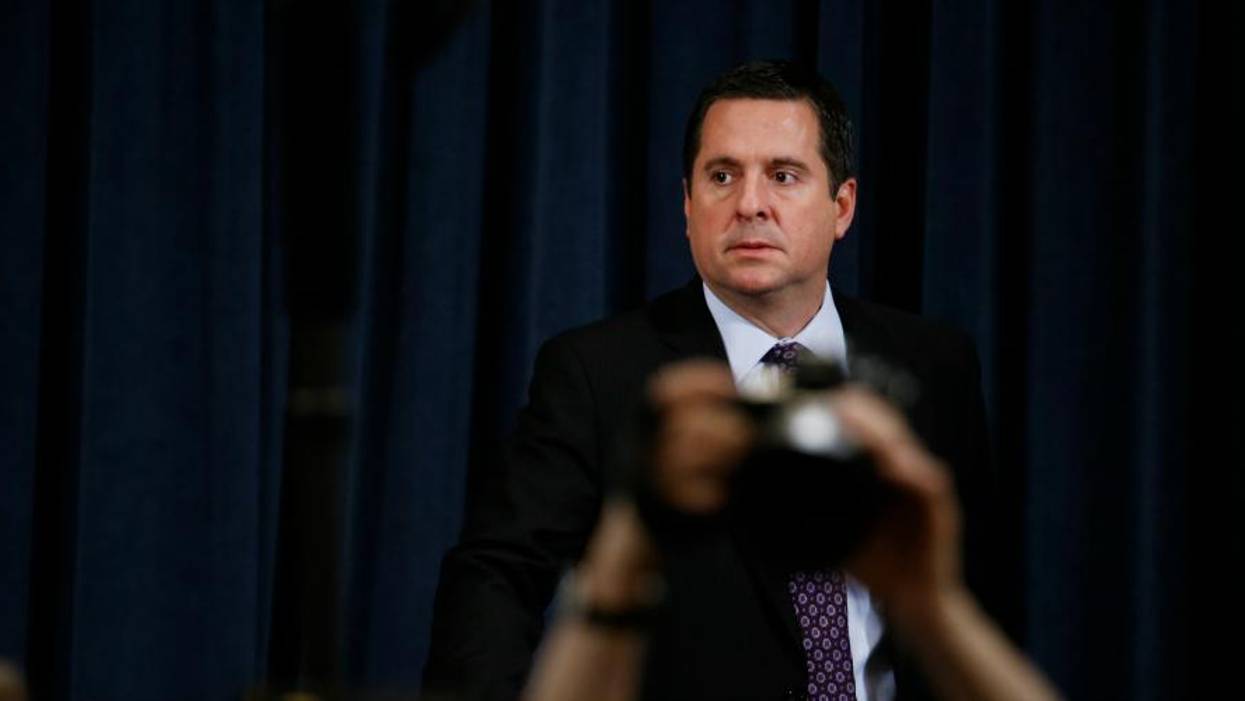
Rep. Devin Nunes, the top Republican on the House Intelligence Committee, claimed Sunday that he was "stalked" at a $15,000-per-plate GOP fundraiser at the luxury Lotte New York Palace Hotel in Manhattan.
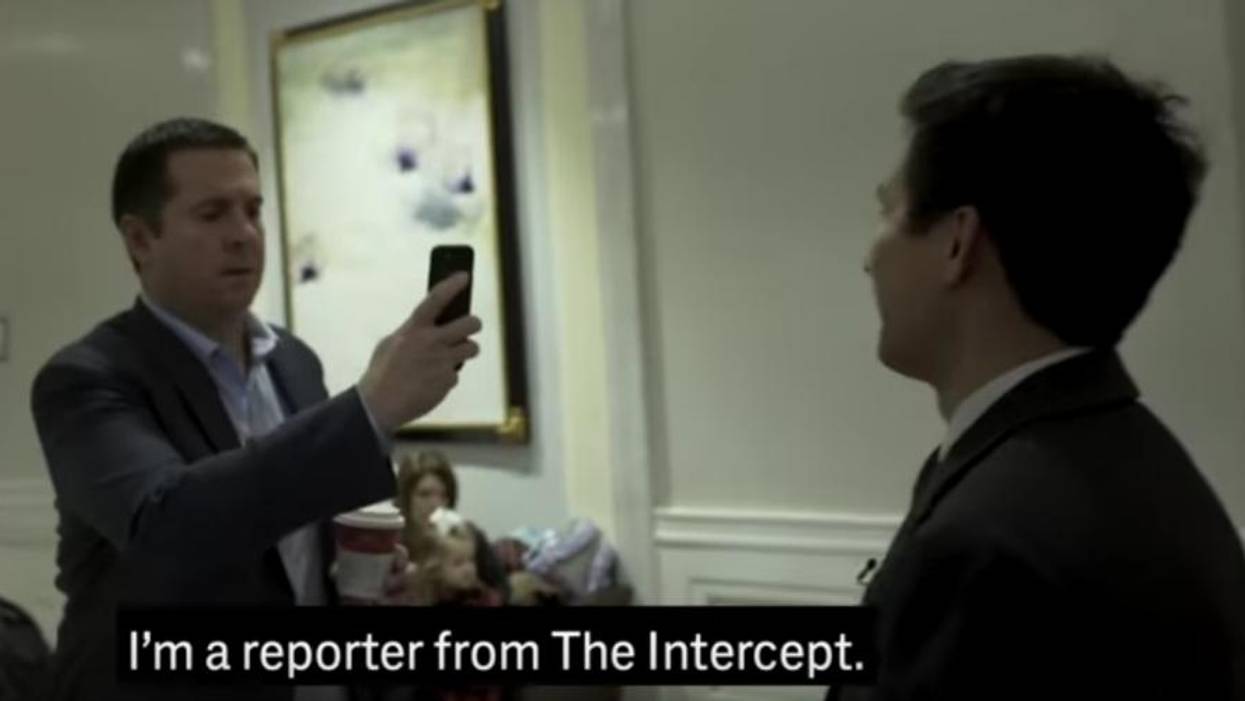
In reality, Nunes was approached at the GOP event Saturday by The Intercept's Lee Fang, who asked basic questions about the California Republican's role in President Donald Trump's efforts to pressure the Ukrainian government to investigate former Vice President Joe Biden's son, Hunter.
"I walked up calmly and asked a simple news question to the congressman. You can see everything I actually said and Nunes' trembling hand while he silently took my picture in the video I posted."
--Lee Fang, The Intercept
"Hey, Congressman Nunes. I just wanted to ask you really quickly: What were your calls with Lev Parnas about?" Fang said, referring to an indicted associate of Trump's personal attorney Rudy Giuliani. "Were you asking about the effort to investigate Hunter Biden?"
Nunes walked away without responding to the questions.
When Fang approached Nunes a second time, the congressman pulled out his cell phone and appeared to take photos of Fang and The Intercept's cameraman.
Fang identified himself as a reporter from The Intercept and asked once again about the contents of his conversations with Parnas, which were disclosed for the first time last week in call records released by Democrats on the House Intelligence Committee.
"Were you part of this effort to pressure the Ukrainian government to investigate Hunter Biden?" Fang asked. Nunes once again walked away without responding to the questions.
Sunday afternoon, Nunes posted a photo of Fang on Twitter and claimed the reporter "stalked" him at the GOP fundraiser.
"Maybe he was in Vienna with CNN," Nunes wrote, apparently referring to a CNN report that the California Republican traveled to Vienna last year to meet with a former Ukrainian prosecutor to discuss the effort to dig up dirt on Biden. Last Tuesday, Nunes filed a lawsuit seeking $435,350,000 in damages from CNN for publishing the story.
Fang was quick to respond to Nunes, calling the congressman's description of the event "weird" and "defamatory."
"I walked up calmly and asked a simple news question to the congressman," Fang tweeted. "You can see everything I actually said and Nunes' trembling hand while he silently took my picture in the video I posted."
"This was an event with many, many members of the House Republican caucus. Several lawmakers spoke to us as they arrived or left the hotel for the NRCC fundraiser upstairs. No one was 'stalked,'" Fang added. "Shortly after this brief interaction with Nunes, he had a Capitol Police officer stationed at the event ask hotel staff for us to leave the hotel, which we obliged without hesitation. The man with the beard seen next to Nunes then left the hotel and followed us around the block."
As Fang and Paul Abowd reported for The Intercept Sunday, "Nunes has struggled to explain his rationale for concealing his communications with the men involved in the alleged pressure campaign in Ukraine at the height of their effort, which reportedly included a bid to withhold military assistance and the firing of an ambassador viewed as an obstacle to the strategy."
In addition to his conversations with Parnas, call records released by the House Intelligence Committee showed Nunes also spoke with Giuliani in April.
Nunes was widely ridiculed for claiming he was "stalked" after being confronted with basic questions about his role in Trump's Ukraine scheme, which is at the heart of the House impeachment probe against the president.
"This video depicts a journalist politely asking reasonable questions of Devin Nunes about his flagrantly corrupt conduct," tweeted Greg Sargent of the Washington Post. "Based on this video, Nunes' depiction is an outrageous smear. Nunes is out of control. He's a public servant. He's functioning as Trump's servant."
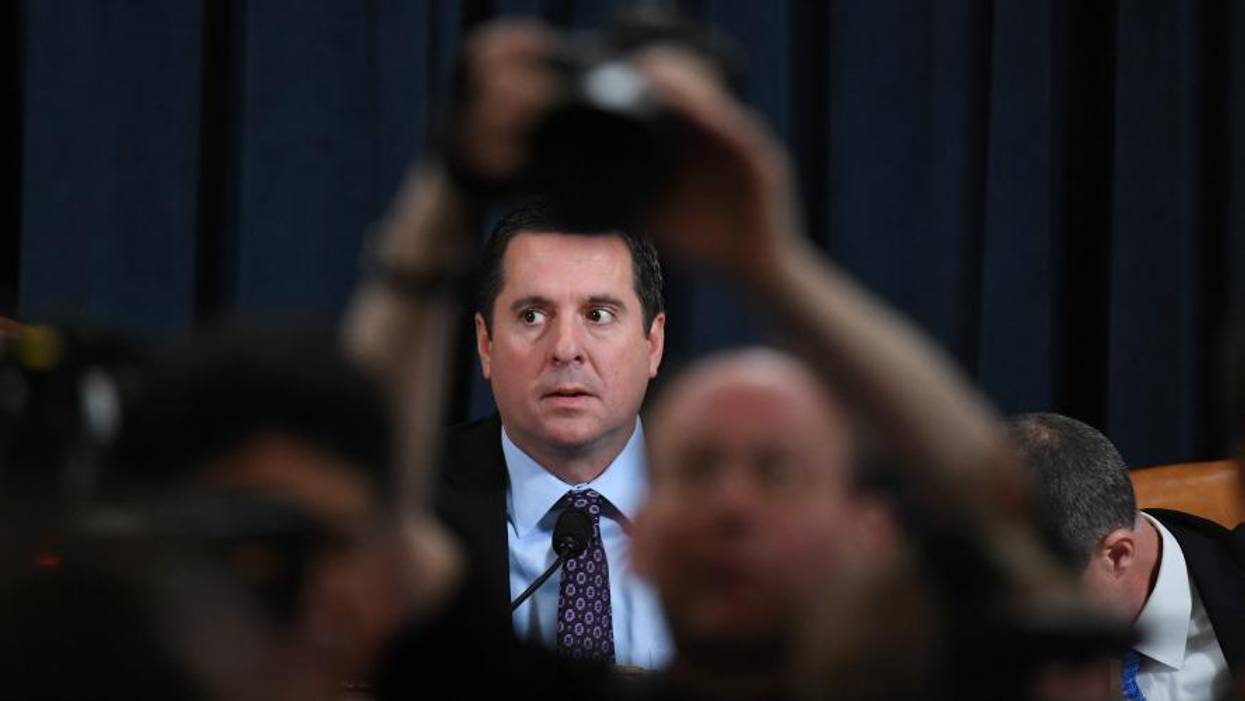
The House Intelligence Committee's 300-page impeachment report released Tuesday made public previously undisclosed and "hugely incriminating" phone records that showed Rep. Devin Nunes, the top Republican on the committee, spoke with President Donald Trump's personal attorney Rudy Giuliani multiple times amid the Trump administration's scheme to dig up dirt on Joe Biden.
According to the records, Nunes was also in contact with Lev Parnas, a Giuliani associate who was indicted in October on campaign finance charges.
Communications between Nunes--a fervent defender of the president--and individuals at the center of the Trump administration's months-long effort to pressure Ukraine to investigate Biden were viewed as "far and away the most damning" revelation in the Intelligence Committee's sprawling impeachment report, which accuses the president of attempting to "use the powers of his office to solicit foreign interference on his behalf in the 2020 election."
"I think he has a lot of explaining to do," Rep. Ted Lieu (D-Calif.), a member of the House Judiciary Committee, said of Nunes.
The Intelligence Committee report states that the calls between Nunes, Giuliani, and Parnas came on the heels of an April 7 column in The Hill by right-wing writer John Solomon, who alleged "wrongdoing by American Democrats and their allies in Kiev."
"Over the course of the four days following the April 7 article, phone records show contacts between Mr. Giuliani, Mr. Parnas, Representative Devin Nunes, and Mr. Solomon," the report says. "Specifically, Mr. Giuliani and Mr. Parnas were in contact with one another, as well as with Mr. Solomon."
"Phone records also show contacts on April 10 between Mr. Giuliani and Rep. Nunes, consisting of three short calls in rapid succession, followed by a text message, and ending with a nearly three minute call," the report continues. "Later that same day, Mr. Parnas and Mr. Solomon had a four minute, 39 second call."
As The Daily Beast's Lachlan Markay noted, the phone records show that Nunes--who has repeatedly attempted to discredit the impeachment probe into Trump by alleging improper conduct by House Democrats--"had engaged in his own behind-the-scenes communications with the very people at issue in the whistleblower complaint."
"Nunes never revealed those communications during the weeks of committee testimony," Markay pointed out.
In an interview with Fox News' Sean Hannity Tuesday night, Nunes said he doesn't recall talking to Parnas, who said last month he is prepared to testify that Nunes met with a former Ukrainian prosecutor in Vienna last year to dig up damaging information on Biden.
Late Tuesday, Nunes filed a lawsuit seeking $435,350,000 in damages from CNN for publishing a story on his alleged meeting in Vienna.
Asked on Tuesday about Nunes' appearance in the call records, House Intelligence Committee chairman Rep. Adam Schiff (D-Calif.) said "it is deeply concerning that at a time when the president of the United States was using the power of his office to dig up dirt on a political rival, that there may be evidence that there were members of Congress complicit in that activity."
Late Tuesday, the Intelligence Committee voted along party lines to send the report to the House Judiciary Committee, which is holding its first public impeachment hearing on Wednesday.
Chaos is a pit, the all-knowing eunuch Lord Varys warns in Game of Thrones, "a gaping pit waiting to swallow us all."
The conniving Peter Baelish, known as Littlefinger, disagrees: "Chaos isn't a pit," he replies. Too few realize, he says, that, "Chaos is a ladder... Only the ladder is real. The climb is all there is."
What does this tell us, other than the fact that earlier this year I binge-watched Game of Thrones? Well, reflect on Littlefinger's cynical opportunism and see how the GOP has degenerated into a party of Littlefingers, lying and scheming for no other reason than to keep climbing the ladder for the power, stature and money they believe it signifies. Rung after rung, the Rudy Giulianis, the Lindsay Grahams and Jim Jordans and Devin Nunes try to rise, blindly willing and in obeisant lockstep behind a maniac, not realizing that at the top there is nothing but a long fall down to their own moral destruction.
Look upon his works and despair. On Friday morning, there was Donald Trump on Fox & Friends, after days of evidence before the House intelligence committee confirming his use of office for personal political gain. This second week of damning testimony, especially from Lt. Colonel Alexander Vindman, EU Ambassador Gordon Sondland, diplomat David Holmes and former National Security Council staffer Fiona Hill, moved him steadily along the road to impeachment.
So of course, he went on Fox to howl at the white and lifeless moon (also known as Steve Doocy and pals) about the lies, conspiracies and calumnies aimed at bringing a great president down. And to think, all over a "perfect" phone call to the president of Ukraine.
As ever, Trump has his own set of conspiracies and insults to monger and according to Daniel Dale and Tara Subramaniam at CNN, peddled "at least 18 false claims." For nearly an hour's ramble, he maligned the usual suspects: Biden, Warren, Pelosi ("crazy as a bedbug") and House intelligence committee chair Adam Schiff ("He's a sick puppy. He's so sick.").
"When it comes to the defense of Dear Leader, Republicans in Congress seem to have decided that any wacky conspiracy in a storm will do, no matter from whence it came."
He again impugned the character of former US Ukrainian Ambassador Marie Yovanovich, who so memorably testified against him last week. And he once more told lies about Ukraine and its imaginary involvement with CrowdStrike, the computer security company hired by the Democratic National Committee to investigate hacking of its computers (CrowdStrike has worked with both Democrats and Republicans).
That CrowdStrike part of the fable has not been getting quite as much attention as Trump's attempt to bribe Ukraine into announcing an investigation of the Bidens, so perhaps a moment to fill in those who haven't been following this sordid mess with a single-minded obsession bordering on the clinical.
This nutty - and disproven - story, which Trump mentioned in his now infamous July 25 call with Ukrainian President Zelensky, falls in line with the death of Vince Foster, Obama's birth in Kenya, the pizzeria child sex ring, Benghazi, Hillary Clinton's emails and assorted other madcap theories. It claims that CrowdStrike is a Ukrainian company (it's not) and conspired with the DNC in a frameup to pin the hacking on Russia and blame Russia for 2016 election interference.
Trump says he believes CrowdStrike turned over a DNC server with incriminating data to Ukraine, which somehow used it to mess with Russia and our electoral process. "I still want to see that server," Trump bellowed on Fox. "You know, the FBI's never gotten that server, that's a big part of this whole thing. Why did they give it to a Ukrainian company?" (Again, it's not Ukrainian.)
And by the way, to anyone with any knowledge of cybersecurity, the idea of physically turning over a server is just plain ludicrous and betrays a computer illiteracy on the part of Trump and his pals similar to the late US Senator Ted Stevens of Alaska describing the Internet as "a series of tubes."
The CrowdStrike tale is, as Lt. Col. Vindman testified this week, "a Russian narrative that President [Vladimir] Putin has promoted." This was seconded by ex-NSC expert Fiona Hill, who described the claim as "fictional" and "perpetrated by Russian security services" - the very people the American intelligence community unequivocally say were the actual guilty ones.
In fact, as we learned from Julian E. Barnes and Matthew Rosenberg at the New York Times on Friday, "American intelligence officials informed senators and their aides in recent weeks that Russia had engaged in a yearslong campaign to essentially frame Ukraine as responsible for Moscow's own hacking of the 2016 election, according to three American officials. The briefing came as Republicans stepped up their defenses of Mr. Trump in the Ukraine affair.
"The revelations demonstrate Russia's persistence in trying to sow discord among its adversaries -- and show that the Kremlin apparently succeeded, as unfounded claims about Ukrainian interference seeped into Republican talking points."
Further, "American intelligence agencies believe Moscow is likely to redouble its efforts as the 2020 presidential campaign intensifies."
Add to this new reporting from The Daily Beast and others that Lev Parnas, the Giuliani crony freshly indicted for campaign finance fraud, facilitated a meeting in Vienna late last year between House intelligence committee ranking member Nunes and fired Ukrainian prosecutor general Victor Shokin, a figure often mentioned in the impeachment hearings. The purpose: yet another attempt to dig up imaginary dirt intended to corroborate fictions about Ukraine, the Bidens and 2016.
When it comes to the defense of Dear Leader, Republicans in Congress seem to have decided that any wacky conspiracy in a storm will do, no matter from whence it came. The angry performance of their insane clown posse serving on the House intelligence committee over the last couple of weeks says it all. Knowingly or not, they have played into this campaign of disinformation and disruption and are dragging democracy down with them. Meanwhile, the Trump-led campaign to dismantle government while trying to siphon off every penny of government revenue for personal enrichment goes on.
Game of Thrones' Littlefinger had it wrong, as does his descendant in the White House. Chaos may be a ladder to power and making a quick buck but in the end, chaos is just chaos, and it's being fomented not only from the very top but throughout the universe of Trump minions. Sadly for us all, there are far too many of what the Russian hierarchy -- led by a former KGB agent -- so often and cogently call "useful idiots."
Calls for Republican Rep. Devin Nunes to resign spread rapidly on social media Friday night following reports that Lev Parnas, an indicted associate of President Donald Trump's personal attorney Rudy Giuliani, is willing to testify to House impeachment investigators that Nunes met with a former Ukrainian prosecutor in an effort to dig up dirt on former Vice President Joe Biden.
Parnas' attorney Joseph Bondy told CNN Friday that his client "learned from former Ukrainian Prosecutor General Victor Shokin that Nunes had met with Shokin in Vienna last December," news that sparked the trending Twitter hashtag #NunesResign.
According to CNN, Parnas and Nunes, the top Republican on the House Intelligence Committee and a fervent Trump defender, "began communicating around the time of the Vienna trip."
"Parnas says he worked to put Nunes in touch with Ukrainians who could help Nunes dig up dirt on Biden and Democrats in Ukraine," CNN reported. "That information would likely be of great interest to House Democrats given its overlap with the current impeachment inquiry into President Trump, and could put Nunes in a difficult spot. Bondy tells CNN his client is willing to comply with a congressional subpoena for documents and testimony."
Nunes has repeatedly claimed during public impeachment hearings that Ukraine may have meddled in the 2016 election in an effort to harm Trump's campaign.
"President Trump had good reason to be wary of Ukrainian election meddling against his campaign," Nunes said Thursday.
Fiona Hill, a former member of Trump's National Security Council, testified Thursday that Nunes' claim of Ukraine election meddling is a "harmful" fiction.
CNN story came days after The Daily Beast reported that Parnas, who was indicted last month on campaign finance charges, "helped arrange meetings and calls in Europe" for Nunes.
In a statement to far-right outlet Breitbart News, Nunes accused CNN and The Daily Beast of "defamation" and said he plans to sue both publications.
"I look forward to prosecuting these cases, including the media outlets, as well as the sources of their fake stories, to the fullest extent of the law," Nunes said. "I intend to hold The Daily Beast and CNN accountable for their actions. They will find themselves in court soon after Thanksgiving."
When CNN asked Nunes earlier this month about the reported Vienna trip, Nunes refused to answer.
"I don't talk to you in this lifetime or the next lifetime," the California Republican said. "At any time. On any question."
Foreign influence in America is the topic du jour. From the impeachment inquiry into President Trump's request that a foreign power investigate a political opponent to the indictment of associates of his personal attorney, Rudy Giuliani, for illegally funneling foreign money into U.S. elections, the nation has been transfixed by news of illegal foreign influence in the political process. While such efforts to subvert American elections garner headlines, there remains a treasure trove of perfectly legal ways foreign powers are subverting American democracy. And they're not waiting for election day -- they're doing it every single day of the year.
"Legislation Is Prepared by Lobbyists All the Time"
Foreign powers have a remarkably direct way of making sure their voices are heard in Washington: let their lobbyists script what various members of Congress say. That may sound wild, but it's actually commonplace. Lee Fang of the Intercept reported a typical example of this recently. He discovered that, on November 13, 2017, Representative Ed Royce (R-CA), then chairman of the House Foreign Affairs Committee, read verbatim into the congressional record a set of talking points given to his office by lobbyists working for the Saudi government. As Representative Ro Khanna (D-CA) and a bipartisan group of lawmakers debated invoking the War Powers Act to end U.S. support for the war in Yemen, Ari Fridman, a lobbyist working for Hogan Lovells, itself representing Saudi Arabia, distributed Saudi talking points to Royce and others. In a C-SPAN video from the debate on the floor, Royce can be seen parroting these very talking points, word for word.
This might seem like an extraordinary success for any lobbyist of a foreign power, but it's actually quite common. A report by the Project On Government Oversight (POGO), co-authored by Ben Freeman, for instance, documented multiple examples of foreign agents writing speeches, even legislation, for members of Congress. Most notably, their investigation unearthed documents showing a foreign agent had provided track-change edits on a proposed bill to a staffer working for Senator Daniel Inouye (D-HI). When the legislation was finally introduced by the senator, it included the exact language the lobbyist had suggested. Asked about this, that agent responded, "It's not unusual for us to comment back and forth" with Congressional staff about legislation. He added, "Proposed legislation is prepared by lobbyists all the time."
In our post-Citizens United world where, thanks to that 2010 Supreme Court decision, money is considered speech when it comes to campaign finance, agents working on behalf of foreign governments regularly "speak" with their pocketbooks. The Foreign Influence Transparency Initiative at the Center for International Policy (CIP), where we work, has repeatedly reported on how agents of foreign governments make campaign contributions to the congressional representatives they're contacting on behalf of foreign powers.
Sometimes they even make such donations on the very day they meet with the member of Congress. In investigating the Saudi lobby in 2018, we found at least five instances when lawmakers received campaign contributions on the day they or their staff spent time with someone working for the Saudis. Firms representing Saudi Arabia gave this way to Senator Jim Inhofe (R-OK), Senator Robert Menendez (D-NJ), Senator Tina Smith (D-MN), Senator Ben Cardin (D-MD), and Representative Mike Conaway (R-TX). Even more striking are contacts (and contributions) made just prior to important votes on Capitol Hill. Senator Bill Nelson (D-FL), for instance, received a total of $3,000 from Brownstein Hyatt Farber Schreck, a firm representing the Saudis, in the four days before a March 20th, 2018, vote on a War Powers Resolution introduced to end U.S. support for the Saudi-led coalition in Yemen. (One of those contributions came on the day of the vote.) Nelson, who has since lost his Senate seat, ended up voting against the Yemen resolution in line with Saudi interests.
While foreign nationals are prohibited from making campaign contributions -- exactly what presidential lawyer and former New York mayor Rudy Giuliani's Ukrainian associates are accused of orchestrating -- nothing prohibits citizens working on their behalf from such donations. Some would argue that gestures of this sort look remarkably like bribery, but they are perfectly legal, according to the Foreign Agents Registration Act (FARA), as long as any contributions an agent reports are "from your own funds and on your own behalf."
Buying Think-Tank Thinking
Foreign powers have ample ability, through their lobbyists, to directly influence congressional legislation. They also have at least three indirect, perfectly legal avenues for trying to shift U.S. foreign policy in their favor: think tanks, the media, and academia.
As CIP's recent report on the influence of the United Arab Emirates (UAE) in America documented, lobbyists hired by foreign powers often work directly with influential think tanks to shape the narrative about the countries they represent. They meet with think-tank experts, provide them with talking points, offer research assistance, and sometimes even give them all-expense-paid trips to the country in question.
Such talking points are disseminated to think-tank pundits in part to influence what they'll write or say. Their work, in turn, is often shared by various congressional offices. This process is effectively talking-point laundering. A foreign power's message is communicated to sympathetic think-tank experts who then echo the talking points in their work, speeches, or even testimony before Congress without having to disclose their connections to that country.
For example, as our UAE report documented, Michael Knights, a senior fellow at the Washington Institute for Near East Policy, has an extremely close relationship with lobbyists working on behalf of the UAE and his public comments often echo their talking points. An article Knights wrote on June 14, 2018, on the UAE's move to "liberate" the Yemeni port of Hodeidah, deeply embroiled in the Saudi-UAE war in that embattled land, closely mirrored an article disseminated by Hagir Elawad & Associates, a firm working on behalf of that country. It, in turn, had been written by Anwar Gargash, the current UAE minister of state for foreign affairs.
FARA filings show as well that Knights has a very close relationship with Richard Mintz, managing director of the Harbour Group, which also represents the UAE in Washington. He reportedly coordinated with Knights on four separate trips to visit UAE forces in Yemen. Afterward, Knights would write a distinctly uncritical analysis about UAE operations in Yemen, never, for instance, mentioning the targeted-assassination program that UAE officials oversaw there or the fact that those same forces gave U.S.-supplied weapons to al-Qaeda and other militant groups in that country. He also dismissed accusations of war crimes by UAE forces as just the work of "local proxies."
While registered foreign agents legally have to declare anything they distribute on behalf of a foreign power, there is no such requirement for think-tank experts. In fact, such institutions don't even have to disclose that they receive funding from foreign powers. Under current law it's perfectly legal for scholars whose work is funded by a foreign government to craft an article with that government's registered foreign agents without disclosing any of their ties.
This can become particularly problematic when such experts testify before Congress without disclosing their potential conflicts of interest. The House of Representatives requires witnesses to fully reveal foreign funding before testifying, but in many instances, such experts don't disclose the money their institutions receive from foreign governments. A POGO report found that the existing House rule relating to testimonial transparency is remarkably weak, allowing many witnesses to adopt a particularly narrow interpretation of the "issues related" to their testimony. In the process, they simply don't disclose their foreign ties.
Experts from the Atlantic Council, which received at least $2,585,000 in foreign funding in 2018, for example, failed to disclose this funding when appearing before Congress. Perhaps most notably, two Atlantic Council experts who testified on "reforming the National Security Council" and "defeating terrorism in Syria" didn't reveal the more than $1 million dollars the Atlantic Council received from the United Arab Emirates embassy in Washington, even though the UAE undoubtedly had an interest in each of those issues.
Shaping the Media Narrative
Media outlets are another prime target of foreign influence operations. Some governments, of course, run their own media outlets in America and many of these are required to register under the Foreign Agents Registration Act. China's CCTV and Russia's RT, which was deemed "the Kremlin's principal international propaganda outlet" in the Director of National Intelligence's report on Russian interference in the 2016 election, are obvious examples. And, of course, foreign powers continue to engage in a number of illegal Twitter and Facebook activities meant to influence domestic politics, as well as American views of their own countries. In early November, for example, two former Twitter employees were charged with spying for Saudi Arabia and accessing the private information of the Kingdom's critics in the U.S.
Generally ignored, however, are the ways in which foreign powers often engage in legal media manipulation that neither they, nor such outlets, are required to tell viewers or listeners about. One of the most common tactics is simply to work closely with reporters covering issues of importance to them. No surprise then that the Center for International Policy's investigations have consistently found journalists among the top targets of registered foreign agents. In some cases it's fairly easy to see how this influence gets converted into extremely positive spin on their behalf.
Take, for example, OZY, which brands itself as "news for the disruptive." Its reporters were contacted repeatedly by UAE agents in late 2017 and early 2018 regarding "story ideas" and to arrange interviews. This courtship culminated in two extraordinarily flattering OZY pieces, one describing Dubai's "Museum of the Future" and the other portraying Dubai as "one of the world's new fashion capitals," ignoring the fact that you can face up to three years in prison, especially if you're a woman, for dressing inappropriately there.
Foreign Influence in the Ivory Tower
While foreign influence in Washington has consistently made front-page headlines, it's arguably just as pervasive at American universities. Chinese influence has, for instance, garnered considerable attention in recent years. That country's Confucius Institutes, ostensibly language and cultural centers at American colleges paid for by the Chinese government, have been the focus of eye-opening congressional investigations on the role foreign governments can play on campus. As a Senate investigation reported in early 2019, "Confucius Institute funding comes with strings that can compromise academic freedom," allowing the Chinese government to play censor at academic conferences on U.S. soil and even censor course materials critical of China.
Chinese influence on campus has garnered headlines, but that country is just one of more than 100 that have funneled $9-plus billion in foreign money to U.S. college campuses in the past five years, according to the Department of Education -- and China isn't even the biggest player among them. That honor, believe it or not, goes to little (but wealthy) Qatar, which has given more than $1.3 billion to American universities since 2014, nearly three times as much as the Chinese. Its officials, in turn, have gone to great lengths to ensure that the strings attached to such funding aren't known to the public. They even sued the state of Texas to prevent Texas A&M, one of its top grantees, from having to disclose the details of its relationship with Qatar.
While at least two dozen universities are severing ties with Confucius Institutes, schools have been far more reluctant to cut ties with other authoritarian governments. After the brutal murder of Jamal Khashoggi at the Saudi consulate in Istanbul, Turkey, for example, universities and think tanks faced considerable pressure to sever ties with Saudi Arabia, but few did. Since 2014, the Massachusetts Institute of Technology (MIT), one of the most prestigious universities in the country, has received the most money from the Saudis -- at least $77 million, according to Department of Education records.
Following outrage after Khashoggi's brutal murder, MIT began a reassessment of its financial ties with the Kingdom. However, in February, when that assessment was finished -- and outrage over Khashoggi's murder was no longer front-page news -- a letter sent to the school's students and teachers concluded that the faculty should be able to "continue their current engagements with colleagues, students, and public and private research sponsors in Saudi Arabia... as long as these projects remain consistent with MIT policies and procedures and U.S. laws and regulations."
Saudi influence on campus can be even more direct than funding. In at least one case, a registered foreign agent working on behalf of that country was a professor on a college campus. According to a report by Brian McGlinchey, an expert on Saudi influence in America, in 2018 Bill Smullen, former chief of staff to Secretary of State Colin Powell, was more recently a registered agent working on behalf of Saudi Arabia while serving as director of the Maxwell School of National Security Studies at Syracuse University. FARA filings show that Smullen was paid to provide "public relations support" for the Saudis, while serving as the head of that prestigious national-security program. When asked if the Saudi money might lead him to show them in a more favorable light at Syracuse, Smullen quickly dismissed the idea, saying, "I don't think there is any conflict of interest."
Expanding the Spotlight to Perfectly Legal Foreign Influence
The scrutiny placed on malign actors like Rudy Giuliani's associates and their alleged dealings with Ukrainian elites to compromise an American election is certainly warranted. We live in a world in which the ability of foreign powers to undermine American democracy (as this country once undermined democracies elsewhere) remains a genuine threat. Seldom, however, does anyone even think about the influence operations of foreign powers -- operations that are perfectly legal and don't garner headlines.
The American political system, which has always been vulnerable to outside influence, is arguably more susceptible to foreign meddling now than it has been in decades -- and most of it is perfectly legal. From woefully inadequate disclosures regarding conflicts of interest by witnesses testifying before Congress to foreign agents filling campaign coffers and literally writing our laws, as well as influencing think tanks, media outlets, and universities, there remain a host of legalways for foreign powers to try to bend our policies and thinking to their will. While it's imperative that we be vigilant in rooting out illegal foreign influence, if American democracy is to remain "of the people, by the people, and for the people," a bright light should be directed onto allforms of influence that seek to undermine it.