SUBSCRIBE TO OUR FREE NEWSLETTER
Daily news & progressive opinion—funded by the people, not the corporations—delivered straight to your inbox.
5
#000000
#FFFFFF
To donate by check, phone, or other method, see our More Ways to Give page.


Daily news & progressive opinion—funded by the people, not the corporations—delivered straight to your inbox.
An independent investigation found Monday that the Trump-appointed leader of the National Oceanic and Atmospheric Administration and another former official violated the agency's scientific integrity policy last year when they released a statement backing up the president's claim that Hurricane Dorian was expected to hit Alabama.
Last September, Trump claimed Alabama would "most likely be hit (much) harder than anticipated" by the Category 5 hurricane, contradicting meteorologists' projections that the storm would mainly affect Florida.
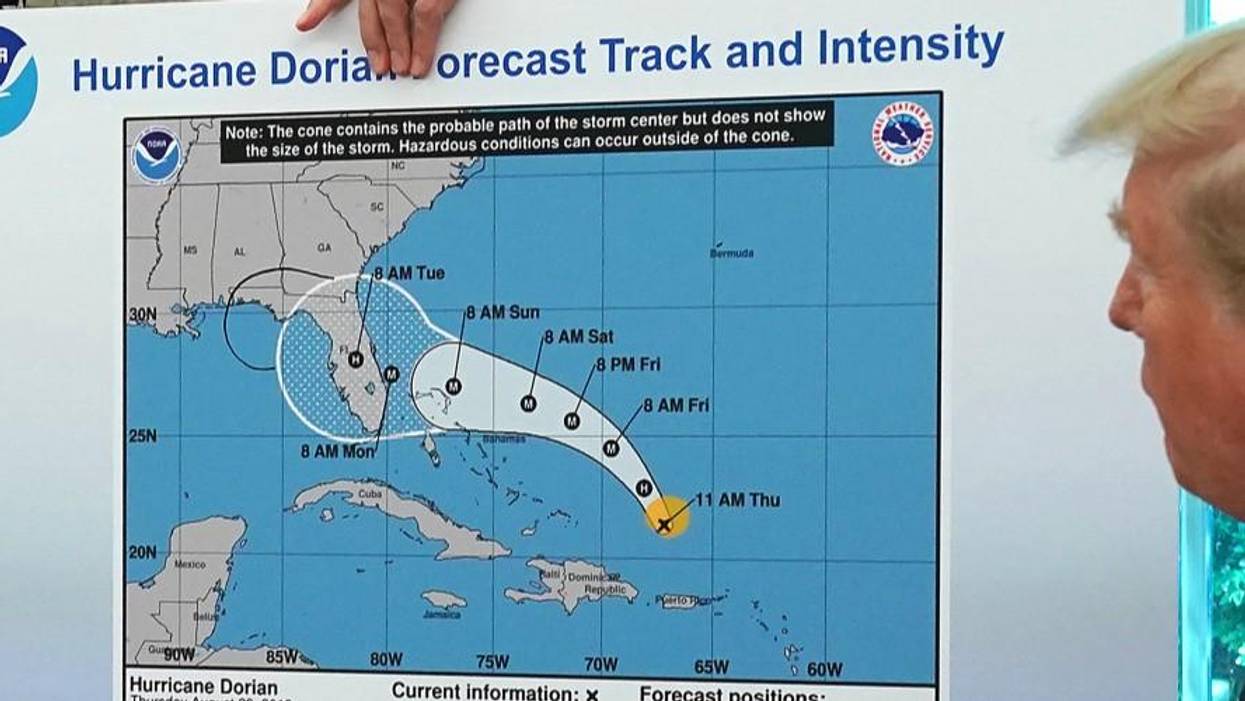
After the National Weather Service's Birmingham, Alabama office tweeted that the president's claim was inaccurate, the president appeared in the Oval Office to display a map altered with a black marker to show the storm's path extended to include Alabama, in an incident widely derided as "Sharpiegate."
"We're about to be in another hurricane season and we're going to have more natural disasters like pandemics and there don't seem to be any consequences for manipulating the science, and that puts real communities, real people at risk."
--Andrew Rosenberg, Union of Concerned Scientists
According to the report Monday from the National Academy of Public Administration (NAPA), acting administrator Neil Jacobs and then-deputy chief of staff and communications director Julie Kay Roberts bowed to political pressure two days after the president's Oval Office appearance when they released a statement rebuking the National Weather Service.
"The Birmingham National Weather Service's Sunday morning tweet spoke in absolute terms that were inconsistent with probabilities from the best forecast products available at the time," said the statement.
NOAA's scientific integrity policy prohibits political interference in the agency's communications about its scientific findings. NAPA found that Roberts and Jacobs, a Trump appointee, violated the agency's code for science supervision and management by releasing the statement, which "compromised NOAA's integrity and reputation as an independent scientific agency."
"Dr. Jacobs and Julie Roberts did not believe it was a good idea to release a statement, but felt significant external pressure to do so," wrote Stephen M. Volz, NOAA's assistant administrator for satellite and information services, in a memo attached to NAPA's final report.
The report did not recommend any consequences for Jacobs and Roberts, instead recommending "scientific integrity training" at the agency and calling on the Commerce Department's inspector general to investigate such violations.
Andrew Rosenberg, a former NOAA administrator who joined two current employees and Rep. Paul Tonko (D-N.Y.) in calling on NAPA to investigate "Sharpiegate," expressed frustration that Roberts and Jacobs would not be held accountable for their actions.
"This is important stuff," Rosenberg, who now leads the Union for Concerned Scientists, told The Hill. "We're about to be in another hurricane season and we're going to have more natural disasters like pandemics and there don't seem to be any consequences for manipulating the science, and that puts real communities, real people at risk."
The report was released following numerous reports of Covid-19 infection and death rates being manipulated by state public health officials. Rebekah Jones, a government data scientist in Florida, said in May that she was fired for refusing to manipulate numbers "to drum up support for the plan to reopen."
In early May, the White House Council of Economic Advisors released a model showing Covid-19 deaths falling to zero by May 15. Since May 15, there have been about 20,000 new cases detected in the U.S. per day, and deaths have gone up to more than 116,000.
The National Oceanic and Atmospheric Administration (NOAA) has just released its Atlantic hurricane season outlook for 2020, forecasting an above-average hurricane season with 13-19 named storms, of which 6-10 could turn into hurricanes. Of these hurricanes, 3-6 could become major. If the outlook projections materialize, 2020 would be the fifth year in a row with above-normal tropical cyclone activity. In addition, the NOAA outlook comes on the heels of the first named Atlantic tropical storm of the season, Arthur, which - for the sixth year in a row - formed before the official start of hurricane season, June 1.
The United States is reeling from the novel coronavirus pandemic, with over 1.5 million cases and roughly 93,500 deaths nationally as of this writing. The full economic and social impacts of both the disease and the measures to contain it are still not clear, as the situation is in constant flux, but we do know it will take a long time for people and the country to recover. And while there is increasing pressure for the states to reopen for the sake of the economy, and stay-at-home orders and other restrictions are being lifted, doing so too soon may lead to a fall second wave of the disease. While we cannot say what the situation of the pandemic will be in the coming months, we do know hurricane season is about to start and its risks will only grow and potentially compound any impacts from the pandemic.
The NOAA outlook mirrors the Colorado State University forecast released in April. Both base their predictions mainly on the absence of an El Nino throughout the summer, in addition to above-average tropical and subtropical sea surface temperatures. El Nino has been linked to increased westerly winds that prevent optimal conditions for hurricanes to form in the tropical Atlantic, while warmer-than-average sea surface waters act like fuel for hurricanes to gain strength, as warm waters bring with them more humidity and other conditions conducive to the formation of hurricanes.
Scientists have compared the conditions this year to those in 2005, when 28 storms developed in the Atlantic and Katrina made landfall, and believe that this could be the most dangerous season since then.
There is definitive evidence that climate change is making hurricane seasons progressively worse, as I describe in a previous blog. If the past five hurricane seasons have taught us anything, it is that hurricanes are becoming stronger, wetter, slower, and more destructive, and all these trends have been linked to anthropogenic global warming.
A just-released study found that, in the period between 1979 and 2017, global warming increased the likelihood of a given tropical cyclone becoming a Category 3-5 by roughly 8 percent per decade. Hurricanes are also intensifying faster compared to historical records - we saw that with hurricanes Harvey (2017), Michael (2018), and Lorenzo (2019), and just this week with cyclone Amphan in the Bay of Bengal, located to the East of India.
A National Center for Atmospheric Research (NCAR) study also found that storms could reach farther inland with stronger winds and more rainfall. For these reasons alone, it is extremely important that hurricane preparedness takes into account the pandemic constraints and compound risks. The administration, federal agencies and local and state governments must have disaster relief plans and resources in place.
While hurricane season is upon us, flood, wildfires, and of course, it being summer, extreme heat also threaten to overtax federal disaster relief in the coming months. The NOAA running list of billion dollar disasters includes many instances of hurricanes, as well as wildfires, floods, storms, and other extreme weather events. With the potential for several of these disasters to happen simultaneously throughout hurricane season, the capacity for response if a hurricane hits may be significantly diminished.
The map below is a view of the pandemic projections as of June 27th, early in hurricane season. Projections show that roughly 8.7 million people may be infected altogether in the states at risk of hurricane impacts if there is a 20 percent weekly reduction in social contact.
Highest risk for hurricanes is usually in states from the Mid-Atlantic coast down to Florida and along the Gulf coast to Texas. However, New England states are not completely out of the woods, as since 1938 seven hurricanes have made landfall in the region. New England and many inland states have also been impacted by hurricanes after landfall, especially due to extreme precipitation and floods, even if they've been downgraded to tropical storms.
As of the 2019 hurricane season, an estimated 7.2 million homes were at risk of storm surge damage in states along the Atlantic and Gulf coasts, with Florida, Texas and Louisiana topping the list, and numbers should be similar this year. NOAA estimated in 2010 that 39 percent of the U.S. population resided in coastal shoreline counties.
Map shows the difference in the number of COVID-19 cases between the scenario used for the Florida map below and one in which there's just the 20% weekly reduction-no increase in social contact in reopening counties. These are total number of cases rather than the confirmed number of cases. Data source: https://github.com/shaman-lab/COVID-19Projection
Florida is one of the most vulnerable states when it comes to hurricanes. A recent study by Florida Atlantic University (FAU) showed that 10 of its 67 counties - mostly in the Panhandle and including some of the hardest hit by hurricane Michael in 2018 - are woefully unprepared for hurricane season evacuations, especially one about to occur in the midst of a pandemic. When you add projections of coronavirus infections for those counties (see figure below), the picture is grim - and that is just one state. Being prepared for both hurricanes and COVID-19 is a tall order for any state, sure, but state priorities now need to be identifying and filling the most dangerous gaps in their preparedness, in light of compound risks and hazards.
Projections are the total number of COVID-19 cases by June 27th and are based on a scenario in which: 20% weekly reduction in social contact in counties where cases are increasing + 10% weekly increase in contact for counties that have reopened, with the latter overriding the former. Map of evacuation preparedness by FAU (https://cues.fau.edu/research/evacuation/). Projections data source: https://github.com/shaman-lab/COVID-19Projection
The Federal Emergency Management Agency (FEMA) is the agency in charge of COVID-19 response and recovery for all states and territories. It is also responsible for hurricane emergency preparedness, emergency response, and disaster recovery. The intersection of the pandemic with hurricane season is unprecedented and unfortunate, as it will play out as FEMA's resources and staff are stretched thin with the pandemic response and a series of disasters since 2017, which will make it harder for the agency to rise to the challenge of simultaneously occurring disasters. FEMA has prepared specific guidance for hurricane preparedness in a COVID-19 era, and its Administrator stated that they are planning for safe evacuation, protection of vulnerable segments of the population, and the possibility of other simultaneous disasters and compound risks, such as wildfires. Read more about hurricane and COVID-19 preparedness and response policies and solutions in my colleague Rachel Cleetus' blog.
In addition to government assistance, we know people's socio-economic status contributes to disaster preparedness and recovery, as well as their ability to cope and make sound decisions. A project started 10 years after Katrina's landfall looked for long-term predictors of resilience, and found a range of factors that seem to help with resilience and recovery after a disaster: financial resources, yes, but also social and cultural ties, and access to stable housing after the event appeared to be important factors. Those are important to consider in an emergency, when a community is asked to evacuate, and also in their decision to return. After Katrina, many people relocated, particularly to the Houston area, but one study based on American Community Survey data found that one year after landfalling, roughly 53 percent of New Orleans adult residents were back, many to their original housing.
The various measures to limit movement in and across states add to those decisions: where could people go safely, if they can evacuate?
A scenario where many people don't evacuate at all is not out of the question either, as evacuating necessitates resources many may not have - transportation, lodging, money. Sheltering in place is also a resource-intensive endeavor, where people may see an increase in electricity bills, food consumption, and other expenses. How can people who have been laid off because of the COVID-19 crisis cope when they are low on cash?
We know Latinos and Blacks are becoming unemployed during the current economic crisis at higher rates than Whites and others, and many in these population segments are also harder hit by COVID-19. People of color and those struggling with low incomes are also historically hit differentially and harder by disaster such as hurricanes and floods, and the way relief is handled makes it more difficult for them to rebound.
Identification of those most vulnerable to these compound risks has to be an integral part of any disaster response plan--a lesson we should have learned from past disasters such as Katrina.
Over one million people were under evacuation orders as Hurricane Dorian approached the U.S. last year. Imagine one million people on the move right now, all trying to find safe shelter. Emergency response officials need to develop COVID-19-safe evacuation plans, with safe locations and enforced social distancing, taking into consideration those most vulnerable socially and economically. Communities should also learn about preparing now for this unique hurricane season, so that together, everyone comes out safe and well.
The climate crisis has moved into everyday life and it can feel overwhelming.
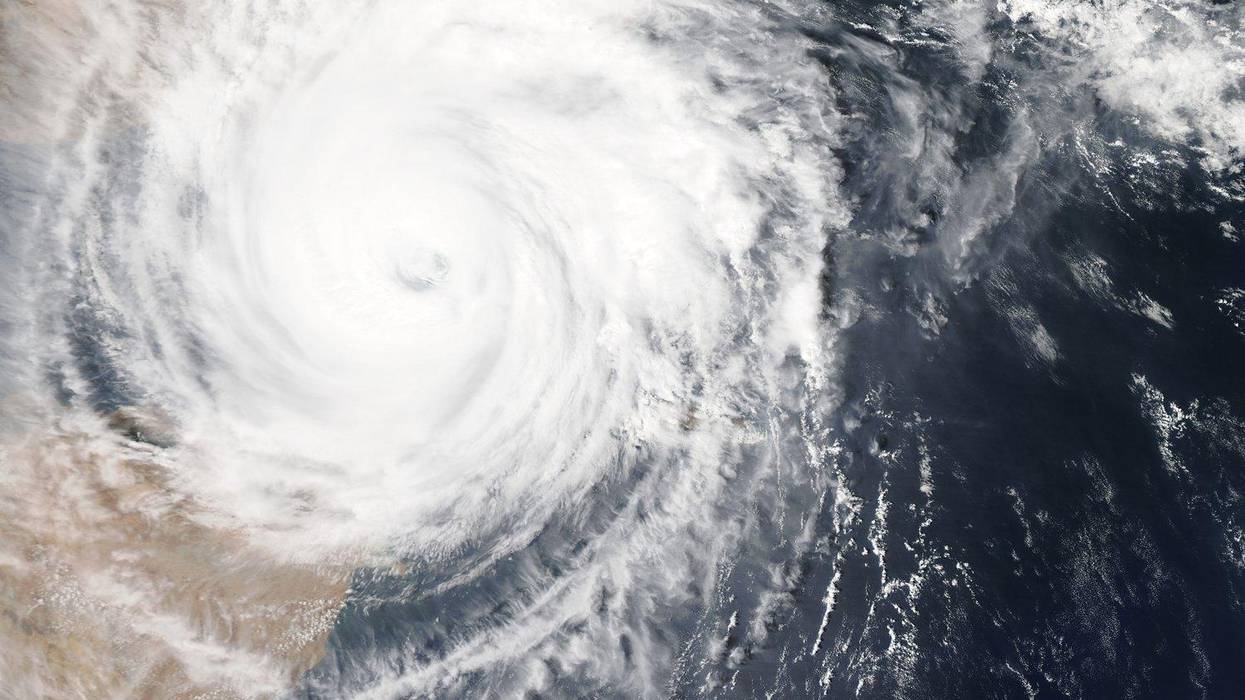
Hurricane Dorian, which left more than 70,000 people homeless, was an instance of this climate breakdown. A hotter ocean means stronger storms, a higher sea means worse flooding, a hotter atmosphere means more rain. Worsening wildfires in California and elsewhere, devastating flooding in our agricultural heartland, swaths of dead forest in the Rockies, the global collapse of coral reefs -- these are just a few examples of the long and lengthening list of the catastrophic impacts of climate breakdown.
The evidence that human-caused global heating is dangerously disrupting Earth systems is unequivocal, and it no longer takes a scientist to see this. Denying this reality puts billions of lives at risk, and will surely come to be condemned by history.
Faced with this reality, it may be tempting to say, "We're doomed," as Jonathan Franzen recently suggested. This view comes from a deep misconception about how the crisis is likely to unfold. We will not suddenly pass a tipping point to doom at 2deg Celsius of global heating above preindustrial levels, as Franzen incorrectly claims. Instead, climate breakdown exists on a continuum where every 10th of a degree of additional heating means more death and suffering. No matter how bad it gets, we must keep doing everything we can to keep it from getting worse.
My own climate wakeup call came about 13 years ago when, as a physics graduate student at Columbia, I heard a lecture by the climatologist James Hansen. His talk terrified me even through its scientific jargon, and led me to begin reading the peer-reviewed climate literature. Around the same time, my first child was born.
My love for my son made his future mine. This love expanded to include all the life on this planet, this marvelous spaceship. I felt a sense of responsibility to do something, but I didn't know what. I felt confused and panicked.
As my awareness grew, I went through stages of grief. I've cried over ecosystems disintegrating, over the looming possibility of social breakdown, over the scale of suffering and death this will unleash. Letting in the grief allowed me to reach acceptance and get to work. I switched careers from astrophysics to climate science -- and I changed my life.
I realized that bringing my actions into alignment with my principles could reduce my panic and cognitive dissonance. Reducing my carbon emissions was something concrete I could do, and it turned out to be interesting and fun.
In 2010, I examined my carbon footprint and realized that most of my emissions came from flying and food, so I became vegetarian, found ways to cut food waste, and started flying less. I also began to bike and discovered a love for gardening and growing fruit. These and other changes turned out to be so satisfying and joyful to me that I started going out into the community to let others know.
Over three years, I reduced my emissions to about a 10th of an average American's. It wasn't always convenient, and if there were carbon-free planes, I'd probably fly once a year or so. But overall, I prefer my lower carbon life. It's slower and less hectic, and more connected to the Earth and to my community. But while I like it much better, I have no illusions that it represents a solution.
Instead, after years of activism, it's extremely clear to me that the most important thing any one of us can do is to raise our voices to shift the culture as much as possible. We need mass global climate mobilization -- the faster we transition to a carbon-free civilization, the better. To unlock collective action, we need people to view climate breakdown with the urgency it merits, and to view burning fossil fuels and clearing forests as socially unacceptable. We need a billion climate activists.
Burning less fossil fuel in our own lives is one way to empower our voices. I've found that taking this step makes my voice more authentic and allows me to speak out more freely. Actions do speak more loudly than words, and the fact that I feel this is urgent enough to change my lifestyle isn't lost on my audience.
While I think using less fossil fuel will benefit anyone who is concerned about climate breakdown (and this should be everyone!), I realize it isn't easy. But there are many other ways to empower your voice. I've started to talk about climate breakdown every chance I get -- with friends, family, colleagues, supermarket cashiers and other activists.
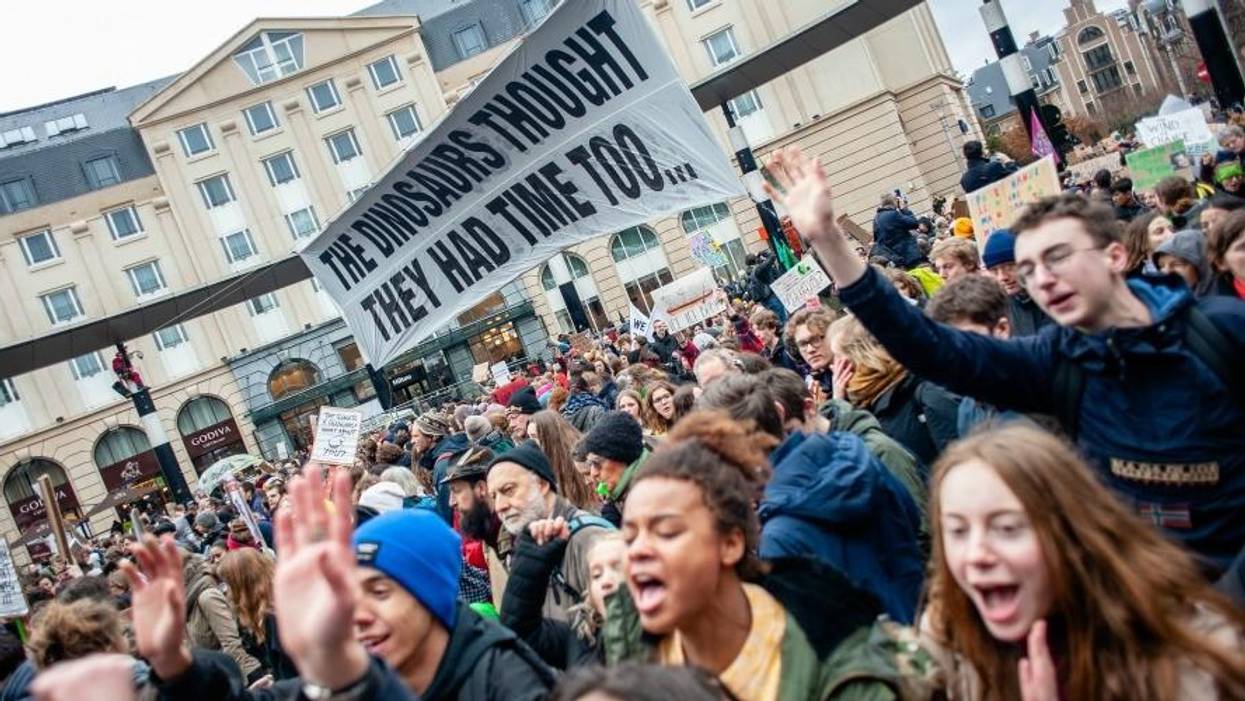
Anyone can do this, and it will naturally connect you with communities of climate activists, such as FridaysForFuture, Sunrise Movement, Citizens' Climate Lobby, 350.org and Extinction Rebellion. On Friday, Sept. 20, young people around the world will be holding a global climate strike to demand action. Joining a community of activists adds your voice powerfully to a chorus of other voices, helps you become quickly informed, and helps you stay sane as you deal with some very challenging knowledge.
As you get more experience, use your creativity. I've been working to move people in academia toward flying less. We can all use our unique skills and interests to move the needle. At this point, it also makes sense to bring lawsuits against industry and government. It's rational to practice nonviolent civil disobedience. These are all forms of speech that can make a difference.
For me, it has been a long road and I often felt like a lone voice in the wilderness. But my journey isn't all that remarkable. What it requires is a willingness to stare this monster straight in the eye and then rise up to protect what we love about this wondrous place.
Today, despite all the grim climate news, I actually feel more optimistic than ever. People are waking up! Maybe there's a bit of panic, but that's a sensible response and a good place to start. I'm hopeful we'll see broad climate mobilization and systems transformation at a pace and scale I wouldn't have dared dream of even a year ago. Together, we're on our way to becoming those billion climate activists.
Although broadcast TV news generally does a subpar job of covering climate change, ABC has fared considerably worse than its counterparts, airing less climate coverage than CBS and NBC every year since 2013, according to a Media Matters study. Notably, two of the debate's moderators, George Stephanopoulos and David Muir, also anchor ABC's two major news program, and those shows aired just over 10 minutes of combined climate coverage in 2018, far behind CBS' and NBC's news programs.
ABC has continued this trend, largely ignoring major climate-related stories in 2019:
On August 22, the Democratic National Committee's resolutions committee rejected a resolution to sponsor a climate debate. A climate debate would have helped voters learn where the candidates stand on potential solutions, motivated candidates to articulate clear plans for climate action, and ensured that debate moderators don't give climate short shrift as they have done in years past. While dedicated "town halls" on climate have been announced since the DNC's decision, that format's limitations and challenges mean that debate moderators still bear the responsibility for engaging the candidates in a meaningful discussion of the climate crisis.
And unfortunately, this presidential election cycle isn't off to a promising start when it comes to discussion of climate action and policy. The climate crisis was the topic of 9.5% of questions during the two-night Democratic presidential primary debate hosted by CNN on July 30 and 31. During the two-night debate hosted by NBC in late June, only 5.8% of the questions were about climate change.
These numbers are only slightly better than those of the 20 presidential primary debates in 2015 and 2016, when a mere 1.5% of the questions were about climate change and ABC moderators failed to ask a climate question in either the network's Democratic or Republican debate.
There are a few ways that ABC's moderators can ensure the climate crisis receives the substantial attention it deserves. These include asking multiple questions about climate change and giving all of the candidates a chance to weigh in, asking specific questions about candidates' plans and proposed solutions, and helping voters understand the differences between the candidates' climate plans. It's also important for moderators to avoid: framing climate change as a narrow political issue, fixating on the cost of taking action to stem the climate crisis without mentioning the potential costs of inaction, and letting the candidates get away with lies or distortions.
Climate change is an existential threat that demands urgent and immediate action to stave off the worst consequences. Without a dedicated climate debate, moderators at the upcoming general debates must begin making the climate crisis a primary focus. Hopefully tonight's debate moderators from ABC and Univision will take this opportunity to give the climate crisis the attention it deserves.
The biggest joke on the planet may be the phrase "national security."
It almost always justifies something brutal, whether outright murder (a.k.a. war) or climate apartheid--the rejection and condemnation of refugees who are fleeing terrible conditions in their homeland, often created or intensified by climate change.
Thus Mark Morgan, acting director of U.S. Customs and Border Protection, addressing the extent to which the United States would open its arms to Bahaman refugees in the wake of Hurricane Dorian, discussed the necessity "to balance the humanitarian need and assistance of those that need it versus the safety of this country," by which he meant . . .
Well, the president (of course!) made matters perfectly clear, unplugging all political correctness regarding refugees and U.S. security: "I don't want to allow people that weren't supposed to be in the Bahamas to come into the United States, including some very bad people and some very bad gang members and some very, very bad drug dealers."
The government could care less about our safety in the course of actions it either pursues or avoids.
One result of the national reticence of Trump America to unconditionally welcome refugees from the Bahamas--where 185 mph winds pummeled the islands for several days, rendering 70,000 people homeless -- was that 119 people were told to leave a ferry that was transporting refugees from Grand Bahama Island to Florida because they lacked visas to enter the U.S. A CBP spokesperson later denied the agency had anything to do with the incident, but the ferry company said it acted after it had been advised by CBP that refugees would be denied entrance without proper documentation.
Even if it was merely border confusion, rather than intentional cruelty, that resulted in the refugees' forced exit from the ferry (and who knows what has happened to them since?), the bureaucratic pseudo-paranoia over the safety of American citizens -- yours and mine! -- that has supposedly reared its head regarding another possible "invasion" of desperate non-white refugees, is a lie so blatant it's virtually invisible.
In point of fact, the government could care less about our safety in the course of actions it either pursues or avoids. Hence, while it's quick to go to war (regardless of the consequences, both internationally and domestically), maintain a nuclear weapons stockpile and devote a trillion dollars to developing the next generation of nukes, it refuses to confront such issues as gun violence, medical debt, the right to clean water and, oh gosh, global warming . . . just to name a few. But it's obsessive in its determination to keep bad non-Americans from slipping into our country and proceeding to harm an American citizen or (even worse) get on the Welfare rolls.
Pretending to keep bad people--excuse me, I mean "very bad people" --out of America is a low-watt public relations ploy that feeds only one thing: us-vs. them thinking and fear of the enemy du jour, the subhuman "other." Stirring up this fear among a segment of the population makes governing so much easier, creating an instant unity often referred to as patriotism.
But beyond the obvious racism of the Trump-era obsession over border "security," there's an even more blatant, unaddressed stupidity about this policy: There is no such thing as national security independent of global security.
Beyond the obvious racism of the Trump-era obsession over border "security," there's an even more blatant, unaddressed stupidity about this policy: There is no such thing as national security independent of global security.
Another term here is wholeness: All things--all people--are connected. Unfortunately, we have managed to divide the planet into a bunch of nation-states that, with a very few exceptions, maintain standing armies to protect themselves from other nation-states and view national sovereignty as their highest, and perhaps only, political value. This seems to leave the planet as a whole unable to unify around deep and serious issues such as climate change, which transcend national borders.
The intellectual defense of national sovereignty is that it's a far better alternative than an autocratic, one-world government. Such a monstrous entity--Hitler writ large--is very easy to imagine, considering that governments on a smaller scale have authoritarian tendencies even if they purport to be democracies, and, of course, absolute power corrupts absolutely. No one wants to imagine a Putin or a Trump dictating directives to the planet at large. Nevertheless, leaving the planet in the hands of 190 or so potential autocrats or corporate errand boys is hardly a better alternative.
Those who are without power--the poor, the indigenous, the uprooted--are at the mercy of heartless authority, no matter that the authority has global limits. One recent such example: Jair Bolsonaro, president of Brazil, infamous for his willingness to turn the Amazon rainforest, ravaged by human-set fires, over to mining, farming and logging interests, told reporters the Amazon is "too much land for so few Indians."
The planet is also at the mercy of the same authority, a phenomenon that journalist George Monbiot described with shocking precision during a recent TED Talk. Noting that "human beings have got this massive capacity for altruism"--indeed, that our remarkable ability to cooperate with one another is what has allowed us to survive as a species--he adds:
"Our good nature has been thwarted by several forces, but I think the most powerful of them is the dominant political narrative of our times, which tells us that we should live in extreme individualism and competition with each other. It pushes us to fight each other, to fear and mistrust each other. It atomizes society. It weakens the social bonds that make our lives worth living.
"And into that vacuum grow these violent, intolerant forces. We are a society of altruists, but we are governed by psychopaths."
All of which brings me back to Trump America and helping the refugees of Hurricane Dorian vs. "keeping the country safe." I am writing these words on the eighteenth anniversary of 9/11, which compels me to point something out to the president: We responded--the whole world responded--to that disaster with unadulterated compassion for the victims. No one worried, let us say, that maybe some delivery boy fleeing the tower and seeking our help had a criminal record . . .
If we want to survive, by which I mean transcend, the global crises we face today, we must grasp the planet, and each other, with compassion--the altruism in our DNA--rather than bureaucratic caution and cold concern for the ruling interests.
Reports late Wednesday that the Trump administration will not offer Temporary Protected Status to Bahamians displaced by Hurricane Dorian drew outrage from lawmakers and rights advocates, who condemned the decision as an inhumane denial of secure refuge to victims of one of the most powerful and devastating storms in recorded history.
"Let's be clear: This decision is racist and cruel," tweeted Sen. Elizabeth Warren (D-Mass.), a 2020 Democratic presidential candidate. "We should grant Temporary Protected Status to Bahamians fleeing Hurricane Dorian."
"To deny temporary protected status to a nation so close to our shores, that has experienced such devastation, is morally bankrupt and a black mark on America."
--Sen. Jeff Merkley
Granting TPS, which the Trump administration has attempted to end for other disaster victims, would allow Bahamians to live and work in the United States until it is safe for them to return home.
Experts told the Washington Post that while TPS would typically be granted to victims of a storm like Hurricane Dorian--which destroyed tens of thousands of homes--the White House's stance is not entirely surprising given President Donald Trump's anti-immigrant, anti-refugee policy agenda.
Sen. Jeff Merkley (D-Ore.) forcefully condemned the Trump administration's reported refusal to offer TPS to Bahamians, a decision that comes just days after Trump smeared Bahamian hurricane victims as "gang members" and "drug dealers."
"After Hurricane Dorian struck the Bahamas, Donald Trump said we'd be there to help. Then he does this," said Merkley. "To deny temporary protected status to a nation so close to our shores, that has experienced such devastation, is morally bankrupt and a black mark on America."
Reports of the Trump administration's decision came as rights groups rallied outside the Washington, D.C. headquarters of Customs and Border Protection Wednesday night to demand that the U.S. welcome Bahamian refugees.
The rally was announced after hundreds of Bahamians were ordered off a ferry headed for Ft. Lauderdale, Florida because they did not have U.S. visas.
"Shame on Donald Trump for his racist words and policies," said Evan Weber of the youth-led Sunrise Movement, which helped organize the demonstration.
The climate crisis and the Trump administration's anti-immigration agenda intersected this week when immigration officials barred some Hurricane Dorian evacuees from the U.S., prompting the Sunrise Movement, United We Dream, and other groups to organize a rally in Washington, D.C. Wednesday night and demand that Bahamians be allowed into the country.
As the groups were preparing for the rally, multiple sources Wednesday afternoon reported that Bahamians would not be granted Temporary Protected Status (TPS), which would allow them to live and work in the U.S. until it is safe to return home.
The groups plan to rally at 6:30 pm ET at Customs and Border Protection (CBP) headquarters and demand the agency reverse its policy of requiring Bahamians to have a travel visa if they're arriving in the U.S. after fleeing Hurricane Dorian's destruction.
The rule, reflected on the Department of Homeland Security website, which was updated on Monday, goes against general protocol for Bahamian travelers, who have normally been allowed into the U.S. with only a passport and clean police record.
"This is disgraceful and goes against everything we are supposed to stand for as a nation," Sunrise Movement co-founder Varshini Prakash said in a statement. "These are people whose homes and livelihoods have been totally destroyed, who have lost family members. But instead of welcoming them with open arms and offering support, we're sending them back to an island with little shelter, no food, and no access to basic necessities."
CBP provoked outrage on Sunday when more than 100 Bahamians were forced off a ferry headed from Freeport to Ft. Lauderdale, Florida, because they didn't have visas.
The agency claimed the decision had been made by the ferry operator, but that claim was contradicted by DHS's updated rules on its website and President Donald Trump's comments on Bahamians on Monday night.
"We have to be very careful," Trump told reporters Monday, claiming that "very bad gang members" and "drug dealers" may be among the refugees fleeing the Bahamas.
Buzzfeed News interviewed Bahamians about the president's comments on Tuesday.
"He's an idiot," hotel manager Vida Hepburn said after watching a video of Trump while taking a break from delivering water and food to badly damaged neighborhoods in Grand Bahama. "But we just went through a Cat-5, he can't bother me."
"On Wednesday, we'll rally with partners outside the Customs and Border Patrol offices in Washington D.C. to demand they stop turning away people fleeing destruction," said Prakash. "The survivors of Hurricane Dorian are climate change refugees fleeing disaster, and they deserve compassion and support, not isolation and exclusion."
Emergency crews are still assessing Dorian's damage after the storm's landfall in the Bahamas on September 1. The official death toll currently stands at 50, and 2,500 are still missing after some communities were completely destroyed. Nearly the entire populations of Grand Bahama and Abaco islands--nearly 70,000 people--were displaced by the storm, and more than 60,000 people need food and water assistance.
Trump's views on people fleeing the post-Dorian conditions, the groups warned, are a sign of how he and leaders like him could respond to other groups of climate refugees.
Last year, the World Bank said that 143 million people may be forced into climate migration by 2050, from Latin America, sub-Saharan Africa, and Southeast Asia.
"We have a choice about who we want to be as a country," said Prakash ahead of the rally. "As the climate crisis makes storms like Dorian stronger and deadlier, will we build bigger walls and keep polluting and making the crisis worse, or will we give the most vulnerable a safe haven in their time of most dire need and commit ourselves to tackling this crisis?"
Echoing the racist and dehumanizing rhetoric he has repeatedly deployed against Mexican immigrants, Muslims, and others, President Donald Trump on Monday told reporters--without offering a shred of evidence--that there may be "very bad gang members" and "drug dealers" among those fleeing the Bahamas in the aftermath of Hurricane Dorian.
The president's comments sparked outrage, with the Sierra Club responding that "Donald Trump's racism and cruelty knows no bounds."
"He needs to do his job and respond to the ongoing humanitarian crisis," the group tweeted. "We rise in solidarity with the Bahamian people."
Trump's remarks came hours after hundreds Bahamian refugees were ordered off a ferry headed for Ft. Lauderdale, Florida, purportedly because they did not have U.S. visas. Brian Entin, a reporter for WSVN 7 News in Miami who was on the vessel, said "this is not normal" and noted Bahamians can usually travel to the U.S. with just a passport and a printout of their police record.
"We have to be very careful," Trump told reporters Monday, defending the decision to remove hurricane victims from the ferry and warning that "very bad people" could be attempting to enter the U.S. after Dorian devastated the Bahamas, killing dozens and destroying tens of thousands of homes.
Watch:
In a statement Monday night, Varshini Prakash, co-founder of the youth-led Sunrise Movement, said the move to deny hurricane victims entry is "disgraceful and goes against everything we are supposed to stand for as a nation."
"These are people whose homes and livelihoods have been totally destroyed, who have lost family members," said Prakash. "But instead of welcoming them with open arms and offering support, we're sending them back to an island with little shelter, no food, and no access to basic necessities."
Prakash said Sunrise and allies are planning to rally outside Customs and Border Protection (CBP) offices in Washington, D.C. on Wednesday to demand that the Trump administration "stop turning away people fleeing destruction."
"As the climate crisis makes storms like Dorian stronger and deadlier, will we build bigger walls and keep polluting and making the crisis worse, or will we give the most vulnerable a safe haven in their time of most dire need and commit ourselves to tackling this crisis?" added Prakash. "The survivors of Hurricane Dorian are climate change refugees fleeing disaster, and they deserve compassion and support, not isolation and exclusion."
The acting chief scientist of the National Oceanic and Atmospheric Administration informed colleagues in an email Sunday that he is launching an investigation into the agency's decision to side with President Donald Trump over its own scientists by issuing an unsigned statement backing Trump's claim that Hurricane Dorian posed a serious threat to Alabama.
Craig McLean told NOAA staff that the agency's decision to contradict the National Weather Service (NWS)--which corrected the president's erroneous assertion just 20 minutes after he first tweeted it last Sunday--was "political," a "danger to public safety," and possibly a violation of NOAA's ethics rules.
"Politics must be kept out of science, and science must play a role in good policy. This is a step toward restoring that balance after the Trump administration has tried, relentlessly, to destroy it."
--Peter Gleick, climate scientist
"The NWS Forecaster(s) corrected any public misunderstanding in an expert and timely way, as they should," McLean wrote in an email obtained by a Washington Post. "There followed, last Friday, an unsigned press release from 'NOAA' that inappropriately and incorrectly contradicted the NWS forecaster. My understanding is that this intervention to contradict the forecaster was not based on science but on external factors including reputation and appearance, or simply put, political."
McLean went on to call the content of the agency's unsigned statement "very concerning," warning that "it compromises the ability of NOAA to convey life-saving information necessary to avoid substantial and specific danger to public health and safety."
"If the public cannot trust our information, or we debase our forecaster's warnings and products, that specific danger arises," said McLean.
Climate scientist Peter Gleick applauded the probe, tweeting that "politics must be kept out of science, and science must play a role in good policy."
"This is a step toward restoring that balance after the Trump administration has tried, relentlessly, to destroy it," said Gleick.
The investigation comes after NOAA's press release defending Trump prompted a furious response over the weekend from scientists and others both inside and outside the agency.
Dan Sobien, president of the National Weather Service Employees Organization, the union that represents 4,000 NOAA employees, said Friday that his members were left "shocked, stunned, and irate" by the agency's statement.
"Never ever before has their management thrown them under the bus like this," Sobien told The Daily Beast. "These are the people risking their lives flying into hurricanes and putting out forecasts that save lives. Never before has their management undercut their scientifically sound reasoning and forecasts."
Trump sparked further outrage--and ridicule--last Wednesday by doubling down on his claim that Dorian posed a threat to Alabama. As Common Dreams reported, the president presented a government map that was altered by a Sharpie to include Alabama in the area threatened by Hurricane Dorian.
As the Post noted, doctoring government weather forecasts is against the law.
The Post highlighted 18 U.S. Code 2074, which reads: "Whoever knowingly issues or publishes any counterfeit weather forecast or warning of weather conditions falsely representing such forecast or warning to have been issued or published by the Weather Bureau, United States Signal Service, or other branch of the government service, shall be fined under this title or imprisoned not more than ninety days, or both.'"
Hundreds of Bahamian refugees were ordered off a ferry headed for Ft. Lauderdale, Florida from Freeport in the Bahamas days after Hurricane Dorian pummeled the islands, leaving at least 44 people dead and tens of thousands without homes.
After the refugees boarded the boat, operated by Balearia Caribbean, a crew member announced over the loudspeaker that anyone without a visa would be turned away by Customs and Border Protection (CBP) and must disembark immediately.
"Please, all passengers that don't have a U.S. visa, please proceed to disembark," the crew member said.
Brian Entin, a reporter for WSVN 7 News in Miami, was reporting from the boat and posted a video on social media of the shocked refugees leaving the ferry.
As Entin wrote, under CBP protocol Bahamians are regularly permitted to enter the U.S. with just a passport and a clean criminal record. On Saturday, about 1,500 evacuees arrived in Florida from the islands on a cruise ship called Grand Celebration, and none were required to show visas when they disembarked in Florida.
Entin posted a video of the boat pulling away from Freeport after leaving dozens of families in the decimated Caribbean country.
"I think this is terrible. I think they should allow everyone to come into the U.S.," a woman who had been permitted to stay on the boat told the reporter. "They said 130 people had to come off. And now we're leaving them."
Climate scientists have warned for years that the extreme weather events caused by a rapidly warming planet are already creating climate refugees around the world and will force many more people from their homes.
The videos drew outrage on social media, with University of Pennsylvania sociology professor Daniel Aldana Cohen calling the removal of the refugees "eco-apartheid."
CBP told WSVN that the ferry operator made the decision to force the refugees off the boat, but according to the ferry crew, the agency informed Balearia Caribbean that people without visas would not be allowed into the United States.
"Even if this rule change were acceptable, how would any Bahamian apply for a visa right now?" tweeted Marissa Jackson Sow, deputy commissioner of the New York City Coalition on Human Rights. "This is beyond cruel."