SUBSCRIBE TO OUR FREE NEWSLETTER
Daily news & progressive opinion—funded by the people, not the corporations—delivered straight to your inbox.
5
#000000
#FFFFFF
To donate by check, phone, or other method, see our More Ways to Give page.

Daily news & progressive opinion—funded by the people, not the corporations—delivered straight to your inbox.
Perhaps those who voted for Kasselakis are unfamiliar with U.S. politics and the true color of the Democratic Party, but it is a vision that undoubtedly sends shivers down the spine of the members of the old guard.
The Third Way is a political term that gained currency in the late 1970s and early 1980s and is associated with the New Labour administration of Tony Blair, who served as UK’s prime minister from 1997 to 2007, but also with those of Bill Clinton in the US (1993-2001) and Gerhard Schroder in Germany (1998-2005), respectively. The term itself was developed by British sociologist Anthony Giddens and denotes a distinct political ideology that argues in favor of so-called “centrist” politics.
Essentially, Third Way proposals seek to reconcile right-wing and left-wing policies. More specifically, the “Third Way” aims to integrate center-right economic policies and center-left social policies. As such, the “Third Way” is really nothing short of a political stratagem whose underlying goal is to maintain the hegemony of capitalism by making the system sensitive to cultural and social sensibilities. Disregarding the left flank, embracing the “catch-all” thesis, and loosening the influence of labor in the economy and society at large while promoting at the same time the politics of multiculturalism define the politics and strategy of social-democratic parties that became part of the "Third Way" movement.
Make no mistake, Syriza is entering a new era with Kasselakis in charge of the party.
Indeed, by the late 1990s, virtually all the social-democratic parties in advanced capitalist societies had fallen prey to the fatal attraction of the Third Way mentality while the traditional values and beliefs of the old Left joined the dustbin of history. The only country in the western world with a radical leftwing party that did not fight for power on the ground laid by the Third Way was Greece.
Until very recently, that is.
Part of the explanation for the “delay” of Greek leftwing parties in adopting the approach of the "Third Way" is that social democracy was never established in Greece. Throughout the 20th century, the bulk of the country’s left had aligned with a Marxist-Leninist Communist Party, named KKE, but a major split occurred in 1968 following the Soviet invasion of Czechoslovakia. A big group broke from the KKE, forming KKE Interior, which eventually came to identify itself with Eurocommunism, a political movement that flourished in the late 1970s in several western European communist parties and sought to introduce socialism beyond the political and ideological orbit of Soviet communism.
The Coalition of the Radical Left (Syriza) traces its roots to the KKE Interior, although Eurocommunism disappeared as an international current shortly after its birth and, for all practical intents and purposes, the Syriza party that rose to power in Greece in 2015 was a political organization that had no discernible ideological traits whatsoever other than an expressed aversion to the fiscal austerity measures that had been imposed on the country by its international creditors -- namely, the European Commission, the European Central Bank, and the International Monetary Fund – as a condition to the bailout deals that had been crafted in 2010 and 2012, respectively.
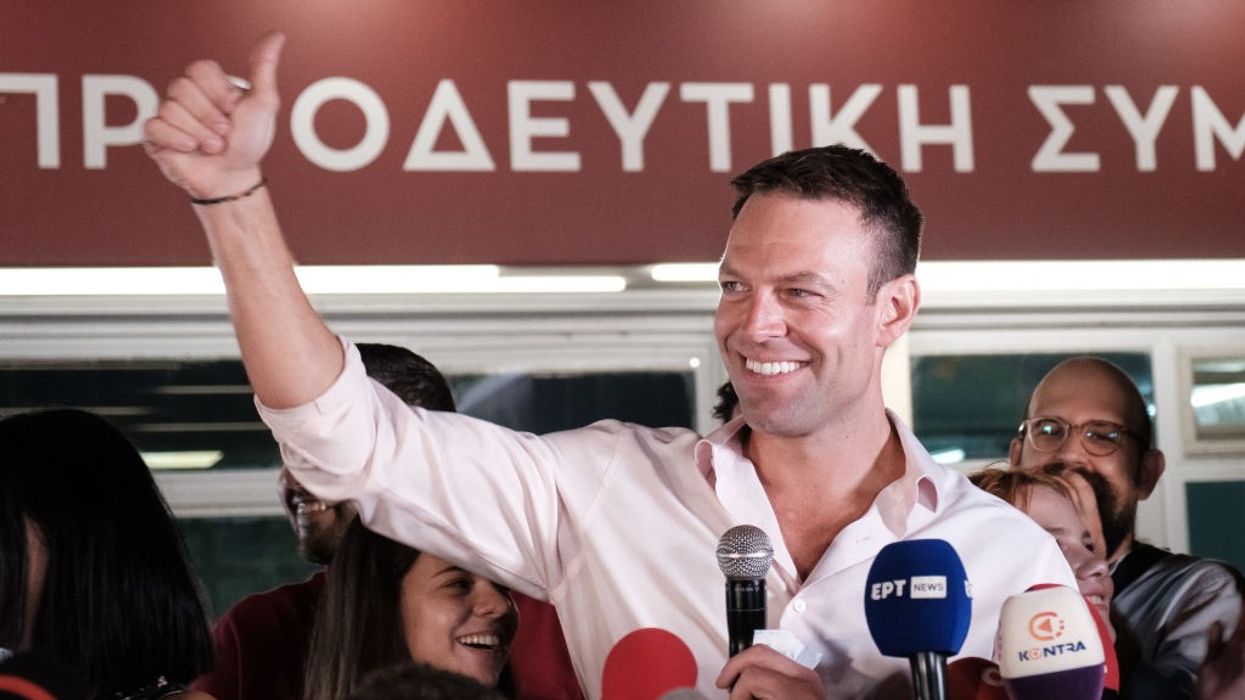
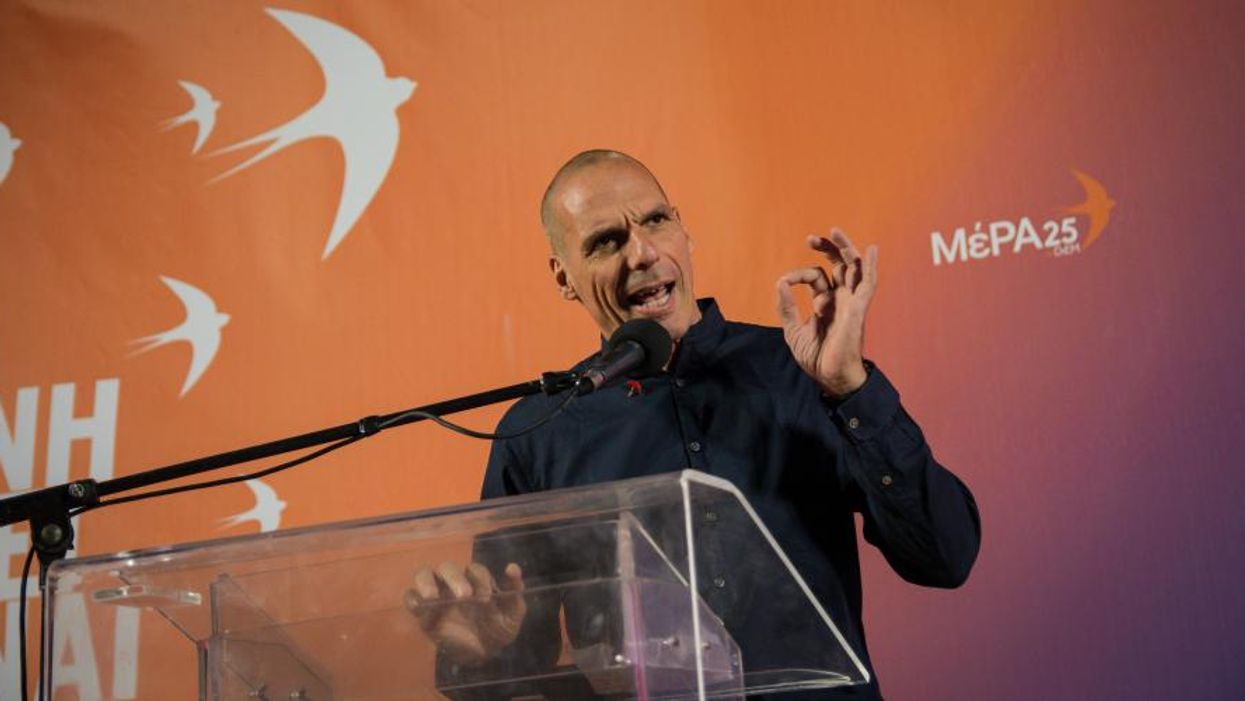
The answer to that mystery was revealed during the leadership election that was held just this past Sunday when party members elected a gay, liberal, former Goldman Sachs trader, shipping investor, and political neophyte Stefanos Kasselakis to head the once radical left-wing Syriza party.
The ideal scenario for Syriza’s future that its new leader has envisioned is that it becomes the mirror image of the Democratic Party in the United States. Perhaps those who voted for Kasselakis are unfamiliar with U.S. politics and the true color of the Democratic Party, but it is a vision that undoubtedly sends shivers down the spine of the members of the old guard inside Syriza for they surely know that this is a recipe for the complete disappearance of the Left from the Greek political scene.
Most likely, then, what lies ahead for the party are divisions and conflict, rather than unity and peace. Eventually, an actual, formal split of the Syriza party also cannot be ruled out. Indeed, senior Syriza cadre and former education minister Nikos Filis said in a TV interview the other day that Kasselakis is “a cross between Beppe Grillo [an Italian comedian and co-founder of Italy’s Five Star Movement political party] and Trump.” In the same interview, Filis also blamed Tsipras for Syriza’s demise. And Effie Achtsioglou has already turned down every party post offered to her by Syriza’s new leader.
Make no mistake, Syriza is entering a new era with Kasselakis in charge of the party. Under Tsipras, Syriza abandoned any pretext of being a radical leftwing party. Under Kasselakis, Syriza will cease having affinity to leftist politics in any form or shape, which means that Greece will now be left with a Leninist-Stalinist Communist Party as the only large-scale organized political force fighting for the interest of the working class.
Oh, the unbearable lightness of the Greek left.
Lack of experience in governance, ideological confusion, severe structural constraints, crude political opportunism, and broken promises guaranteed that Syriza’s downfall was just a matter of time.
On January 25, 2015, Greece’s left-wing party Syriza (Coalition of the Radical Left), which subscribed to no particular ideology but ran an election campaign that vowed to end the sadistic austerity measures that had been imposed on Greece by its international creditors, shred the bailout agreements into pieces, write off a big chuck of the debt, and create jobs for hundreds of thousands of unemployed, won the legislative elections by taking 36% of the popular vote. The result of the election sent shock waves through Europe’s political establishment and marked the return of hope for Greece and left-wing parties and movements around the world.
It was indeed a historic victory for the Left, especially considering the fact that, ten years earlier, Syriza was struggling to gain just a few seats in the Greek parliament. The Communist Party of Greece was far more popular than the Coalition of the Radical Left, whose ranks included an array of leftists ranging from Trotskyists, Maoists, and neo-Marxists to greens and feminists. Indeed, while the Communist party had solid links with working-class people and exerted decisive influence on trade union activism, Syriza’s “impact on civil society was confined to the ideological attraction that it had for a small segment of the academia."
On May 21, 2023, elections were held in Greece and the conservative New Democracy party of Prime Minister Kyriakos Mitsotakis scored a landslide victory, trouncing Syriza by 20 percentage points. However, the new electoral system of proportional representation that had been introduced under the former prime minister and Syriza leader Alexis Tsipras prevents New Democracy’s 40% vote to win an outright majority of the 300 seats in parliament. Mitsotakis had revealed all along that he is not interested in sharing power, so a second election is going to take place in late June where the winning party needs to achieve just 37% of the popular vote.
It was abundantly clear to any unbiased observer that Syriza’s inner circle consisted of people who were dedicated to the pursuit and maintenance of power rather than bringing about radical change.
The scale of Syriza’s defeat in the parliamentary elections of May 21 (lost all but one of the 59 electoral regions in Greece) may signify the end of the road for the party of Alexis Tsipras. The party’s demise has in fact been underway from the very first weeks that Tsipras took office as Greece’s prime minister. Lack of experience in governance, ideological confusion, severe structural constraints, but also crude political opportunism and broken promises pretty much guaranteed that Syriza’s downfall was just a matter of time.
First, the radical-in-name-only Syriza party formed a government with the right-wing and xenophobic party Independent Greeks. There were deep disparities of all sorts between the two parties, but obviously this did not matter to Tsipras since he saw forging an alliance with right-wingers as a necessary tactical move to secure power. And power was all that ever mattered to Syriza’s leader and his inner circle. During the 2023 election campaign, Tsipras would leave many leftist voters flabbergasted by courting voters from the neo-Nazi party Golden Dawn.
Second, Tsipras signed an agreement to extend the austerity measures imposed on Greece by the euro masters, only a few weeks after coming to power.
Third, Syriza’s leader gambled on Greece’s future with a sham referendum in order to save his government from collapse and then went on to betray an entire nation that voted overwhelmingly against the continuation of austerity by signing a new bailout agreement that continued Greece’s status as Germany’s “de facto colony.”
Tsipras called the new bailout agreement “a necessary choice,” though he had engaged in ferocious attacks against his predecessors for having signed similar bailout agreements with the international creditors.
More than 40 Syriza MP’s spoke against the new measures, and half of Syriza’s central committee sided against the new agreement. But none of this mattered. Syriza had very weak democratic structures, no real links with the Greek working-class, and Tsipras had total authority over party decisions as most policy issues were decided in unofficial meetings with people close to the “great leader.” Moreover, Syriza as a party had lost its autonomy once it gained power and “was subsumed into the state.”
Indeed, it was abundantly clear to any unbiased observer that Syriza’s inner circle consisted of people who were dedicated to the pursuit and maintenance of power rather than bringing about radical change. Subsequently, following his government’s capitulation to the euro masters, Tsipras took steps to rebrand the party as a “progressive” political force and begun to tap into the legacy of the Pasok party, one of Greece’s center-left political parties, and to emulate more and more the political persona and political tactics of its charismatic founder and former Prime Minister Andreas Papandreou, who, incidentally, also appeared on the Greek political scene as a radical who made exorbitant promises to the people, such as socializing the economy, modernizing the countryside, terminating membership in NATO, and shutting down U.S. military bases in Greece.
Since the end of the Second World War, sadly enough, the Greek left has been betrayed by its own leaders on multiple occasions. The end result of Syriza’s abandonment of radicalism was defection on the part of hundreds of thousands of mostly working-class voters, though its metamorphosis into a mainstream political party attracted many center-left voters to its ranks.
In the 2019 legislative elections, Syriza still managed to gather 31.5% of the popular vote, losing just less than four points since its last victory in 2015, but the conservative New Democracy party not only won and secured a comfortable majority of 158 out of 300 seats, but had a remarkable 11-point increase from 2015.
Moreover, unlike Tsipras’ “leftist” government, Mitsotakis' conservative government kept many of its campaign promises and handled some foreign policy crises rather effectively. For example, Mitsotakis kept his promise to cut taxes, including a 22% cut to an unpopular property tax introduced during the first bailout agreement, suspended the value added tax on new construction, and reduced the insurance costs of employees and businesses.
Big capital and the middles classes have been the main beneficiaries of Mitsotakis’ efforts to rejuvenate the Greek economy. Because of the pandemic, Greece’s gross domestic product (GDP) contracted by 9% in 2020, but grew by 8.43% in 2021 and by 5.91% in 2022. Tourism contributed greatly to the strong rebound in GDP, and the economic prosperity of Greece remains strongly tied to the development of tourism.
However, Greece’s current accounts deficit increased substantially in 2022, mainly due to the worsening of the balance of goods. And the government debt-to-GDP ratio stood at 171.3% at the end of 2022, which is really at unsustainable levels, though the mainstream press in Greece would not devote space to presenting gloomy economic data ahead of the elections.
But it’s doubtful that doing so would have made any difference. The truth of the matter is that there is an impression among many Greek voters that the Mitsotakis’ government has stabilized the economy, protects the national interest more than adequately, and that it would be suicidal to have Syriza back in power after all its broken promises and flimsy statements made about the economy by key party members during an election campaign, which included a proposal for “local complementary currencies” by the party’s former minister of finance and which came only a few days after Yanis Varoufakis (rightly or wrongly, one of the most unpopular political figures in all of Greece) had called for the adoption of a parallel currency “Dimitra.” Syriza’s shaky position on key issues of national security was also a major drawback for many voters.
Indeed, it seems that what lies at the heart of the 2023 Greek legislative election results is that many voters were distrustful of Tsipras and his politics. This is most likely why so many voters appeared unfazed by revelations of a major surveillance scandal that engulfed the conservative prime minister himself. Mitsotakis’ New Democracy government is made up of right-wing conservatives and even includes in its ranks a couple of high-ranking officials with a history of involvement in far-right politics, but it seems that voters were more concerned with Syriza’s own deficiencies rather than those of the ruling conservative party.
Voters also delivered “a crushing defeat” to Yanis Varoufakis’ MeRA25 party as it failed to cross the 3% threshold to re-enter parliament.
Among left-wing parties, only the Greek Communist party performed better, gathering 7.23% of the popular vote over 5.3% in 2019.
In sum, the future of the left in Greece looks anything but promising at present. With the revival of Pasok, which had been in steep decline electorally since 2012 but managed to get 11.46% of the popular vote in the 2023 legislative elections, Syriza’s long demise may be complete a few years from now. And it will be very difficult for the current Communist party to climb into double digits even if Syriza returns to the dark days of securing low-to-mid single digit votes.
But the Greek left has suffered many crippling blows in the past and always finds a way to resurrect itself, to rise like a phoenix from the ashes. Because as long as exploitation, injustice, and extreme inequality remain central aspects of human society, there will always be a need to create a radical vision for the future.
There were few reasons for progressives in Greece to celebrate Sunday as the right-wing New Democracy Party cruised to a resounding snap election victory--ousting the Syriza government that has long been condemned for betraying its anti-austerity mandate--but one "silver lining" was the strong performance of the nascent leftist party MeRA25, founded by former Greek Finance Minister Yanis Varoufakis.
MeRA25, the Greek arm of the European DiEM25 movement, won nine seats in Greece's parliament, far exceeding expectations and allowing Varoufakis to head what one observer described as a "small but credible left-wing opposition."
In a video message following Sunday's election, Varoufakis vowed to fight both the "inane establishment which continues to implement socialism for the bankers and harsh austerity for everyone else" and "the fascists, the euroskeptics, those who want to deconstruct Europe" in his party's campaign against the crippling austerity Greeks have endured for over a decade.
"Our electoral wing in Greece performed an amazing feat today," said Varoufakis. "We're here to implement in practice our constructive disobedience, our European internationalism. We have a remarkable opportunity to break down this wall of silence, the troika-heavy and troika-dominated politics of this land, indeed of this Europe."
Varoufakis, who resigned from the Syriza government in 2015, took direct aim at outgoing Prime Minister Alexis Tsipras for paving the way for the rise of the New Democracy Party, led by Kyriakos Mitsotakis.
New Democracy's victory, Varoufakis wrote on his website, was "set in motion" the night of the Greek people's 2015 "no" vote against bailout terms proposed by the so-called European troika, composed of the European Commission, the International Monetary Fund, and the European Central Bank.
"Lest we forget, it was immediately after the Greek people's magnificent NO vote that Mr. Tsipras invited the leaders of New Democracy and pro-austerity forces to help him convert the NO vote into a YES," Varoufakis said. "Thus, a referendum that had the capacity to confine New Democracy to the dustbin of history was annulled and the people overthrown by an alliance of Mr. Tsipras and New Democracy."
"Is it any wonder, once Mr. Tsipras passed every austerity measure and privatization bill demanded of him by the troika with the implicit and explicit support of New Democracy, that New Democracy is back?" added Varoufakis. "The Greek people did what they have always done since their incarceration in our vast debtor's prison: they overthrew a government that imposed a new troika bailout along with its poisonous preconditions."
The former finance minister went on to describe MeRA25's entry into the Greek parliament as the "only ray of hope in this bleak setting," a sentiment that was echoed by progressives on social media:
Acknowledging that MeRA25's share of the vote was relatively small, Varoufakis said "it was large enough to make a crucial difference--just like a small candle whose light is capable of penetrating the darkness."
"As of today, we embark upon a steadfast campaign against the most parasitic and cruel form of oligarchy that New Democracy will strive to erect upon the foundation of Mr. Tsipras's bailout agreement with the troika of Greece's lenders," Varoufakis said. "Together with our comrades across Europe, and also as part of the Progressive International that DiEM25 co-founded, we shall fight both types of rising authoritarianism (that of the establishment and that of the racist ultra-right), while connecting our resistance to the crucial campaign for a European and, indeed, an International Green New Deal."
In an outcome celebrated as a rejection of austerity not only in Spain but across the European continent, the Spanish general election Sunday resulted in a splintered parliament, with the conservative People's Party losing significant ground to the anti-austerity Podemos party.
The ruling People's Party, led by Prime Minister Mariano Rajoy, won the highest number of votes on Sunday but it only obtained 122 seats out of the 350-seat parliament, falling short of the 176 needed for a parliamentary majority--and marking its worst result ever in a general election.
This means Rajoy will have to form a coalition or minority government with the Socialist party, which won 91 seats, or newcomers Podemos and Ciudadanos, which secured 69 and 40 seats respectively. Any of these results could see progressive policies breaking austerity's stranglehold on the country, where the Popular Party government has been pursuing harsh budget cuts and tax increases.
Podemos leader Pablo Iglesias--who formed the party in January 2014 with a group of fellow leftist university lecturers, inspired by the grassroots protest movement Los Indignados--hailed the birth of "a new Spain."
Addressing supporters in Madrid late Sunday night, Iglesias added: "Spain is not going to be the same again, and we're happy. Our fight against corruption goes ahead."
Meanwhile, Socialist party leader Pedro Sanchez said the results prove voters want a change in political direction, telling a crowd early Monday that "Spain wants a move to the left."
And Greek Prime Minister Alexis Tsipras and his former finance minister Yanis Varoufakis, whose Syriza party is allied with Podemos, went further than that, heralding the election results on social media as evidence of growing opposition to austerity policies that have swept the European continent.
As Reuters pointed out on Monday, the "outcome was reminiscent of a similar situation in neighboring Portugal, where the incumbent conservatives won an October election but a socialist government backed by far left parties was ultimately sworn in."
Austerity has now been politically defeated in #Spain, as well. Parties seeking to serve society made a strong showing #20D
-- Alexis Tsipras (@tsipras_eu) December 21, 2015
According to the Associated Press:
Under the constitution, King Felipe VI will invite a party leader--normally from the party with the most votes--to form a government. The nominee must garner a majority of deputies' votes in Parliament in a first round to take office, or the most votes in the second round.
Deputies take their seats by Jan. 13 but there is no time limit on staging the first vote. If the candidate is not immediately successful, Parliament has two months to elect a prime minister or call a new election.
Among several potential outcomes is a coalition government helmed by Socialist leader Sanchez.
As Guardian correspondent Giles Tremlett writes on Monday: "A Podemos-backed Sanchez government would open a new anti-austerity breach on Europe's southern flank, as Spaniards reject a new economic model based on low wages and extreme job instability. Unemployment is still 21% in Spain, and the country's economy is smaller than it was in 2008. A vote for Podemos was also, in a confused and erratic European Union, a vote for increased sovereignty."
Or as the Guardian's Owen Jones wrote in advance of the election, "This election matters--not just for Spain, but for Europe too."
As the final votes poured in last January, Greece seemed primed for a political earthquake.
Syriza, the nascent left-wing coalition led by the telegenic Alexis Tsipras, rocketed to power in a decisive vote against the devastating neoliberal economic policies foisted on Greece by its international creditors and implemented by Tspiras' predescessors.
Syriza's victory produced a collective sigh of relief. The old political dynasties of PASOK and New Democracy, Greece's ruling parties that had racked up enormous debt over 40 years of entrenched corruption and economic mismanagement on a grand scale, had finally fallen. Syntagma Square, the nerve center of anti-austerity protests since 2010, now opened up for celebrations.
Yet come mid-summer, Tspiras himself was ramming through a new bundle of pension cuts, sales tax hikes, labor regulation rollbacks, and privatization schemes every bit as austere as the ones he'd run against. Greece's European creditors had given him no choice, he lamented, but to begrudgingly implement a slate of measures "I don't believe in."
Tsipras may have accepted the role begrudgingly, but he played it convincingly. He effectively transformed Syriza into a pro-austerity party, purging dissenting ministers from his cabinet as the party's left flank bolted the bloc. Having lost his parliamentary majority, he then announced new elections to bolster his hold on power, launching a campaign urging the Greek people to vote for Syriza as a pro-memorandum party free from the insitutionalized corruption of previous governments. The move elicited anger, widespread disappointment, and disillusionment. Twenty-nine Syriza legislators abandoned the party to form the rival Popular Unity party.
Greeks will go to the polls again on September 20, with the country as mired as ever in economic and political turmoil. How did it come to this?
It's worth recalling what it was that Syriza once ran against.
The hope invested in the party came after five long years in which New Democracy and PASOK effectively defaulted on the people, shifting the responsibility for 240 billion euros in debt by private investors and banks onto the public.
The loans the old ruling parties requested from Greece's "troika" of creditors -- the International Monetary Fund, the European Central Bank, and the European Commission -- to pay that debt came at a steep political and economic cost: Unelected technocrats in the EU's headquarters in Brussels drew up some 143 memoranda laws, with thousands of attached articles, which were enacted by legislative decree or rammed through parliament under suffocating, creditor-imposed timetables.
The combination of deep wage and pension cuts, sweeping public sector lay-offs, and regressive taxes -- alongside the decimation of the country's public health and education budgets -- shrank the Greek economy by 25 percent, pushing it from a recession into a full blown depression. It triggered the largest drop in living standards since the end of World War II.
By 2013, over 44 percent of the Greek population had an income below the poverty line. National unemployment rocketed from around 7 percent in May 2008 to over 25 percent in February 2015. Youth unemployment rose even higher, hitting 50 percent last February even after tens of thousands of young people emigrated.
Since 2010, public sector wages have been slashed by nearly half, private sector employment has collapsed, and pensions have been cut by 44 percent. Whole extended families are being supported by one grandparent's 400-euro monthly pension, or one worker's monthly minimum wage of 520 euros. Child poverty has nearly doubled to 40 percent -- the highest rate in the developed world.
Small businesses and the self-employed were also hit hard. "Business is bad and I am barely hanging on," says 47-year-old Yiannis Skarakis, who runs a digital products and services business. "Taxes have increased significantly with the austerity measures. I always pay what I can, but if it's a choice between paying taxes and feeding my children, I choose to put food on the table."
On the other hand, the austerity program is working very well for the creditors, who have a huge profit incentive in maintaining the debt status quo.
According to the Jubilee debt relief campaign's latest analysis, "the European Central Bank and its member national central banks are on track to make between EUR10 billion and EUR22 billion of profit out of lending to Greece, if Greece pays its debts in full."
"The European Central Bank has acted exactly like a vulture fund," adds Jubilee economist Tim Jones, "buying up debts cheaply during the crisis, refusing to take part in a necessary restructuring of the debt, and demanding to be repaid at a large profit."
War
Almost immediately after taking power, Syriza plunged into an asymmetrical war with Greece's creditors and their neoliberal economic model. The loan terms, party leaders said, had to be renegotiated in light of Syriza's democratic mandate to ease austerity within the Eurozone.
But the creditors were indifferent to Syriza's political arguments. And besides, the European Central Bank had a trump card: cash flow.
Greece has been unable to borrow from the markets since 2009, and without loan financing since August 2014. On February 4, shortly after Syriza took power, the European Central Bank stopped accepting Greek bonds as collateral, replacing its normal funding operations with a drip-feed of weekly approved emergency liquidity assistance. It also capped Greece's treasury bills at 9 billion euros, down from the normal 16 billion, and excluded Greece from the trillion-euro quantitative easing program for southern European countries.
The result was a full-blown liquidity crisis. The Greek government had to scramble to fund its daily operations even as it tried to renegotiate the devastating terms of previous bailouts.
Increasingly desperate to avoid default as the negotiations dragged on, the government started draining public coffers, including national health insurance and pension funds, to pay public sector salaries and service debt. In an extraordinary move, the prime minister issued a legislative decree in April to municipal governments and public entities, including hospitals and schools, to transfer their cash reserves to the Central Bank of Greece.
This was not popular, and the consequences were severe.
"The public hospitals are in dire crisis," explains Dimitris Sildiris, who owns a restaurant south of Athens. "My 83-year-old mother was recently admitted to Agios Pavlos hospital in Thessaloniki for kidney dialysis. They don't have basic supplies like medicines, bandages, bed linen, even toilet paper, and the patients' relatives have to fill the gap. Hospitals are even boiling hypodermic needles for re-use. This is explicitly forbidden and doesn't happen anywhere, not even in Africa! The fact that Syriza drew on hospital cash reserves to pay the debt is unforgivable."
Referendum
Tsipras went into office vowing to break the austerity chokehold Greece's creditors had placed the country in. But he also needed cash, and the troika insisted that Athens could only receive fresh loans if it committed to the austerity program.
Looking to break the stalemate, Tsipras announced a referendum for July 5, calling on voters to reject the creditors' proposal for further austerity measures in exchange for loan financing to Athens.
What followed can only be described as blatant political interference by European politicians and bureaucrats. They immediately framed the referendum as a vote on Greece's Eurozone membership, openly campaigning for both a Yes vote and the overthrow of the Syriza government.
But they didn't just campaign. When the referendum was announced, the European Central Bank tightened liquidity to the Greek banking system yet again, prompting the government to impose capital controls to prevent a months-long bank jog from becoming a bank run.
ATM cash withdrawals were limited to 60 euros per day. Retirees -- many of whom had become sole breadwinners for their families -- had to queue outside Bank of Greece branches on July 1 to withdraw just 120 euros of their monthly pension, without knowing when the remainder would be available.
Meanwhile, Greece's oligarch-owned corporate media aggressively spun a false narrative of a panicked public and widespread social unrest. Discredited former prime ministers went on TV to advocate a Yes vote as stations ran file footage presenting Turkish victims of the 1999 earthquake and account holders in the 2012 Cyprus banking crisis as distressed Greek pensioners.
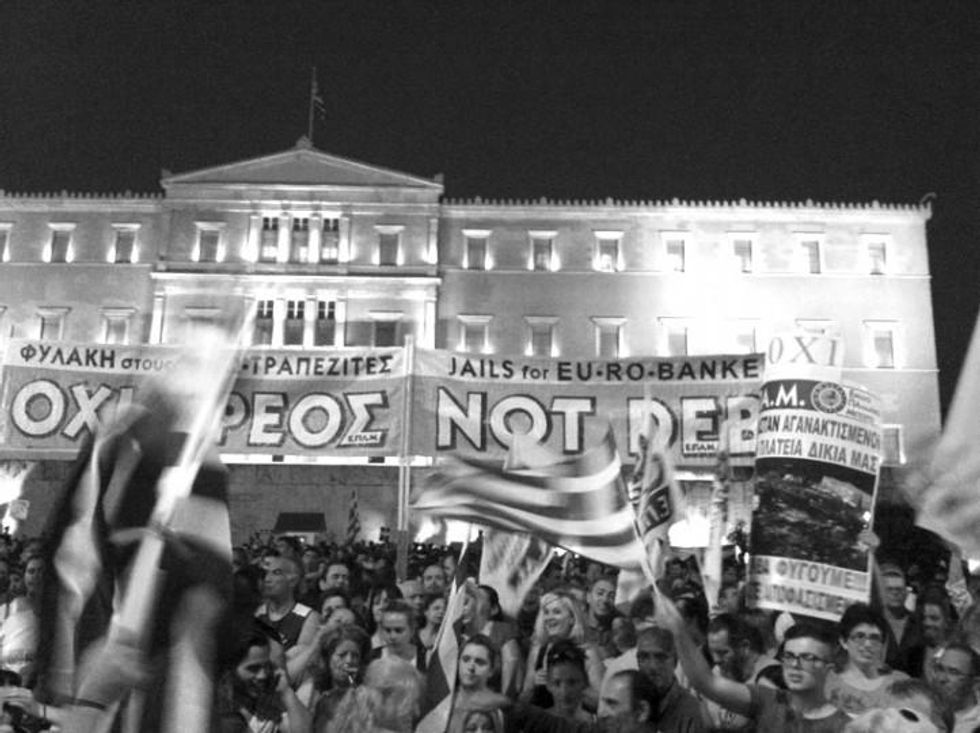
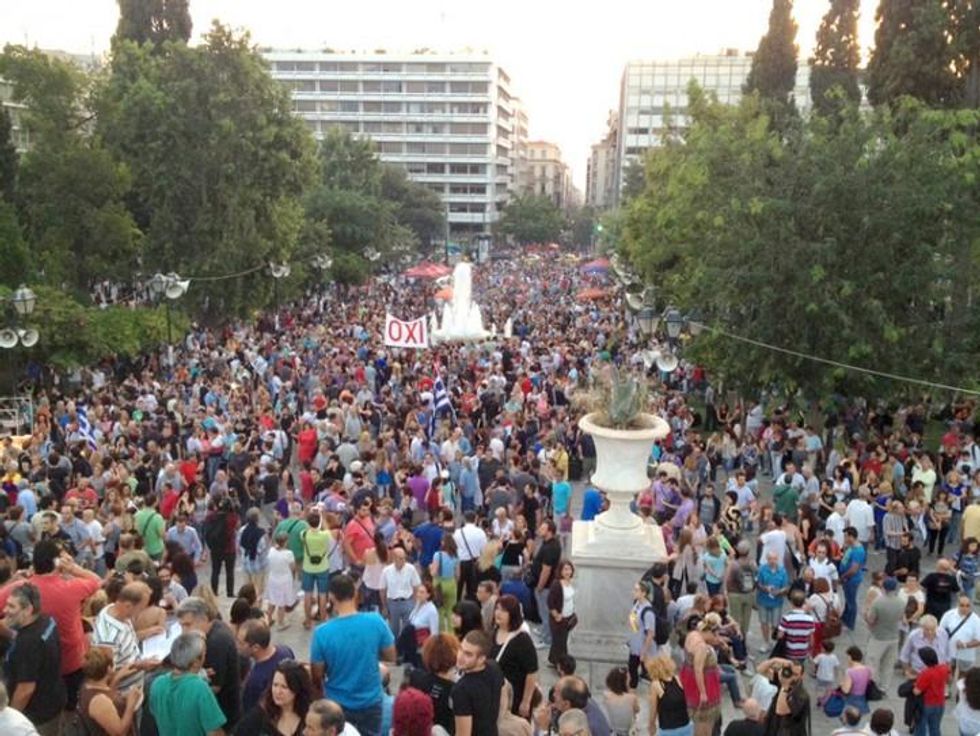
Yet the resistance to austerity persisted. A June 29 rally for a No vote proved particularly extraordinary, not only for the sheer numbers and diversity of the crowd -- from toddlers to grandparents -- but because exactly four years earlier, over 100,000 people had gathered in the same spot to protest the first troika austerity measures. The second No rally held on July 3 was even bigger. At both rallies, the atmosphere in the jam-packed crowd was electric. Greeks had overcome fear. A new mood of defiance, empowerment, and celebration prevailed.
The result? An emphatic victory for the No side, with over 61 percent of Greeks voting to support their government's stance against the creditors.
Defeat
It was a triumphant moment, but it wasn't to last.
Tsipras took the referendum result to the Eurozone summit on Saturday, July 11 to strengthen Greece's hand in the negotiations, even as the ECB threatened to cut its lifeline to Greek banks without an agreement by Sunday night.
After a gruelling weekend of talks, Tsipras was presented with an ultimatum: Greece would either remain an indebted ward of Germany, the dominant Eurozone country, or face a disorderly exit from the Eurozone and the total collapse of the Greek banking system. After 17 hours of all-night talks, Tsipras signed the "agreement" shortly after dawn on Monday, albeit with a proverbial gun to his head.
Thus Greece ceded its sovereignty to its creditors, who now hold legislative and executive power in Greece. Germany now essentially controls Greece's finances and its banks -- and even has the power to veto Greek laws, since draft laws must be submitted for approval to creditors.
The business of the Greek parliament was reduced to rubber-stamping hundreds of new austerity laws that will gouge 12 billion euros from the depressed economy. It was these laws that Tsipras was charged with ushering through Athens, alienating and purging many of his own MPs and Central Commitee members in the process.
One particularly egregious set of provisions in the new memorandum marks 50 billion euros of Greek state assets -- from regional airports servicing busy tourist destinations (already snapped up by the German government firm Frapport) to utility companies and islands -- for transfer to a privatization fund under creditor control. An added clause prevents their future re-purchase, depriving Greece of strategic income-producing national assets.
It was an unambiguous defeat. They "crucified Tsipras in there" a Eurozone official attending the summit told the Financial Times.
Resilience
In Greece, reactions have been mixed. Many view Tsipras' capitulation as unavoidable under the circumstances, and they respect Syriza for fighting in Greece's corner until the bitter end.
Others say the ultimatum didn't occur in a vacuum. Both Tsipras and then-Finance Minister Yanis Varoufakis, critics counter, accepted most of the austerity measures at the start of negotiations, focusing instead on easing the rest while keeping Greece in the Eurozone. Crucially, they never questioned the legitimacy of the debt itself, despite the findings of the Preliminary Report of the Truth Committee on Public Debt, which concluded that the majority of Greek debt is illegal, odious, and unsustainable. And, they say, the Syriza leaders improvised their way through months of negotiations, draining the public coffers to service the debt while refusing to seriously prepare for a Eurozone exit should Germany's position prove intractable -- as it has been for five years. That effectively deprived Greece of its only real leverage in the negotiations, and left Greece at the mercy of the European Central Bank.
These critics see Tsipras more like Judas the betrayer than Christ the crucified. They lament that the Euro Summit "agreement" is far more extreme than the program Greek voters rejected on July 5. And they ask why Tsipras called a referendum if he wasn't prepared to honor the result.
"What does Tsipras think he's doing?" asks 29-year-old Ourania Tzavara, a bartender from Athens. "We voted no!"
"We do not have the right to turn the people's no into a yes," added former parliament speaker and Syriza MP Zoe Konstantopoulou, who will stand as an independent on September 20. "We have a duty to honor their verdict."
Exhausted by an 8-month-old government that brought a new memorandum instead of a new anti-austerity era -- and weary of frequent elections and governments that don't represent them -- a quarter of Greek voters polled in late August were undecided. By mid-September, Syriza and New Democracy -- the latter revived with a new leader from the old guard -- are both polling at around 27 percent. Some say they won't be voting, because regardless of who's in power, the outcome seems to be the same.
Yet Greeks remain determined to stop their free-fall into poverty, halt the mass exodus of their youth, and reclaim their future. "It's a huge blow but we have to re-group and keep going," says Irini Katsou, who co-owns the Athens restaurant with Sildiris. "Just because Tsipras surrendered doesn't mean that we have to."
In a move that came as a surprise to many, sources have told Reuters that Greek Prime Minister Alexis Tsipras will announce Thursday that he will 'step down' from his post as soon as this evening and that new elections for control of the government will be held next month.
"The aim is to hold elections on Sept. 20," the government official reportedly said after Tsipras met with senior party officials and ministers to discuss the government's next move.
Though a call for snap elections was ultimately expected, many assumed they would not be held until after a confidence vote in Parliament. Tsipras' preemptive resignation was not widely foreseen, though the ruling government is compelled to give over power once the election is officially announced. Media outlets report that Tsipras will address the nation tonight to make his resignation official and make clear his reasons for doing so.
According to the Guardian:
Once he submits his resignation the prime minister would be replaced by the president of Greece's supreme court, Vassiliki Thanou-Christophilou - a vocal bailout opponent - who would oversee the elections as the head of a transitional government.
Tsipras won parliamentary backing for the tough bailout programme last week by a comfortable margin despite a large-scale rebellion among members of his ruling leftwing Syriza party, nearly one-third of whose 149 MPs either voted against the deal or abstained. Syriza governs in a coalition with the rightwing, anti-austerity party Independent Greeks (Anel).
The revolt by hardliners angry at what they view as a betrayal of the party's pledge to fight austerity left Tsipras short of the 120 votes he would need - two-fifths of the 300-seat assembly - to survive a censure motion and he was widely expected to call a confidence vote this week or next.
He has now decided to skip that step, deciding instead to go straight to the country in an attempt to silence rebels and shore up public support for the draconian three-year bailout programme, which entails a radical overhaul of the Greek economy including further tax hikes, spending cuts and major reforms of health, welfare, pensions and taxation.
Tsipras appears to have calculated that it was better to call the elections early, before the effects of the new bailout measures - including further pension cuts, VAT increases and a "solidarity" tax on incomes - started to make themselves felt.
Describing the announcement of new elections as a potential opportunity for the Greek people, Mark Weisbrot, co-director of the Center for Economic & Policy Research, said it is not too late for the nation to consider an orderly exit (or "Grexit") from the Eurozone as a viable alternative to further foreign debt bondage and imposed austerity.
" European Union officials have already said that, under the new agreement, the Greek economy will remain in depression for this year and next," Weisbrot said. The most recent bailout package, he continued, "is not for the Greek people - this is the Greek people being thrown overboard."
Many people in Greece, including Tsipras, have accepted the "continued punishment" from foreign creditors because they think the alternative would be worse, explained Weisbrot. "But," he said, "it is unlikely that Greece would remain in depression for longer than what is forecast for the current program, if the country were to issue its own currency. And it could avoid some of the worst 'reforms' that the European authorities are demanding."
The coming economic downturn in Greece, Weisbrot predicted, "will be one of the worst depressions in modern times."
On Twitter:
Germany's approval of Greece's third bailout of EUR86 billion on Wednesday marked what critics of austerity warn is a new phase in the ongoing economic crisis: the privatization of the country's most valuable assets.
Under the terms of this latest agreement, Greece's Syriza government--backtracking on some of its key campaign promises--agreed to sell-off EUR50 billion in state property.
In a letter to the Guardian published on Monday, Nick Dearden, director of the social justice organization Global Justice Now, charged that at this point in the crisis, "the purpose of the bailout has little to do with repaying debt and everything to do with creating a corporate paradise in the Mediterranean."
" Greece is up for sale," Dearden continued. "From the national lottery to the port of Pireaus and swaths of Corfu, corporations are scrambling to get a piece of the action."
In the first wave of such buyouts, German airport operator Fraport purchased the right to operate 14 regional airports in Greece, many of which are located in popular tourist destinations, according to reports citing the German government's official gazette. The EUR1.2 billion contract will last for 40 years.
The group charged with overseeing these transactions, under the watchful eye of European lenders, is called the Hellenic Republic Asset Development Fund. In a column published at Common Dreams on Wednesday, Dearden laid out some of the other "goodies" (also available per this government document) currently on the table:
Piraeus and Thessaloniki ports are up for sale--the former case has caused the chief executive to resign and industrial action has begun. A gas transmission system looks likely to be sold to the government of Azerbaijan, but there's still a power and electricity company, the postal service, a transport utility which allows trains and buses to run, the country's main telecommunications company, a 648 km motorway, and a significant holding in the leading oil refiner, which covers approximately two-thirds of the country's refining capacity.
Holdings in Thessaloniki and Athens water are both on sale--though public protest has ensured that 50% plus 1 share remains in state hands. Nonetheless, the sale will mean that market logic will dictate the future of these water and sewerage monopolies. Finally there are pockets of land, including tourist and sports developments, throughout Greece.
During the internal negotiations over the latest agreement, Greek Prime Minister Alexis Tsipras experienced another revolt from the Syriza party's left wing, which said the bailout fell "outside [the party's] values." Sources say Tsipras will call a confidence vote this week.
In a development spurring calls for a new "anti-bailout movement," the Greek Parliament early Friday approved a controversial EUR85 billion financial rescue package--the country's third such bailout from foreign creditors in five years, and one that will require the Greek people to endure further cuts and austerity.
"After more than seven hours of often passionate, bad-tempered debate, all through the night, the Greek Prime Minister, Alexis Tsipras, has got his way," the BBC reported.
"I do not regret my decision to compromise," Tsipras said as he defended the deal in parliament. "We undertook the responsibility to stay alive over choosing suicide." He admitted to lawmakers the deal was no triumph, "but we are also not mourning over this difficult agreement. I have my conscience clear that it is the best we could achieve under the current balance of power in Europe, under conditions of economic and financial asphyxiation imposed upon us."
The bailout bill, which Greek Finance Minister Euclid Tsakalotos described during the all-night session as "a tough agreement, with many thorns," passed by a comfortable majority. The government needed the bill to pass in time for Tsakalotos to head to Brussels to meet his Eurozone counterparts, who will decide later Friday whether to approve the draft agreement.
"But the vote laid bare the depth of anger within Tsipras's leftist Syriza party at austerity measures in exchange for 85 billion euros in aid," Reuters reports, "as 43 lawmakers--or nearly a third of Syriza deputies--voted against or abstained."
Former Finance Minister Yanis Varoufakis was among the Syriza members to vote against the deal. Earlier this week, he said: "Ask anyone who knows anything about Greece's finances and they will tell you this deal is not going to work."
Meanwhile, a statement signed by more than a dozen Syriza dissenters is calling for people across Greece to mobilize and form a "united movement" for democracy and social justice. The bailout deal, they say, "reverses the Greek people's mandate that went against neoliberal policies on the July 5 referendum."
By a 62 percent majority, the Greek people on July 5 rejected a bailout offer from foreign creditors that would have imposed further austerity and economic hardship. The bailout deal approved by the Greek Parliament on Friday is considered even harsher than the one that was on the table in July.
"We need to continue on the path of July 5 until the end, until we overthrow the bailout policies, with an alternative plan for the next day, for a democratic Greece, reconstructed and socially just," the statement reads. "We call for the creation of a nationwide movement, by establishing committees against the new Memorandum, austerity and the country's new guardianship."
It is being widely reported that approval of the bailout, and the resulting rebellion, will likely force a confidence vote that could pave the way for early elections.
As Reuters explains:
[T]he vote left the government with support from within its own coalition below the threshold of 120 votes in the 300-seat chamber, the minimum needed to command a majority and survive a confidence vote if others abstain.
In response, government officials said Tsipras was expected to call a confidence vote in parliament after Greece makes a debt payment to the European Central Bank on Aug. 20--a move that could trigger the government's collapse and snap elections.
A senior lawmaker, Makis Voridis, from the opposition New Democracy party said his party would vote against Tsipras's coalition, raising the odds it would be toppled.
Still, some of those who rebelled against Tsipras on Friday could still opt to support the government in a confidence vote, as could other pro-European parties like the centrist Potami and the center-left PASOK, leaving unclear the final outcome.
The Guardian is live-blogging the Eurogroup's Friday meeting in Brussels.
Follow the developments on Twitter:
Tweets from https://twitter.com/commondreams/lists/greek-austerity-lives-on
On July 16 this year protests erupted outside Greek parliament as lawmakers were approving further harsh austerity plan in exchange for a third European bailout. Greek Prime Minister Alexis Tsipras won by 229 votes to 64 while 32 members of his own Syriza party voted against the measures, including his ex-finance minister Yanis Varoufakis.
The vote took place after a fiery debate when Tsipras energetically defended his stand under threat of resignation.
On July 16 this year protests erupted outside Greek parliament as lawmakers were approving further harsh austerity plan in exchange for a third European bailout. Greek Prime Minister Alexis Tsipras won by 229 votes to 64 while 32 members of his own Syriza party voted against the measures, including his ex-finance minister Yanis Varoufakis.
The vote took place after a fiery debate when Tsipras energetically defended his stand under threat of resignation.
The parliamentary approval came despite the fact that, on 5 July 2015, people rejected the reforms in a referendum. They said 'No' (Oxi) to retirement age increases, tax hikes, cuts in public spending and pension and curb in collective bargaining, in exchange for up to $94 billion.
Tsipras told the legislators:
"I will admit that the measures we are tabling are harsh, and I don't agree with them. I don't believe they will help the Greek economy, and I say so openly. But I also say that I must implement them."
He made an about-turn after having promised to combat the austerity measure that are driving his people to ruin and poverty. He betrayed his promises and repudiated the will of the people as demonstrated in the referendum. It is least surprising that Tsipras is facing internal resistance within his own Syriza party, including the Syriza Youth and several organisations allied to Syriza.
The anti-austerity demonstrations continued on 22 July when protesters gathered outside the Greek Parliament ahead of the vote on the implementation of further austerity measures. The rally resulted in protesters throwing Molotov cocktails at police. The Greek parliament backed a second package of measures demanded by the country's international creditors.
When Syriza came to power it pledged to end the 'structural reforms' imposed by the European Union. The party victory sent tremors through Europe, especially its pledge to end the social injustice brought about by the 'austerity package.' The then finance minister, Yanis Varoufakis said it turned Greece into a "debt colony".
Varoufakis, one of the nonconformist MPs who was forced to step down from his ministerial position, said in an interview with the BBC that Greece was given a "choice between being executed and capitulating"
The problem is compounded by the fact that international creditors are allergic to democracy. The creditors have been bullying the Greek government into further austerity while advising it against consulting with its people. In a blatant display of arrogance, they once asked Varoufakis: "How do you expect common people to understand complex issues?"
It is often suggested that Greece had an option of defaulting, given the odious nature of the debt. Odious debt is a legalistic expression that refers to debt run up by a former dictatorial regime, which a legitimate successor government can repudiate (see a paper in the Duke Law Journal).
These are debts incurred by a despotic regime that do not benefit the people bound to repay the loans. They are used in ways that are not beneficial, or actually harmful, to the interests of the population.
Greeks can thus reject their odious debts accrued from kleptomaniac and authoritarian regimes of the past. They can claim that debts left over from Greek juntas ought to be cancelled
For it can be argued that the IMF and banks violated their own lending rules by extending to the Greek dictators so much funding that were odious and against the interests of the people. In fact the greater part of the debt had been used to service past debts or to purchase military hardware
It is disingenuous to claim that the money was given to bail out Greek people. What happened is that with rising debt, unemployment increased three-fold while the economy contracted and nominal growth collapsed. Minimum wages and pensions went down while living standards took a plunge
The Greek debt can be traced back to the juntas. In 1947, following the surrender of the Nazi Germany, the U.S. President Truman, in what came to be known as the Truman Doctrine, pledged unlimited military support to thwart the growing popular movements in Europe and throughout the world. This policy facilitated brutal coups and decades of military repression in Greece and elsewhere.
This is how, under the NATO strategic plan, Greek colonels seized power and set up a ruling junta. The army moved in to stop the Socialist Party from taking office with a center-left coalition. This brutal military junta ruled by martial law, mass arrests, torture and disappearances.
Meanwhile, Greek military contracts have always been the greatest source of corruption, payoffs and kickbacks. One of the most notorious bribery scandals involved billions paid over 12 years and billions still owed for six undelivered German submarines. A former defense minister was convicted in 2013 of accepting $8 million in bribes connected to these submarines.
Under these circumstances Greece incurred the odious debt. Less than 10% of the bail-out money was used by the government for reforming its economy and safeguarding vulnerable members of society. Most of the money went to the banks that lent Greece funds before the crash.
Indeed, the Wall Street Journal of July 10, 2010 said:
"Greece, with a population of just 11 million, is the largest importer of conventional weapons in Europe -- and ranks fifth in the world behind China, India, the United Arab Emirates and South Korea. Its military spending is the highest in the European Union as a percentage of gross domestic product. That spending was one of the factors behind Greece's stratospheric national debt."
So much for the corporate media deceptions that the debt crisis in Greece arose because the Greek people were living "beyond their means."
The current situation in Greece resembles the debt peonage that many African countries have been subjected to for decades. They suffered the consequences of the so-called structural adjustment under the supervision of the international finance institutions and the result was economic and social devastation.
In the post-Independence Zimbabwe, for example, the Mugabe government abandoned its 'growth with equity' strategy and went for the economic model designed by the World Bank and the IMF in 1991. The Economic Structural Adjustment Program or ESAP (popularly termed 'economic suffering for African people') was implemented during the 1990s, triggering social and labour unrest and war veteran discontent.
In many African countries inequality and poverty grew while political and business compradors were busy amassing fortunes and power on the back of austerity and 'structural adjustment'.
The result was food riots that erupted in several African countries such as Mozambique, Algeria, South Africa, Central African Republic, Zambia, Ivory Coast, Egypt, Senegal and Nigeria.
Contrary to the popular perception of Africa being dependent on the western loans and donor funding for its development projects, the continent is actually a net creditor. The level of capital flight from sub-Saharan Africa is more than $700 billion in the past four decades. While this is kept secret, the debt burden carried by the African people is made public
As for the nature of the African debt, the lenders knew that they gave to dictators or oppressive regimes, hence they are responsible for their actions, not the people living under those regimes. For example, South Africa has been paying off $22 billion which was lent to the apartheid regime. While they have yet to recover from this, their external debt has increased to $136.6 billion, and the number of people in the housing backlog has increased to 2.1 million from 1994's 1.5 million.
Today debt is the source of enormous problem afflicting the African people. More so because it is not used for social benefit. Instead it is used by a small elitist minority, who fund their own shopping sprees at the expense of their impoverished population and their posterity. In this aspect Greece and Africa are not too poles apart
One may ask, why did Tsipras not take a lesson from Hugo Chavez of Venezuela, Rafael Correa of Ecuador and many others. Correa, for instance, sought to move away from neoliberal economic model by reducing the influence of the World Bank and IMF. He declared Ecuador's national debt illegitimate and announced that the country would default on over $3 billion worth of bonds. He pledged to fight creditors in international courts and succeeded in reducing the price of outstanding bonds by more than 60%.
Tsipras, on the other hand, made a U-turn, opening Greece to the invasion by debt vultures. It has been described as a treason not only on the Greek people, but on Europe as it may lead to the full colonization of Europe.
Only 10 days after the Greeks voted 'No' by a substantial majority against the Troika's demands, Tsipras went further and put $ 55 billion of Greece's national assets into a privatization 'trust' fund under EU supervision. This comes from Tsipras who had pledged to halt privatization in January's election campaign. The deal is so harsh that even the IMF has criticized it.
It would be missing the point to say that Tsipras was hostile to the Troika. International finance institutions like it best when seemingly 'radical' figures do the dirty work for them rather than the professed neo-liberals. They would actually spin and portray the 'reforms' as 'good for the people'. Even better so if the 'radicals' do not wear a tie.