SUBSCRIBE TO OUR FREE NEWSLETTER
Daily news & progressive opinion—funded by the people, not the corporations—delivered straight to your inbox.
5
#000000
#FFFFFF
To donate by check, phone, or other method, see our More Ways to Give page.
Daily news & progressive opinion—funded by the people, not the corporations—delivered straight to your inbox.
We are entering uncharted waters.
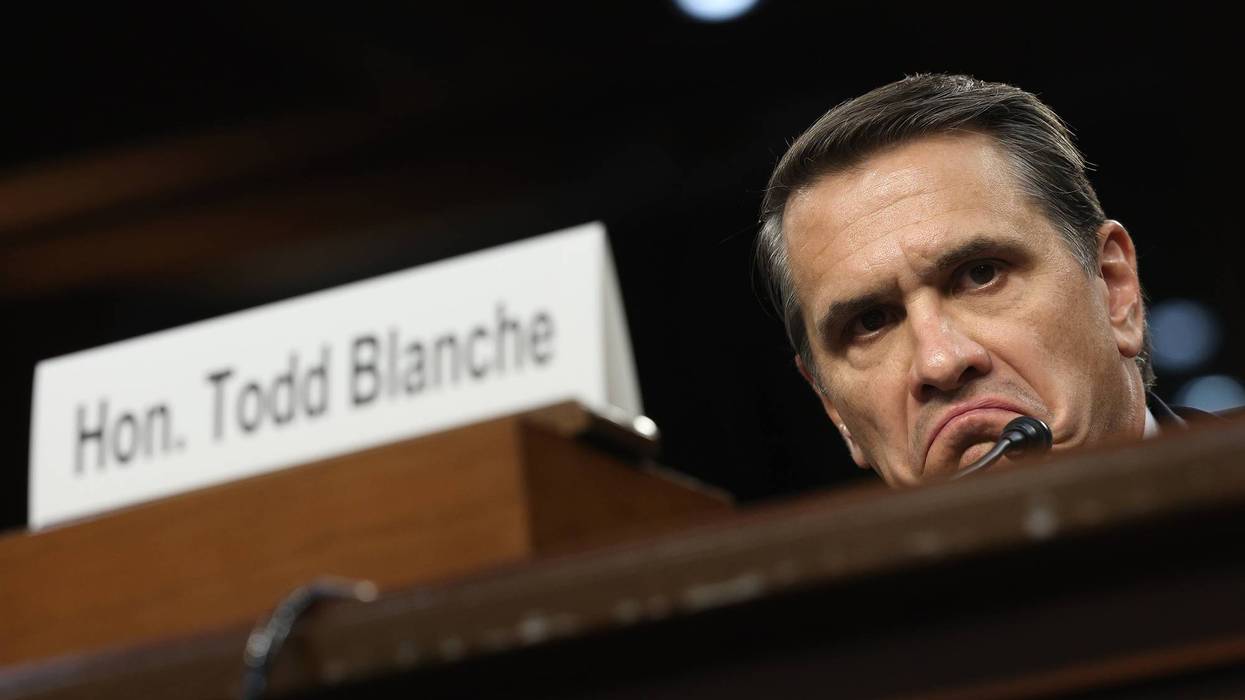
News broke this week that President Donald Trump was conditioning approval of an infrastructure spending bill on renaming New York City’s Penn Station and Washington’s Dulles Airport in his honor. It was unsurprising because there’s a disturbing pattern in Mr. Trump’s approach to governing that includes the glorification of the leader, the erasure of norms, the use of threats of retribution to stifle critics, and a reliance on “alternate facts” to keep the faithful in tow.
Because I am once again writing about President Trump, I know that some will accuse me of having what the president calls “Trump Derangement Syndrome.” I confess to being obsessed with his incendiary speech, his behavior, and the movement he has inspired, precisely because of the danger they pose to American democracy.
During Mr. Trump’s first term we dreaded turning on the news each morning and learning about the threatening tweets he had posted overnight. But because there were guardrails in place—senior staff who would slow walk his demands or simply refuse to act on them, or Congress or the courts that served as a check on his behavior—most often the threats turned out to be hollow.
As has been noted, in his second term, because the guardrails are gone, the president has become emboldened to move beyond empty words to actions which his minions faithfully attempt to execute. As a result, we are entering uncharted waters in which an imperial presidency is testing the resilience of our system of “checks and balances.”
Entering the second year of his second term in office, the pattern is clear. He employs bullying tactics to get his way—with other individuals, institutions, or countries. He “floods the zone,” disorienting opponents by daily confronting them with a barrage of new challenges. And following lessons learned from his mentor, Roy Cohn, he always attacks, never admits mistakes, and always claims victory.
In just the past few weeks, Mr. Trump has undertaken several deeply disturbing initiatives. Individually, each pose a problem, but when viewed collectively they suggest something far more ominous.
He ordered the FBI to seize the 2020 election ballots from Fulton County, Georgia, presumably because he still believes he was cheated out of victory—even though the official who controlled the Georgia balloting in 2020 was a Republican. It is unprecedented for a president to take an action of this sort and to accompany it with a statement saying:
"Remember, the states are merely an 'agent' for the Federal Government in counting and tabulating the votes…They must do what the Federal Government, as represented by the President of the United States, tells them, FOR THE GOOD OF OUR COUNTRY, to do.”
In this one statement, the president calls for violating the Constitution and the prerogative it gives states in running elections. And by equating himself with the federal government and saying that when he speaks, he does so on behalf of and for the good of the country, he is laying the groundwork for an imperial presidency.
The president also made what appears to be a spur of the moment decision to shutter the Kennedy Center for the Performing Arts. He said that the reason for closing the Center was that the building was in such disrepair that it was a danger to patrons. However, given that just a few days before the announced closure, the White House had used this very same venue to host the premiere of the documentary about his wife “Melania,” insiders suggest another reason behind the abrupt decision to shutter the Center.
Unilaterally changing the name of the Center, removing its board, and adding his supporters as board members with himself as chair has made the once-revered institution partisan and toxic. It was losing members and donors, performers were cancelling, and it was bleeding money. Rather than admit defeat, the president shut it down.
One of the president’s earliest actions was to try to bring the nation’s most prestigious universities to heel. He did so by charging them with chronic antisemitism and using “diversity quotas” in hiring and admissions. Because these two issues resonate with his base, he was determined to win. He began by withholding federal grants until universities complied with his demands to rid their campuses of antisemitism (which meant ending protests against Israel) and make admissions and hiring blind. A number of smaller schools submitted to the threats, but Harvard held out. Finally, after a year or fruitless negotiations and threats, the story came out that the White House was backing down on its threat to fine Harvard. This suggestion of defeat so enraged the president that he both denied it and announced that instead of penalizing Harvard $200 million if they didn’t agree to his demands, he was raising Harvard’s penalty to $1 billion, an example of personal peeve becoming policy.
These recent actions by the president are part of a pattern that grows more pronounced each day. He makes decisions unilaterally without regard to the Constitution or established procedure. He acts to punish those who do not submit to his dictates. And he governs as if “L’État, c’est moi.” With the support of a compliant Congress and a base of true believers, right now this president appears to be untouchable. But should he push too far or should Republicans lose control of Congress in November, the tide could turn, leaving Mr. Trump’s effort to create an “Imperial Presidency” to die on the vine.
The US government simply has not done enough to ensure that the livelihoods of all Americans are protected or improved in this new Gilded Age. What it has done is made sure the rich get richer by the minute and more politically powerful year after year.
The decline of Keynesian economic theory in the 1970s marked a tipping point in the evolution of capitalism in the United States. Beginning with the Great Depression, Keynesian economic policy facilitated the expansion of social welfare programs to mitigate the social inequities of the nation's economic system. In the last quarter of the 20th century, however, rising political conservatism targeted public expenditures for social services. Cuts in education and health, including reductions in social welfare programs and the weakening of the social safety network for the poor, were then and continue today to be goals of political conservatives. Conservatives, furthermore, argue that cutting taxes for the wealthy and corporations promotes investment, economic growth and job creation; and that smaller government and less regulation of market forces distributes wealth the most equitably. These ideas are variously known as supply-side economics, neoliberal economics or simply “trickle-down theory.” Historically, though, trickle-down theory has failed to benefit American working families. In fact, during the course of the last several decades this market strategy has encouraged vast accumulation of private wealth and accelerated its concentration on both a national and global scale. Tragically, it has had deeply injurious social consequences. The societal crisis America finds itself in today relates directly to extreme concentration of wealth.
Absent effective public regulation of economic activities, government and law protect investors and corporations in their aggressive pursuit of wealth. The distribution of wealth in the U.S. is a primary indicator of who benefits most from the political and legal organization of American society. In the third quarter of 2025, according to Federal Reserve data, the top 1% of Americans held 31.7% of all wealth while the bottom 50% held 2.5% (Federal Reserve 2025). That is the highest concentration of wealth in the post-WWII era (Economic Inequality), greater than almost any other developed country. Another indicator of the government's weak support for workers and their families is the federal minimum wage. It is $7.25/hour. At forty hours per week this represents a monthly income of $1160 and a yearly income of $13,920. In 2025, the federal poverty level for individuals was $15,650 and $32,150 for families of four (Poverty Level). These dismal figures show how dire wages are for many millions of Americans. In real terms (inflation-adjusted) the average wage of American workers peaked 48 years ago in 1978 (Wages Peaked).
If one takes a closer look at wealth concentration and the average American’s opportunity to accrue wealth since the 1970s and 1980s, it offers more evidence of how the last few decades of capitalism's development have denied workers a fair share of the tremendous wealth that has been generated. Indeed, a 2023 Rand Corporation analysis revealed that, since 1975, $79 trillion in wealth had been transferred from the bottom 90% to the top 1%. (Massive Wealth Transfer ). This massive redistribution of wealth continues today. In 2023 alone, $3.9 trillion in wealth was siphoned from working Americans to the richest Americans, enough to give every full-time worker in the bottom 90% a $32,000 raise for the year (2023 Wealth Transfer). When it comes to gaining wealth for the average working American, owning a home is the principal path. Home ownership, however, is completely out of reach for the poor and millions more in today's middle class find it unattainable. The median home price to annual income ratio was 5 in 2025. In other words, the median price of a home was equal to 5 years of salary. The ratio was 3.7 in 1985 when a median-price home was $82,800. Today a median-price home is $416,900. Not only is the distribution of wealth radically unequal, the pathway to increased wealth in home ownership has narrowed dramatically.
The political division and violence in America today stems in large measure from a political system whose policies have encouraged radical disparities in incomes and wealth.
These data amply illustrate the crisis poor and increasingly middle income people in the United States face. The poorest Americans, the bottom 20%, simply do not have enough money to meet their daily needs. Nearly a third of all households lives on less than $50,000 annual income (Household Income). In the richest country in the world 36.8 million Americans live in poverty (Poverty), including 9 million children without adequate access to food, shelter and healthcare (Children). At the same time, the more than 900 billionaires in the U.S. have a collective wealth of $6.9 trillion, their wealth increasing 18% in 2025 alone (Fortune). As reported in Forbes, Elon Musk, the richest man in the world, now has wealth of $778 billion (Elon Musk). It would take the average American worker 16 million years to make that much (Extrapolated).
The US government simply has not done enough to ensure that the livelihoods of all Americans are protected in this new Gilded Age. In fact, the government actually provides 40% more benefits to the wealthy than to the impoverished. In his 2023 book Poverty, By America, Pulitzer Prize-winning author Matthew Desmond draws attention to this fact. From recent government data “compiling spending on social insurance, means-tested programs, tax benefits, and financial aid for higher education,” Desmond calculates that the top 20% of income earners on average receives $35,363 in government benefits and individuals in the bottom 20% receive an average $25,733 (p. 99). This reality is a result of policies, policies that benefit wealthy Americans and corporations at the expense of working people. Public policy, in turn, is shaped by corporate lobbying and political contributions as well as professional research that supports goals of the wealthiest and most influential: smaller government, broad corporate deregulation, limited worker protections, and tax breaks favoring the wealthy over working Americans.
It has not always been this way. Between 1947 and 1979, the period when Keynesian economic theory and policies prevailed, “hourly wages grew 2.2 percent. From 1979 to the present, average growth in hourly wages fell to 0.7 percent per year, only one-third of the average rate in the earlier postwar period” (Economic Policy Institute). In the first three decades after WWII labor unions tripled weekly earnings of manufacturing workers across the nation. Collective bargaining gained “for union workers an unprecedented measure of security against old age, illness and unemployment, and, through contractual protections, greatly strengthening their right to fair treatment at the workplace” (Labor Unions). Significantly, one-third of workers (32.3% in 1959) were unionized in this post-war period (Bureau of Labor Statistics ). By 2024, the percentage of wage and salary workers in unions fell to 9.9 percent (Bureau of Labor Statistics). Concentrated wealth, particularly corporate wealth, and government failure to protect workers dampened wages. Also, in the 1950s the statutory taxes on U.S.corporate and personal wealth were much higher, though the effective tax rate was considerably lower due to corporate tax loopholes and rich taxpayers recategorizing income as derived from investments (Tax Rates). The statutory corporate income tax was over 50 percent (Economic Policy Institute). Today it is 21 percent (Corporate Tax). While it is difficult to determine the percentage of taxes actually paid by wealthy individuals and corporations in the early post-war era, it is clear that the statutory personal and corporate income tax is lower today than it was 70 years ago. Of course, enforcement of steeply progressive taxation would make billions of dollars, even trillions, available to fund social programs that distribute income and wealth more fairly.
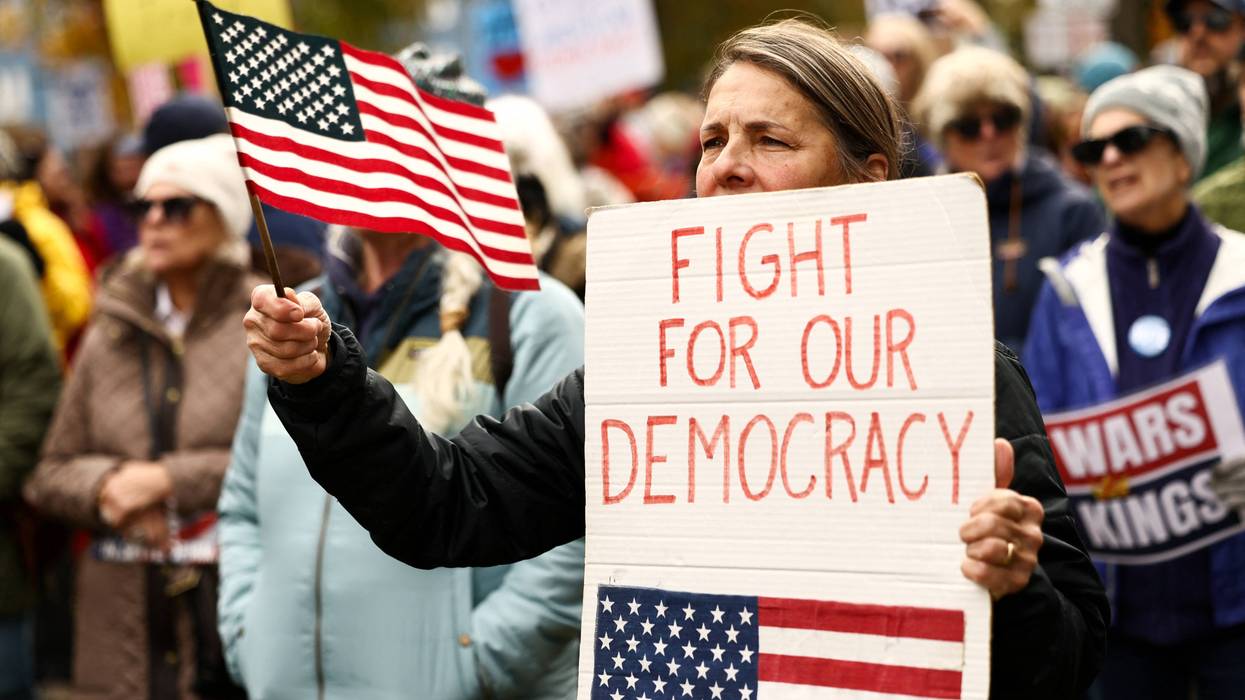
The pro-democracy citizenry must organize around a political vision that emphasizes several political projects: a just, progressive taxation system; a guaranteed household income; universal healthcare; quality public education; free preschool education; and scientific and technological initiatives for a sustainable economy.
A society riven by such income and wealth inequality is inherently unstable. The political division and violence in America today stems in large measure from a political system whose policies have encouraged radical disparities in incomes and wealth. The loss of 6.5 million manufacturing jobs since 1979 (1979 and 2025), for example, has been facilitated by trade agreements that enable corporations to chase the cheapest wages throughout the world. Runaway companies have gutted industrial towns without consequence, leaving behind poorer communities of people with limited resources to rebuild their lives and neighborhoods. The federal government, moreover, has done virtually nothing to force corporations to pay reparations for the social disintegration left in their wake. As the coastal regions and large metropolitan centers of the nation were generally integrated into the surging commerce of unbridled globalization, distant rural regions experienced economic stagnation and decline. It is little wonder that an authoritarian political figure that exploits these divisions has risen to the presidency of the United States.
In his seminal book Capital in the Twenty-First Century, French economist Thomas Piketty provides an analysis of capitalism in which he notes that “the history of the distribution of wealth has always been deeply political” (p. 20). Reduction of taxes that favors the wealthy is one political determination reflecting the unstemmed power of concentrated wealth. While this political maneuver undermines a primary income and wealth distributive mechanism (taxation system), it further restricts the resources for funding other re-distributive projects such as social welfare, public education and healthcare. Smaller government and privatization of public services are corollary results.
A principal dynamic factor in the process of wealth accumulation and concentration over the last several decades is the growth of profits as the economic growth rate has slowed down. Put another way, the wealthy are taking a larger and larger slice of diminishing income and wealth production. As the vast inequalities in the distribution of income and wealth deny the provision of basic living necessities to tens of millions and circumscribe opportunity for most Americans, social instability and political division and violence escalate. In response, an authoritarian regime consolidates its power around armed force to repress those protesting its anti-democratic policies. Its armed repression inevitably leads to bloodshed.
The pro-democracy citizenry must organize around a political vision that emphasizes several political projects: a just, progressive taxation system; a guaranteed household income; universal healthcare; quality public education; free preschool education; and scientific and technological initiatives for a sustainable economy. These political goals stand in stark contrast to an authoritarian regime that advances the interests of the one percent. They offer a view of the future that is constructive and inspirational, one that generates broad social justice and appeals to the vast majority of Americans.
I didn't witness one National Guard soldier help a mother with a stroller or a person walking with a cane. "That's not our job," they said.
I’ve been in Washington, DC for the past week battling the icy and snow piled sidewalks and streets, one week after the big snow and ice storm that immobilized the city for days.
While using the city’s buses and Metros, it was very apparent the most probable danger in DC is falling on sidewalk ice and at unshoveled bus stops.
The National Guard, the group that was brought into the city by President Trump for the soc=-called "protection" of the residents of the city, was doing nothing to protect its residents.
Of the thousands of National Guard personnel sent to Washington, every day at least 15 National Guard personnel in groups of three or four were at various corners around the Eastern Market Metro stop. These young men and women in uniform watched as residents slid, climbed over, and fell through piles of snow and ice.
Never did I see one of the young National Guard soldiers help the mothers with babies in strollers that were pushing through piles of snow to get onto a bus or help a person with a cane or walker.
I introduced myself as a retired US Army Reserve Colonel. I asked if their officers had told them not to help residents, something I would have hoped that each would have done out of uniform as pure courtesy toward others. The polite answer, “No ma’am, but that’s not our job. We are to protect you from criminals.”
Have you apprehended any criminals? “No ma’am, but we are always ready.”
Have you thought to ask if the National Guard could buy some shovels for you to help protect citizens from injury? “Yes, but no one has.”
A total of 2,188 National Guard troops have been assigned to the joint task force in Washington, DC, according to a government update reported by the Associated Press. Of those, there are 949 DC National Guard troops, as well as close to 1,200 troops from several outside states, with West Virginia having deployed 416 guardsmen.
So much for a good use of the National Guard deployment in Washington, DC.
If they're going to stay, I have a simple demand: put down the guns and pick up some shovels.
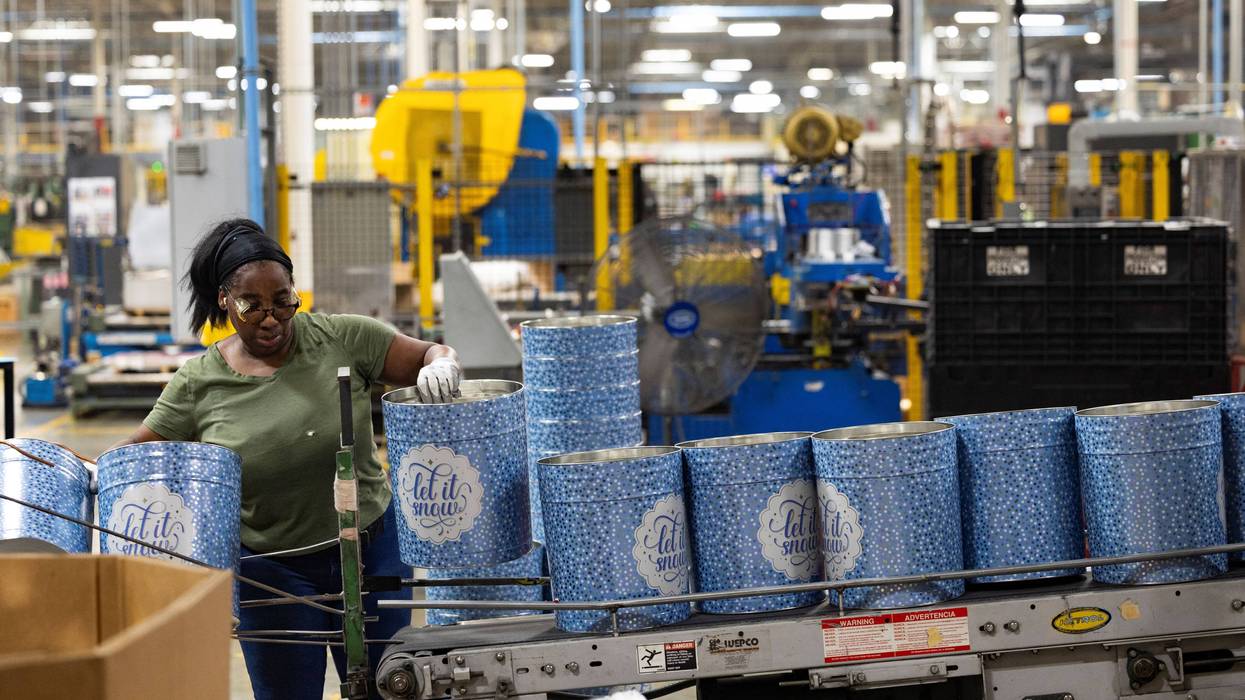
The counter-top manufacturing industry doesn’t want to protect workers from harm; it wants protection from the workers it harms.
Those who cut our artificial stone countertops are breathing in silica dust and dying. Not just a few. In fact, so many that in Australia they’ve banned the product and adopted safer substitutes. In the US, however, the industry wants to ban workers from suing the manufacturers and Republicans are doing their bidding, introducing H.R. 5437, The Protection of Lawful Commerce in Stone Slab Products Act.
Dr. David Michaels, the former head of OSHA, points us to California’s tearless Silicosis Surveillance Dashboard: 511 cases of silicosis have been diagnosed among these workers; 29 have died (average age 46); 54 underwent lung transplants; and 98 percent of these workers are Latino.
In 2021, there were only two diagnosed silicosis cases in California. In 2025 there were 214. “The number of cases is rising rapidly,” Dr. Michaels wrote to me, “That’s the important point.”
Here’s the more tearful description form Dr. Michaels during testimony last month before the House:
The hallmarks of the disease: shortness of breath and diminished exercise capacity that progresses to an inability to climb even one flight of stairs. A short walk that should take just 20 minutes can take an hour. Working is difficult or impossible. People cough incessantly. They can’t sleep because it is difficult to breathe and they are kept awake coughing. Over time, people with more advanced silicosis require supplemental oxygen and can’t leave home without an oxygen tank. And they are at increased risk of dying from lung cancer.
The crime behind this slaughter is that safer, profitable substitutes are available. As Michaels testified:
There are substitute products that are comparable in use and cost, but which do not kill workers. Many substitutes are made from amorphous silica—a different and a safer material than crystalline silica. Since Australia banned countertops containing crystalline silica, countertops are fabricated from alternative products that look and cost the same but are safer for workers.
But switching to safer products involves costs that the manufacturers would prefer to avoid. Why lose any profits at all? Why go through the disruptions involved in producing new products? Better to be shielded by your political allies.
The countertop manufacturing industry doesn’t want to protect workers from harm; it wants protection from the workers it harms. It worries this could become another asbestos epidemic that has cost asbestos manufacturers billions of dollars in payments to the victims. This time around, the industry is in position to nip it in the bud, given that the Republicans are in full control of all three branches of government.
What the industry dreads are third-party suits. Workers are not permitted, in nearly all circumstances, to sue their own employers for illnesses and exposures at work. Those claims are covered by state workers’ compensation programs. But harmed workers can and do sue manufacturers of equipment or substances that cause them harm. And if the harm can be proved to a jury, the compensation can be steep. It doesn’t make up for the damage to the exposed workers, but it provides some support to their families and pressures the industry to find safer substitutes for its harmful products.
The solution preferred by the countertop industry is simple: get a free pass, which is what this killer legislation would do. It would shield the entire industry from “persons who claim personal injuries as a result of exposure to silica dust produced during the alteration of such products in the course of their employment by third-party fabricators.”
Nice. No change needed, no interruption of profitable production, no switching to new products. No nothing except a few political donations to grease the skids. And at least some of that corporate-funded grease comes from millionaire Marty Davis, the CEO of Cambria, a large counter manufacturer, who has donated more than $800,000 to Republicans, and encouraged Trump to challenged the outcome of the 2020 election.
On this piece of legislation, the Democrats are saying the right things. Rep. Henry C. “Hank” Johnson (D-Ga.), the ranking Democrat on the House Courts, Intellectual Property, Artificial Intelligence and the Internet Subcommittee committee, which is pushing this legislation, said it as clearly as could be said:
The bill behind today’s hearing would give blanket immunity to artificial stone manufacturers and suppliers, preventing injured workers from seeking justice in court. It would dismiss the hundreds of cases pending against these manufacturers.
…Our courts determine liability all the time. People petition the court, have their grievances heard, a judge and jury consider the evidence, and a judgment is rendered.
Manufacturers are asking for a different scenario – one where the deep pockets go to Congress, Congress makes a snap judgment, and the big businesses never have to go to court again. That’s not how our justice system is supposed to work, and I condemn the blatant misuse of this committee to shield corporations at the expense of the American worker.
If only more Democrats would speak like this more often, millions of working people might hear them.
The quote in the headline of this article is attributed to journalist Paul Brodeur, author of "Expendable Americans."