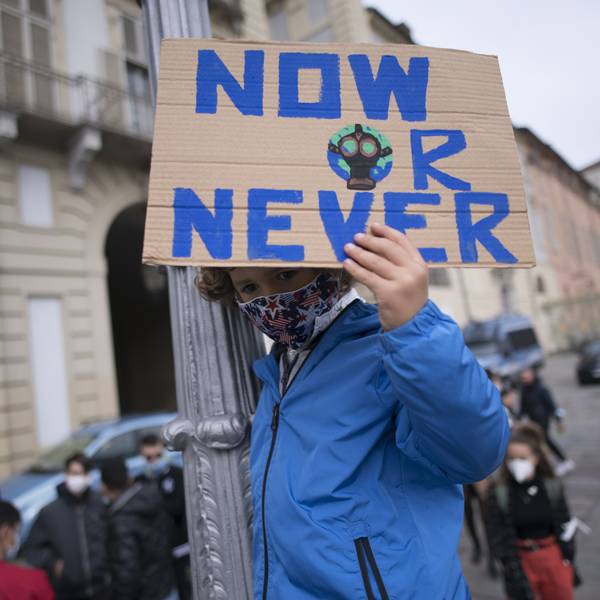


A wave of eco-anxiety, an invisible yet potent tsunami of concern, is rippling through the minds of our younger generation. According to a 2021 study presented in The Lancet, an unsettling 62% of young individuals confessed to being haunted by climate-change-induced anxiety, with a substantial 59% being very or extremely worried, while an overwhelming 84% acknowledged a moderate level of worry at the very least.
Geographical borders do not confine this unease; it's a global epidemic that infiltrates the rhythm of everyday life, with more than 45% stating that climate change apprehensions cast a shadow on their daily functioning.
The study also highlighted a poignant fact. The source of this deluge of negative emotions stems largely from the inertia of government and corporate juggernauts. These feelings of betrayal outstrip reassurance, with an emphatic 83% expressing disappointment at the perceived failure of the powers-that-be to act as stewards of our planet. A sense of betrayal, the study found, was intimately tied to climate anxiety and distress, magnified by the perceived inaction of governments.
By providing relief for the distressed and amplifying awareness using The Climate Clock, we aim to alleviate suffering and catalyze climate action.
It's important to note that "climate anxiety," as a term, resonates with a specific audience, and some label it a manifestation of privilege or a symptom of white fragility. However, the underlying feelings associated with this phrase - distress, worry, fear - are not new or limited to a specific demographic. Tethered to environmental concerns, these emotions have coursed through communities globally for generations. Indeed, for marginalized populations already contending with the brunt of environmental degradation, this anxiety is not a prospective threat but an immediate and tangible reality.
These feelings are not without basis. Scientific alarm bells are ringing, warning us that we're barreling towards a precipice – a catastrophic 1.5ºC rise in global temperatures, potentially as early as 2027 – unless we slam the brakes with both feet.
Enter the Climate Clock, a global project to get the world to act in time.
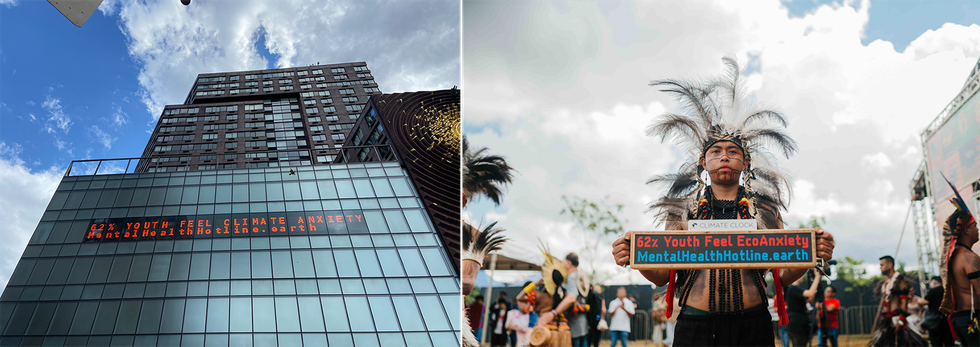 (L-R) Climate mental health messages on the world-famous Climate Clock in Union Square, NYC, Climate mental health messages that will be displayed on the 100s of handheld Climate Clocks deployed globally.(Photo: Courtesy of Climate Clok
We ourselves have been accused of creating climate anxiety by delivering the hard truths that most of us, understandably, would want to push into the background. But our dialogues with countless activists and young people make one thing clear:
The trigger of anxiety is not climate truth; it's the unsettling silence of inaction echoing against that truth. It's the chorus of climate denial, the procrastination of crucial actions, and the peddling of half-measure solutions that amplify mental distress, especially among the young generation.
The remedy for climate anxiety aligns perfectly with the answer to our climate crisis: immediate, unyielding, collective action on climate change.
Young people, pioneers of hope and resilience, are already stepping up to the plate. And following their lead are the older generations who are recalibrating their priorities, dedicating their twilight years to bringing about change, as highlighted by initiatives like the Third Act.
The missing jigsaw piece in this picture is unequivocal action from government leaders and industry behemoths. We must systematically dismantle the fossil fuel industry to guarantee our current generation, and all those who follow, the chance of a fulfilling, safe life.
However, the journey towards a climate-secure future is strewn with obstacles. Fierce resistance from industry, seemingly more committed to their shareholders than the survival of our species, particularly the fossil fuel conglomerates and their banking benefactors, steepens our path forward.
To navigate this challenge, we must take care of our mental well-being here and now. To this end, the Climate Clock has launched a 'hotline' - www.mentalhealthhotline.earth - for Climate Mental Health, a cache of resources dedicated to providing immediate assistance to those grappling with climate anxiety. This provision extends a lifeline to those navigating the stormy seas of our changing world, sparking not only the fight for our planet's preservation but also the resilience of our people.
This hotline connects those in need to a wide variety of support resources - from helplines and climate cafes to online forums and specialized mental health services tackling climate-related issues. This network spans the globe, drawing on resources from organizations like the Climate Psychology Alliance, Force of Nature, Good Grief Network, Climate Awakening, Gen Dread, and Psychologists for the Future. You’ll find the hotline displayed on our monolithic Climate Clock in Union Square, New York City, and echoed in the hundreds of handheld Climate Clocks around the world, reaching from teachers in DRC and Italy to youth activists in Turkey and Tokyo and extending to activist organizations in Ghana, the Netherlands, Kosovo, and Brazil.
By providing relief for the distressed and amplifying awareness using The Climate Clock, we aim to alleviate suffering and catalyze climate action, turning the tide on both eco-anxiety and the climate crisis.
A wave of eco-anxiety, an invisible yet potent tsunami of concern, is rippling through the minds of our younger generation. According to a 2021 study presented in The Lancet, an unsettling 62% of young individuals confessed to being haunted by climate-change-induced anxiety, with a substantial 59% being very or extremely worried, while an overwhelming 84% acknowledged a moderate level of worry at the very least.
Geographical borders do not confine this unease; it's a global epidemic that infiltrates the rhythm of everyday life, with more than 45% stating that climate change apprehensions cast a shadow on their daily functioning.
The study also highlighted a poignant fact. The source of this deluge of negative emotions stems largely from the inertia of government and corporate juggernauts. These feelings of betrayal outstrip reassurance, with an emphatic 83% expressing disappointment at the perceived failure of the powers-that-be to act as stewards of our planet. A sense of betrayal, the study found, was intimately tied to climate anxiety and distress, magnified by the perceived inaction of governments.
By providing relief for the distressed and amplifying awareness using The Climate Clock, we aim to alleviate suffering and catalyze climate action.
It's important to note that "climate anxiety," as a term, resonates with a specific audience, and some label it a manifestation of privilege or a symptom of white fragility. However, the underlying feelings associated with this phrase - distress, worry, fear - are not new or limited to a specific demographic. Tethered to environmental concerns, these emotions have coursed through communities globally for generations. Indeed, for marginalized populations already contending with the brunt of environmental degradation, this anxiety is not a prospective threat but an immediate and tangible reality.
These feelings are not without basis. Scientific alarm bells are ringing, warning us that we're barreling towards a precipice – a catastrophic 1.5ºC rise in global temperatures, potentially as early as 2027 – unless we slam the brakes with both feet.
Enter the Climate Clock, a global project to get the world to act in time.
(L-R) Climate mental health messages on the world-famous Climate Clock in Union Square, NYC, Climate mental health messages that will be displayed on the 100s of handheld Climate Clocks deployed globally.(Photo: Courtesy of Climate Clok
We ourselves have been accused of creating climate anxiety by delivering the hard truths that most of us, understandably, would want to push into the background. But our dialogues with countless activists and young people make one thing clear:
The trigger of anxiety is not climate truth; it's the unsettling silence of inaction echoing against that truth. It's the chorus of climate denial, the procrastination of crucial actions, and the peddling of half-measure solutions that amplify mental distress, especially among the young generation.
The remedy for climate anxiety aligns perfectly with the answer to our climate crisis: immediate, unyielding, collective action on climate change.
Young people, pioneers of hope and resilience, are already stepping up to the plate. And following their lead are the older generations who are recalibrating their priorities, dedicating their twilight years to bringing about change, as highlighted by initiatives like the Third Act.
The missing jigsaw piece in this picture is unequivocal action from government leaders and industry behemoths. We must systematically dismantle the fossil fuel industry to guarantee our current generation, and all those who follow, the chance of a fulfilling, safe life.
However, the journey towards a climate-secure future is strewn with obstacles. Fierce resistance from industry, seemingly more committed to their shareholders than the survival of our species, particularly the fossil fuel conglomerates and their banking benefactors, steepens our path forward.
To navigate this challenge, we must take care of our mental well-being here and now. To this end, the Climate Clock has launched a 'hotline' - www.mentalhealthhotline.earth - for Climate Mental Health, a cache of resources dedicated to providing immediate assistance to those grappling with climate anxiety. This provision extends a lifeline to those navigating the stormy seas of our changing world, sparking not only the fight for our planet's preservation but also the resilience of our people.
This hotline connects those in need to a wide variety of support resources - from helplines and climate cafes to online forums and specialized mental health services tackling climate-related issues. This network spans the globe, drawing on resources from organizations like the Climate Psychology Alliance, Force of Nature, Good Grief Network, Climate Awakening, Gen Dread, and Psychologists for the Future. You’ll find the hotline displayed on our monolithic Climate Clock in Union Square, New York City, and echoed in the hundreds of handheld Climate Clocks around the world, reaching from teachers in DRC and Italy to youth activists in Turkey and Tokyo and extending to activist organizations in Ghana, the Netherlands, Kosovo, and Brazil.
By providing relief for the distressed and amplifying awareness using The Climate Clock, we aim to alleviate suffering and catalyze climate action, turning the tide on both eco-anxiety and the climate crisis.
- Capitalism Is Killing the Planet―and It's Okay To Be Angry About That ›
- On Climate: Grieve, Cry, But Don’t Give Up! ›
- Opinion | The Cure for Climate Anxiety? Climate Action | Common Dreams ›
- Opinion | The Solutionary Life: Forging a Better World and a Happier Self | Common Dreams ›
- Opinion | Climate Inaction Is a Betrayal of the Young, and They Feel It | Common Dreams ›
A wave of eco-anxiety, an invisible yet potent tsunami of concern, is rippling through the minds of our younger generation. According to a 2021 study presented in The Lancet, an unsettling 62% of young individuals confessed to being haunted by climate-change-induced anxiety, with a substantial 59% being very or extremely worried, while an overwhelming 84% acknowledged a moderate level of worry at the very least.
Geographical borders do not confine this unease; it's a global epidemic that infiltrates the rhythm of everyday life, with more than 45% stating that climate change apprehensions cast a shadow on their daily functioning.
The study also highlighted a poignant fact. The source of this deluge of negative emotions stems largely from the inertia of government and corporate juggernauts. These feelings of betrayal outstrip reassurance, with an emphatic 83% expressing disappointment at the perceived failure of the powers-that-be to act as stewards of our planet. A sense of betrayal, the study found, was intimately tied to climate anxiety and distress, magnified by the perceived inaction of governments.
By providing relief for the distressed and amplifying awareness using The Climate Clock, we aim to alleviate suffering and catalyze climate action.
It's important to note that "climate anxiety," as a term, resonates with a specific audience, and some label it a manifestation of privilege or a symptom of white fragility. However, the underlying feelings associated with this phrase - distress, worry, fear - are not new or limited to a specific demographic. Tethered to environmental concerns, these emotions have coursed through communities globally for generations. Indeed, for marginalized populations already contending with the brunt of environmental degradation, this anxiety is not a prospective threat but an immediate and tangible reality.
These feelings are not without basis. Scientific alarm bells are ringing, warning us that we're barreling towards a precipice – a catastrophic 1.5ºC rise in global temperatures, potentially as early as 2027 – unless we slam the brakes with both feet.
Enter the Climate Clock, a global project to get the world to act in time.
(L-R) Climate mental health messages on the world-famous Climate Clock in Union Square, NYC, Climate mental health messages that will be displayed on the 100s of handheld Climate Clocks deployed globally.(Photo: Courtesy of Climate Clok
We ourselves have been accused of creating climate anxiety by delivering the hard truths that most of us, understandably, would want to push into the background. But our dialogues with countless activists and young people make one thing clear:
The trigger of anxiety is not climate truth; it's the unsettling silence of inaction echoing against that truth. It's the chorus of climate denial, the procrastination of crucial actions, and the peddling of half-measure solutions that amplify mental distress, especially among the young generation.
The remedy for climate anxiety aligns perfectly with the answer to our climate crisis: immediate, unyielding, collective action on climate change.
Young people, pioneers of hope and resilience, are already stepping up to the plate. And following their lead are the older generations who are recalibrating their priorities, dedicating their twilight years to bringing about change, as highlighted by initiatives like the Third Act.
The missing jigsaw piece in this picture is unequivocal action from government leaders and industry behemoths. We must systematically dismantle the fossil fuel industry to guarantee our current generation, and all those who follow, the chance of a fulfilling, safe life.
However, the journey towards a climate-secure future is strewn with obstacles. Fierce resistance from industry, seemingly more committed to their shareholders than the survival of our species, particularly the fossil fuel conglomerates and their banking benefactors, steepens our path forward.
To navigate this challenge, we must take care of our mental well-being here and now. To this end, the Climate Clock has launched a 'hotline' - www.mentalhealthhotline.earth - for Climate Mental Health, a cache of resources dedicated to providing immediate assistance to those grappling with climate anxiety. This provision extends a lifeline to those navigating the stormy seas of our changing world, sparking not only the fight for our planet's preservation but also the resilience of our people.
This hotline connects those in need to a wide variety of support resources - from helplines and climate cafes to online forums and specialized mental health services tackling climate-related issues. This network spans the globe, drawing on resources from organizations like the Climate Psychology Alliance, Force of Nature, Good Grief Network, Climate Awakening, Gen Dread, and Psychologists for the Future. You’ll find the hotline displayed on our monolithic Climate Clock in Union Square, New York City, and echoed in the hundreds of handheld Climate Clocks around the world, reaching from teachers in DRC and Italy to youth activists in Turkey and Tokyo and extending to activist organizations in Ghana, the Netherlands, Kosovo, and Brazil.
By providing relief for the distressed and amplifying awareness using The Climate Clock, we aim to alleviate suffering and catalyze climate action, turning the tide on both eco-anxiety and the climate crisis.
- Capitalism Is Killing the Planet―and It's Okay To Be Angry About That ›
- On Climate: Grieve, Cry, But Don’t Give Up! ›
- Opinion | The Cure for Climate Anxiety? Climate Action | Common Dreams ›
- Opinion | The Solutionary Life: Forging a Better World and a Happier Self | Common Dreams ›
- Opinion | Climate Inaction Is a Betrayal of the Young, and They Feel It | Common Dreams ›