

SUBSCRIBE TO OUR FREE NEWSLETTER
Daily news & progressive opinion—funded by the people, not the corporations—delivered straight to your inbox.
5
#000000
#FFFFFF
To donate by check, phone, or other method, see our More Ways to Give page.
Daily news & progressive opinion—funded by the people, not the corporations—delivered straight to your inbox.
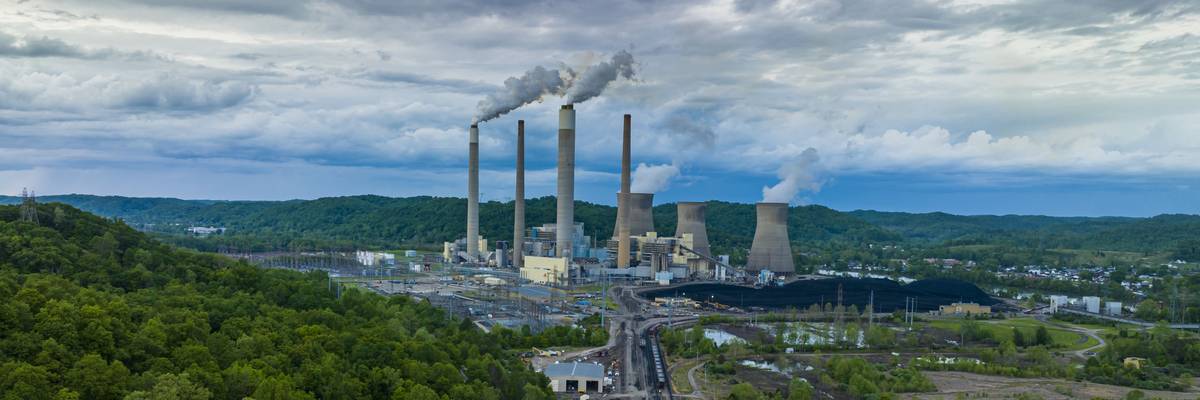
An aerial view of the Jon Amos Power Plant shows smoke stacks and cooling in Poca, West Virginia on May 8, 2023.
Carbon offset projects are "proving a dangerous diversion of political capital and time from the meaningful and just solutions needed to rise to the challenge of the climate crisis," said one researcher.
A joint investigation published Tuesday by the watchdog group Corporate Accountability and The Guardian finds that nearly 80% of the leading carbon offset schemes backed by corporations and governments in a purported attempt to reduce planet-warming pollution should be deemed "likely junk or worthless."
Carbon offset projects are billed as a way for corporations, governmental bodies, and individuals to compensate for their emissions footprints by investing in efforts to curb pollution elsewhere. Environmentalists have long warned that carbon offset schemes—part of the so-called voluntary carbon market (VCM)—are a way for fossil fuel companies such as Chevron to justify continued oil and gas extraction.
Citing the emissions trading database AlliedOffsets, The Guardian noted Tuesday that "the 50 most popular global projects include forestry schemes, hydroelectric dams, solar and wind farms, waste disposal, and greener household appliances schemes across 20 (mostly) developing countries."
The new joint investigation finds that 39 of the top 50 carbon offset projects contain at least one "fundamental failing that undermines its promised emission cuts," making them "likely junk."
The analysis characterizes a project as "likely junk" if there's "compelling evidence, claims, or high risk that it cannot guarantee additional, permanent greenhouse gas cuts, among other criteria."
"In some cases, there was evidence suggesting the project could leak greenhouse gas emissions or shift emissions elsewhere," The Guardian explained. "In other cases, the climate benefits appeared to be exaggerated or the project would have happened independently—with or without the voluntary carbon market."
Rachel Rose Jackson, director of climate research and international policy at Corporate Accountability, said in a statement that "the findings are extremely damning of a scheme that the world's largest emitters repeatedly tout as a lynchpin in solving the climate crisis."
"The VCM is proving a dangerous diversion of political capital and time from the meaningful and just solutions needed to rise to the challenge of the climate crisis," said Jackson.
"We cannot afford to waste any more time on false solutions."
The investigation is just the latest research to cast serious doubt on the effectiveness of carbon offset initiatives as companies and governments around the world, including the United States, increasingly invest resources in unproven voluntary carbon trading schemes as they face mounting backlash for doing little to phase out fossil fuels.
Last week, Carbon Market Watch released an analysis from experts at the University of California, Berkeley showing that popular carbon offset projects focused on forest preservation exaggerate their emissions reductions and are ineffective at combating deforestation, a major threat to the climate.
In their investigation, Corporate Accountability and The Guardian pointed to a major forest conservation project in Zimbabwe that "was reported to have had so many exaggerated and inflated claims—and probably shifted emissions elsewhere—that it was described as 'having more financial holes than Swiss cheese.'"
"In the U.S., the most problematic project is the world's largest carbon capture and storage plant in Wyoming, which has benefited from generous taxpayer subsidies, but where the vast majority of the captured CO2 has been released into the atmosphere or sold to other fossil fuel companies to help extract hard-to-reach oil," The Guardian reported, citing the Institute for Energy Economics and Financial Analysis.
Anuradha Mittal, director of the Oakland Institute, told the newspaper that "the ramifications of this analysis are huge, as it points to systemic failings of the voluntary market, providing additional evidence that junk carbon credits pervade the market."
"We cannot afford to waste any more time on false solutions," Mittal added. "The issues are far-reaching and pervasive, extending well beyond specific verifiers. The VCM is actively exacerbating the climate emergency."
Dear Common Dreams reader, It’s been nearly 30 years since I co-founded Common Dreams with my late wife, Lina Newhouser. We had the radical notion that journalism should serve the public good, not corporate profits. It was clear to us from the outset what it would take to build such a project. No paid advertisements. No corporate sponsors. No millionaire publisher telling us what to think or do. Many people said we wouldn't last a year, but we proved those doubters wrong. Together with a tremendous team of journalists and dedicated staff, we built an independent media outlet free from the constraints of profits and corporate control. Our mission has always been simple: To inform. To inspire. To ignite change for the common good. Building Common Dreams was not easy. Our survival was never guaranteed. When you take on the most powerful forces—Wall Street greed, fossil fuel industry destruction, Big Tech lobbyists, and uber-rich oligarchs who have spent billions upon billions rigging the economy and democracy in their favor—the only bulwark you have is supporters who believe in your work. But here’s the urgent message from me today. It's never been this bad out there. And it's never been this hard to keep us going. At the very moment Common Dreams is most needed, the threats we face are intensifying. We need your support now more than ever. We don't accept corporate advertising and never will. We don't have a paywall because we don't think people should be blocked from critical news based on their ability to pay. Everything we do is funded by the donations of readers like you. When everyone does the little they can afford, we are strong. But if that support retreats or dries up, so do we. Will you donate now to make sure Common Dreams not only survives but thrives? —Craig Brown, Co-founder |
A joint investigation published Tuesday by the watchdog group Corporate Accountability and The Guardian finds that nearly 80% of the leading carbon offset schemes backed by corporations and governments in a purported attempt to reduce planet-warming pollution should be deemed "likely junk or worthless."
Carbon offset projects are billed as a way for corporations, governmental bodies, and individuals to compensate for their emissions footprints by investing in efforts to curb pollution elsewhere. Environmentalists have long warned that carbon offset schemes—part of the so-called voluntary carbon market (VCM)—are a way for fossil fuel companies such as Chevron to justify continued oil and gas extraction.
Citing the emissions trading database AlliedOffsets, The Guardian noted Tuesday that "the 50 most popular global projects include forestry schemes, hydroelectric dams, solar and wind farms, waste disposal, and greener household appliances schemes across 20 (mostly) developing countries."
The new joint investigation finds that 39 of the top 50 carbon offset projects contain at least one "fundamental failing that undermines its promised emission cuts," making them "likely junk."
The analysis characterizes a project as "likely junk" if there's "compelling evidence, claims, or high risk that it cannot guarantee additional, permanent greenhouse gas cuts, among other criteria."
"In some cases, there was evidence suggesting the project could leak greenhouse gas emissions or shift emissions elsewhere," The Guardian explained. "In other cases, the climate benefits appeared to be exaggerated or the project would have happened independently—with or without the voluntary carbon market."
Rachel Rose Jackson, director of climate research and international policy at Corporate Accountability, said in a statement that "the findings are extremely damning of a scheme that the world's largest emitters repeatedly tout as a lynchpin in solving the climate crisis."
"The VCM is proving a dangerous diversion of political capital and time from the meaningful and just solutions needed to rise to the challenge of the climate crisis," said Jackson.
"We cannot afford to waste any more time on false solutions."
The investigation is just the latest research to cast serious doubt on the effectiveness of carbon offset initiatives as companies and governments around the world, including the United States, increasingly invest resources in unproven voluntary carbon trading schemes as they face mounting backlash for doing little to phase out fossil fuels.
Last week, Carbon Market Watch released an analysis from experts at the University of California, Berkeley showing that popular carbon offset projects focused on forest preservation exaggerate their emissions reductions and are ineffective at combating deforestation, a major threat to the climate.
In their investigation, Corporate Accountability and The Guardian pointed to a major forest conservation project in Zimbabwe that "was reported to have had so many exaggerated and inflated claims—and probably shifted emissions elsewhere—that it was described as 'having more financial holes than Swiss cheese.'"
"In the U.S., the most problematic project is the world's largest carbon capture and storage plant in Wyoming, which has benefited from generous taxpayer subsidies, but where the vast majority of the captured CO2 has been released into the atmosphere or sold to other fossil fuel companies to help extract hard-to-reach oil," The Guardian reported, citing the Institute for Energy Economics and Financial Analysis.
Anuradha Mittal, director of the Oakland Institute, told the newspaper that "the ramifications of this analysis are huge, as it points to systemic failings of the voluntary market, providing additional evidence that junk carbon credits pervade the market."
"We cannot afford to waste any more time on false solutions," Mittal added. "The issues are far-reaching and pervasive, extending well beyond specific verifiers. The VCM is actively exacerbating the climate emergency."
A joint investigation published Tuesday by the watchdog group Corporate Accountability and The Guardian finds that nearly 80% of the leading carbon offset schemes backed by corporations and governments in a purported attempt to reduce planet-warming pollution should be deemed "likely junk or worthless."
Carbon offset projects are billed as a way for corporations, governmental bodies, and individuals to compensate for their emissions footprints by investing in efforts to curb pollution elsewhere. Environmentalists have long warned that carbon offset schemes—part of the so-called voluntary carbon market (VCM)—are a way for fossil fuel companies such as Chevron to justify continued oil and gas extraction.
Citing the emissions trading database AlliedOffsets, The Guardian noted Tuesday that "the 50 most popular global projects include forestry schemes, hydroelectric dams, solar and wind farms, waste disposal, and greener household appliances schemes across 20 (mostly) developing countries."
The new joint investigation finds that 39 of the top 50 carbon offset projects contain at least one "fundamental failing that undermines its promised emission cuts," making them "likely junk."
The analysis characterizes a project as "likely junk" if there's "compelling evidence, claims, or high risk that it cannot guarantee additional, permanent greenhouse gas cuts, among other criteria."
"In some cases, there was evidence suggesting the project could leak greenhouse gas emissions or shift emissions elsewhere," The Guardian explained. "In other cases, the climate benefits appeared to be exaggerated or the project would have happened independently—with or without the voluntary carbon market."
Rachel Rose Jackson, director of climate research and international policy at Corporate Accountability, said in a statement that "the findings are extremely damning of a scheme that the world's largest emitters repeatedly tout as a lynchpin in solving the climate crisis."
"The VCM is proving a dangerous diversion of political capital and time from the meaningful and just solutions needed to rise to the challenge of the climate crisis," said Jackson.
"We cannot afford to waste any more time on false solutions."
The investigation is just the latest research to cast serious doubt on the effectiveness of carbon offset initiatives as companies and governments around the world, including the United States, increasingly invest resources in unproven voluntary carbon trading schemes as they face mounting backlash for doing little to phase out fossil fuels.
Last week, Carbon Market Watch released an analysis from experts at the University of California, Berkeley showing that popular carbon offset projects focused on forest preservation exaggerate their emissions reductions and are ineffective at combating deforestation, a major threat to the climate.
In their investigation, Corporate Accountability and The Guardian pointed to a major forest conservation project in Zimbabwe that "was reported to have had so many exaggerated and inflated claims—and probably shifted emissions elsewhere—that it was described as 'having more financial holes than Swiss cheese.'"
"In the U.S., the most problematic project is the world's largest carbon capture and storage plant in Wyoming, which has benefited from generous taxpayer subsidies, but where the vast majority of the captured CO2 has been released into the atmosphere or sold to other fossil fuel companies to help extract hard-to-reach oil," The Guardian reported, citing the Institute for Energy Economics and Financial Analysis.
Anuradha Mittal, director of the Oakland Institute, told the newspaper that "the ramifications of this analysis are huge, as it points to systemic failings of the voluntary market, providing additional evidence that junk carbon credits pervade the market."
"We cannot afford to waste any more time on false solutions," Mittal added. "The issues are far-reaching and pervasive, extending well beyond specific verifiers. The VCM is actively exacerbating the climate emergency."

