New figures published Friday by the U.S. Bureau of Labor Statistics show that wage growth continued to decelerate last month, prompting economists to redouble their warnings that additional large interest rate hikes from the Federal Reserve could undermine the solid job market and hurl the country into recession.
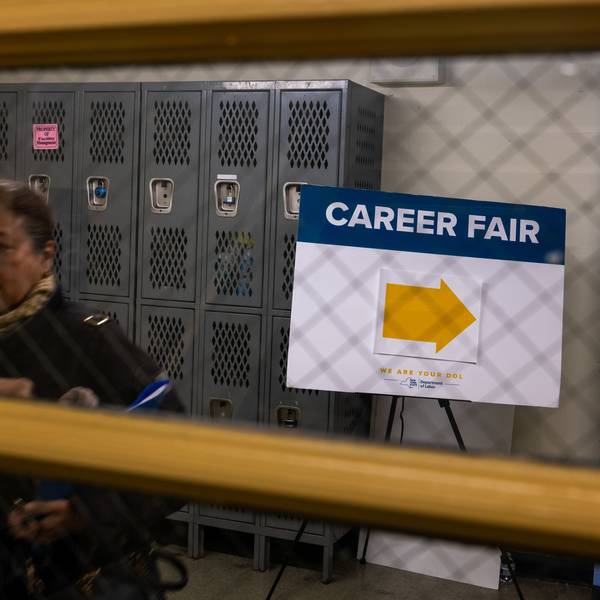
Average hourly wages in the U.S. rose 0.3% in June, according to the Labor Department data, which showed that hiring remained strong last month and the official unemployment rate held steady at a historically low 3.6%.
"If they go too far too fast, the shining achievement of a rapid recovery from a horrendous economic shock could be squandered."
Over the past year through June, average hourly earnings are up 5.1%, a slight decrease from the past 12 months through May, a period in which wages rose 5.3%.
Dean Baker, senior economist at the Center for Economic and Policy Research, noted in an analysis of the government numbers that "the annualized rate of wage growth, comparing the last three months (April, May, June) with the prior three months (January, February, March), was 4.3%."
"That is down from an annualized rate of 6.1%, comparing the winter (November, December, January) to the fall (August, September, October)," Baker observed. "This is a huge deal because the Fed's plans for aggressive rate hikes were based on a concern for a 1970s-type wage-price spiral. It is impossible to have a wage-price spiral when wage growth is slowing."
The Economic Policy Institute's (EPI) Heidi Shierholz reacted similarly to the fresh report, writing that nominal wage growth is "clearly decelerating, which is enormously consequential for Fed policy."
"Make no mistake, we want positive real wage growth for workers," Shierholz continued, alluding to the fact that wage gains have been eroded significantly by inflation. "But--and this is hugely important--this decelerating wage growth means the Fed doesn't need more interest rate increases to contain inflation."
Related Content

'Their Inflation Strategy Is Working': Corporate Profits Soared to Record High in 2021
The new economic data comes just under three weeks before the central bank's Federal Open Market Committee (FOMC) is set to convene and decide its next steps in its bid to tame sky-high inflation. Analysts expect the Fed to implement another major rate hike--potentially 75 basis points, the same as last month--despite warnings that doing so risks unnecessarily choking off investment and throwing millions out of work.
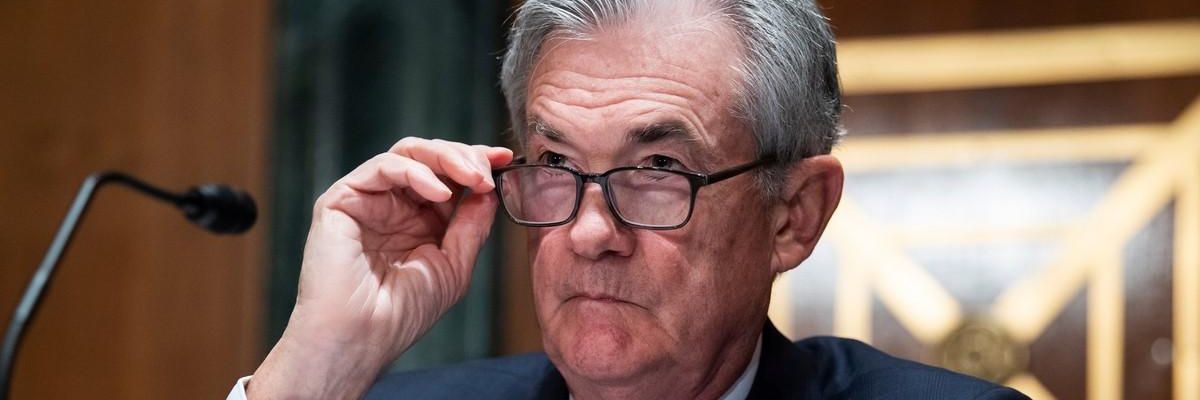
While Fed Chair Jerome Powell has said that "wages are not principally responsible for the inflation that we're seeing," he has also voiced a desire to "get wages down" as part of the effort to rein in prices, which have been pushed to historic highs by factors that--by Powell's own admission--are largely out of the central bank's control.
It's unclear whether the recent deceleration in wage growth will be sufficient for Fed officials to reverse course on rate hikes. During last month's meeting, according to FOMC minutes, the nation's central bankers cited "elevated nominal wage growth" and "persistent wage pressures" as cause for concern, even as economists noted at the time that wage growth was cooling substantially.
Amid increasingly vocal warnings from experts and progressive lawmakers about the dangers posed by the Fed's approach to inflation, President Joe Biden has declined publicly to criticize it.
Ahead of Friday's data release, EPI director of research Josh Bivens wrote in a blog post that "the entire case for raising rates is to slow economy-wide spending and engineer higher unemployment so that growth in labor incomes can be reined in, which will dampen both potential cost-drivers of inflation (wages) and reduce household demand for goods and services."
But if wage growth is already slowing, Bivens cautioned, "the implications are startling: there really is no need for any further tightening from the Fed."
"And if they go too far too fast," he added, "the shining achievement of a rapid recovery from a horrendous economic shock could be squandered."
Dr. Rakeen Mabud, chief economist and managing director of policy and research at the Groundwork Collaborative, said in a statement Friday that "while the labor market has experienced robust job growth in recent months, we must reject calls to push the economy into a recession and put millions out of work in the name of combating inflation."
"Doing so would be especially catastrophic for Black workers, who face nearly double the unemployment rate of white workers even in the best of times," said Mabud. "Rather than condemning millions to joblessness, we must make the critical, long-overdue investments in care, climate, and housing that will bring down costs and strengthen our economy as a whole."
New figures published Friday by the U.S. Bureau of Labor Statistics show that wage growth continued to decelerate last month, prompting economists to redouble their warnings that additional large interest rate hikes from the Federal Reserve could undermine the solid job market and hurl the country into recession.
Average hourly wages in the U.S. rose 0.3% in June, according to the Labor Department data, which showed that hiring remained strong last month and the official unemployment rate held steady at a historically low 3.6%.
"If they go too far too fast, the shining achievement of a rapid recovery from a horrendous economic shock could be squandered."
Over the past year through June, average hourly earnings are up 5.1%, a slight decrease from the past 12 months through May, a period in which wages rose 5.3%.
Dean Baker, senior economist at the Center for Economic and Policy Research, noted in an analysis of the government numbers that "the annualized rate of wage growth, comparing the last three months (April, May, June) with the prior three months (January, February, March), was 4.3%."
"That is down from an annualized rate of 6.1%, comparing the winter (November, December, January) to the fall (August, September, October)," Baker observed. "This is a huge deal because the Fed's plans for aggressive rate hikes were based on a concern for a 1970s-type wage-price spiral. It is impossible to have a wage-price spiral when wage growth is slowing."
The Economic Policy Institute's (EPI) Heidi Shierholz reacted similarly to the fresh report, writing that nominal wage growth is "clearly decelerating, which is enormously consequential for Fed policy."
"Make no mistake, we want positive real wage growth for workers," Shierholz continued, alluding to the fact that wage gains have been eroded significantly by inflation. "But--and this is hugely important--this decelerating wage growth means the Fed doesn't need more interest rate increases to contain inflation."
Related Content
'Their Inflation Strategy Is Working': Corporate Profits Soared to Record High in 2021
The new economic data comes just under three weeks before the central bank's Federal Open Market Committee (FOMC) is set to convene and decide its next steps in its bid to tame sky-high inflation. Analysts expect the Fed to implement another major rate hike--potentially 75 basis points, the same as last month--despite warnings that doing so risks unnecessarily choking off investment and throwing millions out of work.
While Fed Chair Jerome Powell has said that "wages are not principally responsible for the inflation that we're seeing," he has also voiced a desire to "get wages down" as part of the effort to rein in prices, which have been pushed to historic highs by factors that--by Powell's own admission--are largely out of the central bank's control.
It's unclear whether the recent deceleration in wage growth will be sufficient for Fed officials to reverse course on rate hikes. During last month's meeting, according to FOMC minutes, the nation's central bankers cited "elevated nominal wage growth" and "persistent wage pressures" as cause for concern, even as economists noted at the time that wage growth was cooling substantially.
Amid increasingly vocal warnings from experts and progressive lawmakers about the dangers posed by the Fed's approach to inflation, President Joe Biden has declined publicly to criticize it.
Ahead of Friday's data release, EPI director of research Josh Bivens wrote in a blog post that "the entire case for raising rates is to slow economy-wide spending and engineer higher unemployment so that growth in labor incomes can be reined in, which will dampen both potential cost-drivers of inflation (wages) and reduce household demand for goods and services."
But if wage growth is already slowing, Bivens cautioned, "the implications are startling: there really is no need for any further tightening from the Fed."
"And if they go too far too fast," he added, "the shining achievement of a rapid recovery from a horrendous economic shock could be squandered."
Dr. Rakeen Mabud, chief economist and managing director of policy and research at the Groundwork Collaborative, said in a statement Friday that "while the labor market has experienced robust job growth in recent months, we must reject calls to push the economy into a recession and put millions out of work in the name of combating inflation."
"Doing so would be especially catastrophic for Black workers, who face nearly double the unemployment rate of white workers even in the best of times," said Mabud. "Rather than condemning millions to joblessness, we must make the critical, long-overdue investments in care, climate, and housing that will bring down costs and strengthen our economy as a whole."
New figures published Friday by the U.S. Bureau of Labor Statistics show that wage growth continued to decelerate last month, prompting economists to redouble their warnings that additional large interest rate hikes from the Federal Reserve could undermine the solid job market and hurl the country into recession.
Average hourly wages in the U.S. rose 0.3% in June, according to the Labor Department data, which showed that hiring remained strong last month and the official unemployment rate held steady at a historically low 3.6%.
"If they go too far too fast, the shining achievement of a rapid recovery from a horrendous economic shock could be squandered."
Over the past year through June, average hourly earnings are up 5.1%, a slight decrease from the past 12 months through May, a period in which wages rose 5.3%.
Dean Baker, senior economist at the Center for Economic and Policy Research, noted in an analysis of the government numbers that "the annualized rate of wage growth, comparing the last three months (April, May, June) with the prior three months (January, February, March), was 4.3%."
"That is down from an annualized rate of 6.1%, comparing the winter (November, December, January) to the fall (August, September, October)," Baker observed. "This is a huge deal because the Fed's plans for aggressive rate hikes were based on a concern for a 1970s-type wage-price spiral. It is impossible to have a wage-price spiral when wage growth is slowing."
The Economic Policy Institute's (EPI) Heidi Shierholz reacted similarly to the fresh report, writing that nominal wage growth is "clearly decelerating, which is enormously consequential for Fed policy."
"Make no mistake, we want positive real wage growth for workers," Shierholz continued, alluding to the fact that wage gains have been eroded significantly by inflation. "But--and this is hugely important--this decelerating wage growth means the Fed doesn't need more interest rate increases to contain inflation."
Related Content
'Their Inflation Strategy Is Working': Corporate Profits Soared to Record High in 2021
The new economic data comes just under three weeks before the central bank's Federal Open Market Committee (FOMC) is set to convene and decide its next steps in its bid to tame sky-high inflation. Analysts expect the Fed to implement another major rate hike--potentially 75 basis points, the same as last month--despite warnings that doing so risks unnecessarily choking off investment and throwing millions out of work.
While Fed Chair Jerome Powell has said that "wages are not principally responsible for the inflation that we're seeing," he has also voiced a desire to "get wages down" as part of the effort to rein in prices, which have been pushed to historic highs by factors that--by Powell's own admission--are largely out of the central bank's control.
It's unclear whether the recent deceleration in wage growth will be sufficient for Fed officials to reverse course on rate hikes. During last month's meeting, according to FOMC minutes, the nation's central bankers cited "elevated nominal wage growth" and "persistent wage pressures" as cause for concern, even as economists noted at the time that wage growth was cooling substantially.
Amid increasingly vocal warnings from experts and progressive lawmakers about the dangers posed by the Fed's approach to inflation, President Joe Biden has declined publicly to criticize it.
Ahead of Friday's data release, EPI director of research Josh Bivens wrote in a blog post that "the entire case for raising rates is to slow economy-wide spending and engineer higher unemployment so that growth in labor incomes can be reined in, which will dampen both potential cost-drivers of inflation (wages) and reduce household demand for goods and services."
But if wage growth is already slowing, Bivens cautioned, "the implications are startling: there really is no need for any further tightening from the Fed."
"And if they go too far too fast," he added, "the shining achievement of a rapid recovery from a horrendous economic shock could be squandered."
Dr. Rakeen Mabud, chief economist and managing director of policy and research at the Groundwork Collaborative, said in a statement Friday that "while the labor market has experienced robust job growth in recent months, we must reject calls to push the economy into a recession and put millions out of work in the name of combating inflation."
"Doing so would be especially catastrophic for Black workers, who face nearly double the unemployment rate of white workers even in the best of times," said Mabud. "Rather than condemning millions to joblessness, we must make the critical, long-overdue investments in care, climate, and housing that will bring down costs and strengthen our economy as a whole."