SUBSCRIBE TO OUR FREE NEWSLETTER
Daily news & progressive opinion—funded by the people, not the corporations—delivered straight to your inbox.
5
#000000
#FFFFFF
To donate by check, phone, or other method, see our More Ways to Give page.
Daily news & progressive opinion—funded by the people, not the corporations—delivered straight to your inbox.
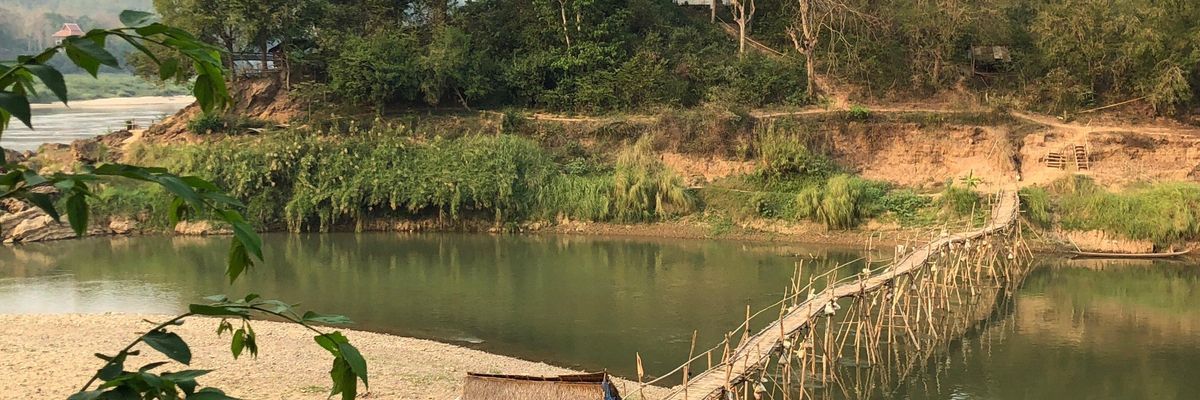
Researchers examining pharmaceutical contamination took samples from more than 1,000 locations around the world, including the Mekong River in Luang Prabang, Laos. (Photo: John Wilkinson)
Underscoring the value of collaboration, experts from around the world on Monday unveiled what they described as the first "truly global study" of pharmaceutical drugs contaminating rivers, which has "deleterious effects on ecological and human health."
"I hope the study will lead to projects that support and expand sewage treatment where it is needed the most."
The historic analysis, published in the journal Proceedings of the National Academy of Sciences, involved 127 authors from 86 institutions. They examined surface water samples from 1,052 sites in 104 countries--including 36 that had never been monitored before-- across all continents for 61 different active pharmaceutical ingredients (APIs).
Sample sites ranged from an Indigenous community in Venezuela where modern medicine is not used to highly populated urban areas such as Delhi, London, and New York City. Researchers also gathered samples from regions with political instability, including Baghdad, Nablus in the Palestinian West Bank, and Cameroon's capital, Yaounde.
The United States was the "most extensively studied" nation, with samples collected at 81 locations along 29 rivers across Colorado, Florida, Hawaii, Iowa, Missouri, Nevada, New York, and Texas. Samples were also taken in every European Union member state except Malta, which the paper explains "was not included due to the country's lack of rivers."
The paper notes that all four contaminants detected on every continent--caffeine, nicotine, acetaminophen or paracetamol, and cotinine--are "considered either lifestyle compounds or over-the-counter APIs." Another 14 APIs, including various antidepressants and antihistamines, were found on all continents except Antarctica.
"Concentrations of at least one API at 25.7% of the sampling sites were greater than concentrations considered safe for aquatic organisms, or which are of concern in terms of selection for antimicrobial resistance," the study states. "Therefore, pharmaceutical pollution poses a global threat to environmental and human health, as well as to delivery of the United Nations Sustainable Development Goals."
The Guardian's Damian Carrington reported that "the APIs end up in rivers after being taken by people and livestock and then excreted into the sewer system or directly into the environment, though some may also leak from pharmaceutical factories."
Lead author John Wilkinson of the University of York told Carrington that "the World Health Organization and U.N. and other organizations say antimicrobial resistance is the single greatest threat to humanity--it's a next pandemic."
"In 19% of all of the sites we monitored, the concentrations of [antibiotics] exceeded the levels that we'd expect to encourage bacteria to develop resistance," he said.
With the exceptions of Iceland and the Yanomami Village in Venezuela, "at least one API was detected in all of our study campaigns," the paper reveals. The highest concentrations were documented in Lahore, Pakistan; La Paz, Bolivia; and Addis Ababa, Ethiopia.
Overall, the most polluted samples came from African and Asian countries, the experts found. The most contaminated samples from Europe, North America, and Oceania were from Madrid, Spain; San Jose, Costa Rica; and Adelaide, Australia, respectively.
"While the majority of previous studies have monitored active pharmaceutical ingredients in rivers, these studies have often excluded many countries, have measured only a select few pharmaceuticals, and used different analytical methods," co-author Anna Sobek of Stockholm University said in a statement. "This means that it is difficult to make direct comparisons between studies and, hence, assess the scale of pharmaceutical pollution across the globe."
Though she emphasized that the study confirms the issue is global in nature, Sobek noted that "in general, the rivers with the highest level of pharmaceutical pollution were found in low- to medium-income countries where there are no adequate water treatment facilities and where high emissions from the manufacturing of pharmaceuticals are found."
"The findings of this study remind us that the medicines we buy in pharmacies can have a big impact on the environment of the countries they are manufactured in," Sobek said.
"Since we clearly show that access to sewage treatment facilities significantly improves water quality," she added, "I hope the study will lead to projects that support and expand sewage treatment where it is needed the most."
Wilkinson told Carrington that "we know good sewage connectivity and wastewater treatment is the key to minimizing, though not necessarily eliminating, pharmaceutical concentrations," but it "is extremely expensive as there's a lot of infrastructure involved."
In a statement, Wilkinson said the research project "is an excellent example of how the global scientific community can come together to tackle large-scale environmental issues."
The paper highlights that the authors' approach "could be applied to other APIs and other classes of pollutants, such as personal care products, endocrine-disrupting chemicals, pesticides, and metals," as well as "expanded to other environmental media, such as sediments, soils, and biota."
"As we move toward 2030, the new paradigm in environmental monitoring must involve a global, inclusive, and interconnected effort," the study concludes. "Only through global collaboration will we be able to generate the monitoring data required to make informed decisions on mitigation approaches required to reduce the environmental impacts of chemicals."
Dear Common Dreams reader, It’s been nearly 30 years since I co-founded Common Dreams with my late wife, Lina Newhouser. We had the radical notion that journalism should serve the public good, not corporate profits. It was clear to us from the outset what it would take to build such a project. No paid advertisements. No corporate sponsors. No millionaire publisher telling us what to think or do. Many people said we wouldn't last a year, but we proved those doubters wrong. Together with a tremendous team of journalists and dedicated staff, we built an independent media outlet free from the constraints of profits and corporate control. Our mission has always been simple: To inform. To inspire. To ignite change for the common good. Building Common Dreams was not easy. Our survival was never guaranteed. When you take on the most powerful forces—Wall Street greed, fossil fuel industry destruction, Big Tech lobbyists, and uber-rich oligarchs who have spent billions upon billions rigging the economy and democracy in their favor—the only bulwark you have is supporters who believe in your work. But here’s the urgent message from me today. It's never been this bad out there. And it's never been this hard to keep us going. At the very moment Common Dreams is most needed, the threats we face are intensifying. We need your support now more than ever. We don't accept corporate advertising and never will. We don't have a paywall because we don't think people should be blocked from critical news based on their ability to pay. Everything we do is funded by the donations of readers like you. When everyone does the little they can afford, we are strong. But if that support retreats or dries up, so do we. Will you donate now to make sure Common Dreams not only survives but thrives? —Craig Brown, Co-founder |
Underscoring the value of collaboration, experts from around the world on Monday unveiled what they described as the first "truly global study" of pharmaceutical drugs contaminating rivers, which has "deleterious effects on ecological and human health."
"I hope the study will lead to projects that support and expand sewage treatment where it is needed the most."
The historic analysis, published in the journal Proceedings of the National Academy of Sciences, involved 127 authors from 86 institutions. They examined surface water samples from 1,052 sites in 104 countries--including 36 that had never been monitored before-- across all continents for 61 different active pharmaceutical ingredients (APIs).
Sample sites ranged from an Indigenous community in Venezuela where modern medicine is not used to highly populated urban areas such as Delhi, London, and New York City. Researchers also gathered samples from regions with political instability, including Baghdad, Nablus in the Palestinian West Bank, and Cameroon's capital, Yaounde.
The United States was the "most extensively studied" nation, with samples collected at 81 locations along 29 rivers across Colorado, Florida, Hawaii, Iowa, Missouri, Nevada, New York, and Texas. Samples were also taken in every European Union member state except Malta, which the paper explains "was not included due to the country's lack of rivers."
The paper notes that all four contaminants detected on every continent--caffeine, nicotine, acetaminophen or paracetamol, and cotinine--are "considered either lifestyle compounds or over-the-counter APIs." Another 14 APIs, including various antidepressants and antihistamines, were found on all continents except Antarctica.
"Concentrations of at least one API at 25.7% of the sampling sites were greater than concentrations considered safe for aquatic organisms, or which are of concern in terms of selection for antimicrobial resistance," the study states. "Therefore, pharmaceutical pollution poses a global threat to environmental and human health, as well as to delivery of the United Nations Sustainable Development Goals."
The Guardian's Damian Carrington reported that "the APIs end up in rivers after being taken by people and livestock and then excreted into the sewer system or directly into the environment, though some may also leak from pharmaceutical factories."
Lead author John Wilkinson of the University of York told Carrington that "the World Health Organization and U.N. and other organizations say antimicrobial resistance is the single greatest threat to humanity--it's a next pandemic."
"In 19% of all of the sites we monitored, the concentrations of [antibiotics] exceeded the levels that we'd expect to encourage bacteria to develop resistance," he said.
With the exceptions of Iceland and the Yanomami Village in Venezuela, "at least one API was detected in all of our study campaigns," the paper reveals. The highest concentrations were documented in Lahore, Pakistan; La Paz, Bolivia; and Addis Ababa, Ethiopia.
Overall, the most polluted samples came from African and Asian countries, the experts found. The most contaminated samples from Europe, North America, and Oceania were from Madrid, Spain; San Jose, Costa Rica; and Adelaide, Australia, respectively.
"While the majority of previous studies have monitored active pharmaceutical ingredients in rivers, these studies have often excluded many countries, have measured only a select few pharmaceuticals, and used different analytical methods," co-author Anna Sobek of Stockholm University said in a statement. "This means that it is difficult to make direct comparisons between studies and, hence, assess the scale of pharmaceutical pollution across the globe."
Though she emphasized that the study confirms the issue is global in nature, Sobek noted that "in general, the rivers with the highest level of pharmaceutical pollution were found in low- to medium-income countries where there are no adequate water treatment facilities and where high emissions from the manufacturing of pharmaceuticals are found."
"The findings of this study remind us that the medicines we buy in pharmacies can have a big impact on the environment of the countries they are manufactured in," Sobek said.
"Since we clearly show that access to sewage treatment facilities significantly improves water quality," she added, "I hope the study will lead to projects that support and expand sewage treatment where it is needed the most."
Wilkinson told Carrington that "we know good sewage connectivity and wastewater treatment is the key to minimizing, though not necessarily eliminating, pharmaceutical concentrations," but it "is extremely expensive as there's a lot of infrastructure involved."
In a statement, Wilkinson said the research project "is an excellent example of how the global scientific community can come together to tackle large-scale environmental issues."
The paper highlights that the authors' approach "could be applied to other APIs and other classes of pollutants, such as personal care products, endocrine-disrupting chemicals, pesticides, and metals," as well as "expanded to other environmental media, such as sediments, soils, and biota."
"As we move toward 2030, the new paradigm in environmental monitoring must involve a global, inclusive, and interconnected effort," the study concludes. "Only through global collaboration will we be able to generate the monitoring data required to make informed decisions on mitigation approaches required to reduce the environmental impacts of chemicals."
Underscoring the value of collaboration, experts from around the world on Monday unveiled what they described as the first "truly global study" of pharmaceutical drugs contaminating rivers, which has "deleterious effects on ecological and human health."
"I hope the study will lead to projects that support and expand sewage treatment where it is needed the most."
The historic analysis, published in the journal Proceedings of the National Academy of Sciences, involved 127 authors from 86 institutions. They examined surface water samples from 1,052 sites in 104 countries--including 36 that had never been monitored before-- across all continents for 61 different active pharmaceutical ingredients (APIs).
Sample sites ranged from an Indigenous community in Venezuela where modern medicine is not used to highly populated urban areas such as Delhi, London, and New York City. Researchers also gathered samples from regions with political instability, including Baghdad, Nablus in the Palestinian West Bank, and Cameroon's capital, Yaounde.
The United States was the "most extensively studied" nation, with samples collected at 81 locations along 29 rivers across Colorado, Florida, Hawaii, Iowa, Missouri, Nevada, New York, and Texas. Samples were also taken in every European Union member state except Malta, which the paper explains "was not included due to the country's lack of rivers."
The paper notes that all four contaminants detected on every continent--caffeine, nicotine, acetaminophen or paracetamol, and cotinine--are "considered either lifestyle compounds or over-the-counter APIs." Another 14 APIs, including various antidepressants and antihistamines, were found on all continents except Antarctica.
"Concentrations of at least one API at 25.7% of the sampling sites were greater than concentrations considered safe for aquatic organisms, or which are of concern in terms of selection for antimicrobial resistance," the study states. "Therefore, pharmaceutical pollution poses a global threat to environmental and human health, as well as to delivery of the United Nations Sustainable Development Goals."
The Guardian's Damian Carrington reported that "the APIs end up in rivers after being taken by people and livestock and then excreted into the sewer system or directly into the environment, though some may also leak from pharmaceutical factories."
Lead author John Wilkinson of the University of York told Carrington that "the World Health Organization and U.N. and other organizations say antimicrobial resistance is the single greatest threat to humanity--it's a next pandemic."
"In 19% of all of the sites we monitored, the concentrations of [antibiotics] exceeded the levels that we'd expect to encourage bacteria to develop resistance," he said.
With the exceptions of Iceland and the Yanomami Village in Venezuela, "at least one API was detected in all of our study campaigns," the paper reveals. The highest concentrations were documented in Lahore, Pakistan; La Paz, Bolivia; and Addis Ababa, Ethiopia.
Overall, the most polluted samples came from African and Asian countries, the experts found. The most contaminated samples from Europe, North America, and Oceania were from Madrid, Spain; San Jose, Costa Rica; and Adelaide, Australia, respectively.
"While the majority of previous studies have monitored active pharmaceutical ingredients in rivers, these studies have often excluded many countries, have measured only a select few pharmaceuticals, and used different analytical methods," co-author Anna Sobek of Stockholm University said in a statement. "This means that it is difficult to make direct comparisons between studies and, hence, assess the scale of pharmaceutical pollution across the globe."
Though she emphasized that the study confirms the issue is global in nature, Sobek noted that "in general, the rivers with the highest level of pharmaceutical pollution were found in low- to medium-income countries where there are no adequate water treatment facilities and where high emissions from the manufacturing of pharmaceuticals are found."
"The findings of this study remind us that the medicines we buy in pharmacies can have a big impact on the environment of the countries they are manufactured in," Sobek said.
"Since we clearly show that access to sewage treatment facilities significantly improves water quality," she added, "I hope the study will lead to projects that support and expand sewage treatment where it is needed the most."
Wilkinson told Carrington that "we know good sewage connectivity and wastewater treatment is the key to minimizing, though not necessarily eliminating, pharmaceutical concentrations," but it "is extremely expensive as there's a lot of infrastructure involved."
In a statement, Wilkinson said the research project "is an excellent example of how the global scientific community can come together to tackle large-scale environmental issues."
The paper highlights that the authors' approach "could be applied to other APIs and other classes of pollutants, such as personal care products, endocrine-disrupting chemicals, pesticides, and metals," as well as "expanded to other environmental media, such as sediments, soils, and biota."
"As we move toward 2030, the new paradigm in environmental monitoring must involve a global, inclusive, and interconnected effort," the study concludes. "Only through global collaboration will we be able to generate the monitoring data required to make informed decisions on mitigation approaches required to reduce the environmental impacts of chemicals."