SUBSCRIBE TO OUR FREE NEWSLETTER
Daily news & progressive opinion—funded by the people, not the corporations—delivered straight to your inbox.
5
#000000
#FFFFFF
To donate by check, phone, or other method, see our More Ways to Give page.
Daily news & progressive opinion—funded by the people, not the corporations—delivered straight to your inbox.
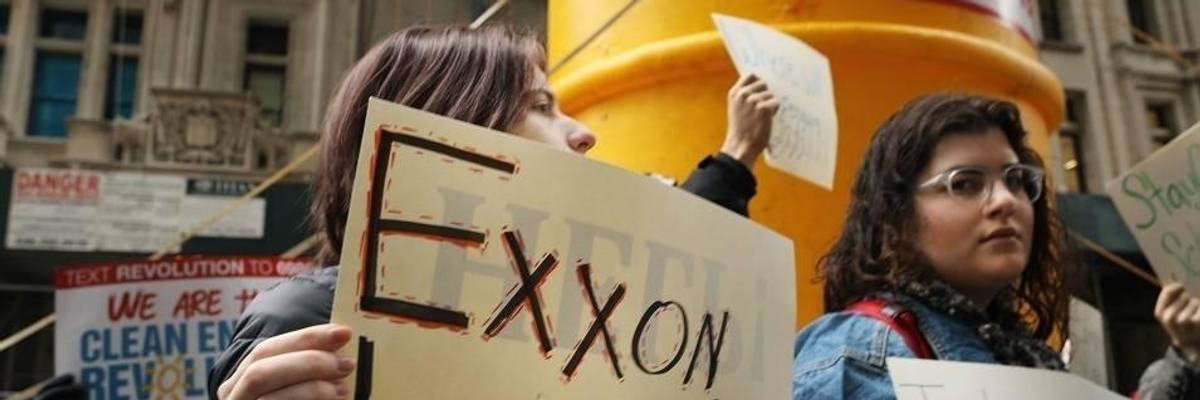
"These lawsuits were filed to protect our residents, workers, and businesses from the harms of climate change knowingly imposed on our communities by the fossil fuel companies," San Francisco City Attorney Dennis Herrera and Oakland City Attorney Barbara Parker said in a joint statement. (Photo: Spencer Platt/Getty Images)
A panel of federal judges on Tuesday ruled that California climate lawsuits aiming to force major fossil fuel companies to pay for their role in causing the environmental crisis must be heard in state courts rather than more industry-friendly federal venues, a decision that was celebrated as a major blow to Big Oil's efforts to evade accountability.
"The oil companies' strategy is to keep the light from shining on their own behavior. This gets closer to allowing plaintiffs to shine that light."
--Ann Carlson, UCLA
In a unanimous 3-0 ruling, the Ninth U.S. Circuit Court of Appeals rejected arguments from fossil fuel company lawyers that the lawsuits by five California cities and three counties should be heard in federal rather than state court. In a separate ruling Tuesday, the panel unanimously overturned a 2018 district court decision that tossed out climate lawsuits brought by San Francisco and Oakland.
The latter ruling sends the San Francisco and Oakland suits back to the lower court for reconsideration.
The lawsuits by California municipalities seek to compel major oil companies like Chevron, BP, and Exxon Mobil to pay tens of billions of dollars to help cities and counties combat the devastating effects of the climate crisis.
"These lawsuits were filed to protect our residents, workers, and businesses from the harms of climate change knowingly imposed on our communities by the fossil fuel companies," San Francisco City Attorney Dennis Herrera and Oakland City Attorney Barbara Parker said in a joint statement. "Today's ruling from a unanimous Court of Appeals panel puts us one step closer to that goal."
The Associated Press reported that the rulings "are expected to meet continued challenges that could include a review by a larger Ninth Circuit panel and, eventually, review by the U.S. Supreme Court."
While the lawsuits have a long way to go before reaching a jury, UCLA environmental law professor Ann Carlson told AP that the rulings move plaintiffs closer to discovering what top fossil fuel executives knew and when they knew it and what oil companies did to fund a campaign to dissuade the American public that climate change was happening."
"The oil companies' strategy is to keep the light from shining on their own behavior," said Carlson. "This gets closer to allowing plaintiffs to shine that light."
Richard Wiles, executive director of the Center for Climate Integrity, said in a statement that Tuesday's rulings are "a tremendous victory in the fight to hold Big Oil accountable for lying about climate change and leaving communities to pay for the damage."
"The last thing Big Oil wants is a trial where the truth about their decades of lying about climate change would be laid bare," said Wiles. "These decisions get these communities one step closer to that day."
Dear Common Dreams reader, It’s been nearly 30 years since I co-founded Common Dreams with my late wife, Lina Newhouser. We had the radical notion that journalism should serve the public good, not corporate profits. It was clear to us from the outset what it would take to build such a project. No paid advertisements. No corporate sponsors. No millionaire publisher telling us what to think or do. Many people said we wouldn't last a year, but we proved those doubters wrong. Together with a tremendous team of journalists and dedicated staff, we built an independent media outlet free from the constraints of profits and corporate control. Our mission has always been simple: To inform. To inspire. To ignite change for the common good. Building Common Dreams was not easy. Our survival was never guaranteed. When you take on the most powerful forces—Wall Street greed, fossil fuel industry destruction, Big Tech lobbyists, and uber-rich oligarchs who have spent billions upon billions rigging the economy and democracy in their favor—the only bulwark you have is supporters who believe in your work. But here’s the urgent message from me today. It's never been this bad out there. And it's never been this hard to keep us going. At the very moment Common Dreams is most needed, the threats we face are intensifying. We need your support now more than ever. We don't accept corporate advertising and never will. We don't have a paywall because we don't think people should be blocked from critical news based on their ability to pay. Everything we do is funded by the donations of readers like you. When everyone does the little they can afford, we are strong. But if that support retreats or dries up, so do we. Will you donate now to make sure Common Dreams not only survives but thrives? —Craig Brown, Co-founder |
A panel of federal judges on Tuesday ruled that California climate lawsuits aiming to force major fossil fuel companies to pay for their role in causing the environmental crisis must be heard in state courts rather than more industry-friendly federal venues, a decision that was celebrated as a major blow to Big Oil's efforts to evade accountability.
"The oil companies' strategy is to keep the light from shining on their own behavior. This gets closer to allowing plaintiffs to shine that light."
--Ann Carlson, UCLA
In a unanimous 3-0 ruling, the Ninth U.S. Circuit Court of Appeals rejected arguments from fossil fuel company lawyers that the lawsuits by five California cities and three counties should be heard in federal rather than state court. In a separate ruling Tuesday, the panel unanimously overturned a 2018 district court decision that tossed out climate lawsuits brought by San Francisco and Oakland.
The latter ruling sends the San Francisco and Oakland suits back to the lower court for reconsideration.
The lawsuits by California municipalities seek to compel major oil companies like Chevron, BP, and Exxon Mobil to pay tens of billions of dollars to help cities and counties combat the devastating effects of the climate crisis.
"These lawsuits were filed to protect our residents, workers, and businesses from the harms of climate change knowingly imposed on our communities by the fossil fuel companies," San Francisco City Attorney Dennis Herrera and Oakland City Attorney Barbara Parker said in a joint statement. "Today's ruling from a unanimous Court of Appeals panel puts us one step closer to that goal."
The Associated Press reported that the rulings "are expected to meet continued challenges that could include a review by a larger Ninth Circuit panel and, eventually, review by the U.S. Supreme Court."
While the lawsuits have a long way to go before reaching a jury, UCLA environmental law professor Ann Carlson told AP that the rulings move plaintiffs closer to discovering what top fossil fuel executives knew and when they knew it and what oil companies did to fund a campaign to dissuade the American public that climate change was happening."
"The oil companies' strategy is to keep the light from shining on their own behavior," said Carlson. "This gets closer to allowing plaintiffs to shine that light."
Richard Wiles, executive director of the Center for Climate Integrity, said in a statement that Tuesday's rulings are "a tremendous victory in the fight to hold Big Oil accountable for lying about climate change and leaving communities to pay for the damage."
"The last thing Big Oil wants is a trial where the truth about their decades of lying about climate change would be laid bare," said Wiles. "These decisions get these communities one step closer to that day."
A panel of federal judges on Tuesday ruled that California climate lawsuits aiming to force major fossil fuel companies to pay for their role in causing the environmental crisis must be heard in state courts rather than more industry-friendly federal venues, a decision that was celebrated as a major blow to Big Oil's efforts to evade accountability.
"The oil companies' strategy is to keep the light from shining on their own behavior. This gets closer to allowing plaintiffs to shine that light."
--Ann Carlson, UCLA
In a unanimous 3-0 ruling, the Ninth U.S. Circuit Court of Appeals rejected arguments from fossil fuel company lawyers that the lawsuits by five California cities and three counties should be heard in federal rather than state court. In a separate ruling Tuesday, the panel unanimously overturned a 2018 district court decision that tossed out climate lawsuits brought by San Francisco and Oakland.
The latter ruling sends the San Francisco and Oakland suits back to the lower court for reconsideration.
The lawsuits by California municipalities seek to compel major oil companies like Chevron, BP, and Exxon Mobil to pay tens of billions of dollars to help cities and counties combat the devastating effects of the climate crisis.
"These lawsuits were filed to protect our residents, workers, and businesses from the harms of climate change knowingly imposed on our communities by the fossil fuel companies," San Francisco City Attorney Dennis Herrera and Oakland City Attorney Barbara Parker said in a joint statement. "Today's ruling from a unanimous Court of Appeals panel puts us one step closer to that goal."
The Associated Press reported that the rulings "are expected to meet continued challenges that could include a review by a larger Ninth Circuit panel and, eventually, review by the U.S. Supreme Court."
While the lawsuits have a long way to go before reaching a jury, UCLA environmental law professor Ann Carlson told AP that the rulings move plaintiffs closer to discovering what top fossil fuel executives knew and when they knew it and what oil companies did to fund a campaign to dissuade the American public that climate change was happening."
"The oil companies' strategy is to keep the light from shining on their own behavior," said Carlson. "This gets closer to allowing plaintiffs to shine that light."
Richard Wiles, executive director of the Center for Climate Integrity, said in a statement that Tuesday's rulings are "a tremendous victory in the fight to hold Big Oil accountable for lying about climate change and leaving communities to pay for the damage."
"The last thing Big Oil wants is a trial where the truth about their decades of lying about climate change would be laid bare," said Wiles. "These decisions get these communities one step closer to that day."