SUBSCRIBE TO OUR FREE NEWSLETTER
Daily news & progressive opinion—funded by the people, not the corporations—delivered straight to your inbox.
5
#000000
#FFFFFF
To donate by check, phone, or other method, see our More Ways to Give page.
Daily news & progressive opinion—funded by the people, not the corporations—delivered straight to your inbox.
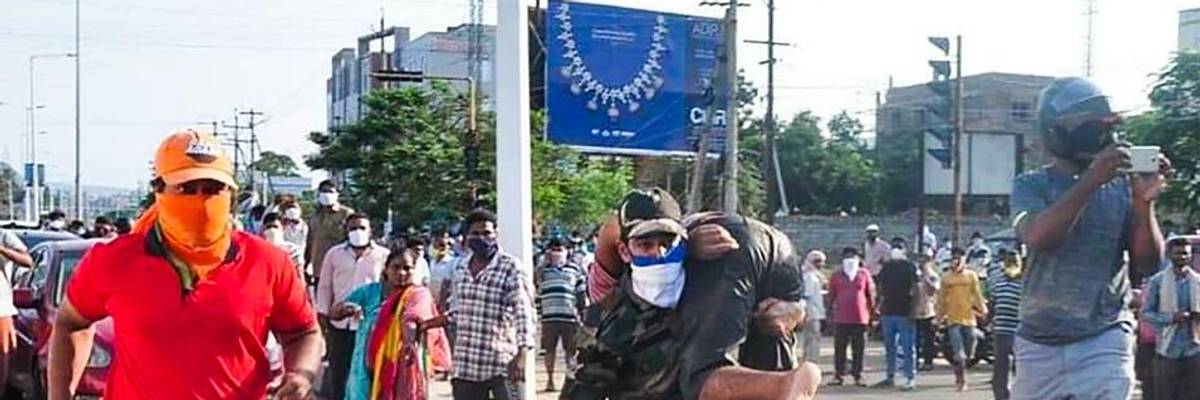
Rescuers evacuate people following a gas leak incident at an LG Polymers plant in Visakhapatnam on May 7, 2020. (Photo: AFP via Getty Images)
This is a developing news story... Check back for possible updates...
A chemical factory in Visakhapatnam, India owned by the South Korean company LG Corp. spewed toxic gas into the air in the early hours of Thursday morning, killing at least 11 people and sickening thousands more.
Horrifying footage of people collapsing in the streets after inhaling the gas spread quickly across social media Thursday as hundreds were rushed to the hospital and city officials worked to contain the leak of styrene, a chemical used to make rubber and plastic.
"We could feel the strong stench of the gas," one man told the New York Times. "Our eyes started watering and we could smell the gas in our mouths."
Warning: The following footage is disturbing.
LG Corp. said in a statement that the "gas leakage is now under control, but the leaked gas can cause nausea and dizziness, so we are investing every effort to ensure proper treatment is provided swiftly." The leak reportedly began as workers prepared to restart the plant, which has been closed for weeks amid the city's Covid-19 lockdown.
As the Times reported, images and footage that emerged following the leak "immediately drew comparison to the 1984 gas leak in India's Bhopal State, considered the world's worst industrial accident. That leak, at a Union Carbide pesticide plant, left nearly 4,000 dead and another 500,000 injured."
While reminiscent of the previous disaster, some warned against making a direct comparison with Bhopal at this point:
Dr. Surendra Kumar Chellarapu, a neurosurgeon at a local hospital, said one of the victims of Thursday's leak "woke up gasping for breath and rushed out onto the balcony of his room for air. But he lost his balance and fell two floors down from the balcony. He died later at the hospital of head injuries."
"Most were suffering from vomiting, eye irritation, skin rashes and breathing problems but most are out of danger," Chellarapu told The Guardian.
Dear Common Dreams reader, It’s been nearly 30 years since I co-founded Common Dreams with my late wife, Lina Newhouser. We had the radical notion that journalism should serve the public good, not corporate profits. It was clear to us from the outset what it would take to build such a project. No paid advertisements. No corporate sponsors. No millionaire publisher telling us what to think or do. Many people said we wouldn't last a year, but we proved those doubters wrong. Together with a tremendous team of journalists and dedicated staff, we built an independent media outlet free from the constraints of profits and corporate control. Our mission has always been simple: To inform. To inspire. To ignite change for the common good. Building Common Dreams was not easy. Our survival was never guaranteed. When you take on the most powerful forces—Wall Street greed, fossil fuel industry destruction, Big Tech lobbyists, and uber-rich oligarchs who have spent billions upon billions rigging the economy and democracy in their favor—the only bulwark you have is supporters who believe in your work. But here’s the urgent message from me today. It's never been this bad out there. And it's never been this hard to keep us going. At the very moment Common Dreams is most needed, the threats we face are intensifying. We need your support now more than ever. We don't accept corporate advertising and never will. We don't have a paywall because we don't think people should be blocked from critical news based on their ability to pay. Everything we do is funded by the donations of readers like you. When everyone does the little they can afford, we are strong. But if that support retreats or dries up, so do we. Will you donate now to make sure Common Dreams not only survives but thrives? —Craig Brown, Co-founder |
This is a developing news story... Check back for possible updates...
A chemical factory in Visakhapatnam, India owned by the South Korean company LG Corp. spewed toxic gas into the air in the early hours of Thursday morning, killing at least 11 people and sickening thousands more.
Horrifying footage of people collapsing in the streets after inhaling the gas spread quickly across social media Thursday as hundreds were rushed to the hospital and city officials worked to contain the leak of styrene, a chemical used to make rubber and plastic.
"We could feel the strong stench of the gas," one man told the New York Times. "Our eyes started watering and we could smell the gas in our mouths."
Warning: The following footage is disturbing.
LG Corp. said in a statement that the "gas leakage is now under control, but the leaked gas can cause nausea and dizziness, so we are investing every effort to ensure proper treatment is provided swiftly." The leak reportedly began as workers prepared to restart the plant, which has been closed for weeks amid the city's Covid-19 lockdown.
As the Times reported, images and footage that emerged following the leak "immediately drew comparison to the 1984 gas leak in India's Bhopal State, considered the world's worst industrial accident. That leak, at a Union Carbide pesticide plant, left nearly 4,000 dead and another 500,000 injured."
While reminiscent of the previous disaster, some warned against making a direct comparison with Bhopal at this point:
Dr. Surendra Kumar Chellarapu, a neurosurgeon at a local hospital, said one of the victims of Thursday's leak "woke up gasping for breath and rushed out onto the balcony of his room for air. But he lost his balance and fell two floors down from the balcony. He died later at the hospital of head injuries."
"Most were suffering from vomiting, eye irritation, skin rashes and breathing problems but most are out of danger," Chellarapu told The Guardian.
This is a developing news story... Check back for possible updates...
A chemical factory in Visakhapatnam, India owned by the South Korean company LG Corp. spewed toxic gas into the air in the early hours of Thursday morning, killing at least 11 people and sickening thousands more.
Horrifying footage of people collapsing in the streets after inhaling the gas spread quickly across social media Thursday as hundreds were rushed to the hospital and city officials worked to contain the leak of styrene, a chemical used to make rubber and plastic.
"We could feel the strong stench of the gas," one man told the New York Times. "Our eyes started watering and we could smell the gas in our mouths."
Warning: The following footage is disturbing.
LG Corp. said in a statement that the "gas leakage is now under control, but the leaked gas can cause nausea and dizziness, so we are investing every effort to ensure proper treatment is provided swiftly." The leak reportedly began as workers prepared to restart the plant, which has been closed for weeks amid the city's Covid-19 lockdown.
As the Times reported, images and footage that emerged following the leak "immediately drew comparison to the 1984 gas leak in India's Bhopal State, considered the world's worst industrial accident. That leak, at a Union Carbide pesticide plant, left nearly 4,000 dead and another 500,000 injured."
While reminiscent of the previous disaster, some warned against making a direct comparison with Bhopal at this point:
Dr. Surendra Kumar Chellarapu, a neurosurgeon at a local hospital, said one of the victims of Thursday's leak "woke up gasping for breath and rushed out onto the balcony of his room for air. But he lost his balance and fell two floors down from the balcony. He died later at the hospital of head injuries."
"Most were suffering from vomiting, eye irritation, skin rashes and breathing problems but most are out of danger," Chellarapu told The Guardian.