SUBSCRIBE TO OUR FREE NEWSLETTER
Daily news & progressive opinion—funded by the people, not the corporations—delivered straight to your inbox.
5
#000000
#FFFFFF
To donate by check, phone, or other method, see our More Ways to Give page.
Daily news & progressive opinion—funded by the people, not the corporations—delivered straight to your inbox.
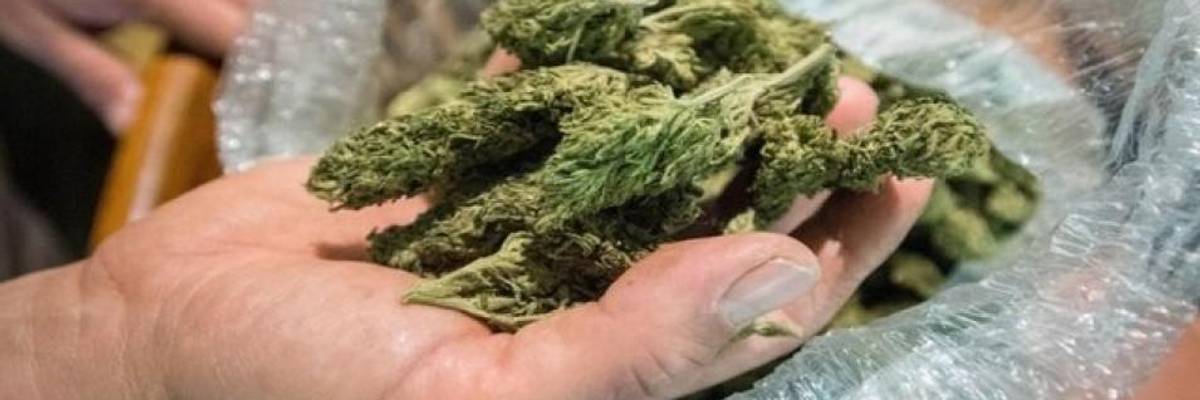
As of Wednesday, Illinois residents and visitors aged 21 and older can legally purchase cannabis products at state-licensed dispensaries. (Photo: Getty Images)
On Tuesday, just one day before "equity-centric" legislation legalizing sales and adult use of recreational marijuana took effect in Illinois, Democratic Gov. JB Pritzker granted pardons to more than 11,000 individuals with low-level cannabis convictions.
Pritzker, who signed the bill in June, announced the pardons during an event at the Trinity United Church of Christ on Chicago's South Side:
"Tomorrow, Illinois will become the 11th state to legalize and regulate adult-use cannabis. But our state is today doing something that sets us apart: Illinois is putting equity first, clearing thousands of convictions and giving individuals and their families a new lease on life," Pritzker said in series of tweets Tuesday.
The governor explained that "these 11,017 misdemeanor convictions represent individuals who have carried around with them a stain on their records for possessing less than 30 grams of cannabis--a stain that has very often prevented them from obtaining housing or jobs or benefits."
Toi Hutchinson, who resigned as a Democratic state senator in September to serve as a senior adviser to the governor and oversee implementation of the cannabis law, welcomed Pritzker's announcement in a statement Tuesday.
"As one of the authors of this historic law, I am so proud to witness equity being put into practice today," she said. "The 11,017 pardons that Gov. Pritzker is granting today are thousands of lives forever changed--and hundreds of thousands more will be changed in the coming months. Those who were unfairly targeted by discriminatory drug laws can finally get ahead and build a new future for themselves and their families."
Pritzker highlighted on Twitter that the pardons represented just the first wave. Under the state's new law, hundreds of thousands of people are eligible to have their cannabis-related arrests and convictions cleared from the public record.
According to the governor's office, more than 700,000 records are eligible for expungement thanks to the law. Of those, 116,000 records are eligible through the governor's pardon process, which is for convictions up to 30 grams, and another 34,000 records are eligible under a process for convictions between 30 and 500 grams.
Approximately 572,000 records for arrests that did not result in a conviction up to 30 grams are set to be automatically expunged by local law enforcement agencies and the state police. The agencies have a series of deadlines for that process, scheduled to be complete by Jan. 1, 2025.
In mid-December, Cook County State's Attorney Kim Foxx kicked off the expungement effort by filing motions to vacate 1,012 low-level convictions. She said at the time that "today, we made history and took the first step in the single largest and most equitable piece of criminal justice reform Illinois has ever seen."
Common Dreams reported when Illinois lawmakers unveiled the bill in May 2019 that the legislation is notable for provisions designed to serve individuals and communities in the state who have been negatively affected by the nation's decades-long War on Drugs, including one that establishes a low-interest loan program to help "social equity applicants" enter the legal cannabis industry.
As Lt. Gov. Juliana Stratton, a Democrat, put it Tuesday: "Illinois is going where no other state has before, admitting the unjust errors of the War on Drugs and giving so many Illinoisans greater opportunities to build good lives for themselves and the people they love."
The Restore, Reinvest, and Renew (R3) Program "will direct 25 percent of the state's cannabis revenue right back into the communities hit the hardest by decades of over-policing, disinvestment, disenfranchisement, and violence," she said. "In that effort, we're lifting up the voices of the people who actually live in these neighborhoods, who know these blocks and exactly where our dollars will make a real difference."
A fact sheet from the Illinois Justice Project explains that R3 Program funds "will be used to reduce gun violence through intervention and prevention, to improve re-entry and diversion services for people involved with the criminal justice system, and to support programs that improve the social determinants of health."
Illinois residents and visitors aged 21 and older can now legally purchase limited amounts of cannabis products at state-licensed dispensaries. "So far, 43 marijuana stores around the state have received all needed approvals" to start selling while six other stores are "held up by permitting issues, construction, or other hurdles," according to the Chicago Tribune.
"The historic first day of sales of recreational marijuana in Illinois kicked off Wednesday morning with the expected long lines and party atmosphere," the Tribune reported. The lieutenant governor was among the hundreds of people who visited a licensed dispensary.
"We believe the social equity aspects of this legislation should be a model for the entire country," Stratton told reporters outside of the store while holding a bag of clementine gummy edibles. "Yesterday, Governor Pritzker pardoned 11,017 low-level cannabis arrests and convictions. That's just the beginning. We have hundreds of thousands more who will be eligible for having their records expunged. That's a big deal."
Dear Common Dreams reader, It’s been nearly 30 years since I co-founded Common Dreams with my late wife, Lina Newhouser. We had the radical notion that journalism should serve the public good, not corporate profits. It was clear to us from the outset what it would take to build such a project. No paid advertisements. No corporate sponsors. No millionaire publisher telling us what to think or do. Many people said we wouldn't last a year, but we proved those doubters wrong. Together with a tremendous team of journalists and dedicated staff, we built an independent media outlet free from the constraints of profits and corporate control. Our mission has always been simple: To inform. To inspire. To ignite change for the common good. Building Common Dreams was not easy. Our survival was never guaranteed. When you take on the most powerful forces—Wall Street greed, fossil fuel industry destruction, Big Tech lobbyists, and uber-rich oligarchs who have spent billions upon billions rigging the economy and democracy in their favor—the only bulwark you have is supporters who believe in your work. But here’s the urgent message from me today. It's never been this bad out there. And it's never been this hard to keep us going. At the very moment Common Dreams is most needed, the threats we face are intensifying. We need your support now more than ever. We don't accept corporate advertising and never will. We don't have a paywall because we don't think people should be blocked from critical news based on their ability to pay. Everything we do is funded by the donations of readers like you. When everyone does the little they can afford, we are strong. But if that support retreats or dries up, so do we. Will you donate now to make sure Common Dreams not only survives but thrives? —Craig Brown, Co-founder |
On Tuesday, just one day before "equity-centric" legislation legalizing sales and adult use of recreational marijuana took effect in Illinois, Democratic Gov. JB Pritzker granted pardons to more than 11,000 individuals with low-level cannabis convictions.
Pritzker, who signed the bill in June, announced the pardons during an event at the Trinity United Church of Christ on Chicago's South Side:
"Tomorrow, Illinois will become the 11th state to legalize and regulate adult-use cannabis. But our state is today doing something that sets us apart: Illinois is putting equity first, clearing thousands of convictions and giving individuals and their families a new lease on life," Pritzker said in series of tweets Tuesday.
The governor explained that "these 11,017 misdemeanor convictions represent individuals who have carried around with them a stain on their records for possessing less than 30 grams of cannabis--a stain that has very often prevented them from obtaining housing or jobs or benefits."
Toi Hutchinson, who resigned as a Democratic state senator in September to serve as a senior adviser to the governor and oversee implementation of the cannabis law, welcomed Pritzker's announcement in a statement Tuesday.
"As one of the authors of this historic law, I am so proud to witness equity being put into practice today," she said. "The 11,017 pardons that Gov. Pritzker is granting today are thousands of lives forever changed--and hundreds of thousands more will be changed in the coming months. Those who were unfairly targeted by discriminatory drug laws can finally get ahead and build a new future for themselves and their families."
Pritzker highlighted on Twitter that the pardons represented just the first wave. Under the state's new law, hundreds of thousands of people are eligible to have their cannabis-related arrests and convictions cleared from the public record.
According to the governor's office, more than 700,000 records are eligible for expungement thanks to the law. Of those, 116,000 records are eligible through the governor's pardon process, which is for convictions up to 30 grams, and another 34,000 records are eligible under a process for convictions between 30 and 500 grams.
Approximately 572,000 records for arrests that did not result in a conviction up to 30 grams are set to be automatically expunged by local law enforcement agencies and the state police. The agencies have a series of deadlines for that process, scheduled to be complete by Jan. 1, 2025.
In mid-December, Cook County State's Attorney Kim Foxx kicked off the expungement effort by filing motions to vacate 1,012 low-level convictions. She said at the time that "today, we made history and took the first step in the single largest and most equitable piece of criminal justice reform Illinois has ever seen."
Common Dreams reported when Illinois lawmakers unveiled the bill in May 2019 that the legislation is notable for provisions designed to serve individuals and communities in the state who have been negatively affected by the nation's decades-long War on Drugs, including one that establishes a low-interest loan program to help "social equity applicants" enter the legal cannabis industry.
As Lt. Gov. Juliana Stratton, a Democrat, put it Tuesday: "Illinois is going where no other state has before, admitting the unjust errors of the War on Drugs and giving so many Illinoisans greater opportunities to build good lives for themselves and the people they love."
The Restore, Reinvest, and Renew (R3) Program "will direct 25 percent of the state's cannabis revenue right back into the communities hit the hardest by decades of over-policing, disinvestment, disenfranchisement, and violence," she said. "In that effort, we're lifting up the voices of the people who actually live in these neighborhoods, who know these blocks and exactly where our dollars will make a real difference."
A fact sheet from the Illinois Justice Project explains that R3 Program funds "will be used to reduce gun violence through intervention and prevention, to improve re-entry and diversion services for people involved with the criminal justice system, and to support programs that improve the social determinants of health."
Illinois residents and visitors aged 21 and older can now legally purchase limited amounts of cannabis products at state-licensed dispensaries. "So far, 43 marijuana stores around the state have received all needed approvals" to start selling while six other stores are "held up by permitting issues, construction, or other hurdles," according to the Chicago Tribune.
"The historic first day of sales of recreational marijuana in Illinois kicked off Wednesday morning with the expected long lines and party atmosphere," the Tribune reported. The lieutenant governor was among the hundreds of people who visited a licensed dispensary.
"We believe the social equity aspects of this legislation should be a model for the entire country," Stratton told reporters outside of the store while holding a bag of clementine gummy edibles. "Yesterday, Governor Pritzker pardoned 11,017 low-level cannabis arrests and convictions. That's just the beginning. We have hundreds of thousands more who will be eligible for having their records expunged. That's a big deal."
On Tuesday, just one day before "equity-centric" legislation legalizing sales and adult use of recreational marijuana took effect in Illinois, Democratic Gov. JB Pritzker granted pardons to more than 11,000 individuals with low-level cannabis convictions.
Pritzker, who signed the bill in June, announced the pardons during an event at the Trinity United Church of Christ on Chicago's South Side:
"Tomorrow, Illinois will become the 11th state to legalize and regulate adult-use cannabis. But our state is today doing something that sets us apart: Illinois is putting equity first, clearing thousands of convictions and giving individuals and their families a new lease on life," Pritzker said in series of tweets Tuesday.
The governor explained that "these 11,017 misdemeanor convictions represent individuals who have carried around with them a stain on their records for possessing less than 30 grams of cannabis--a stain that has very often prevented them from obtaining housing or jobs or benefits."
Toi Hutchinson, who resigned as a Democratic state senator in September to serve as a senior adviser to the governor and oversee implementation of the cannabis law, welcomed Pritzker's announcement in a statement Tuesday.
"As one of the authors of this historic law, I am so proud to witness equity being put into practice today," she said. "The 11,017 pardons that Gov. Pritzker is granting today are thousands of lives forever changed--and hundreds of thousands more will be changed in the coming months. Those who were unfairly targeted by discriminatory drug laws can finally get ahead and build a new future for themselves and their families."
Pritzker highlighted on Twitter that the pardons represented just the first wave. Under the state's new law, hundreds of thousands of people are eligible to have their cannabis-related arrests and convictions cleared from the public record.
According to the governor's office, more than 700,000 records are eligible for expungement thanks to the law. Of those, 116,000 records are eligible through the governor's pardon process, which is for convictions up to 30 grams, and another 34,000 records are eligible under a process for convictions between 30 and 500 grams.
Approximately 572,000 records for arrests that did not result in a conviction up to 30 grams are set to be automatically expunged by local law enforcement agencies and the state police. The agencies have a series of deadlines for that process, scheduled to be complete by Jan. 1, 2025.
In mid-December, Cook County State's Attorney Kim Foxx kicked off the expungement effort by filing motions to vacate 1,012 low-level convictions. She said at the time that "today, we made history and took the first step in the single largest and most equitable piece of criminal justice reform Illinois has ever seen."
Common Dreams reported when Illinois lawmakers unveiled the bill in May 2019 that the legislation is notable for provisions designed to serve individuals and communities in the state who have been negatively affected by the nation's decades-long War on Drugs, including one that establishes a low-interest loan program to help "social equity applicants" enter the legal cannabis industry.
As Lt. Gov. Juliana Stratton, a Democrat, put it Tuesday: "Illinois is going where no other state has before, admitting the unjust errors of the War on Drugs and giving so many Illinoisans greater opportunities to build good lives for themselves and the people they love."
The Restore, Reinvest, and Renew (R3) Program "will direct 25 percent of the state's cannabis revenue right back into the communities hit the hardest by decades of over-policing, disinvestment, disenfranchisement, and violence," she said. "In that effort, we're lifting up the voices of the people who actually live in these neighborhoods, who know these blocks and exactly where our dollars will make a real difference."
A fact sheet from the Illinois Justice Project explains that R3 Program funds "will be used to reduce gun violence through intervention and prevention, to improve re-entry and diversion services for people involved with the criminal justice system, and to support programs that improve the social determinants of health."
Illinois residents and visitors aged 21 and older can now legally purchase limited amounts of cannabis products at state-licensed dispensaries. "So far, 43 marijuana stores around the state have received all needed approvals" to start selling while six other stores are "held up by permitting issues, construction, or other hurdles," according to the Chicago Tribune.
"The historic first day of sales of recreational marijuana in Illinois kicked off Wednesday morning with the expected long lines and party atmosphere," the Tribune reported. The lieutenant governor was among the hundreds of people who visited a licensed dispensary.
"We believe the social equity aspects of this legislation should be a model for the entire country," Stratton told reporters outside of the store while holding a bag of clementine gummy edibles. "Yesterday, Governor Pritzker pardoned 11,017 low-level cannabis arrests and convictions. That's just the beginning. We have hundreds of thousands more who will be eligible for having their records expunged. That's a big deal."