SUBSCRIBE TO OUR FREE NEWSLETTER
Daily news & progressive opinion—funded by the people, not the corporations—delivered straight to your inbox.
5
#000000
#FFFFFF
To donate by check, phone, or other method, see our More Ways to Give page.
Daily news & progressive opinion—funded by the people, not the corporations—delivered straight to your inbox.
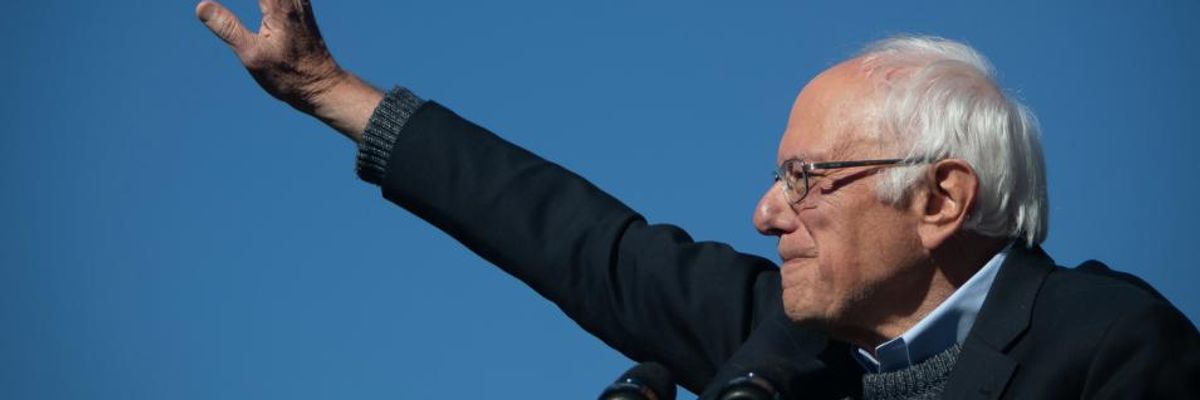
Sen. Bernard Sanders (I-Vt.) during the event dubbed "Bernie's Back Rally" comes as Sanders returns to campaigning after suffering a heart attack earlier this month. An estimated 26,000 people attended. Sanders on Thursday released a plan to legalize marijuana at the federal level. (Photo: Michael Nigro/Pacific Press/LightRocket via Getty Images)
Sen. Bernie Sanders released an expansive plan on Thursday to as president legalize marijuana and ensure the benefits of legalization are felt across all communities, especially those affected by the war on drugs.
"We will legalize marijuana and vacate and expunge past marijuana convictions," the Vermont senator, who is running for the 2020 Democratic presidential nominaion, said in a statement announcing the policy.
Sanders tweeted out the plan at 4:20pm.
"Too many lives were ruined due to the disastrous criminalization of marijuana," Sanders said.
The proposal would legalize marijuana in the first 100 days of a Sanders administration, vacate and expunge all past marijuana convictions, and "ensure that revenue from legal marijuana is reinvested in communities hit hardest by the War on Drugs, especially African-American and other communities of color."
The plan would also aim to stop marijuana from turning into a business like tobacco by structuring the industry like a non-profit, prohibiting advertising targeting youth, and preventing "consolidation and profiteering."
Reaction on social media was largely positive.
"Nice," tweeted a number of users.
"Blaze it," said Canadian journalist Rob Rousseau.
Dear Common Dreams reader, It’s been nearly 30 years since I co-founded Common Dreams with my late wife, Lina Newhouser. We had the radical notion that journalism should serve the public good, not corporate profits. It was clear to us from the outset what it would take to build such a project. No paid advertisements. No corporate sponsors. No millionaire publisher telling us what to think or do. Many people said we wouldn't last a year, but we proved those doubters wrong. Together with a tremendous team of journalists and dedicated staff, we built an independent media outlet free from the constraints of profits and corporate control. Our mission has always been simple: To inform. To inspire. To ignite change for the common good. Building Common Dreams was not easy. Our survival was never guaranteed. When you take on the most powerful forces—Wall Street greed, fossil fuel industry destruction, Big Tech lobbyists, and uber-rich oligarchs who have spent billions upon billions rigging the economy and democracy in their favor—the only bulwark you have is supporters who believe in your work. But here’s the urgent message from me today. It's never been this bad out there. And it's never been this hard to keep us going. At the very moment Common Dreams is most needed, the threats we face are intensifying. We need your support now more than ever. We don't accept corporate advertising and never will. We don't have a paywall because we don't think people should be blocked from critical news based on their ability to pay. Everything we do is funded by the donations of readers like you. When everyone does the little they can afford, we are strong. But if that support retreats or dries up, so do we. Will you donate now to make sure Common Dreams not only survives but thrives? —Craig Brown, Co-founder |
Sen. Bernie Sanders released an expansive plan on Thursday to as president legalize marijuana and ensure the benefits of legalization are felt across all communities, especially those affected by the war on drugs.
"We will legalize marijuana and vacate and expunge past marijuana convictions," the Vermont senator, who is running for the 2020 Democratic presidential nominaion, said in a statement announcing the policy.
Sanders tweeted out the plan at 4:20pm.
"Too many lives were ruined due to the disastrous criminalization of marijuana," Sanders said.
The proposal would legalize marijuana in the first 100 days of a Sanders administration, vacate and expunge all past marijuana convictions, and "ensure that revenue from legal marijuana is reinvested in communities hit hardest by the War on Drugs, especially African-American and other communities of color."
The plan would also aim to stop marijuana from turning into a business like tobacco by structuring the industry like a non-profit, prohibiting advertising targeting youth, and preventing "consolidation and profiteering."
Reaction on social media was largely positive.
"Nice," tweeted a number of users.
"Blaze it," said Canadian journalist Rob Rousseau.
Sen. Bernie Sanders released an expansive plan on Thursday to as president legalize marijuana and ensure the benefits of legalization are felt across all communities, especially those affected by the war on drugs.
"We will legalize marijuana and vacate and expunge past marijuana convictions," the Vermont senator, who is running for the 2020 Democratic presidential nominaion, said in a statement announcing the policy.
Sanders tweeted out the plan at 4:20pm.
"Too many lives were ruined due to the disastrous criminalization of marijuana," Sanders said.
The proposal would legalize marijuana in the first 100 days of a Sanders administration, vacate and expunge all past marijuana convictions, and "ensure that revenue from legal marijuana is reinvested in communities hit hardest by the War on Drugs, especially African-American and other communities of color."
The plan would also aim to stop marijuana from turning into a business like tobacco by structuring the industry like a non-profit, prohibiting advertising targeting youth, and preventing "consolidation and profiteering."
Reaction on social media was largely positive.
"Nice," tweeted a number of users.
"Blaze it," said Canadian journalist Rob Rousseau.