

SUBSCRIBE TO OUR FREE NEWSLETTER
Daily news & progressive opinion—funded by the people, not the corporations—delivered straight to your inbox.
5
#000000
#FFFFFF
To donate by check, phone, or other method, see our More Ways to Give page.
Daily news & progressive opinion—funded by the people, not the corporations—delivered straight to your inbox.
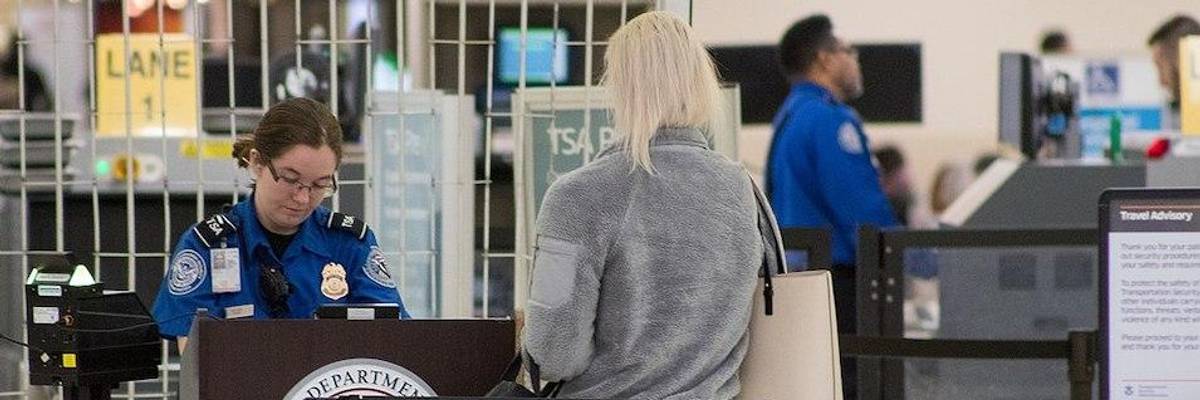
A Transportation Security Administration agent at a checkpoint verifying passenger identification in John Glenn Columbus International Airport. (Photo: Michael Ball/cc)
A federal judge on Wednesday ruled that the government's terror watchlist violates the civil rights of Americans placed on it, opening the door for a major piece of legislation from the global war on terror being overturned.
"This is a really important ruling, long overdue," said Jameel Jaffer, director of the Knight First Amendment Institute at Columbia University. "The watchlist is overbroad, opaque, and arbitrary--a civil liberties train wreck."
The ruling (pdf) stemmed from a lawsuit brought by 19 Americans on the list represented by the Council on American-Islamic Relations (CAIR).
"Today's opinion is a victory for the more than one hundred American Muslims we represent and for the thousands of American Muslims who are currently stigmatized by the watchlist," CAIR national litigation director Lena Masri said in a statment.
The New York Times broke the story Wednesday evening:
Being on the watchlist can restrict people from traveling or entering the country, subject them to greater scrutiny at airports and by the police, and deny them government benefits and contracts. In a 32-page opinion, Judge Anthony J. Trenga of United States District Court for the Eastern District of Virginia said the standard for inclusion in the database was too vague.
"The court concludes that the risk of erroneous deprivation of plaintiffs' travel-related and reputational liberty interests is high, and the currently existing procedural safeguards are not sufficient to address that risk," Judge Trenga wrote.
"About time somebody did something about this," tweeted journalist Dan Froomkin.
The watchlist is part of a system of abuses and unlawful overreach that rose out of the so-called "War on Terror," The Intercept's Glenn Greenwald said on Twitter.
The ruling was welcomed by the ACLU's National Security Project director Hina Shamsi.
"This important decision is exactly right," said Shamsi. "The government watchlist stigmatizes people as terrorism suspects based on a vague and error-prone standard and secret evidence, and causes real harms. It violates due process."
Shamsi added that the next steps must address how to repair the damage done by years of the watchlist.
"There must be a fair and meaningful process for people to challenge wrongful placement on the watchlist and clear their names," Shamsi said.
The fight will go on, CAIR senior litigation attorney Gadeir Abbas said in a statment.
"Every step of this case revealed new layers of government secrets, including that the government shares the watchlist with private companies and more than sixty foreign countries," said Abbas. "CAIR will continue its fight until the full scope of the government's shadowy watchlist activities is disclosed to the American public."
Dear Common Dreams reader, It’s been nearly 30 years since I co-founded Common Dreams with my late wife, Lina Newhouser. We had the radical notion that journalism should serve the public good, not corporate profits. It was clear to us from the outset what it would take to build such a project. No paid advertisements. No corporate sponsors. No millionaire publisher telling us what to think or do. Many people said we wouldn't last a year, but we proved those doubters wrong. Together with a tremendous team of journalists and dedicated staff, we built an independent media outlet free from the constraints of profits and corporate control. Our mission has always been simple: To inform. To inspire. To ignite change for the common good. Building Common Dreams was not easy. Our survival was never guaranteed. When you take on the most powerful forces—Wall Street greed, fossil fuel industry destruction, Big Tech lobbyists, and uber-rich oligarchs who have spent billions upon billions rigging the economy and democracy in their favor—the only bulwark you have is supporters who believe in your work. But here’s the urgent message from me today. It's never been this bad out there. And it's never been this hard to keep us going. At the very moment Common Dreams is most needed, the threats we face are intensifying. We need your support now more than ever. We don't accept corporate advertising and never will. We don't have a paywall because we don't think people should be blocked from critical news based on their ability to pay. Everything we do is funded by the donations of readers like you. When everyone does the little they can afford, we are strong. But if that support retreats or dries up, so do we. Will you donate now to make sure Common Dreams not only survives but thrives? —Craig Brown, Co-founder |
A federal judge on Wednesday ruled that the government's terror watchlist violates the civil rights of Americans placed on it, opening the door for a major piece of legislation from the global war on terror being overturned.
"This is a really important ruling, long overdue," said Jameel Jaffer, director of the Knight First Amendment Institute at Columbia University. "The watchlist is overbroad, opaque, and arbitrary--a civil liberties train wreck."
The ruling (pdf) stemmed from a lawsuit brought by 19 Americans on the list represented by the Council on American-Islamic Relations (CAIR).
"Today's opinion is a victory for the more than one hundred American Muslims we represent and for the thousands of American Muslims who are currently stigmatized by the watchlist," CAIR national litigation director Lena Masri said in a statment.
The New York Times broke the story Wednesday evening:
Being on the watchlist can restrict people from traveling or entering the country, subject them to greater scrutiny at airports and by the police, and deny them government benefits and contracts. In a 32-page opinion, Judge Anthony J. Trenga of United States District Court for the Eastern District of Virginia said the standard for inclusion in the database was too vague.
"The court concludes that the risk of erroneous deprivation of plaintiffs' travel-related and reputational liberty interests is high, and the currently existing procedural safeguards are not sufficient to address that risk," Judge Trenga wrote.
"About time somebody did something about this," tweeted journalist Dan Froomkin.
The watchlist is part of a system of abuses and unlawful overreach that rose out of the so-called "War on Terror," The Intercept's Glenn Greenwald said on Twitter.
The ruling was welcomed by the ACLU's National Security Project director Hina Shamsi.
"This important decision is exactly right," said Shamsi. "The government watchlist stigmatizes people as terrorism suspects based on a vague and error-prone standard and secret evidence, and causes real harms. It violates due process."
Shamsi added that the next steps must address how to repair the damage done by years of the watchlist.
"There must be a fair and meaningful process for people to challenge wrongful placement on the watchlist and clear their names," Shamsi said.
The fight will go on, CAIR senior litigation attorney Gadeir Abbas said in a statment.
"Every step of this case revealed new layers of government secrets, including that the government shares the watchlist with private companies and more than sixty foreign countries," said Abbas. "CAIR will continue its fight until the full scope of the government's shadowy watchlist activities is disclosed to the American public."
A federal judge on Wednesday ruled that the government's terror watchlist violates the civil rights of Americans placed on it, opening the door for a major piece of legislation from the global war on terror being overturned.
"This is a really important ruling, long overdue," said Jameel Jaffer, director of the Knight First Amendment Institute at Columbia University. "The watchlist is overbroad, opaque, and arbitrary--a civil liberties train wreck."
The ruling (pdf) stemmed from a lawsuit brought by 19 Americans on the list represented by the Council on American-Islamic Relations (CAIR).
"Today's opinion is a victory for the more than one hundred American Muslims we represent and for the thousands of American Muslims who are currently stigmatized by the watchlist," CAIR national litigation director Lena Masri said in a statment.
The New York Times broke the story Wednesday evening:
Being on the watchlist can restrict people from traveling or entering the country, subject them to greater scrutiny at airports and by the police, and deny them government benefits and contracts. In a 32-page opinion, Judge Anthony J. Trenga of United States District Court for the Eastern District of Virginia said the standard for inclusion in the database was too vague.
"The court concludes that the risk of erroneous deprivation of plaintiffs' travel-related and reputational liberty interests is high, and the currently existing procedural safeguards are not sufficient to address that risk," Judge Trenga wrote.
"About time somebody did something about this," tweeted journalist Dan Froomkin.
The watchlist is part of a system of abuses and unlawful overreach that rose out of the so-called "War on Terror," The Intercept's Glenn Greenwald said on Twitter.
The ruling was welcomed by the ACLU's National Security Project director Hina Shamsi.
"This important decision is exactly right," said Shamsi. "The government watchlist stigmatizes people as terrorism suspects based on a vague and error-prone standard and secret evidence, and causes real harms. It violates due process."
Shamsi added that the next steps must address how to repair the damage done by years of the watchlist.
"There must be a fair and meaningful process for people to challenge wrongful placement on the watchlist and clear their names," Shamsi said.
The fight will go on, CAIR senior litigation attorney Gadeir Abbas said in a statment.
"Every step of this case revealed new layers of government secrets, including that the government shares the watchlist with private companies and more than sixty foreign countries," said Abbas. "CAIR will continue its fight until the full scope of the government's shadowy watchlist activities is disclosed to the American public."

