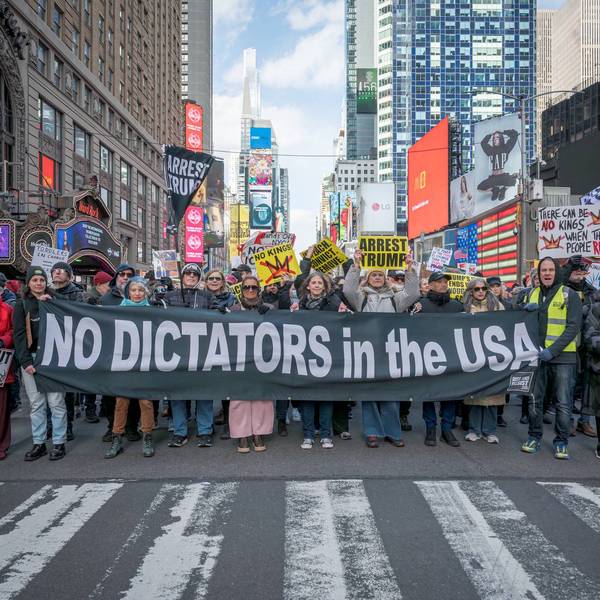

Occupy London demonstrators erected tents in front of St Paul's Cathedral on Oct. 16, 2011. (Photo: Neil Cummings/Flickr/cc)
'Crisis of Trust': Poll Finds People Living in Democracies Think Governments Aren't Acting in Public Interest
"Democracies cannot afford to be complacent if they are to survive and prosper."
Democracies worldwide are experiencing a "crisis of trust," according to the Democracy Perception Index (pdf) released Thursday, which found that among citizens of democratic nations, the majority does not believe that their voices matter in politics or that governments are acting in the public interest.
Earlier this month, Dalia Research, Alliance of Democracies, and Rasmussen Global polled some 125,000 people across 50 countries, and found that those living in nations deemed "democractic"--based on Freedom House's latest index--have even less faith in government than those living in "non-democratic" states.
More than half of respondents in democratic countries said their voices "rarely" or "never" matter in politics, and 64 percent said they believe their government "rarely" or "never" acts in the interest of the public. In terms of citizens not believing their voices have an impact, Japan fared the worst, with a full 74 percent of people who said they felt their voice doesn't matter.
Austria, which has recently garnered international attention for the surging popularity of its far-right politicians, is the worst-ranked democracy in terms of acting in the public interest, and overall falls second to only the "partly free" Kenya. In the United States, 49 percent said their voice doesn't matter and 66 percent believe the government fails to serve the public.
Other key findings from all 50 surveyed countries include: more than half of citizens "don't trust the news they read," and nearly half "don't feel free to share political opinions in public." While citizens of democracies feel the most free to publicly discuss politics, a full 57 percent said they don't believe the news media gives them "balanced and neutral information."
"Democratic systems of governance are under severe threat, not only from foreign interference and the rise of autocratic regimes, but also from the huge crisis of confidence amongst the electorate," concluded Nina Schick, director of data and polling at Rasmussen Global. "Democracies cannot afford to be complacent if they are to survive and prosper."
As Dalia Research CEO and cofounder Nico Jaspers put it, "Right now the biggest risk for democracies is that the public no longer sees them as democratic."
The index was released to mark the inaugural Copenhagen Democracy Summit, which was organized by the three surveryers.
We are at a crossroads
This country and this world are at a monumental crossroads. In a few short weeks, US voters will have an opportunity to beat back the forces of fascism and confront the billionaires who are rigging the economy, our media system, and our democracy, making it increasingly impossible for ordinary people to get by. We’re not just talking about the election. We’re talking about what must be done once these fascist elements are vanquished from power. We need a bolder set of solutions than what either major party has so far been willing to offer and a working-class movement ready to fight like hell for it. Trump didn't emerge from nowhere. The conditions that fueled MAGA authoritarianism were created by decades of radical neoliberal economic policies and a corrupt political system dominated by corporate interests. They slashed taxes on the super-rich, promising that the benefits would trickle down. They said giveaways to the corporate titans would make life more affordable for the rest of us. It was all bullshit. And when a bitter, betrayed populace searches for someone to blame, right-wing demagogues have little trouble finding scapegoats. People know when they're being lied to, but you won't hear any of this from the corporate media. Only independent journalism—powered and funded by people who believe in building a better world—can deliver truly trustworthy daily news. Our Fall Campaign is underway, and we need your help. To power our newsroom through the rest of the year, we need to raise $125,000 by midnight on October 31. So if you share our vision, please contribute whatever you can to sustain our work. |
Democracies worldwide are experiencing a "crisis of trust," according to the Democracy Perception Index (pdf) released Thursday, which found that among citizens of democratic nations, the majority does not believe that their voices matter in politics or that governments are acting in the public interest.
Earlier this month, Dalia Research, Alliance of Democracies, and Rasmussen Global polled some 125,000 people across 50 countries, and found that those living in nations deemed "democractic"--based on Freedom House's latest index--have even less faith in government than those living in "non-democratic" states.
More than half of respondents in democratic countries said their voices "rarely" or "never" matter in politics, and 64 percent said they believe their government "rarely" or "never" acts in the interest of the public. In terms of citizens not believing their voices have an impact, Japan fared the worst, with a full 74 percent of people who said they felt their voice doesn't matter.
Austria, which has recently garnered international attention for the surging popularity of its far-right politicians, is the worst-ranked democracy in terms of acting in the public interest, and overall falls second to only the "partly free" Kenya. In the United States, 49 percent said their voice doesn't matter and 66 percent believe the government fails to serve the public.
Other key findings from all 50 surveyed countries include: more than half of citizens "don't trust the news they read," and nearly half "don't feel free to share political opinions in public." While citizens of democracies feel the most free to publicly discuss politics, a full 57 percent said they don't believe the news media gives them "balanced and neutral information."
"Democratic systems of governance are under severe threat, not only from foreign interference and the rise of autocratic regimes, but also from the huge crisis of confidence amongst the electorate," concluded Nina Schick, director of data and polling at Rasmussen Global. "Democracies cannot afford to be complacent if they are to survive and prosper."
As Dalia Research CEO and cofounder Nico Jaspers put it, "Right now the biggest risk for democracies is that the public no longer sees them as democratic."
The index was released to mark the inaugural Copenhagen Democracy Summit, which was organized by the three surveryers.
Democracies worldwide are experiencing a "crisis of trust," according to the Democracy Perception Index (pdf) released Thursday, which found that among citizens of democratic nations, the majority does not believe that their voices matter in politics or that governments are acting in the public interest.
Earlier this month, Dalia Research, Alliance of Democracies, and Rasmussen Global polled some 125,000 people across 50 countries, and found that those living in nations deemed "democractic"--based on Freedom House's latest index--have even less faith in government than those living in "non-democratic" states.
More than half of respondents in democratic countries said their voices "rarely" or "never" matter in politics, and 64 percent said they believe their government "rarely" or "never" acts in the interest of the public. In terms of citizens not believing their voices have an impact, Japan fared the worst, with a full 74 percent of people who said they felt their voice doesn't matter.
Austria, which has recently garnered international attention for the surging popularity of its far-right politicians, is the worst-ranked democracy in terms of acting in the public interest, and overall falls second to only the "partly free" Kenya. In the United States, 49 percent said their voice doesn't matter and 66 percent believe the government fails to serve the public.
Other key findings from all 50 surveyed countries include: more than half of citizens "don't trust the news they read," and nearly half "don't feel free to share political opinions in public." While citizens of democracies feel the most free to publicly discuss politics, a full 57 percent said they don't believe the news media gives them "balanced and neutral information."
"Democratic systems of governance are under severe threat, not only from foreign interference and the rise of autocratic regimes, but also from the huge crisis of confidence amongst the electorate," concluded Nina Schick, director of data and polling at Rasmussen Global. "Democracies cannot afford to be complacent if they are to survive and prosper."
As Dalia Research CEO and cofounder Nico Jaspers put it, "Right now the biggest risk for democracies is that the public no longer sees them as democratic."
The index was released to mark the inaugural Copenhagen Democracy Summit, which was organized by the three surveryers.