SUBSCRIBE TO OUR FREE NEWSLETTER
Daily news & progressive opinion—funded by the people, not the corporations—delivered straight to your inbox.
5
#000000
#FFFFFF
To donate by check, phone, or other method, see our More Ways to Give page.
Daily news & progressive opinion—funded by the people, not the corporations—delivered straight to your inbox.
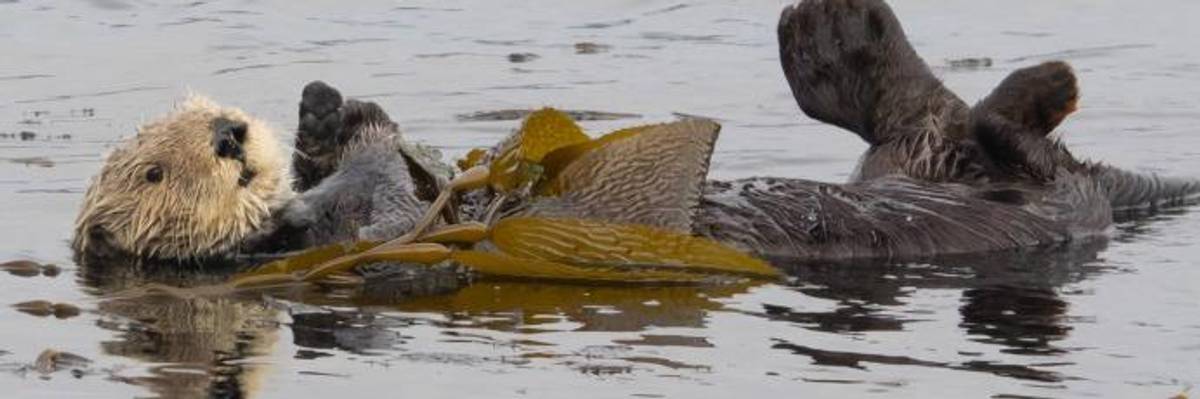
A California/Southern Sea Otter, a species listed as threatened, enjoys a float in the kelp. (Photo: Ingrid Taylar/Flickr/cc)
In a "disgraceful" move that conservationists warn will amount to "a death sentence to nearly 300 threatened species," the Trump administration is attempting to kill a portion of the Endangered Species Act (ESA).
"If these critical protections for threatened species are eliminated, Trump will go down in history as the extinction president."
--Noah Greenwald, Center for Biological Diversity
The Interior Department on Monday submitted a proposal to rescind the section of the law that extends all protections afforded to endangered species to those that are classified as threatened.
Noah Greenwald, endangered species director at the Center for Biological Diversity, says the Trump administration's new proposal, in enacted, "could be the end for iconic wildlife like the northern spotted owl and southern sea otter."
In addition to granting "crucial protections" to theatened species, the 1978 "blanket" 4(d) rule--which the administration is trying to rescind--and enables (pdf) the U.S. Fish and Wildlife Service (FWS) to increase or decrease certain protections based on the needs of individual species.
The FWS says it often uses the rule "to clarify or simplify what forms of take of a threatened species are and are not prohibited."
There are 384 U.S. species--212 animals; 172 plants--currently classified as threatened, according to the FWS.
This revelation about the Trump administration's latest attack on the ESA comes as the Washington Post reports that Interior Department Secretary Ryan Zinke has chosen a "fierce opponent" of the law to serve as acting secretary for fish, wildlife, and parks.
Susan Combs, "a rancher and former Texas comptroller with strong ties to the oil industry," reportedly once compared proposed endangered species listings to "incoming Scud missiles," and continued to oppose the law after leaving her position in state government.
Greenwald tied the new ESA proposal to the Trump administration's other attacks on conservation efforts that serve its broader deregulatory agenda.
"This administration's assault on critical safeguards for our air, water, and wildlife," Greenwald said, "threatens to undo decades of progress towards improving the health of the environment for people and wildlife alike."
"Trump is erasing America's natural heritage to make his friends richer and allow polluters to ravage our environment," he concluded. "If these critical protections for threatened species are eliminated, Trump will go down in history as the extinction president."
Dear Common Dreams reader, It’s been nearly 30 years since I co-founded Common Dreams with my late wife, Lina Newhouser. We had the radical notion that journalism should serve the public good, not corporate profits. It was clear to us from the outset what it would take to build such a project. No paid advertisements. No corporate sponsors. No millionaire publisher telling us what to think or do. Many people said we wouldn't last a year, but we proved those doubters wrong. Together with a tremendous team of journalists and dedicated staff, we built an independent media outlet free from the constraints of profits and corporate control. Our mission has always been simple: To inform. To inspire. To ignite change for the common good. Building Common Dreams was not easy. Our survival was never guaranteed. When you take on the most powerful forces—Wall Street greed, fossil fuel industry destruction, Big Tech lobbyists, and uber-rich oligarchs who have spent billions upon billions rigging the economy and democracy in their favor—the only bulwark you have is supporters who believe in your work. But here’s the urgent message from me today. It's never been this bad out there. And it's never been this hard to keep us going. At the very moment Common Dreams is most needed, the threats we face are intensifying. We need your support now more than ever. We don't accept corporate advertising and never will. We don't have a paywall because we don't think people should be blocked from critical news based on their ability to pay. Everything we do is funded by the donations of readers like you. When everyone does the little they can afford, we are strong. But if that support retreats or dries up, so do we. Will you donate now to make sure Common Dreams not only survives but thrives? —Craig Brown, Co-founder |
In a "disgraceful" move that conservationists warn will amount to "a death sentence to nearly 300 threatened species," the Trump administration is attempting to kill a portion of the Endangered Species Act (ESA).
"If these critical protections for threatened species are eliminated, Trump will go down in history as the extinction president."
--Noah Greenwald, Center for Biological Diversity
The Interior Department on Monday submitted a proposal to rescind the section of the law that extends all protections afforded to endangered species to those that are classified as threatened.
Noah Greenwald, endangered species director at the Center for Biological Diversity, says the Trump administration's new proposal, in enacted, "could be the end for iconic wildlife like the northern spotted owl and southern sea otter."
In addition to granting "crucial protections" to theatened species, the 1978 "blanket" 4(d) rule--which the administration is trying to rescind--and enables (pdf) the U.S. Fish and Wildlife Service (FWS) to increase or decrease certain protections based on the needs of individual species.
The FWS says it often uses the rule "to clarify or simplify what forms of take of a threatened species are and are not prohibited."
There are 384 U.S. species--212 animals; 172 plants--currently classified as threatened, according to the FWS.
This revelation about the Trump administration's latest attack on the ESA comes as the Washington Post reports that Interior Department Secretary Ryan Zinke has chosen a "fierce opponent" of the law to serve as acting secretary for fish, wildlife, and parks.
Susan Combs, "a rancher and former Texas comptroller with strong ties to the oil industry," reportedly once compared proposed endangered species listings to "incoming Scud missiles," and continued to oppose the law after leaving her position in state government.
Greenwald tied the new ESA proposal to the Trump administration's other attacks on conservation efforts that serve its broader deregulatory agenda.
"This administration's assault on critical safeguards for our air, water, and wildlife," Greenwald said, "threatens to undo decades of progress towards improving the health of the environment for people and wildlife alike."
"Trump is erasing America's natural heritage to make his friends richer and allow polluters to ravage our environment," he concluded. "If these critical protections for threatened species are eliminated, Trump will go down in history as the extinction president."
In a "disgraceful" move that conservationists warn will amount to "a death sentence to nearly 300 threatened species," the Trump administration is attempting to kill a portion of the Endangered Species Act (ESA).
"If these critical protections for threatened species are eliminated, Trump will go down in history as the extinction president."
--Noah Greenwald, Center for Biological Diversity
The Interior Department on Monday submitted a proposal to rescind the section of the law that extends all protections afforded to endangered species to those that are classified as threatened.
Noah Greenwald, endangered species director at the Center for Biological Diversity, says the Trump administration's new proposal, in enacted, "could be the end for iconic wildlife like the northern spotted owl and southern sea otter."
In addition to granting "crucial protections" to theatened species, the 1978 "blanket" 4(d) rule--which the administration is trying to rescind--and enables (pdf) the U.S. Fish and Wildlife Service (FWS) to increase or decrease certain protections based on the needs of individual species.
The FWS says it often uses the rule "to clarify or simplify what forms of take of a threatened species are and are not prohibited."
There are 384 U.S. species--212 animals; 172 plants--currently classified as threatened, according to the FWS.
This revelation about the Trump administration's latest attack on the ESA comes as the Washington Post reports that Interior Department Secretary Ryan Zinke has chosen a "fierce opponent" of the law to serve as acting secretary for fish, wildlife, and parks.
Susan Combs, "a rancher and former Texas comptroller with strong ties to the oil industry," reportedly once compared proposed endangered species listings to "incoming Scud missiles," and continued to oppose the law after leaving her position in state government.
Greenwald tied the new ESA proposal to the Trump administration's other attacks on conservation efforts that serve its broader deregulatory agenda.
"This administration's assault on critical safeguards for our air, water, and wildlife," Greenwald said, "threatens to undo decades of progress towards improving the health of the environment for people and wildlife alike."
"Trump is erasing America's natural heritage to make his friends richer and allow polluters to ravage our environment," he concluded. "If these critical protections for threatened species are eliminated, Trump will go down in history as the extinction president."