SUBSCRIBE TO OUR FREE NEWSLETTER
Daily news & progressive opinion—funded by the people, not the corporations—delivered straight to your inbox.
5
#000000
#FFFFFF
To donate by check, phone, or other method, see our More Ways to Give page.
Daily news & progressive opinion—funded by the people, not the corporations—delivered straight to your inbox.

People stand outside the Rawdah mosque after an attack in Bir Al-Abed, Egypt on Nov. 25, 2017. (Photo: Mohamed Soliman/Reuters)
The death toll from the attack on the Al-Rawdah Mosque in Egypt's Sinai Peninsula rose to over 300, the state prosecutor said Saturday.
The death toll includes at least 27 children. More than 100 people were also wounded in the Friday attack.
One witness, 38-year-old Ebid Salem Mansour, told the Associated Press, "The shooting was random and hysterical at the beginning and then became more deliberate. Whoever they weren't sure was dead or still breathing was shot dead."
"The worshippers were taken by surprise by these elements," the prosecutor said in a statement, citing accounts from survivors. "They numbered between 25 and 30, carrying the Daesh [IS or Islamic State] flag and took up positions in front of the mosque door and its 12 windows with automatic rifles."
Their strategy also included setting multiple cars on fire outside the mosque to prevent people from escaping. The attackers also opened fire on ambulances as they tried to take away the wounded, CNN reports, citing witnesses.
No group has yet claimed responsibility for attack. But the Islamic State "is the main suspect as the mosque is associated with followers of the mystical Sufi branch of Sunni Islam whom it has branded heretics," AFP reports.
Egypt's President Abdel Fattah el-Sisi promised to respond to the attack with "brute force," and military spokesman Tamer Rifai said Saturday, "The Egyptian Air Force pursued the terrorist elements, discovered and destroyed a number of vehicles that carried out the brutal terrorist killings, and killed all terrorists inside those vehicles."
The New York Times offers this background:
For decades Egypt has seen Sinai through a military prism, taking an aggressive approach to an alienated local population. The military has engaged in summary executions and the destruction of whole villages, while offering little to solve the region's deep social and economic problems, including chronic unemployment, illiteracy and poor access to health care.
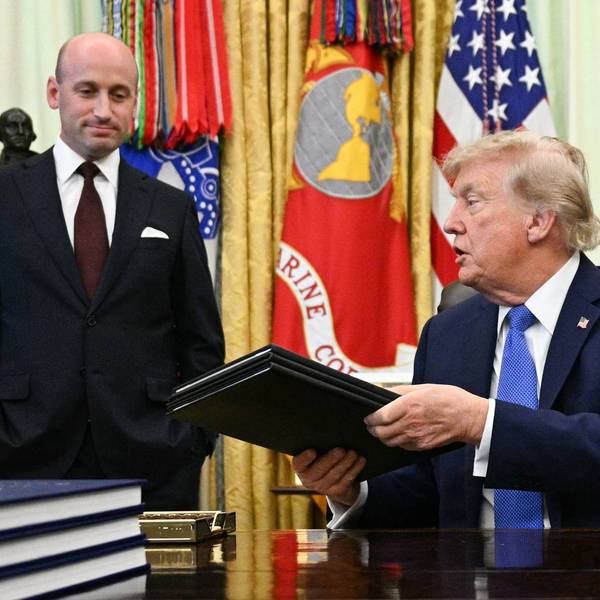
President Donald Trump, meanwhile, responded to the mosque attack as he has following previous deadly attacks--using Twitter to promote his so-called Muslim ban. His tweet on Friday also promotes his proposed border wall.
This country and this world are at a monumental crossroads. US voters have an opportunity to beat back the forces of fascism and confront the billionaires who are rigging the economy, our media system, and our democracy, making it increasingly impossible for ordinary people to get by. We’re not just talking about the election. We’re talking about what must be done once these fascist elements are vanquished from power. We need a bolder set of solutions than what either major party has so far been willing to offer and a working-class movement ready to fight like hell for it. Trump didn't emerge from nowhere. The conditions that fueled MAGA authoritarianism were created by decades of radical neoliberal economic policies and a corrupt political system dominated by corporate interests. They slashed taxes on the super-rich, promising that the benefits would trickle down. They said giveaways to the corporate titans would make life more affordable for the rest of us. It was all bullshit. And when a bitter, betrayed populace searches for someone to blame, right-wing demagogues have little trouble finding scapegoats. People know when they're being lied to, but you won't hear any of this from the corporate media. Only independent journalism—powered and funded by people who believe in building a better world—can deliver truly trustworthy daily news. If you share our vision, please contribute whatever you can to sustain our work. |
The death toll from the attack on the Al-Rawdah Mosque in Egypt's Sinai Peninsula rose to over 300, the state prosecutor said Saturday.
The death toll includes at least 27 children. More than 100 people were also wounded in the Friday attack.
One witness, 38-year-old Ebid Salem Mansour, told the Associated Press, "The shooting was random and hysterical at the beginning and then became more deliberate. Whoever they weren't sure was dead or still breathing was shot dead."
"The worshippers were taken by surprise by these elements," the prosecutor said in a statement, citing accounts from survivors. "They numbered between 25 and 30, carrying the Daesh [IS or Islamic State] flag and took up positions in front of the mosque door and its 12 windows with automatic rifles."
Their strategy also included setting multiple cars on fire outside the mosque to prevent people from escaping. The attackers also opened fire on ambulances as they tried to take away the wounded, CNN reports, citing witnesses.
No group has yet claimed responsibility for attack. But the Islamic State "is the main suspect as the mosque is associated with followers of the mystical Sufi branch of Sunni Islam whom it has branded heretics," AFP reports.
Egypt's President Abdel Fattah el-Sisi promised to respond to the attack with "brute force," and military spokesman Tamer Rifai said Saturday, "The Egyptian Air Force pursued the terrorist elements, discovered and destroyed a number of vehicles that carried out the brutal terrorist killings, and killed all terrorists inside those vehicles."
The New York Times offers this background:
For decades Egypt has seen Sinai through a military prism, taking an aggressive approach to an alienated local population. The military has engaged in summary executions and the destruction of whole villages, while offering little to solve the region's deep social and economic problems, including chronic unemployment, illiteracy and poor access to health care.
President Donald Trump, meanwhile, responded to the mosque attack as he has following previous deadly attacks--using Twitter to promote his so-called Muslim ban. His tweet on Friday also promotes his proposed border wall.