SUBSCRIBE TO OUR FREE NEWSLETTER
Daily news & progressive opinion—funded by the people, not the corporations—delivered straight to your inbox.
5
#000000
#FFFFFF
To donate by check, phone, or other method, see our More Ways to Give page.
"That is an unusually high number of workers to be exposed at any given time," said Robert Alvarez, senior scholar at the Institute for Policy Studies and former senior policy adviser to the secretary of energy under the Clinton administration, in an interview with Common Dreams. "This is very unusual and not supposed to happen. This is a wake-up call."
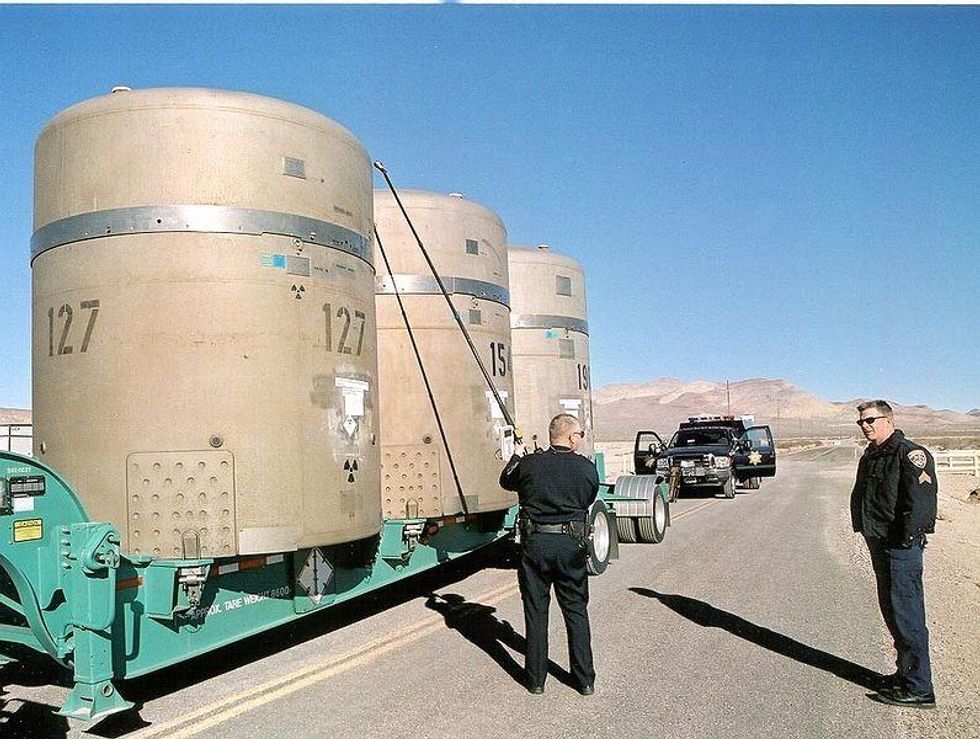
The federally-owned Waste Isolation Pilot Plant (WIPP) in southeastern New Mexico holds plutonium-contaminated military waste, generated by nuclear weapons production across the United States, including Los Alamos National Laboratory in northern New Mexico. It is the only underground nuclear waste dump in the country, storing radioactive material deep beneath the earth's surface in salt formations. Officials say this facility was never supposed to leak.
The exposed workers were performing "above ground operations" on February 14th at the time the leak was detected, according to a statement by the DOE. "It is premature to speculate on the health effects of these preliminary results, or any treatment that may be needed," reads the statement, which notes that many more tests are needed to determine the full extent of the workers' exposure.
Findings that the workers have been contaminated contradict initial claims by WIPP managers that none of the 139 people working when the leak was detected had been exposed.
Furthermore, the number of workers contaminated could be even higher. "We are still reviewing staff assignments to determine if additional employees will need to be tested," states the DOE.
The revelation follows an announcement by the DOE on Monday that an underground leak at the Waste Isolation Pilot Plant (WIPP) in southeastern New Mexico had contaminated the surface air, resulting in "slightly elevated levels of airborne radioactive concentrations." The findings sparked alarm among many residents of the nearby town of Carlsbad.
The DOE claimed in their Wednesday statement that "There is no risk to family or friends" of employees who have tested positive for radiation. The DOE and Nuclear Waste Partnership, the contractor that operates WIPP, have aggressively downplayed the danger and impact of the leak.
Yet Arnie Gundersen, Chief Engineer and nuclear safety advocate at Fairewinds Associates and former nuclear industry executive turned whistleblower, for Fairewinds Associates and former nuclear industry executive turned whistleblower, told Common Dreams that this claim is premature. "It happens routinely when workers are contaminated that they bring that radiation home," he said. "The families of the workers need to have their homes tested as soon as possible."
According to Alvarez, the worker contamination is "a symptom of a larger problem"--a system in which the DOE is responsible for regulating and overseeing itself and "often leaves this responsibility in the hands of private contractors." The DOE has "steadily demoted its environmental and health oversight function," said Alvarez. "That's a real problem. These are high-hazard activities."
"How many times are we going to allow this to happen?"
_____________________
"That is an unusually high number of workers to be exposed at any given time," said Robert Alvarez, senior scholar at the Institute for Policy Studies and former senior policy adviser to the secretary of energy under the Clinton administration, in an interview with Common Dreams. "This is very unusual and not supposed to happen. This is a wake-up call."
The federally-owned Waste Isolation Pilot Plant (WIPP) in southeastern New Mexico holds plutonium-contaminated military waste, generated by nuclear weapons production across the United States, including Los Alamos National Laboratory in northern New Mexico. It is the only underground nuclear waste dump in the country, storing radioactive material deep beneath the earth's surface in salt formations. Officials say this facility was never supposed to leak.
The exposed workers were performing "above ground operations" on February 14th at the time the leak was detected, according to a statement by the DOE. "It is premature to speculate on the health effects of these preliminary results, or any treatment that may be needed," reads the statement, which notes that many more tests are needed to determine the full extent of the workers' exposure.
Findings that the workers have been contaminated contradict initial claims by WIPP managers that none of the 139 people working when the leak was detected had been exposed.
Furthermore, the number of workers contaminated could be even higher. "We are still reviewing staff assignments to determine if additional employees will need to be tested," states the DOE.
The revelation follows an announcement by the DOE on Monday that an underground leak at the Waste Isolation Pilot Plant (WIPP) in southeastern New Mexico had contaminated the surface air, resulting in "slightly elevated levels of airborne radioactive concentrations." The findings sparked alarm among many residents of the nearby town of Carlsbad.
The DOE claimed in their Wednesday statement that "There is no risk to family or friends" of employees who have tested positive for radiation. The DOE and Nuclear Waste Partnership, the contractor that operates WIPP, have aggressively downplayed the danger and impact of the leak.
Yet Arnie Gundersen, Chief Engineer and nuclear safety advocate at Fairewinds Associates and former nuclear industry executive turned whistleblower, for Fairewinds Associates and former nuclear industry executive turned whistleblower, told Common Dreams that this claim is premature. "It happens routinely when workers are contaminated that they bring that radiation home," he said. "The families of the workers need to have their homes tested as soon as possible."
According to Alvarez, the worker contamination is "a symptom of a larger problem"--a system in which the DOE is responsible for regulating and overseeing itself and "often leaves this responsibility in the hands of private contractors." The DOE has "steadily demoted its environmental and health oversight function," said Alvarez. "That's a real problem. These are high-hazard activities."
"How many times are we going to allow this to happen?"
_____________________
"That is an unusually high number of workers to be exposed at any given time," said Robert Alvarez, senior scholar at the Institute for Policy Studies and former senior policy adviser to the secretary of energy under the Clinton administration, in an interview with Common Dreams. "This is very unusual and not supposed to happen. This is a wake-up call."
The federally-owned Waste Isolation Pilot Plant (WIPP) in southeastern New Mexico holds plutonium-contaminated military waste, generated by nuclear weapons production across the United States, including Los Alamos National Laboratory in northern New Mexico. It is the only underground nuclear waste dump in the country, storing radioactive material deep beneath the earth's surface in salt formations. Officials say this facility was never supposed to leak.
The exposed workers were performing "above ground operations" on February 14th at the time the leak was detected, according to a statement by the DOE. "It is premature to speculate on the health effects of these preliminary results, or any treatment that may be needed," reads the statement, which notes that many more tests are needed to determine the full extent of the workers' exposure.
Findings that the workers have been contaminated contradict initial claims by WIPP managers that none of the 139 people working when the leak was detected had been exposed.
Furthermore, the number of workers contaminated could be even higher. "We are still reviewing staff assignments to determine if additional employees will need to be tested," states the DOE.
The revelation follows an announcement by the DOE on Monday that an underground leak at the Waste Isolation Pilot Plant (WIPP) in southeastern New Mexico had contaminated the surface air, resulting in "slightly elevated levels of airborne radioactive concentrations." The findings sparked alarm among many residents of the nearby town of Carlsbad.
The DOE claimed in their Wednesday statement that "There is no risk to family or friends" of employees who have tested positive for radiation. The DOE and Nuclear Waste Partnership, the contractor that operates WIPP, have aggressively downplayed the danger and impact of the leak.
Yet Arnie Gundersen, Chief Engineer and nuclear safety advocate at Fairewinds Associates and former nuclear industry executive turned whistleblower, for Fairewinds Associates and former nuclear industry executive turned whistleblower, told Common Dreams that this claim is premature. "It happens routinely when workers are contaminated that they bring that radiation home," he said. "The families of the workers need to have their homes tested as soon as possible."
According to Alvarez, the worker contamination is "a symptom of a larger problem"--a system in which the DOE is responsible for regulating and overseeing itself and "often leaves this responsibility in the hands of private contractors." The DOE has "steadily demoted its environmental and health oversight function," said Alvarez. "That's a real problem. These are high-hazard activities."
"How many times are we going to allow this to happen?"
_____________________