SUBSCRIBE TO OUR FREE NEWSLETTER
Daily news & progressive opinion—funded by the people, not the corporations—delivered straight to your inbox.
5
#000000
#FFFFFF
To donate by check, phone, or other method, see our More Ways to Give page.
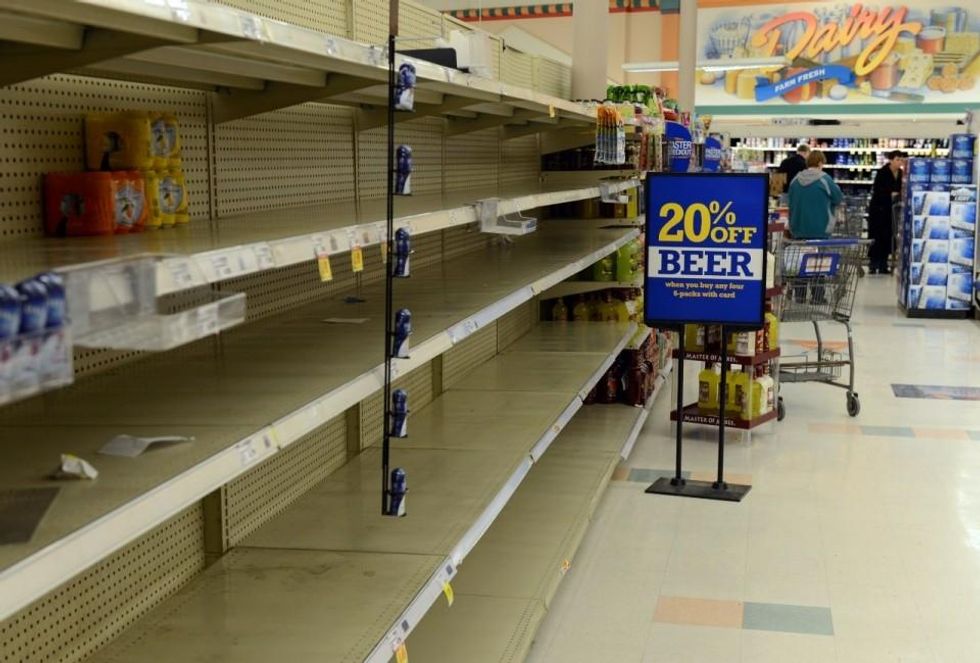
West Virginia was declared in a stated of emergency by Gov. Earl Ray Tombli Thursday following the chemical leak, which occurred at the Freedom Industries coal plant along the Elk River, a source of drinking water for nine counties and hundreds of thousands of people.
Dozens were hospitalized and at least four people have been admitted to the Charleston Area Medical Center, reportedly due to the spill.
The leaked chemical, 4-Methylcyclohexane Methanol, which is used for coal processing, causes nausea, dizziness, vomiting and eye and skin irritation upon exposure.
Residents Sunday were still advised not to drink, bathe, wash clothes or dishes, or any other such activity until further notice.
Authorities said it could still be "several days" before water from the area is safe again but provided no definite timeline. Additionally, the extent of the chemical spilled into the public water supply is not yet known. Mike Dorsey, with the state Department of Environmental Protection, said it could be around 7,500 gallons.
Federal authorities, including the Occupational Safety and Health Administration (OSHA) have opened an investigation into the spill.
Without knowledge of the extent of the spill or how long, exactly, it will be before things return to normal, much of the area's towns remained abandoned by visitors, and locals seemed to be staying home.
Associated Press reports:
On the fourth day without clean tap water, business owners with empty dining rooms and quiet aisles of merchandise around West Virginia's capital were left to wonder how much of an economic hit they'll take from a chemical spill.
Most visitors have cleared out of Charleston while locals are either staying home or driving out of the area to find somewhere they can get a hot meal or a shower. Orders not to use tap water for much other than flushing toilets mean that the spill is an emergency not just for the environment but also for local businesses.
800,000 liters of fresh water will have been shipped to the area by Sunday night. However, most of the town's business and restaurants remained closed Sunday.
Many residents feel not enough is being done to help, AP reports, and are particularly angry towards the coal company responsible for the spill.
"It seems like no one watches these companies," said Patricia Mason, a retired 54-year-old teacher. "They get away with this all the time, and we're the ones who pay for it. We're the ones who are suffering. It's just wrong."
_______________________
West Virginia was declared in a stated of emergency by Gov. Earl Ray Tombli Thursday following the chemical leak, which occurred at the Freedom Industries coal plant along the Elk River, a source of drinking water for nine counties and hundreds of thousands of people.
Dozens were hospitalized and at least four people have been admitted to the Charleston Area Medical Center, reportedly due to the spill.
The leaked chemical, 4-Methylcyclohexane Methanol, which is used for coal processing, causes nausea, dizziness, vomiting and eye and skin irritation upon exposure.
Residents Sunday were still advised not to drink, bathe, wash clothes or dishes, or any other such activity until further notice.
Authorities said it could still be "several days" before water from the area is safe again but provided no definite timeline. Additionally, the extent of the chemical spilled into the public water supply is not yet known. Mike Dorsey, with the state Department of Environmental Protection, said it could be around 7,500 gallons.
Federal authorities, including the Occupational Safety and Health Administration (OSHA) have opened an investigation into the spill.
Without knowledge of the extent of the spill or how long, exactly, it will be before things return to normal, much of the area's towns remained abandoned by visitors, and locals seemed to be staying home.
Associated Press reports:
On the fourth day without clean tap water, business owners with empty dining rooms and quiet aisles of merchandise around West Virginia's capital were left to wonder how much of an economic hit they'll take from a chemical spill.
Most visitors have cleared out of Charleston while locals are either staying home or driving out of the area to find somewhere they can get a hot meal or a shower. Orders not to use tap water for much other than flushing toilets mean that the spill is an emergency not just for the environment but also for local businesses.
800,000 liters of fresh water will have been shipped to the area by Sunday night. However, most of the town's business and restaurants remained closed Sunday.
Many residents feel not enough is being done to help, AP reports, and are particularly angry towards the coal company responsible for the spill.
"It seems like no one watches these companies," said Patricia Mason, a retired 54-year-old teacher. "They get away with this all the time, and we're the ones who pay for it. We're the ones who are suffering. It's just wrong."
_______________________
West Virginia was declared in a stated of emergency by Gov. Earl Ray Tombli Thursday following the chemical leak, which occurred at the Freedom Industries coal plant along the Elk River, a source of drinking water for nine counties and hundreds of thousands of people.
Dozens were hospitalized and at least four people have been admitted to the Charleston Area Medical Center, reportedly due to the spill.
The leaked chemical, 4-Methylcyclohexane Methanol, which is used for coal processing, causes nausea, dizziness, vomiting and eye and skin irritation upon exposure.
Residents Sunday were still advised not to drink, bathe, wash clothes or dishes, or any other such activity until further notice.
Authorities said it could still be "several days" before water from the area is safe again but provided no definite timeline. Additionally, the extent of the chemical spilled into the public water supply is not yet known. Mike Dorsey, with the state Department of Environmental Protection, said it could be around 7,500 gallons.
Federal authorities, including the Occupational Safety and Health Administration (OSHA) have opened an investigation into the spill.
Without knowledge of the extent of the spill or how long, exactly, it will be before things return to normal, much of the area's towns remained abandoned by visitors, and locals seemed to be staying home.
Associated Press reports:
On the fourth day without clean tap water, business owners with empty dining rooms and quiet aisles of merchandise around West Virginia's capital were left to wonder how much of an economic hit they'll take from a chemical spill.
Most visitors have cleared out of Charleston while locals are either staying home or driving out of the area to find somewhere they can get a hot meal or a shower. Orders not to use tap water for much other than flushing toilets mean that the spill is an emergency not just for the environment but also for local businesses.
800,000 liters of fresh water will have been shipped to the area by Sunday night. However, most of the town's business and restaurants remained closed Sunday.
Many residents feel not enough is being done to help, AP reports, and are particularly angry towards the coal company responsible for the spill.
"It seems like no one watches these companies," said Patricia Mason, a retired 54-year-old teacher. "They get away with this all the time, and we're the ones who pay for it. We're the ones who are suffering. It's just wrong."
_______________________