SUBSCRIBE TO OUR FREE NEWSLETTER
Daily news & progressive opinion—funded by the people, not the corporations—delivered straight to your inbox.
5
#000000
#FFFFFF
To donate by check, phone, or other method, see our More Ways to Give page.
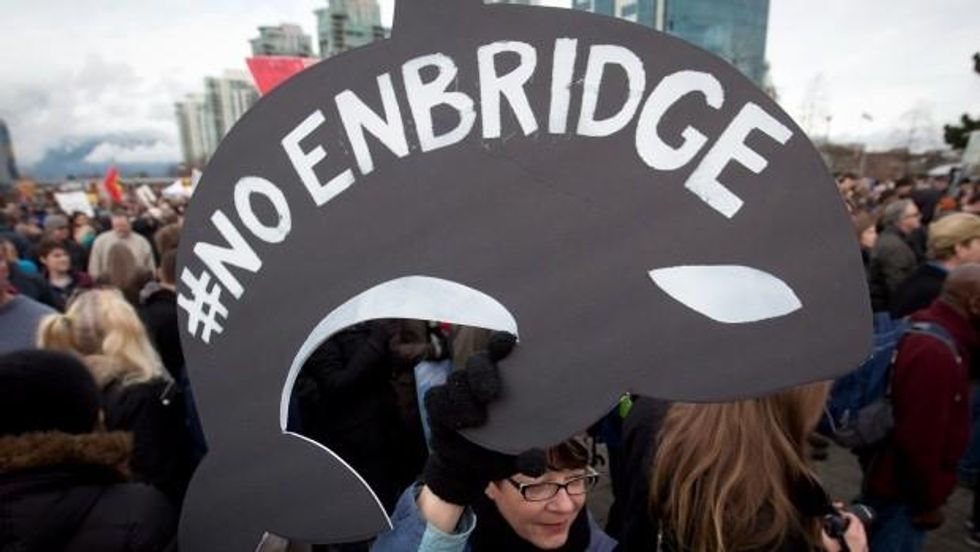
The pipeline has been the source of a large protest movement by environmental and indigenous rights groups throughout the year who say the pipeline will bring inevitable oil spills to pristine habitats and illegally encroach on First Nations' lands.
Rabble.ca reports:
The National Energy Board ruled to approve the controversial Enbridge Northern Gateway pipeline today at a media lock-up event in Calgary. The pipeline was approved with 209 conditions.
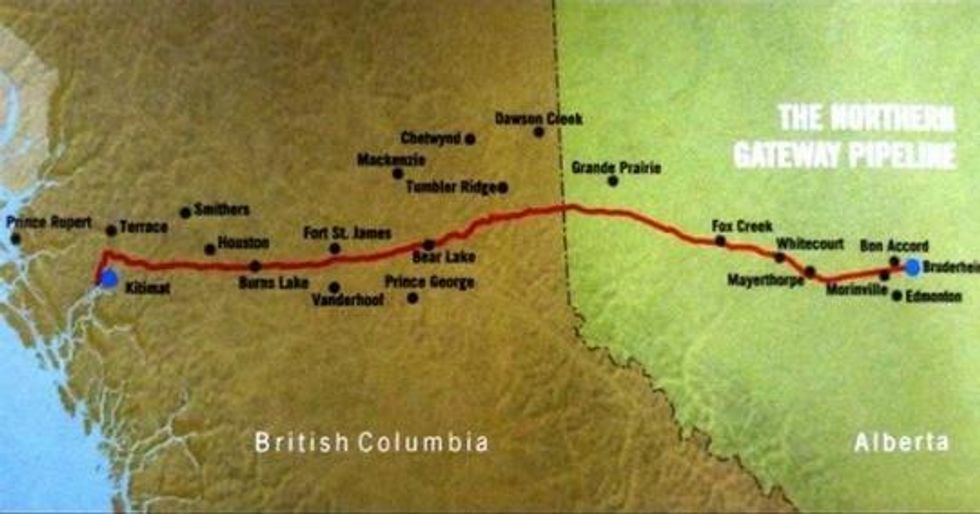
The 1,177-kilometre pipeline would bring tar sands bitumen from Alberta to Kitimat, BC, for shipment to Asian and U.S. markets. It has been fiercely opposed by Northern BC residents and a coalition of over 130 First Nations.
The board's decision does not immediately finalize the approval process, given the numerous conditions placed on the approval such as a requirement for Enbridge to have $950 million in liability coverage and "'unfettered access' to $100 million within 10 business days of a large spill from any component of the project," the Montreal Gazette reports.
But the final approval of the pipeline, along with the panel's required conditions, will now go to the Canadian Cabinet of the federal government, chaired by fossil fuel friendly Prime Minister Stephen Harper, which has six months to decide on the matter.
"If there ever was or could be a pipeline that the NEB could have turned away from on the basis of a social consensus of Canadians, surely Gateway was that pipeline," writes Fred Wilson at Rabble.ca. "But the NEB has just proven that it cares not a whit about how Canadians define the public interest. The NEB really has only one constituency that it considers relevant; that being, of course, the oil and gas industry."
However opposition groups vow that the fight against the tar sands pipeline is far from over.
"It will trigger a nasty backlash," said Grand Chief Stewart Phillip, president of of the Union of British Columbia Indian Chiefs, who said the NEB's decision is "the death of the integrity with respect to...environmental review processes in the country."
"There will be a multitude of lawsuits, protests, demonstrations, marches and at the end, if the company goes for site preparation, people will be physically out there confronting bulldozers."
"This is far from the end of the story -- really what happened today was more like throwing fuel on a fire," said Ben West, tar sands campaign director for Vancouver-based ForestEthics Advocacy.
The pipeline proposal has faced mass protests and political opposition across Canada throughout the year, particularly in British Columbia where the pipeline would unload the tar sands onto tankers along the coast for export.
"This pipeline would threaten existing industries, and even a modest spill will contaminate this pristine coastline for decades--ravaging tourism and the salmon fishery. The risks are simply unacceptable," said Canadian Member of Parliament for the New Democratic Party Peter Julien.
Rabble.ca continues:
The project was broadly opposed throughout BC during the Joint Review Panel hearings. Of over 1,000 speakers who presented at the hearings, only a small handful spoke in support of the projects. Some communities near the pipeline route, such as Smithers and Burns Lake expressed 100 per cent opposition to the project, with mayors speaking out strongly against the project.
The BC government had formally rejected the proposed Enbridge Northern Gateway pipeline in May, saying that Enbridge, the corporation behind the project, has failed to address the environmental concerns tied to the tar sands project.
_______________________
The pipeline has been the source of a large protest movement by environmental and indigenous rights groups throughout the year who say the pipeline will bring inevitable oil spills to pristine habitats and illegally encroach on First Nations' lands.
Rabble.ca reports:
The National Energy Board ruled to approve the controversial Enbridge Northern Gateway pipeline today at a media lock-up event in Calgary. The pipeline was approved with 209 conditions.
The 1,177-kilometre pipeline would bring tar sands bitumen from Alberta to Kitimat, BC, for shipment to Asian and U.S. markets. It has been fiercely opposed by Northern BC residents and a coalition of over 130 First Nations.
The board's decision does not immediately finalize the approval process, given the numerous conditions placed on the approval such as a requirement for Enbridge to have $950 million in liability coverage and "'unfettered access' to $100 million within 10 business days of a large spill from any component of the project," the Montreal Gazette reports.
But the final approval of the pipeline, along with the panel's required conditions, will now go to the Canadian Cabinet of the federal government, chaired by fossil fuel friendly Prime Minister Stephen Harper, which has six months to decide on the matter.
"If there ever was or could be a pipeline that the NEB could have turned away from on the basis of a social consensus of Canadians, surely Gateway was that pipeline," writes Fred Wilson at Rabble.ca. "But the NEB has just proven that it cares not a whit about how Canadians define the public interest. The NEB really has only one constituency that it considers relevant; that being, of course, the oil and gas industry."
However opposition groups vow that the fight against the tar sands pipeline is far from over.
"It will trigger a nasty backlash," said Grand Chief Stewart Phillip, president of of the Union of British Columbia Indian Chiefs, who said the NEB's decision is "the death of the integrity with respect to...environmental review processes in the country."
"There will be a multitude of lawsuits, protests, demonstrations, marches and at the end, if the company goes for site preparation, people will be physically out there confronting bulldozers."
"This is far from the end of the story -- really what happened today was more like throwing fuel on a fire," said Ben West, tar sands campaign director for Vancouver-based ForestEthics Advocacy.
The pipeline proposal has faced mass protests and political opposition across Canada throughout the year, particularly in British Columbia where the pipeline would unload the tar sands onto tankers along the coast for export.
"This pipeline would threaten existing industries, and even a modest spill will contaminate this pristine coastline for decades--ravaging tourism and the salmon fishery. The risks are simply unacceptable," said Canadian Member of Parliament for the New Democratic Party Peter Julien.
Rabble.ca continues:
The project was broadly opposed throughout BC during the Joint Review Panel hearings. Of over 1,000 speakers who presented at the hearings, only a small handful spoke in support of the projects. Some communities near the pipeline route, such as Smithers and Burns Lake expressed 100 per cent opposition to the project, with mayors speaking out strongly against the project.
The BC government had formally rejected the proposed Enbridge Northern Gateway pipeline in May, saying that Enbridge, the corporation behind the project, has failed to address the environmental concerns tied to the tar sands project.
_______________________
The pipeline has been the source of a large protest movement by environmental and indigenous rights groups throughout the year who say the pipeline will bring inevitable oil spills to pristine habitats and illegally encroach on First Nations' lands.
Rabble.ca reports:
The National Energy Board ruled to approve the controversial Enbridge Northern Gateway pipeline today at a media lock-up event in Calgary. The pipeline was approved with 209 conditions.
The 1,177-kilometre pipeline would bring tar sands bitumen from Alberta to Kitimat, BC, for shipment to Asian and U.S. markets. It has been fiercely opposed by Northern BC residents and a coalition of over 130 First Nations.
The board's decision does not immediately finalize the approval process, given the numerous conditions placed on the approval such as a requirement for Enbridge to have $950 million in liability coverage and "'unfettered access' to $100 million within 10 business days of a large spill from any component of the project," the Montreal Gazette reports.
But the final approval of the pipeline, along with the panel's required conditions, will now go to the Canadian Cabinet of the federal government, chaired by fossil fuel friendly Prime Minister Stephen Harper, which has six months to decide on the matter.
"If there ever was or could be a pipeline that the NEB could have turned away from on the basis of a social consensus of Canadians, surely Gateway was that pipeline," writes Fred Wilson at Rabble.ca. "But the NEB has just proven that it cares not a whit about how Canadians define the public interest. The NEB really has only one constituency that it considers relevant; that being, of course, the oil and gas industry."
However opposition groups vow that the fight against the tar sands pipeline is far from over.
"It will trigger a nasty backlash," said Grand Chief Stewart Phillip, president of of the Union of British Columbia Indian Chiefs, who said the NEB's decision is "the death of the integrity with respect to...environmental review processes in the country."
"There will be a multitude of lawsuits, protests, demonstrations, marches and at the end, if the company goes for site preparation, people will be physically out there confronting bulldozers."
"This is far from the end of the story -- really what happened today was more like throwing fuel on a fire," said Ben West, tar sands campaign director for Vancouver-based ForestEthics Advocacy.
The pipeline proposal has faced mass protests and political opposition across Canada throughout the year, particularly in British Columbia where the pipeline would unload the tar sands onto tankers along the coast for export.
"This pipeline would threaten existing industries, and even a modest spill will contaminate this pristine coastline for decades--ravaging tourism and the salmon fishery. The risks are simply unacceptable," said Canadian Member of Parliament for the New Democratic Party Peter Julien.
Rabble.ca continues:
The project was broadly opposed throughout BC during the Joint Review Panel hearings. Of over 1,000 speakers who presented at the hearings, only a small handful spoke in support of the projects. Some communities near the pipeline route, such as Smithers and Burns Lake expressed 100 per cent opposition to the project, with mayors speaking out strongly against the project.
The BC government had formally rejected the proposed Enbridge Northern Gateway pipeline in May, saying that Enbridge, the corporation behind the project, has failed to address the environmental concerns tied to the tar sands project.
_______________________