SUBSCRIBE TO OUR FREE NEWSLETTER
Daily news & progressive opinion—funded by the people, not the corporations—delivered straight to your inbox.
5
#000000
#FFFFFF
To donate by check, phone, or other method, see our More Ways to Give page.
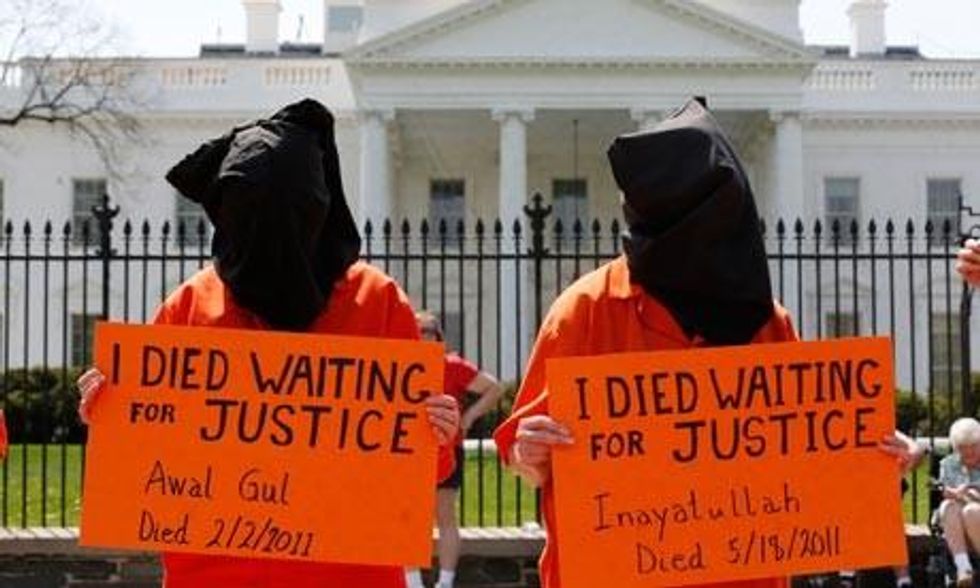
In its latest bid to deprive Guantanamo Bay inmates of what Algerian prisoner Ahmed Belbacha has called their "sole peaceful means" of protest, the U.S. military announced it will stop providing information to the press about the ongoing hunger strikes within this notorious offshore prison.
"The hunger strike has been the only way the prisoners can effectively protest and force world attention back on Guantanamo Bay," said Omar Farah, staff attorney for Center for Constitutional Rights, in an interview with Common Dreams. "The government has tried to undermine that in many ways. We saw that in the summer with raids on Camp 6 and forcing prisoners into solitary confinement. This is a new and different way to silence the protests."
In an interview with Al Jazeera-America published Wednesday, Navy Commander John Filostrat acknowledged that the withholding of information is a deliberate move to undermine public knowledge of a protest that has garnered international support. "It's [the strikers'] desire to draw attention to themselves, and so we're not going to help them do that," he stated.
"JTF-Guantanamo allows detainees to peacefully protest but will not further their protests by reporting the numbers to the public," Filostrat told the Miami Herald last week upon announcing the blackout.
British Guantanamo inmate Shaker Aamer said last week that the hunger strike is growing despite the wall of silence. The "Guantanamo hunger strike is back on," stated Aamer in a phone call with his attorney Clive Stafford Smith, director of the U.K.-based human rights charity Reprieve, that was reported by Al Jazeera-America. Aamer said at least 29 prisoners are still taking part--19 of them being subjected to painful force-feedings that have been widely denounced as torture.
"We are hearing that there have been increasing numbers of men who are hunger striking," Farah confirmed. "It is also important to recognize there are a number of men who are long-term hunger strikers. My client Tariq Ba Odah, who has already been cleared for release, has been on unbroken hunger strike since February 2007."
Hunger strikes have swept the prison since shortly after it opened in 2002, growing to over 100 participants who refused food for extended periods, many of whom were subject to the painful force-feedings.
U.S. military officials had previously disclosed the numbers of inmates who refused food. Yet, Shayana Kadidal, senior managing attorney of the Guantanamo Global Justice Initiative at the Center for Constitutional Rights, previously told Common Dreams that these numbers should be viewed with skepticism because the military "doctors them down."
162 people are still incarcerated at the military prison in Cuba that has been widely condemned for abusive and inhumane conditions, systematic torture, and lack of due process--including indefinite detentions without trial or formal charges. More than half of all inmates languish in prison despite having been cleared for release.
In a previous 60 Minutes broadcast from Guantanamo, Aamer could be heard declaring from his cell, "Leave us to die in peace or tell the world the truth!"
_____________________
In its latest bid to deprive Guantanamo Bay inmates of what Algerian prisoner Ahmed Belbacha has called their "sole peaceful means" of protest, the U.S. military announced it will stop providing information to the press about the ongoing hunger strikes within this notorious offshore prison.
"The hunger strike has been the only way the prisoners can effectively protest and force world attention back on Guantanamo Bay," said Omar Farah, staff attorney for Center for Constitutional Rights, in an interview with Common Dreams. "The government has tried to undermine that in many ways. We saw that in the summer with raids on Camp 6 and forcing prisoners into solitary confinement. This is a new and different way to silence the protests."
In an interview with Al Jazeera-America published Wednesday, Navy Commander John Filostrat acknowledged that the withholding of information is a deliberate move to undermine public knowledge of a protest that has garnered international support. "It's [the strikers'] desire to draw attention to themselves, and so we're not going to help them do that," he stated.
"JTF-Guantanamo allows detainees to peacefully protest but will not further their protests by reporting the numbers to the public," Filostrat told the Miami Herald last week upon announcing the blackout.
British Guantanamo inmate Shaker Aamer said last week that the hunger strike is growing despite the wall of silence. The "Guantanamo hunger strike is back on," stated Aamer in a phone call with his attorney Clive Stafford Smith, director of the U.K.-based human rights charity Reprieve, that was reported by Al Jazeera-America. Aamer said at least 29 prisoners are still taking part--19 of them being subjected to painful force-feedings that have been widely denounced as torture.
"We are hearing that there have been increasing numbers of men who are hunger striking," Farah confirmed. "It is also important to recognize there are a number of men who are long-term hunger strikers. My client Tariq Ba Odah, who has already been cleared for release, has been on unbroken hunger strike since February 2007."
Hunger strikes have swept the prison since shortly after it opened in 2002, growing to over 100 participants who refused food for extended periods, many of whom were subject to the painful force-feedings.
U.S. military officials had previously disclosed the numbers of inmates who refused food. Yet, Shayana Kadidal, senior managing attorney of the Guantanamo Global Justice Initiative at the Center for Constitutional Rights, previously told Common Dreams that these numbers should be viewed with skepticism because the military "doctors them down."
162 people are still incarcerated at the military prison in Cuba that has been widely condemned for abusive and inhumane conditions, systematic torture, and lack of due process--including indefinite detentions without trial or formal charges. More than half of all inmates languish in prison despite having been cleared for release.
In a previous 60 Minutes broadcast from Guantanamo, Aamer could be heard declaring from his cell, "Leave us to die in peace or tell the world the truth!"
_____________________
In its latest bid to deprive Guantanamo Bay inmates of what Algerian prisoner Ahmed Belbacha has called their "sole peaceful means" of protest, the U.S. military announced it will stop providing information to the press about the ongoing hunger strikes within this notorious offshore prison.
"The hunger strike has been the only way the prisoners can effectively protest and force world attention back on Guantanamo Bay," said Omar Farah, staff attorney for Center for Constitutional Rights, in an interview with Common Dreams. "The government has tried to undermine that in many ways. We saw that in the summer with raids on Camp 6 and forcing prisoners into solitary confinement. This is a new and different way to silence the protests."
In an interview with Al Jazeera-America published Wednesday, Navy Commander John Filostrat acknowledged that the withholding of information is a deliberate move to undermine public knowledge of a protest that has garnered international support. "It's [the strikers'] desire to draw attention to themselves, and so we're not going to help them do that," he stated.
"JTF-Guantanamo allows detainees to peacefully protest but will not further their protests by reporting the numbers to the public," Filostrat told the Miami Herald last week upon announcing the blackout.
British Guantanamo inmate Shaker Aamer said last week that the hunger strike is growing despite the wall of silence. The "Guantanamo hunger strike is back on," stated Aamer in a phone call with his attorney Clive Stafford Smith, director of the U.K.-based human rights charity Reprieve, that was reported by Al Jazeera-America. Aamer said at least 29 prisoners are still taking part--19 of them being subjected to painful force-feedings that have been widely denounced as torture.
"We are hearing that there have been increasing numbers of men who are hunger striking," Farah confirmed. "It is also important to recognize there are a number of men who are long-term hunger strikers. My client Tariq Ba Odah, who has already been cleared for release, has been on unbroken hunger strike since February 2007."
Hunger strikes have swept the prison since shortly after it opened in 2002, growing to over 100 participants who refused food for extended periods, many of whom were subject to the painful force-feedings.
U.S. military officials had previously disclosed the numbers of inmates who refused food. Yet, Shayana Kadidal, senior managing attorney of the Guantanamo Global Justice Initiative at the Center for Constitutional Rights, previously told Common Dreams that these numbers should be viewed with skepticism because the military "doctors them down."
162 people are still incarcerated at the military prison in Cuba that has been widely condemned for abusive and inhumane conditions, systematic torture, and lack of due process--including indefinite detentions without trial or formal charges. More than half of all inmates languish in prison despite having been cleared for release.
In a previous 60 Minutes broadcast from Guantanamo, Aamer could be heard declaring from his cell, "Leave us to die in peace or tell the world the truth!"
_____________________