In the wake of the death of detained Palestinian Arafat Jaradat, officials with the Palestinian Authority have issued a warning to President Obama that Palestine could be "on fire" during his upcoming visit to the region if he does not exert pressure on longtime ally Israel regarding the ongoing treatment of prisoners.
On Monday, over 10,000 Palestinians took part in a funeral procession for Jaradat, the thirty year old Palestinian man who died Saturday after being in Israeli custody for less than one week. An autopsy showed that he had many broken bones, and the PA attributed his death to "extreme torture" inflicted by his captors.
"If President Obama wants to visit the region peacefully, he should exert pressure on Israel to release the prisoners--especially the ones who are on hunger strike--or else he will visit while Palestine is on fire," said Palestinian Minister of Prisoner Affairs Issa Qaraqe, speaking at a news conference in Ramallah.
Obama's trip to Israel in March will be his first since becoming US president.
After his warning, Qaraqe demanded an international investigation into the suspicious death, refuting claims by the Israeli Prison Service that he had died of cardiac arrest, though Israeli officials later said the autopsy results were "preliminary and inconclusive".
Jaradat's death comes at a time of increasing outrage among Palestinians who, for weeks, have been protesting Israel's inhumane treatment of thousands of Palestinian prisoners.
According to UPI, Qadura Fares, chairman of the Palestinian Prison Society, warned the situation could lead to a third intifada, adding, "The situation in the prisons, the economic plight and the stalled peace process are pushing people to the brink, but I would like to believe that we are still far from that."
Palestinian Minister for Prisoner Affairs Issa Karaka seconded that statement, saying "popular resistance activities would continue," adding that the tension within the prisons was a "reflection of the strained situation on the ground."
Shortly after the funeral, clashes reportedly broke out between Palestinians and Israeli security forces who surrounded the village in the Hebron area where Jaradat's body was buried.
On Sunday, nearly all 4,500 of the Palestinians currently held in Israeli prisons took part in a hunger strike, the Israel Prisons Service said. According to Prisoner Affairs spokesman, Hassan Abed Rabo, it is an "open-ended hunger strike" and "a sign of mourning" for Jaradat.

In the wake of the death of detained Palestinian Arafat Jaradat, officials with the Palestinian Authority have issued a warning to President Obama that Palestine could be "on fire" during his upcoming visit to the region if he does not exert pressure on longtime ally Israel regarding the ongoing treatment of prisoners.
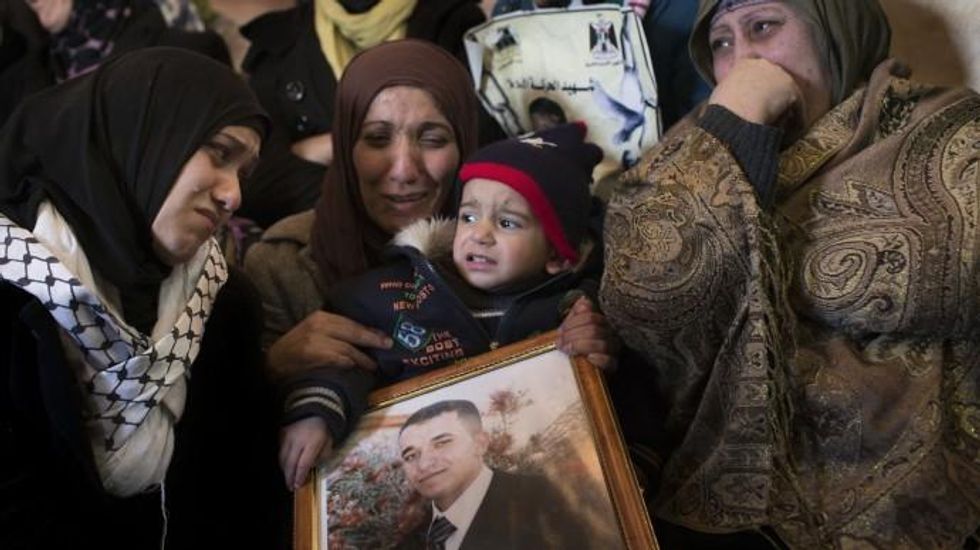
On Monday, over 10,000 Palestinians took part in a funeral procession for Jaradat, the thirty year old Palestinian man who died Saturday after being in Israeli custody for less than one week. An autopsy showed that he had many broken bones, and the PA attributed his death to "extreme torture" inflicted by his captors.
"If President Obama wants to visit the region peacefully, he should exert pressure on Israel to release the prisoners--especially the ones who are on hunger strike--or else he will visit while Palestine is on fire," said Palestinian Minister of Prisoner Affairs Issa Qaraqe, speaking at a news conference in Ramallah.
Obama's trip to Israel in March will be his first since becoming US president.
After his warning, Qaraqe demanded an international investigation into the suspicious death, refuting claims by the Israeli Prison Service that he had died of cardiac arrest, though Israeli officials later said the autopsy results were "preliminary and inconclusive".
Jaradat's death comes at a time of increasing outrage among Palestinians who, for weeks, have been protesting Israel's inhumane treatment of thousands of Palestinian prisoners.
According to UPI, Qadura Fares, chairman of the Palestinian Prison Society, warned the situation could lead to a third intifada, adding, "The situation in the prisons, the economic plight and the stalled peace process are pushing people to the brink, but I would like to believe that we are still far from that."
Palestinian Minister for Prisoner Affairs Issa Karaka seconded that statement, saying "popular resistance activities would continue," adding that the tension within the prisons was a "reflection of the strained situation on the ground."
Shortly after the funeral, clashes reportedly broke out between Palestinians and Israeli security forces who surrounded the village in the Hebron area where Jaradat's body was buried.
On Sunday, nearly all 4,500 of the Palestinians currently held in Israeli prisons took part in a hunger strike, the Israel Prisons Service said. According to Prisoner Affairs spokesman, Hassan Abed Rabo, it is an "open-ended hunger strike" and "a sign of mourning" for Jaradat.
In the wake of the death of detained Palestinian Arafat Jaradat, officials with the Palestinian Authority have issued a warning to President Obama that Palestine could be "on fire" during his upcoming visit to the region if he does not exert pressure on longtime ally Israel regarding the ongoing treatment of prisoners.
On Monday, over 10,000 Palestinians took part in a funeral procession for Jaradat, the thirty year old Palestinian man who died Saturday after being in Israeli custody for less than one week. An autopsy showed that he had many broken bones, and the PA attributed his death to "extreme torture" inflicted by his captors.
"If President Obama wants to visit the region peacefully, he should exert pressure on Israel to release the prisoners--especially the ones who are on hunger strike--or else he will visit while Palestine is on fire," said Palestinian Minister of Prisoner Affairs Issa Qaraqe, speaking at a news conference in Ramallah.
Obama's trip to Israel in March will be his first since becoming US president.
After his warning, Qaraqe demanded an international investigation into the suspicious death, refuting claims by the Israeli Prison Service that he had died of cardiac arrest, though Israeli officials later said the autopsy results were "preliminary and inconclusive".
Jaradat's death comes at a time of increasing outrage among Palestinians who, for weeks, have been protesting Israel's inhumane treatment of thousands of Palestinian prisoners.
According to UPI, Qadura Fares, chairman of the Palestinian Prison Society, warned the situation could lead to a third intifada, adding, "The situation in the prisons, the economic plight and the stalled peace process are pushing people to the brink, but I would like to believe that we are still far from that."
Palestinian Minister for Prisoner Affairs Issa Karaka seconded that statement, saying "popular resistance activities would continue," adding that the tension within the prisons was a "reflection of the strained situation on the ground."
Shortly after the funeral, clashes reportedly broke out between Palestinians and Israeli security forces who surrounded the village in the Hebron area where Jaradat's body was buried.
On Sunday, nearly all 4,500 of the Palestinians currently held in Israeli prisons took part in a hunger strike, the Israel Prisons Service said. According to Prisoner Affairs spokesman, Hassan Abed Rabo, it is an "open-ended hunger strike" and "a sign of mourning" for Jaradat.