SUBSCRIBE TO OUR FREE NEWSLETTER
Daily news & progressive opinion—funded by the people, not the corporations—delivered straight to your inbox.
5
#000000
#FFFFFF
To donate by check, phone, or other method, see our More Ways to Give page.
Daily news & progressive opinion—funded by the people, not the corporations—delivered straight to your inbox.
The official death toll in the southern Philippines has risen sharply in the wake of 'Super Typhoon' Bopha that slammed into the island nation Tuesday, climbing to well over 200 people, with tens of thousands displaced and fears that with many people still missing and whole villages destroyed those numbers would continue upwards.
Though successful warning efforts made ahead of the storm are believed to have saved many lives, as the weather cleared on Tuesday and into Wednesday the emerging reports of mudslides, flooding and dramatic damage in rural villages have increased significantly.
As The Philippine Star reports:
The death toll from Typhoon "Bopha" (locally called Pablo) ballooned to at least 238 people as rescue and retrieval operations intensified on Wednesday and local officials feared many more bodies could be found as rescuers reach hard-hit areas that had been isolated by landslides, floods and downed communications.
The Armed Forces of the Philippines' Eastern Mindanao Command (Eastmincom), whose troops were engaged in ongoing disaster, relief and retrieval operations in areas ravaged by Pablo, reported that at least 143 people died from flash floods and landslides in the farming and mining provinces of Compostela Valley, specifically in the towns of Monkayo, New Bataan, Compostela, Montevista, Nabunturan and Pantukan.
Just as Hurricane Sandy ripped through Caribbean nations and then up the US east coast several weeks ago leaving death and destruction in its wake, Typhoon Bopha has also been attributed to the "new normal" of climate change. Experts have pointed out the unusual strength, path, and seasonal timing of the storm.
The Associated Press, which put the death toll at 270, reports:
At least 151 people have died in the worst-hit province of Compostela Valley since typhoon Bopha began lashing the region early on Tuesday, including 66 villagers and soldiers who perished in a flash flood that swamped two emergency shelters and a military camp in New Bataan town, provincial spokeswoman Fe Maestre told the Associated Press.
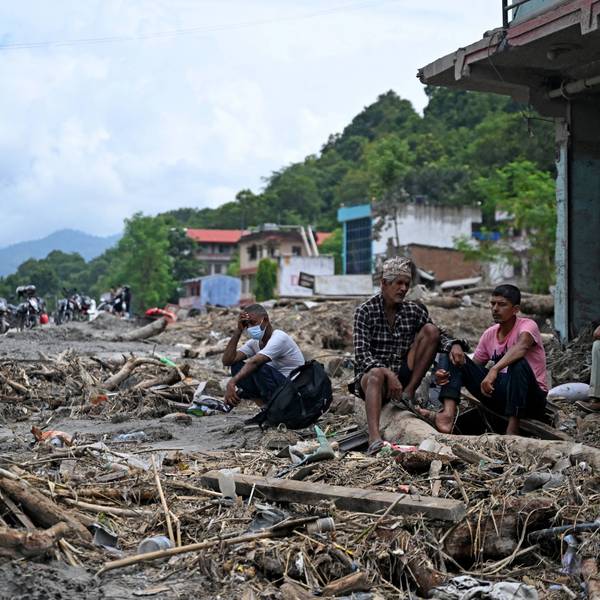
About 80 people survived the deluge in New Bataan with injuries, but an unspecified number of villagers remain missing. On Wednesday, the farming town of 45,000 people was a muddy wasteland of collapsed houses and columns of coconut and banana trees felled by Bopha's ferocious winds.
Outside a town gymnasium, several mud-stained bodies were laid side-by-side, covered by cloth and banana leaves and surrounded by villagers covering their noses to fight the stench. A man sprayed insecticide on the remains to keep flies away.
"It's hard to say how many more are missing," Maestre said. "We're now searching everywhere."
Al-Jazeera offered video and this report:
________________________
Dear Common Dreams reader, It’s been nearly 30 years since I co-founded Common Dreams with my late wife, Lina Newhouser. We had the radical notion that journalism should serve the public good, not corporate profits. It was clear to us from the outset what it would take to build such a project. No paid advertisements. No corporate sponsors. No millionaire publisher telling us what to think or do. Many people said we wouldn't last a year, but we proved those doubters wrong. Together with a tremendous team of journalists and dedicated staff, we built an independent media outlet free from the constraints of profits and corporate control. Our mission has always been simple: To inform. To inspire. To ignite change for the common good. Building Common Dreams was not easy. Our survival was never guaranteed. When you take on the most powerful forces—Wall Street greed, fossil fuel industry destruction, Big Tech lobbyists, and uber-rich oligarchs who have spent billions upon billions rigging the economy and democracy in their favor—the only bulwark you have is supporters who believe in your work. But here’s the urgent message from me today. It's never been this bad out there. And it's never been this hard to keep us going. At the very moment Common Dreams is most needed, the threats we face are intensifying. We need your support now more than ever. We don't accept corporate advertising and never will. We don't have a paywall because we don't think people should be blocked from critical news based on their ability to pay. Everything we do is funded by the donations of readers like you. When everyone does the little they can afford, we are strong. But if that support retreats or dries up, so do we. Will you donate now to make sure Common Dreams not only survives but thrives? —Craig Brown, Co-founder |
The official death toll in the southern Philippines has risen sharply in the wake of 'Super Typhoon' Bopha that slammed into the island nation Tuesday, climbing to well over 200 people, with tens of thousands displaced and fears that with many people still missing and whole villages destroyed those numbers would continue upwards.
Though successful warning efforts made ahead of the storm are believed to have saved many lives, as the weather cleared on Tuesday and into Wednesday the emerging reports of mudslides, flooding and dramatic damage in rural villages have increased significantly.
As The Philippine Star reports:
The death toll from Typhoon "Bopha" (locally called Pablo) ballooned to at least 238 people as rescue and retrieval operations intensified on Wednesday and local officials feared many more bodies could be found as rescuers reach hard-hit areas that had been isolated by landslides, floods and downed communications.
The Armed Forces of the Philippines' Eastern Mindanao Command (Eastmincom), whose troops were engaged in ongoing disaster, relief and retrieval operations in areas ravaged by Pablo, reported that at least 143 people died from flash floods and landslides in the farming and mining provinces of Compostela Valley, specifically in the towns of Monkayo, New Bataan, Compostela, Montevista, Nabunturan and Pantukan.
Just as Hurricane Sandy ripped through Caribbean nations and then up the US east coast several weeks ago leaving death and destruction in its wake, Typhoon Bopha has also been attributed to the "new normal" of climate change. Experts have pointed out the unusual strength, path, and seasonal timing of the storm.
The Associated Press, which put the death toll at 270, reports:
At least 151 people have died in the worst-hit province of Compostela Valley since typhoon Bopha began lashing the region early on Tuesday, including 66 villagers and soldiers who perished in a flash flood that swamped two emergency shelters and a military camp in New Bataan town, provincial spokeswoman Fe Maestre told the Associated Press.
About 80 people survived the deluge in New Bataan with injuries, but an unspecified number of villagers remain missing. On Wednesday, the farming town of 45,000 people was a muddy wasteland of collapsed houses and columns of coconut and banana trees felled by Bopha's ferocious winds.
Outside a town gymnasium, several mud-stained bodies were laid side-by-side, covered by cloth and banana leaves and surrounded by villagers covering their noses to fight the stench. A man sprayed insecticide on the remains to keep flies away.
"It's hard to say how many more are missing," Maestre said. "We're now searching everywhere."
Al-Jazeera offered video and this report:
________________________
The official death toll in the southern Philippines has risen sharply in the wake of 'Super Typhoon' Bopha that slammed into the island nation Tuesday, climbing to well over 200 people, with tens of thousands displaced and fears that with many people still missing and whole villages destroyed those numbers would continue upwards.
Though successful warning efforts made ahead of the storm are believed to have saved many lives, as the weather cleared on Tuesday and into Wednesday the emerging reports of mudslides, flooding and dramatic damage in rural villages have increased significantly.
As The Philippine Star reports:
The death toll from Typhoon "Bopha" (locally called Pablo) ballooned to at least 238 people as rescue and retrieval operations intensified on Wednesday and local officials feared many more bodies could be found as rescuers reach hard-hit areas that had been isolated by landslides, floods and downed communications.
The Armed Forces of the Philippines' Eastern Mindanao Command (Eastmincom), whose troops were engaged in ongoing disaster, relief and retrieval operations in areas ravaged by Pablo, reported that at least 143 people died from flash floods and landslides in the farming and mining provinces of Compostela Valley, specifically in the towns of Monkayo, New Bataan, Compostela, Montevista, Nabunturan and Pantukan.
Just as Hurricane Sandy ripped through Caribbean nations and then up the US east coast several weeks ago leaving death and destruction in its wake, Typhoon Bopha has also been attributed to the "new normal" of climate change. Experts have pointed out the unusual strength, path, and seasonal timing of the storm.
The Associated Press, which put the death toll at 270, reports:
At least 151 people have died in the worst-hit province of Compostela Valley since typhoon Bopha began lashing the region early on Tuesday, including 66 villagers and soldiers who perished in a flash flood that swamped two emergency shelters and a military camp in New Bataan town, provincial spokeswoman Fe Maestre told the Associated Press.
About 80 people survived the deluge in New Bataan with injuries, but an unspecified number of villagers remain missing. On Wednesday, the farming town of 45,000 people was a muddy wasteland of collapsed houses and columns of coconut and banana trees felled by Bopha's ferocious winds.
Outside a town gymnasium, several mud-stained bodies were laid side-by-side, covered by cloth and banana leaves and surrounded by villagers covering their noses to fight the stench. A man sprayed insecticide on the remains to keep flies away.
"It's hard to say how many more are missing," Maestre said. "We're now searching everywhere."
Al-Jazeera offered video and this report:
________________________