SUBSCRIBE TO OUR FREE NEWSLETTER
Daily news & progressive opinion—funded by the people, not the corporations—delivered straight to your inbox.
5
#000000
#FFFFFF
To donate by check, phone, or other method, see our More Ways to Give page.
Environmentalists and child advocates are raising warning flags this week over the consumer-driven, corporate-sponsored ad campaigns and product tie-ins surrounding the movie version of Dr. Suess' 'The Lorax'. One of the most beloved children's book authors of all time, Dr. Seuss published his environmental parable in 1971.
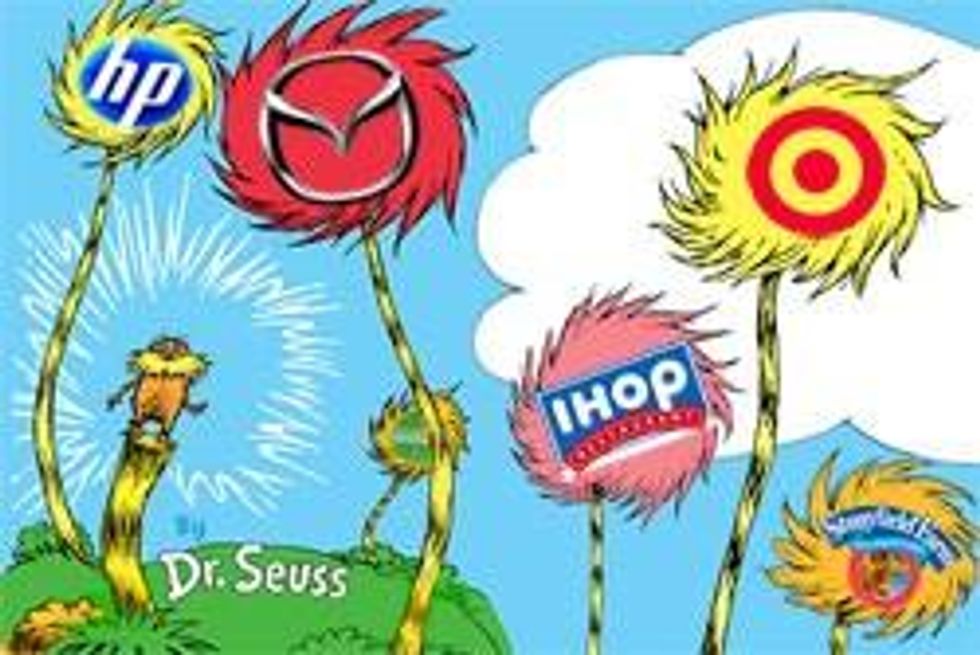
Generations of children have been moved by its powerful tale of how rampant greed and consumerism destroyed the forest of Truffula Trees and the Brown Bar-ba-loots, Swomee-Swans, and Humming-Fish that depended on them. But now, according to the Campaign for a Commercial-Free Childhood (CCFC), the book's powerful message is in danger of being crushed by a real-life landslide of corporate greed after Dr. Seuss Enterprises, Random House, and Universal Pictures produced the film and sold licenses for the various product agreements.
In a statement accouncing their new campaign to 'Save the Lorax!' the CCFC writes:
For more than forty years, Dr. Seuss's classic book, The Lorax, has been a clarion call for reducing consumption and promoting conservation. But this Friday, Universal Pictures' The Lorax arrives in theaters with dozens of corporate partners promoting everything from SUVs to Pottery Barn to Pancakes.
For the campaign, the CCFC is urging anyone who cares about The Lorax's original message to enjoy the story but pledge to shun the movie's commercial tie-ins, including:
"It is both cynical and hypocritical to use a beloved children's story with a prescient environmental message to sell kids on consumption," said CCFC's director, Dr. Susan Linn.
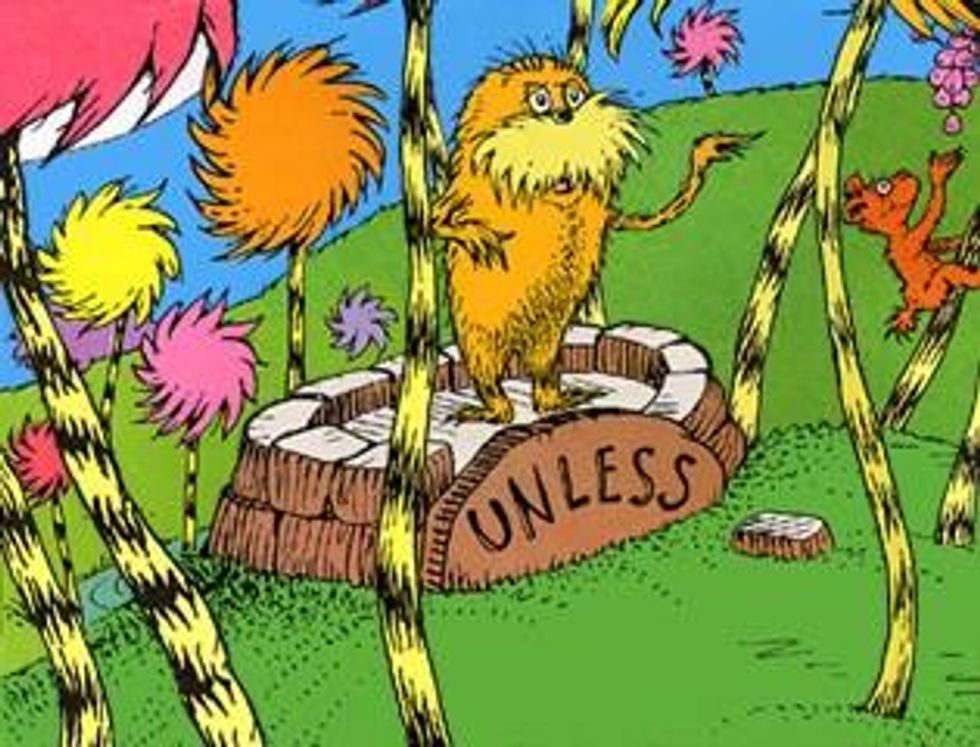
Read the book with your children. See the movie if you must. But tell the corporations that have kidnapped the Lorax you want nothing to do with their greenwashed products. --Campaign for a Commerical-Free Childhood
"The Lorax that so many of us know and love would never immerse children in the false corporate narrative that we can consume our way to everything, from happiness to sustainability. Instead, he would join everyone who cares about children and the environment to give kids time and space to grow up free of commercial pressures."
Ed Gillespie, writing in The Guardian this week, takes specific target of Mazda's use of the movie to push its latest SUV:
Using cartoon characters in marketing tie-ins is nothing new - The Incredibles and McDonalds or Toy Story and Burger King, for example - but there's something about the connection between Mazda and the Lorax which leaves a particularly unpleasant taste in the mouth.
Renowned in Dr Seuss's fable as "speaking for the trees", the Lorax fights the environmental destruction wrought by the faceless Once-ler. To take the wise Lorax and use his integrity to help flog what is a really rather ordinary and unimpressive vehicle is downright character assassination. The Lorax has been well and truly carjacked.
Here's the current Mazda commercial running in the US:
"The car industry has been advertising to children for years," said Catherine Lutz, Professor and Chair of Brown University's Department of Anthropology, and Anne Fernandez, co-authors of Carjacked: The Culture of the Automobile and Its Effect on Our Lives. "But the real poke in the eye of this ad campaign is its deceptive message to children and their parents that buying an SUV can save the planet from the environmental destruction that auto manufacturing, auto emissions, and auto sprawl has wrought."
Popular satirist Stephen Colbert also weighed in with two thumbs up for movie, saying "As we all know, the more product tie-ins, the more good something is." Watch:
***
Help your children really be like the Lorax. Sign the pledge to shun The Lorax's corporate cross-promotions and urge your friends and family to do the same.
Spread the Word!
Click here to email family and friends about this campaign.
###
Environmentalists and child advocates are raising warning flags this week over the consumer-driven, corporate-sponsored ad campaigns and product tie-ins surrounding the movie version of Dr. Suess' 'The Lorax'. One of the most beloved children's book authors of all time, Dr. Seuss published his environmental parable in 1971.
Generations of children have been moved by its powerful tale of how rampant greed and consumerism destroyed the forest of Truffula Trees and the Brown Bar-ba-loots, Swomee-Swans, and Humming-Fish that depended on them. But now, according to the Campaign for a Commercial-Free Childhood (CCFC), the book's powerful message is in danger of being crushed by a real-life landslide of corporate greed after Dr. Seuss Enterprises, Random House, and Universal Pictures produced the film and sold licenses for the various product agreements.
In a statement accouncing their new campaign to 'Save the Lorax!' the CCFC writes:
For more than forty years, Dr. Seuss's classic book, The Lorax, has been a clarion call for reducing consumption and promoting conservation. But this Friday, Universal Pictures' The Lorax arrives in theaters with dozens of corporate partners promoting everything from SUVs to Pottery Barn to Pancakes.
For the campaign, the CCFC is urging anyone who cares about The Lorax's original message to enjoy the story but pledge to shun the movie's commercial tie-ins, including:
"It is both cynical and hypocritical to use a beloved children's story with a prescient environmental message to sell kids on consumption," said CCFC's director, Dr. Susan Linn.
Read the book with your children. See the movie if you must. But tell the corporations that have kidnapped the Lorax you want nothing to do with their greenwashed products. --Campaign for a Commerical-Free Childhood
"The Lorax that so many of us know and love would never immerse children in the false corporate narrative that we can consume our way to everything, from happiness to sustainability. Instead, he would join everyone who cares about children and the environment to give kids time and space to grow up free of commercial pressures."
Ed Gillespie, writing in The Guardian this week, takes specific target of Mazda's use of the movie to push its latest SUV:
Using cartoon characters in marketing tie-ins is nothing new - The Incredibles and McDonalds or Toy Story and Burger King, for example - but there's something about the connection between Mazda and the Lorax which leaves a particularly unpleasant taste in the mouth.
Renowned in Dr Seuss's fable as "speaking for the trees", the Lorax fights the environmental destruction wrought by the faceless Once-ler. To take the wise Lorax and use his integrity to help flog what is a really rather ordinary and unimpressive vehicle is downright character assassination. The Lorax has been well and truly carjacked.
Here's the current Mazda commercial running in the US:
"The car industry has been advertising to children for years," said Catherine Lutz, Professor and Chair of Brown University's Department of Anthropology, and Anne Fernandez, co-authors of Carjacked: The Culture of the Automobile and Its Effect on Our Lives. "But the real poke in the eye of this ad campaign is its deceptive message to children and their parents that buying an SUV can save the planet from the environmental destruction that auto manufacturing, auto emissions, and auto sprawl has wrought."
Popular satirist Stephen Colbert also weighed in with two thumbs up for movie, saying "As we all know, the more product tie-ins, the more good something is." Watch:
***
Help your children really be like the Lorax. Sign the pledge to shun The Lorax's corporate cross-promotions and urge your friends and family to do the same.
Spread the Word!
Click here to email family and friends about this campaign.
###
Environmentalists and child advocates are raising warning flags this week over the consumer-driven, corporate-sponsored ad campaigns and product tie-ins surrounding the movie version of Dr. Suess' 'The Lorax'. One of the most beloved children's book authors of all time, Dr. Seuss published his environmental parable in 1971.
Generations of children have been moved by its powerful tale of how rampant greed and consumerism destroyed the forest of Truffula Trees and the Brown Bar-ba-loots, Swomee-Swans, and Humming-Fish that depended on them. But now, according to the Campaign for a Commercial-Free Childhood (CCFC), the book's powerful message is in danger of being crushed by a real-life landslide of corporate greed after Dr. Seuss Enterprises, Random House, and Universal Pictures produced the film and sold licenses for the various product agreements.
In a statement accouncing their new campaign to 'Save the Lorax!' the CCFC writes:
For more than forty years, Dr. Seuss's classic book, The Lorax, has been a clarion call for reducing consumption and promoting conservation. But this Friday, Universal Pictures' The Lorax arrives in theaters with dozens of corporate partners promoting everything from SUVs to Pottery Barn to Pancakes.
For the campaign, the CCFC is urging anyone who cares about The Lorax's original message to enjoy the story but pledge to shun the movie's commercial tie-ins, including:
"It is both cynical and hypocritical to use a beloved children's story with a prescient environmental message to sell kids on consumption," said CCFC's director, Dr. Susan Linn.
Read the book with your children. See the movie if you must. But tell the corporations that have kidnapped the Lorax you want nothing to do with their greenwashed products. --Campaign for a Commerical-Free Childhood
"The Lorax that so many of us know and love would never immerse children in the false corporate narrative that we can consume our way to everything, from happiness to sustainability. Instead, he would join everyone who cares about children and the environment to give kids time and space to grow up free of commercial pressures."
Ed Gillespie, writing in The Guardian this week, takes specific target of Mazda's use of the movie to push its latest SUV:
Using cartoon characters in marketing tie-ins is nothing new - The Incredibles and McDonalds or Toy Story and Burger King, for example - but there's something about the connection between Mazda and the Lorax which leaves a particularly unpleasant taste in the mouth.
Renowned in Dr Seuss's fable as "speaking for the trees", the Lorax fights the environmental destruction wrought by the faceless Once-ler. To take the wise Lorax and use his integrity to help flog what is a really rather ordinary and unimpressive vehicle is downright character assassination. The Lorax has been well and truly carjacked.
Here's the current Mazda commercial running in the US:
"The car industry has been advertising to children for years," said Catherine Lutz, Professor and Chair of Brown University's Department of Anthropology, and Anne Fernandez, co-authors of Carjacked: The Culture of the Automobile and Its Effect on Our Lives. "But the real poke in the eye of this ad campaign is its deceptive message to children and their parents that buying an SUV can save the planet from the environmental destruction that auto manufacturing, auto emissions, and auto sprawl has wrought."
Popular satirist Stephen Colbert also weighed in with two thumbs up for movie, saying "As we all know, the more product tie-ins, the more good something is." Watch:
***
Help your children really be like the Lorax. Sign the pledge to shun The Lorax's corporate cross-promotions and urge your friends and family to do the same.
Spread the Word!
Click here to email family and friends about this campaign.
###