

SUBSCRIBE TO OUR FREE NEWSLETTER
Daily news & progressive opinion—funded by the people, not the corporations—delivered straight to your inbox.
5
#000000
#FFFFFF
To donate by check, phone, or other method, see our More Ways to Give page.


Daily news & progressive opinion—funded by the people, not the corporations—delivered straight to your inbox.
Food crises are jeopardising efforts to achieve the millennium development goal of halving the proportion of people who suffer from hunger by 2015, United Nations food experts warned today.
In an annual report on world hunger, UN food agencies said food price volatility is likely to continue and possibly increase, making poor farmers, consumers and countries more vulnerable to poverty and food insecurity.
"Demand from consumers in rapidly growing economies will increase, the population continues to grow, and further growth in biofuels will place additional demands on the food system," the report said, adding that food price volatility may increase over the next decade due to stronger links between agricultural and energy markets and more frequent extreme weather events.
Small, import-dependent countries, particularly in Africa, are especially at risk, with many of them still facing severe problems following the world food and economic crises of 2006-2008, the UN Food and Agriculture Organisation (FAO), the International Fund for Agricultural Development (Ifad) and the World Food Programme (WFP) said in their joint report.
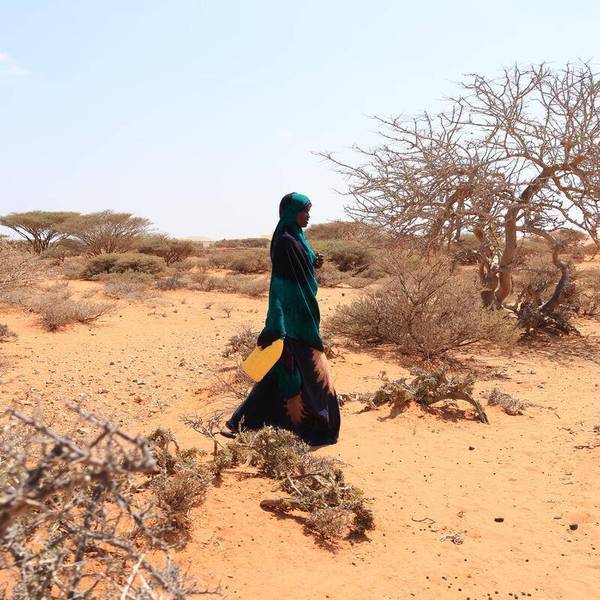
At a time when drought in east Africa and famine in Somalia have left 12 million people in need of aid, the report argued that such crises are challenging efforts to reduce hunger by half.
"Even if the MDG were achieved by 2015, some 600 million people in developing countries would still be undernourished," said UN experts. "Having 600 million people suffering from hunger on a daily basis is never acceptable. The entire international community must act today and act forcefully to banish food insecurity from the planet."
The report emphasised that investment in agriculture remains critical to sustainable, long-term food security and called for money to be put into irrigation, improved land-management practices and better seeds developed through agricultural research.
Amid growing concern about land grabs, where small farmers are evicted to make way for corporate interests, the report stressed: "It is important that all investment considers and respects the rights of all existing users of land and related natural resources, benefits local communities, promotes food security and environmental sustainability, and contributes to adaptation to and mitigation of climate change impacts."
When farmers react to higher prices with increased production, the report said, it was essential to build on their short-term response with increased investment in agriculture, with the emphasis on initiatives that support smallholders, who are the main food producers in many parts of the developing world.
With the global population expected to increase from 6.9 billion to 9 billion by 2050, the problem of feeding the world is increasing preoccupying governments. Food security was put on the G20 agenda this year under the group's French presidency.
NGOs point out, however, that developed countries have yet to live up to their pledge to invest $22bn in agriculture development. The money was promised at L'Aquila, Italy in 2009, following food crises that triggered riots in 30 countries across three continents.
The report said predictable policies and openness to trade were more effective strategies for governments than export bans and other restrictive policies, which risk increasing volatility and high prices on international markets.

Dear Common Dreams reader, The U.S. is on a fast track to authoritarianism like nothing I've ever seen. Meanwhile, corporate news outlets are utterly capitulating to Trump, twisting their coverage to avoid drawing his ire while lining up to stuff cash in his pockets. That's why I believe that Common Dreams is doing the best and most consequential reporting that we've ever done. Our small but mighty team is a progressive reporting powerhouse, covering the news every day that the corporate media never will. Our mission has always been simple: To inform. To inspire. And to ignite change for the common good. Now here's the key piece that I want all our readers to understand: None of this would be possible without your financial support. That's not just some fundraising cliche. It's the absolute and literal truth. We don't accept corporate advertising and never will. We don't have a paywall because we don't think people should be blocked from critical news based on their ability to pay. Everything we do is funded by the donations of readers like you. Will you donate now to help power the nonprofit, independent reporting of Common Dreams? Thank you for being a vital member of our community. Together, we can keep independent journalism alive when it’s needed most. - Craig Brown, Co-founder |
Food crises are jeopardising efforts to achieve the millennium development goal of halving the proportion of people who suffer from hunger by 2015, United Nations food experts warned today.
In an annual report on world hunger, UN food agencies said food price volatility is likely to continue and possibly increase, making poor farmers, consumers and countries more vulnerable to poverty and food insecurity.
"Demand from consumers in rapidly growing economies will increase, the population continues to grow, and further growth in biofuels will place additional demands on the food system," the report said, adding that food price volatility may increase over the next decade due to stronger links between agricultural and energy markets and more frequent extreme weather events.
Small, import-dependent countries, particularly in Africa, are especially at risk, with many of them still facing severe problems following the world food and economic crises of 2006-2008, the UN Food and Agriculture Organisation (FAO), the International Fund for Agricultural Development (Ifad) and the World Food Programme (WFP) said in their joint report.
At a time when drought in east Africa and famine in Somalia have left 12 million people in need of aid, the report argued that such crises are challenging efforts to reduce hunger by half.
"Even if the MDG were achieved by 2015, some 600 million people in developing countries would still be undernourished," said UN experts. "Having 600 million people suffering from hunger on a daily basis is never acceptable. The entire international community must act today and act forcefully to banish food insecurity from the planet."
The report emphasised that investment in agriculture remains critical to sustainable, long-term food security and called for money to be put into irrigation, improved land-management practices and better seeds developed through agricultural research.
Amid growing concern about land grabs, where small farmers are evicted to make way for corporate interests, the report stressed: "It is important that all investment considers and respects the rights of all existing users of land and related natural resources, benefits local communities, promotes food security and environmental sustainability, and contributes to adaptation to and mitigation of climate change impacts."
When farmers react to higher prices with increased production, the report said, it was essential to build on their short-term response with increased investment in agriculture, with the emphasis on initiatives that support smallholders, who are the main food producers in many parts of the developing world.
With the global population expected to increase from 6.9 billion to 9 billion by 2050, the problem of feeding the world is increasing preoccupying governments. Food security was put on the G20 agenda this year under the group's French presidency.
NGOs point out, however, that developed countries have yet to live up to their pledge to invest $22bn in agriculture development. The money was promised at L'Aquila, Italy in 2009, following food crises that triggered riots in 30 countries across three continents.
The report said predictable policies and openness to trade were more effective strategies for governments than export bans and other restrictive policies, which risk increasing volatility and high prices on international markets.
Food crises are jeopardising efforts to achieve the millennium development goal of halving the proportion of people who suffer from hunger by 2015, United Nations food experts warned today.
In an annual report on world hunger, UN food agencies said food price volatility is likely to continue and possibly increase, making poor farmers, consumers and countries more vulnerable to poverty and food insecurity.
"Demand from consumers in rapidly growing economies will increase, the population continues to grow, and further growth in biofuels will place additional demands on the food system," the report said, adding that food price volatility may increase over the next decade due to stronger links between agricultural and energy markets and more frequent extreme weather events.
Small, import-dependent countries, particularly in Africa, are especially at risk, with many of them still facing severe problems following the world food and economic crises of 2006-2008, the UN Food and Agriculture Organisation (FAO), the International Fund for Agricultural Development (Ifad) and the World Food Programme (WFP) said in their joint report.
At a time when drought in east Africa and famine in Somalia have left 12 million people in need of aid, the report argued that such crises are challenging efforts to reduce hunger by half.
"Even if the MDG were achieved by 2015, some 600 million people in developing countries would still be undernourished," said UN experts. "Having 600 million people suffering from hunger on a daily basis is never acceptable. The entire international community must act today and act forcefully to banish food insecurity from the planet."
The report emphasised that investment in agriculture remains critical to sustainable, long-term food security and called for money to be put into irrigation, improved land-management practices and better seeds developed through agricultural research.
Amid growing concern about land grabs, where small farmers are evicted to make way for corporate interests, the report stressed: "It is important that all investment considers and respects the rights of all existing users of land and related natural resources, benefits local communities, promotes food security and environmental sustainability, and contributes to adaptation to and mitigation of climate change impacts."
When farmers react to higher prices with increased production, the report said, it was essential to build on their short-term response with increased investment in agriculture, with the emphasis on initiatives that support smallholders, who are the main food producers in many parts of the developing world.
With the global population expected to increase from 6.9 billion to 9 billion by 2050, the problem of feeding the world is increasing preoccupying governments. Food security was put on the G20 agenda this year under the group's French presidency.
NGOs point out, however, that developed countries have yet to live up to their pledge to invest $22bn in agriculture development. The money was promised at L'Aquila, Italy in 2009, following food crises that triggered riots in 30 countries across three continents.
The report said predictable policies and openness to trade were more effective strategies for governments than export bans and other restrictive policies, which risk increasing volatility and high prices on international markets.
