SUBSCRIBE TO OUR FREE NEWSLETTER
Daily news & progressive opinion—funded by the people, not the corporations—delivered straight to your inbox.
5
#000000
#FFFFFF
To donate by check, phone, or other method, see our More Ways to Give page.
Daily news & progressive opinion—funded by the people, not the corporations—delivered straight to your inbox.
Journalists in Egypt - domestic and foreign - are increasingly under
siege, with Egyptian authorities detaining reporters and gangs of young
men roaming the streets looking for anyone with camera equipment.
Some
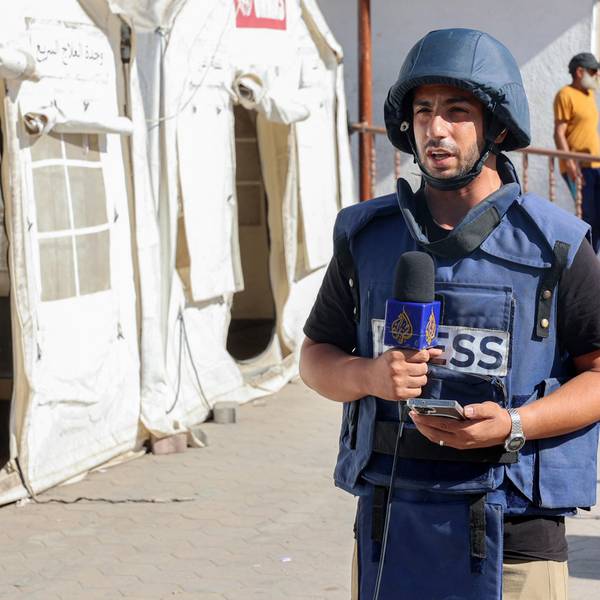
of the pressure has come from the government: Six Al Jazeera
journalists were detained for several hours earlier this week, and while
they were eventually released, their equipment remains with the police.
Two New York Times reporters were reportedly arrested - or "taken into protective custody", as the government termed it.
Spotters
stand outside many hotels, watching balconies with high-powered
binoculars. When they see balconies with camera equipment or
photographers, they use radios to call in the details.
Egyptian
police sources say that information from those spotters has been used to
conduct several raids on journalists' hotel rooms in recent days.
And the government has reportedly pressured several hotels not to extend the reservations of foreign journalists.
But
most of the intimidation and violence has come from unofficial sources:
Young men loiter outside the hotels where many reporters are staying,
shouting at (and sometimes attacking) anyone with equipment.
Hotel
lobbies are filled with journalists and camera crews wearing bandages,
and many have been restricted to watching the events in Tahrir Square
from their hotel balconies.
Egyptian state television has
actively tried to foment the unrest by reporting that "Israeli spies"
have infiltrated the city - which explains why many of the gangs who
attack reporters shout "yehudi!" ("Jew!").
The area around Tahrir
Square has become a virtual no-go zone for camera crews, which were
assaulted on Wednesday almost as soon as they entered the area
controlled by supporters of Egyptian president Hosni Mubarak.
Several
of them were mistaken for Al Jazeera crews, and were chased off by
young men wielding sticks and chanting, "Jazeera! Jazeera!".
CNN anchor Anderson Cooper said his crew was also assaulted on Tuesday night after being mistaken for an Al Jazeera crew.
A reporter for the Al Arabiya network was kidnapped for several hours during Wednesday's protest.
The
violence has come exclusively from the Mubarak supporters: There have
been no reports of pro-democracy demonstrators attacking or intimidating
the media.
Egyptian journalists, too, have been the victims of
angry mobs, all of them affiliated with the pro-Mubarak crowd. Sarah El
Sirgany, an editor with the Daily News Egypt, tweeted that her brother was assaulted while trying to protect a group of reporters attacked by an angry mob.
An
Al Jazeera reporter was held at knifepoint by a group of young men on
Thursday morning. One man's face was still bloodied from the previous
night's fighting.
Bloggers, too, have become targets: The popular Egyptian blogger Sandmonkey has reportedly been arrested (it's unclear by who).
Dear Common Dreams reader, It’s been nearly 30 years since I co-founded Common Dreams with my late wife, Lina Newhouser. We had the radical notion that journalism should serve the public good, not corporate profits. It was clear to us from the outset what it would take to build such a project. No paid advertisements. No corporate sponsors. No millionaire publisher telling us what to think or do. Many people said we wouldn't last a year, but we proved those doubters wrong. Together with a tremendous team of journalists and dedicated staff, we built an independent media outlet free from the constraints of profits and corporate control. Our mission has always been simple: To inform. To inspire. To ignite change for the common good. Building Common Dreams was not easy. Our survival was never guaranteed. When you take on the most powerful forces—Wall Street greed, fossil fuel industry destruction, Big Tech lobbyists, and uber-rich oligarchs who have spent billions upon billions rigging the economy and democracy in their favor—the only bulwark you have is supporters who believe in your work. But here’s the urgent message from me today. It's never been this bad out there. And it's never been this hard to keep us going. At the very moment Common Dreams is most needed, the threats we face are intensifying. We need your support now more than ever. We don't accept corporate advertising and never will. We don't have a paywall because we don't think people should be blocked from critical news based on their ability to pay. Everything we do is funded by the donations of readers like you. When everyone does the little they can afford, we are strong. But if that support retreats or dries up, so do we. Will you donate now to make sure Common Dreams not only survives but thrives? —Craig Brown, Co-founder |
Journalists in Egypt - domestic and foreign - are increasingly under
siege, with Egyptian authorities detaining reporters and gangs of young
men roaming the streets looking for anyone with camera equipment.
Some
of the pressure has come from the government: Six Al Jazeera
journalists were detained for several hours earlier this week, and while
they were eventually released, their equipment remains with the police.
Two New York Times reporters were reportedly arrested - or "taken into protective custody", as the government termed it.
Spotters
stand outside many hotels, watching balconies with high-powered
binoculars. When they see balconies with camera equipment or
photographers, they use radios to call in the details.
Egyptian
police sources say that information from those spotters has been used to
conduct several raids on journalists' hotel rooms in recent days.
And the government has reportedly pressured several hotels not to extend the reservations of foreign journalists.
But
most of the intimidation and violence has come from unofficial sources:
Young men loiter outside the hotels where many reporters are staying,
shouting at (and sometimes attacking) anyone with equipment.
Hotel
lobbies are filled with journalists and camera crews wearing bandages,
and many have been restricted to watching the events in Tahrir Square
from their hotel balconies.
Egyptian state television has
actively tried to foment the unrest by reporting that "Israeli spies"
have infiltrated the city - which explains why many of the gangs who
attack reporters shout "yehudi!" ("Jew!").
The area around Tahrir
Square has become a virtual no-go zone for camera crews, which were
assaulted on Wednesday almost as soon as they entered the area
controlled by supporters of Egyptian president Hosni Mubarak.
Several
of them were mistaken for Al Jazeera crews, and were chased off by
young men wielding sticks and chanting, "Jazeera! Jazeera!".
CNN anchor Anderson Cooper said his crew was also assaulted on Tuesday night after being mistaken for an Al Jazeera crew.
A reporter for the Al Arabiya network was kidnapped for several hours during Wednesday's protest.
The
violence has come exclusively from the Mubarak supporters: There have
been no reports of pro-democracy demonstrators attacking or intimidating
the media.
Egyptian journalists, too, have been the victims of
angry mobs, all of them affiliated with the pro-Mubarak crowd. Sarah El
Sirgany, an editor with the Daily News Egypt, tweeted that her brother was assaulted while trying to protect a group of reporters attacked by an angry mob.
An
Al Jazeera reporter was held at knifepoint by a group of young men on
Thursday morning. One man's face was still bloodied from the previous
night's fighting.
Bloggers, too, have become targets: The popular Egyptian blogger Sandmonkey has reportedly been arrested (it's unclear by who).
Journalists in Egypt - domestic and foreign - are increasingly under
siege, with Egyptian authorities detaining reporters and gangs of young
men roaming the streets looking for anyone with camera equipment.
Some
of the pressure has come from the government: Six Al Jazeera
journalists were detained for several hours earlier this week, and while
they were eventually released, their equipment remains with the police.
Two New York Times reporters were reportedly arrested - or "taken into protective custody", as the government termed it.
Spotters
stand outside many hotels, watching balconies with high-powered
binoculars. When they see balconies with camera equipment or
photographers, they use radios to call in the details.
Egyptian
police sources say that information from those spotters has been used to
conduct several raids on journalists' hotel rooms in recent days.
And the government has reportedly pressured several hotels not to extend the reservations of foreign journalists.
But
most of the intimidation and violence has come from unofficial sources:
Young men loiter outside the hotels where many reporters are staying,
shouting at (and sometimes attacking) anyone with equipment.
Hotel
lobbies are filled with journalists and camera crews wearing bandages,
and many have been restricted to watching the events in Tahrir Square
from their hotel balconies.
Egyptian state television has
actively tried to foment the unrest by reporting that "Israeli spies"
have infiltrated the city - which explains why many of the gangs who
attack reporters shout "yehudi!" ("Jew!").
The area around Tahrir
Square has become a virtual no-go zone for camera crews, which were
assaulted on Wednesday almost as soon as they entered the area
controlled by supporters of Egyptian president Hosni Mubarak.
Several
of them were mistaken for Al Jazeera crews, and were chased off by
young men wielding sticks and chanting, "Jazeera! Jazeera!".
CNN anchor Anderson Cooper said his crew was also assaulted on Tuesday night after being mistaken for an Al Jazeera crew.
A reporter for the Al Arabiya network was kidnapped for several hours during Wednesday's protest.
The
violence has come exclusively from the Mubarak supporters: There have
been no reports of pro-democracy demonstrators attacking or intimidating
the media.
Egyptian journalists, too, have been the victims of
angry mobs, all of them affiliated with the pro-Mubarak crowd. Sarah El
Sirgany, an editor with the Daily News Egypt, tweeted that her brother was assaulted while trying to protect a group of reporters attacked by an angry mob.
An
Al Jazeera reporter was held at knifepoint by a group of young men on
Thursday morning. One man's face was still bloodied from the previous
night's fighting.
Bloggers, too, have become targets: The popular Egyptian blogger Sandmonkey has reportedly been arrested (it's unclear by who).