5
#000000
#FFFFFF
To donate by check, phone, or other method, see our More Ways to Give page.
Daily news & progressive opinion—funded by the people, not the corporations—delivered straight to your inbox.
JARRATT, Virginia - A US grandmother has been put to death by lethal injection in Virgina, the first woman executed in the state for nearly a century, prompting outrage from anti-death penalty campaigners.
Teresa Lewis, 41, convicted of masterminding the murders of her husband and step-son, was pronounced dead at 9:13 pm Thursday (0113 GMT Friday) at Greensville prison, prison official Larry Traylor said.
Death penalty abolitionists had championed Lewis's case, insisting she had diminished mental faculties and that smarter accomplices had taken advantage of her.
"This execution means that the system is broken," Lewis's lawyer James Rocap said after the execution.
Jack Payden-Travers of the National Coalition to Abolish the Death Penalty described the execution as "legal homicide. Nothing more than a legal lynching."
Lewis, who had an IQ of about 70, "was calm, she seemed very resolute" as she walked into the death room, Taylor said. The press pool, however, said "she looked scared, nervous."
The US Supreme Court on Tuesday turned down Lewis's appeal for a stay of execution and Virginia Governor Bob McDonnell, as he had previously signaled, did not intervene in the case.
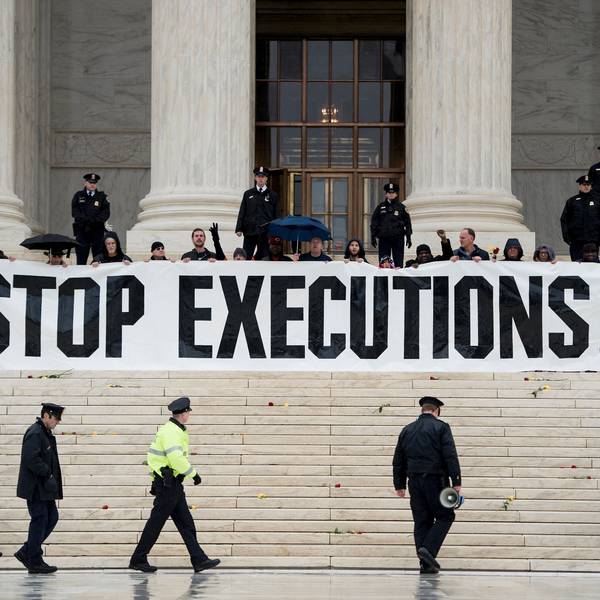
Outside the prison, a group of about 30 opponents of the death penalty rang a bell and prayed as Lewis went to her death.
"What kind of people are we to execute someone like her?" cried campaigner Virginia Rovnyak.
"She didn't pull the trigger, and she was mentally challenged," she insisted to AFP.
Lewis is the first female prisoner executed in the southern state since 1912, when a 17-year-old black woman name Virginia Christian was sent to the electric chair.
She is only the 12th woman executed in the United States since the death penalty was resumed in 1976.
Despite her low IQ, Lewis was ruled fit for trial in Virginia. She pleaded guilty to hiring two men in 2002 to murder her husband and stepson so she could pocket their life insurance policy.
Lewis admits she left open the door of the family trailer in rural Pittsylvania County so her two young accomplices could enter and shoot her husband and his 25-year-old son.
All three pleaded guilty. The shooters got life in prison, but Lewis was sentenced to death, accused of being the mastermind of the killings.
Lewis's supporters question why she was sentenced to death when the two men who actually carried out the murder were handed life without parole.
This "is as good an example as you can find of someone who should not be put to death," Rocap told the National Law Journal before the execution.
"Teresa Lewis is a poster child for why the death penalty process is broken."
The criminal justice system is "so badly broken, it can not be saved from my view," Rocap told AFP.
Asked if the Lewis case could help to change things, he said: "I hope so."
Lewis, who had an adult son and stepdaughter -- Kathy Clifton, met her spiritual advisor and attorneys earlier Thursday and had a final meal of fried chicken, green peas with butter, chocolate cake, apple pie and a Dr Pepper soda, Taylor said.
"I just want Kathy to know I love her. And I'm very sorry," were Lewis's final words, according to the Virginia Department of Corrections.
Payden-Travers told AFP he had driven Lewis's 20-year-old son, Billy Bean, to Jarrett to meet with his mother.
"He is here to have a contact visit with her, to touch her and be touched by her, for the first time since she was arrested," he said.
Lewis met her two accomplices, Rodney Fuller and Matthew Shallenberger, in a Walmart superstore. Soon she began an affair with the 22-year-old Shallenberger.
Her lawyers had argued that new evidence, including her low IQ, had appeared since her trial and should prevent her execution.
The key piece of evidence they wanted considered was a letter from Shallenberger, who killed himself in jail in 2006, in which he claimed full responsibility for the murder plot and suggests he pushed Lewis into it.
Lewis's case made global headlines this week when Iranian President Mahmoud Ahmadinejad contrasted the lack of opposition to her impending execution to the "storm" surrounding a woman sentenced to be stoned to death in Iran.
And the Council of Europe goodwill ambassador, Bianca Jagger, urged Governor McDonnell to halt the execution in an article on the online Huffington Post Thursday, saying the execution would be "a lasting shame on the American legal system."
Dear Common Dreams reader, It’s been nearly 30 years since I co-founded Common Dreams with my late wife, Lina Newhouser. We had the radical notion that journalism should serve the public good, not corporate profits. It was clear to us from the outset what it would take to build such a project. No paid advertisements. No corporate sponsors. No millionaire publisher telling us what to think or do. Many people said we wouldn't last a year, but we proved those doubters wrong. Together with a tremendous team of journalists and dedicated staff, we built an independent media outlet free from the constraints of profits and corporate control. Our mission has always been simple: To inform. To inspire. To ignite change for the common good. Building Common Dreams was not easy. Our survival was never guaranteed. When you take on the most powerful forces—Wall Street greed, fossil fuel industry destruction, Big Tech lobbyists, and uber-rich oligarchs who have spent billions upon billions rigging the economy and democracy in their favor—the only bulwark you have is supporters who believe in your work. But here’s the urgent message from me today. It's never been this bad out there. And it's never been this hard to keep us going. At the very moment Common Dreams is most needed, the threats we face are intensifying. We need your support now more than ever. We don't accept corporate advertising and never will. We don't have a paywall because we don't think people should be blocked from critical news based on their ability to pay. Everything we do is funded by the donations of readers like you. When everyone does the little they can afford, we are strong. But if that support retreats or dries up, so do we. Will you donate now to make sure Common Dreams not only survives but thrives? —Craig Brown, Co-founder |
JARRATT, Virginia - A US grandmother has been put to death by lethal injection in Virgina, the first woman executed in the state for nearly a century, prompting outrage from anti-death penalty campaigners.
Teresa Lewis, 41, convicted of masterminding the murders of her husband and step-son, was pronounced dead at 9:13 pm Thursday (0113 GMT Friday) at Greensville prison, prison official Larry Traylor said.
Death penalty abolitionists had championed Lewis's case, insisting she had diminished mental faculties and that smarter accomplices had taken advantage of her.
"This execution means that the system is broken," Lewis's lawyer James Rocap said after the execution.
Jack Payden-Travers of the National Coalition to Abolish the Death Penalty described the execution as "legal homicide. Nothing more than a legal lynching."
Lewis, who had an IQ of about 70, "was calm, she seemed very resolute" as she walked into the death room, Taylor said. The press pool, however, said "she looked scared, nervous."
The US Supreme Court on Tuesday turned down Lewis's appeal for a stay of execution and Virginia Governor Bob McDonnell, as he had previously signaled, did not intervene in the case.
Outside the prison, a group of about 30 opponents of the death penalty rang a bell and prayed as Lewis went to her death.
"What kind of people are we to execute someone like her?" cried campaigner Virginia Rovnyak.
"She didn't pull the trigger, and she was mentally challenged," she insisted to AFP.
Lewis is the first female prisoner executed in the southern state since 1912, when a 17-year-old black woman name Virginia Christian was sent to the electric chair.
She is only the 12th woman executed in the United States since the death penalty was resumed in 1976.
Despite her low IQ, Lewis was ruled fit for trial in Virginia. She pleaded guilty to hiring two men in 2002 to murder her husband and stepson so she could pocket their life insurance policy.
Lewis admits she left open the door of the family trailer in rural Pittsylvania County so her two young accomplices could enter and shoot her husband and his 25-year-old son.
All three pleaded guilty. The shooters got life in prison, but Lewis was sentenced to death, accused of being the mastermind of the killings.
Lewis's supporters question why she was sentenced to death when the two men who actually carried out the murder were handed life without parole.
This "is as good an example as you can find of someone who should not be put to death," Rocap told the National Law Journal before the execution.
"Teresa Lewis is a poster child for why the death penalty process is broken."
The criminal justice system is "so badly broken, it can not be saved from my view," Rocap told AFP.
Asked if the Lewis case could help to change things, he said: "I hope so."
Lewis, who had an adult son and stepdaughter -- Kathy Clifton, met her spiritual advisor and attorneys earlier Thursday and had a final meal of fried chicken, green peas with butter, chocolate cake, apple pie and a Dr Pepper soda, Taylor said.
"I just want Kathy to know I love her. And I'm very sorry," were Lewis's final words, according to the Virginia Department of Corrections.
Payden-Travers told AFP he had driven Lewis's 20-year-old son, Billy Bean, to Jarrett to meet with his mother.
"He is here to have a contact visit with her, to touch her and be touched by her, for the first time since she was arrested," he said.
Lewis met her two accomplices, Rodney Fuller and Matthew Shallenberger, in a Walmart superstore. Soon she began an affair with the 22-year-old Shallenberger.
Her lawyers had argued that new evidence, including her low IQ, had appeared since her trial and should prevent her execution.
The key piece of evidence they wanted considered was a letter from Shallenberger, who killed himself in jail in 2006, in which he claimed full responsibility for the murder plot and suggests he pushed Lewis into it.
Lewis's case made global headlines this week when Iranian President Mahmoud Ahmadinejad contrasted the lack of opposition to her impending execution to the "storm" surrounding a woman sentenced to be stoned to death in Iran.
And the Council of Europe goodwill ambassador, Bianca Jagger, urged Governor McDonnell to halt the execution in an article on the online Huffington Post Thursday, saying the execution would be "a lasting shame on the American legal system."
JARRATT, Virginia - A US grandmother has been put to death by lethal injection in Virgina, the first woman executed in the state for nearly a century, prompting outrage from anti-death penalty campaigners.
Teresa Lewis, 41, convicted of masterminding the murders of her husband and step-son, was pronounced dead at 9:13 pm Thursday (0113 GMT Friday) at Greensville prison, prison official Larry Traylor said.
Death penalty abolitionists had championed Lewis's case, insisting she had diminished mental faculties and that smarter accomplices had taken advantage of her.
"This execution means that the system is broken," Lewis's lawyer James Rocap said after the execution.
Jack Payden-Travers of the National Coalition to Abolish the Death Penalty described the execution as "legal homicide. Nothing more than a legal lynching."
Lewis, who had an IQ of about 70, "was calm, she seemed very resolute" as she walked into the death room, Taylor said. The press pool, however, said "she looked scared, nervous."
The US Supreme Court on Tuesday turned down Lewis's appeal for a stay of execution and Virginia Governor Bob McDonnell, as he had previously signaled, did not intervene in the case.
Outside the prison, a group of about 30 opponents of the death penalty rang a bell and prayed as Lewis went to her death.
"What kind of people are we to execute someone like her?" cried campaigner Virginia Rovnyak.
"She didn't pull the trigger, and she was mentally challenged," she insisted to AFP.
Lewis is the first female prisoner executed in the southern state since 1912, when a 17-year-old black woman name Virginia Christian was sent to the electric chair.
She is only the 12th woman executed in the United States since the death penalty was resumed in 1976.
Despite her low IQ, Lewis was ruled fit for trial in Virginia. She pleaded guilty to hiring two men in 2002 to murder her husband and stepson so she could pocket their life insurance policy.
Lewis admits she left open the door of the family trailer in rural Pittsylvania County so her two young accomplices could enter and shoot her husband and his 25-year-old son.
All three pleaded guilty. The shooters got life in prison, but Lewis was sentenced to death, accused of being the mastermind of the killings.
Lewis's supporters question why she was sentenced to death when the two men who actually carried out the murder were handed life without parole.
This "is as good an example as you can find of someone who should not be put to death," Rocap told the National Law Journal before the execution.
"Teresa Lewis is a poster child for why the death penalty process is broken."
The criminal justice system is "so badly broken, it can not be saved from my view," Rocap told AFP.
Asked if the Lewis case could help to change things, he said: "I hope so."
Lewis, who had an adult son and stepdaughter -- Kathy Clifton, met her spiritual advisor and attorneys earlier Thursday and had a final meal of fried chicken, green peas with butter, chocolate cake, apple pie and a Dr Pepper soda, Taylor said.
"I just want Kathy to know I love her. And I'm very sorry," were Lewis's final words, according to the Virginia Department of Corrections.
Payden-Travers told AFP he had driven Lewis's 20-year-old son, Billy Bean, to Jarrett to meet with his mother.
"He is here to have a contact visit with her, to touch her and be touched by her, for the first time since she was arrested," he said.
Lewis met her two accomplices, Rodney Fuller and Matthew Shallenberger, in a Walmart superstore. Soon she began an affair with the 22-year-old Shallenberger.
Her lawyers had argued that new evidence, including her low IQ, had appeared since her trial and should prevent her execution.
The key piece of evidence they wanted considered was a letter from Shallenberger, who killed himself in jail in 2006, in which he claimed full responsibility for the murder plot and suggests he pushed Lewis into it.
Lewis's case made global headlines this week when Iranian President Mahmoud Ahmadinejad contrasted the lack of opposition to her impending execution to the "storm" surrounding a woman sentenced to be stoned to death in Iran.
And the Council of Europe goodwill ambassador, Bianca Jagger, urged Governor McDonnell to halt the execution in an article on the online Huffington Post Thursday, saying the execution would be "a lasting shame on the American legal system."