SUBSCRIBE TO OUR FREE NEWSLETTER
Daily news & progressive opinion—funded by the people, not the corporations—delivered straight to your inbox.
5
#000000
#FFFFFF
To donate by check, phone, or other method, see our More Ways to Give page.
Daily news & progressive opinion—funded by the people, not the corporations—delivered straight to your inbox.
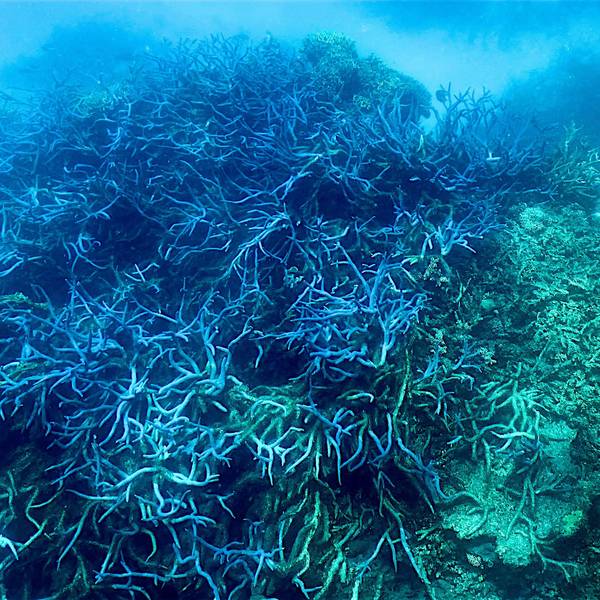
A new global deal on climate change will come too late to save most
of the world's coral reefs, according to a US study that suggests major
ecological damage to the oceans is now inevitable.
Emissions of
carbon dioxide are making seawater so acidic that reefs including the
Great Barrier Reef off Australia could begin to break up within a few
decades, research by the Carnegie Institution at Stanford University in
California suggests. Even ambitious targets to stabilise greenhouse gas
levels in the atmosphere, as championed by Britain and Europe to stave
off dangerous climate change, still place more than 90% of coral reefs
in jeopardy.
Oceanographers Long Cao and Ken Caldeira looked at
how carbon dioxide dissolves in the sea as human emissions increase.
About a third of carbon pollution is soaked up in this way, where it
reacts with seawater to form carbonic acid. Experts say human activity
over the last two centuries has produced enough acid to lower the
average pH of global ocean surface waters by about 0.1 units.
Such
acidification spells problems for coral reefs, which rely on calcium
minerals called aragonite to build and maintain their exoskeletons.
"We
can't say for sure that [the reefs] will disappear but ... the
likelihood they will be able to persist is pretty small," said Caldeira.
The
new study was prompted by questions by a US congressional committee on
how possible carbon stabilisation targets would affect coral loss.
Carbon
dioxide in the atmosphere has risen from 280 parts per million (ppm)
before the industrial revolution to more than 380ppm now. Campaigners
and politicians in Europe and the UK say a new global climate deal,
which is expected to be agreed next year, must aim to limit CO2 to
450ppm, though scientists say that is unlikely and the world is heading
for 550ppm or even 650ppm.
The research suggests that stabilising
world carbon levels at 450ppm would still dump so much carbon dioxide
in the oceans that only 8% of coral reefs would be surrounded by water
with enough aragonite to maintain their structure. Some 7% of the ocean
below 60 degrees south will see a shortage of aragonite, while parts of
the high latitude ocean could see a pH drop of 0.2 units.
At
550ppm CO2 in the atmosphere, no coral reef would have access to enough
of the mineral. Even stabilising CO2 at current levels would still
leave some 60% of coral bathed in seawater with low aragonite levels.
The
increased amounts of carbon dioxide going into the ocean will also
affect other marine life, such as shellfish, that need the calcium
mineral to build carbonate shells.
Writing in the journal Geophysical Research Letters,
the scientists say the risk posed by carbon pollution to coral and
marine life could justify a carbon stabilisation goal "lower than what
might be chosen based on climate considerations alone".
The
UK's Royal Society is preparing to issue a warning to policymakers on
the issue, together with dozens of other international science
academies.
Caldeira said the affected reefs would not disappear
straight away, but that the change in water chemistry would leave them
vulnerable to attack, bleaching or disease.
He said: "We're
losing the Arctic ice, it looks like we're going to lose the coral
reefs and we could lose much of the rainforest. I find it disconcerting
that these ecosystems that have been around on Earth for a long, long
time are no longer able to survive."
Dear Common Dreams reader, It’s been nearly 30 years since I co-founded Common Dreams with my late wife, Lina Newhouser. We had the radical notion that journalism should serve the public good, not corporate profits. It was clear to us from the outset what it would take to build such a project. No paid advertisements. No corporate sponsors. No millionaire publisher telling us what to think or do. Many people said we wouldn't last a year, but we proved those doubters wrong. Together with a tremendous team of journalists and dedicated staff, we built an independent media outlet free from the constraints of profits and corporate control. Our mission has always been simple: To inform. To inspire. To ignite change for the common good. Building Common Dreams was not easy. Our survival was never guaranteed. When you take on the most powerful forces—Wall Street greed, fossil fuel industry destruction, Big Tech lobbyists, and uber-rich oligarchs who have spent billions upon billions rigging the economy and democracy in their favor—the only bulwark you have is supporters who believe in your work. But here’s the urgent message from me today. It's never been this bad out there. And it's never been this hard to keep us going. At the very moment Common Dreams is most needed, the threats we face are intensifying. We need your support now more than ever. We don't accept corporate advertising and never will. We don't have a paywall because we don't think people should be blocked from critical news based on their ability to pay. Everything we do is funded by the donations of readers like you. When everyone does the little they can afford, we are strong. But if that support retreats or dries up, so do we. Will you donate now to make sure Common Dreams not only survives but thrives? —Craig Brown, Co-founder |
A new global deal on climate change will come too late to save most
of the world's coral reefs, according to a US study that suggests major
ecological damage to the oceans is now inevitable.
Emissions of
carbon dioxide are making seawater so acidic that reefs including the
Great Barrier Reef off Australia could begin to break up within a few
decades, research by the Carnegie Institution at Stanford University in
California suggests. Even ambitious targets to stabilise greenhouse gas
levels in the atmosphere, as championed by Britain and Europe to stave
off dangerous climate change, still place more than 90% of coral reefs
in jeopardy.
Oceanographers Long Cao and Ken Caldeira looked at
how carbon dioxide dissolves in the sea as human emissions increase.
About a third of carbon pollution is soaked up in this way, where it
reacts with seawater to form carbonic acid. Experts say human activity
over the last two centuries has produced enough acid to lower the
average pH of global ocean surface waters by about 0.1 units.
Such
acidification spells problems for coral reefs, which rely on calcium
minerals called aragonite to build and maintain their exoskeletons.
"We
can't say for sure that [the reefs] will disappear but ... the
likelihood they will be able to persist is pretty small," said Caldeira.
The
new study was prompted by questions by a US congressional committee on
how possible carbon stabilisation targets would affect coral loss.
Carbon
dioxide in the atmosphere has risen from 280 parts per million (ppm)
before the industrial revolution to more than 380ppm now. Campaigners
and politicians in Europe and the UK say a new global climate deal,
which is expected to be agreed next year, must aim to limit CO2 to
450ppm, though scientists say that is unlikely and the world is heading
for 550ppm or even 650ppm.
The research suggests that stabilising
world carbon levels at 450ppm would still dump so much carbon dioxide
in the oceans that only 8% of coral reefs would be surrounded by water
with enough aragonite to maintain their structure. Some 7% of the ocean
below 60 degrees south will see a shortage of aragonite, while parts of
the high latitude ocean could see a pH drop of 0.2 units.
At
550ppm CO2 in the atmosphere, no coral reef would have access to enough
of the mineral. Even stabilising CO2 at current levels would still
leave some 60% of coral bathed in seawater with low aragonite levels.
The
increased amounts of carbon dioxide going into the ocean will also
affect other marine life, such as shellfish, that need the calcium
mineral to build carbonate shells.
Writing in the journal Geophysical Research Letters,
the scientists say the risk posed by carbon pollution to coral and
marine life could justify a carbon stabilisation goal "lower than what
might be chosen based on climate considerations alone".
The
UK's Royal Society is preparing to issue a warning to policymakers on
the issue, together with dozens of other international science
academies.
Caldeira said the affected reefs would not disappear
straight away, but that the change in water chemistry would leave them
vulnerable to attack, bleaching or disease.
He said: "We're
losing the Arctic ice, it looks like we're going to lose the coral
reefs and we could lose much of the rainforest. I find it disconcerting
that these ecosystems that have been around on Earth for a long, long
time are no longer able to survive."
A new global deal on climate change will come too late to save most
of the world's coral reefs, according to a US study that suggests major
ecological damage to the oceans is now inevitable.
Emissions of
carbon dioxide are making seawater so acidic that reefs including the
Great Barrier Reef off Australia could begin to break up within a few
decades, research by the Carnegie Institution at Stanford University in
California suggests. Even ambitious targets to stabilise greenhouse gas
levels in the atmosphere, as championed by Britain and Europe to stave
off dangerous climate change, still place more than 90% of coral reefs
in jeopardy.
Oceanographers Long Cao and Ken Caldeira looked at
how carbon dioxide dissolves in the sea as human emissions increase.
About a third of carbon pollution is soaked up in this way, where it
reacts with seawater to form carbonic acid. Experts say human activity
over the last two centuries has produced enough acid to lower the
average pH of global ocean surface waters by about 0.1 units.
Such
acidification spells problems for coral reefs, which rely on calcium
minerals called aragonite to build and maintain their exoskeletons.
"We
can't say for sure that [the reefs] will disappear but ... the
likelihood they will be able to persist is pretty small," said Caldeira.
The
new study was prompted by questions by a US congressional committee on
how possible carbon stabilisation targets would affect coral loss.
Carbon
dioxide in the atmosphere has risen from 280 parts per million (ppm)
before the industrial revolution to more than 380ppm now. Campaigners
and politicians in Europe and the UK say a new global climate deal,
which is expected to be agreed next year, must aim to limit CO2 to
450ppm, though scientists say that is unlikely and the world is heading
for 550ppm or even 650ppm.
The research suggests that stabilising
world carbon levels at 450ppm would still dump so much carbon dioxide
in the oceans that only 8% of coral reefs would be surrounded by water
with enough aragonite to maintain their structure. Some 7% of the ocean
below 60 degrees south will see a shortage of aragonite, while parts of
the high latitude ocean could see a pH drop of 0.2 units.
At
550ppm CO2 in the atmosphere, no coral reef would have access to enough
of the mineral. Even stabilising CO2 at current levels would still
leave some 60% of coral bathed in seawater with low aragonite levels.
The
increased amounts of carbon dioxide going into the ocean will also
affect other marine life, such as shellfish, that need the calcium
mineral to build carbonate shells.
Writing in the journal Geophysical Research Letters,
the scientists say the risk posed by carbon pollution to coral and
marine life could justify a carbon stabilisation goal "lower than what
might be chosen based on climate considerations alone".
The
UK's Royal Society is preparing to issue a warning to policymakers on
the issue, together with dozens of other international science
academies.
Caldeira said the affected reefs would not disappear
straight away, but that the change in water chemistry would leave them
vulnerable to attack, bleaching or disease.
He said: "We're
losing the Arctic ice, it looks like we're going to lose the coral
reefs and we could lose much of the rainforest. I find it disconcerting
that these ecosystems that have been around on Earth for a long, long
time are no longer able to survive."