

SUBSCRIBE TO OUR FREE NEWSLETTER
Daily news & progressive opinion—funded by the people, not the corporations—delivered straight to your inbox.
5
#000000
#FFFFFF
To donate by check, phone, or other method, see our More Ways to Give page.
Last October, in Foshan, China, a 2-year-old girl was run over by a van. The driver did not stop. Over the next seven minutes, more than a dozen people walked or bicycled past the injured child. A second truck ran over her. Eventually, a woman pulled her to the side, and her mother arrived. The child died in a hospital. The entire scene was captured on video and caused an uproar when it was shown by a television station and posted online. A similar event occurred in London in 2004, as have others, far from the lens of a video camera.
A news search for the words "hero saves" will routinely turn up stories of bystanders braving oncoming trains, swift currents and raging fires to save strangers from harm. Acts of extreme kindness, responsibility and compassion are, like their opposites, nearly universal.
Why are some people prepared to risk their lives to help a stranger when others won't even stop to dial an emergency number?
Scientists have been exploring questions like this for decades. In the 1960s and early '70s, famous experiments by Stanley Milgram and Philip Zimbardo suggested that most of us would, under specific circumstances, voluntarily do great harm to innocent people. During the same period, John Darley and C. Daniel Batson showed that even some seminary students on their way to give a lecture about the parable of the Good Samaritan would, if told that they were running late, walk past a stranger lying moaning beside the path. More recent research has told us a lot about what happens in the brain when people make moral decisions. But are we getting any closer to understanding what drives our moral behavior?
Leif Parsons
Here's what much of the discussion of all these experiments missed: Some people did the right thing. A recent experiment (about which we have some ethical reservations) at the University of Chicago seems to shed new light on why.
Researchers there took two rats who shared a cage and trapped one of them in a tube that could be opened only from the outside. The free rat usually tried to open the door, eventually succeeding. Even when the free rats could eat up all of a quantity of chocolate before freeing the trapped rat, they mostly preferred to free their cage-mate. The experimenters interpret their findings as demonstrating empathy in rats. But if that is the case, they have also demonstrated that individual rats vary, for only 23 of 30 rats freed their trapped companions.
The causes of the difference in their behavior must lie in the rats themselves. It seems plausible that humans, like rats, are spread along a continuum of readiness to help others. There has been considerable research on abnormal people, like psychopaths, but we need to know more about relatively stable differences (perhaps rooted in our genes) in the great majority of people as well.
Undoubtedly, situational factors can make a huge difference, and perhaps moral beliefs do as well, but if humans are just different in their predispositions to act morally, we also need to know more about these differences. Only then will we gain a proper understanding of our moral behavior, including why it varies so much from person to person and whether there is anything we can do about it.
If continuing brain research does in fact show biochemical differences between the brains of those who help others and the brains of those who do not, could this lead to a "morality pill" -- a drug that makes us more likely to help? Given the many other studies linking biochemical conditions to mood and behavior, and the proliferation of drugs to modify them that have followed, the idea is not far-fetched. If so, would people choose to take it? Could criminals be given the option, as an alternative to prison, of a drug-releasing implant that would make them less likely to harm others? Might governments begin screening people to discover those most likely to commit crimes? Those who are at much greater risk of committing a crime might be offered the morality pill; if they refused, they might be required to wear a tracking device that would show where they had been at any given time, so that they would know that if they did commit a crime, they would be detected.
Fifty years ago, Anthony Burgess wrote "A Clockwork Orange," a futuristic novel about a vicious gang leader who undergoes a procedure that makes him incapable of violence. Stanley Kubrick's 1971 movie version sparked a discussion in which many argued that we could never be justified in depriving someone of his free will, no matter how gruesome the violence that would thereby be prevented. No doubt any proposal to develop a morality pill would encounter the same objection.
But if our brain's chemistry does affect our moral behavior, the question of whether that balance is set in a natural way or by medical intervention will make no difference in how freely we act. If there are already biochemical differences between us that can be used to predict how ethically we will act, then either such differences are compatible with free will, or they are evidence that at least as far as some of our ethical actions are concerned, none of us have ever had free will anyway. In any case, whether or not we have free will, we may soon face new choices about the ways in which we are willing to influence behavior for the better.
Last October, in Foshan, China, a 2-year-old girl was run over by a van. The driver did not stop. Over the next seven minutes, more than a dozen people walked or bicycled past the injured child. A second truck ran over her. Eventually, a woman pulled her to the side, and her mother arrived. The child died in a hospital. The entire scene was captured on video and caused an uproar when it was shown by a television station and posted online. A similar event occurred in London in 2004, as have others, far from the lens of a video camera.
A news search for the words "hero saves" will routinely turn up stories of bystanders braving oncoming trains, swift currents and raging fires to save strangers from harm. Acts of extreme kindness, responsibility and compassion are, like their opposites, nearly universal.
Why are some people prepared to risk their lives to help a stranger when others won't even stop to dial an emergency number?
Scientists have been exploring questions like this for decades. In the 1960s and early '70s, famous experiments by Stanley Milgram and Philip Zimbardo suggested that most of us would, under specific circumstances, voluntarily do great harm to innocent people. During the same period, John Darley and C. Daniel Batson showed that even some seminary students on their way to give a lecture about the parable of the Good Samaritan would, if told that they were running late, walk past a stranger lying moaning beside the path. More recent research has told us a lot about what happens in the brain when people make moral decisions. But are we getting any closer to understanding what drives our moral behavior?
Leif Parsons
Here's what much of the discussion of all these experiments missed: Some people did the right thing. A recent experiment (about which we have some ethical reservations) at the University of Chicago seems to shed new light on why.
Researchers there took two rats who shared a cage and trapped one of them in a tube that could be opened only from the outside. The free rat usually tried to open the door, eventually succeeding. Even when the free rats could eat up all of a quantity of chocolate before freeing the trapped rat, they mostly preferred to free their cage-mate. The experimenters interpret their findings as demonstrating empathy in rats. But if that is the case, they have also demonstrated that individual rats vary, for only 23 of 30 rats freed their trapped companions.
The causes of the difference in their behavior must lie in the rats themselves. It seems plausible that humans, like rats, are spread along a continuum of readiness to help others. There has been considerable research on abnormal people, like psychopaths, but we need to know more about relatively stable differences (perhaps rooted in our genes) in the great majority of people as well.
Undoubtedly, situational factors can make a huge difference, and perhaps moral beliefs do as well, but if humans are just different in their predispositions to act morally, we also need to know more about these differences. Only then will we gain a proper understanding of our moral behavior, including why it varies so much from person to person and whether there is anything we can do about it.
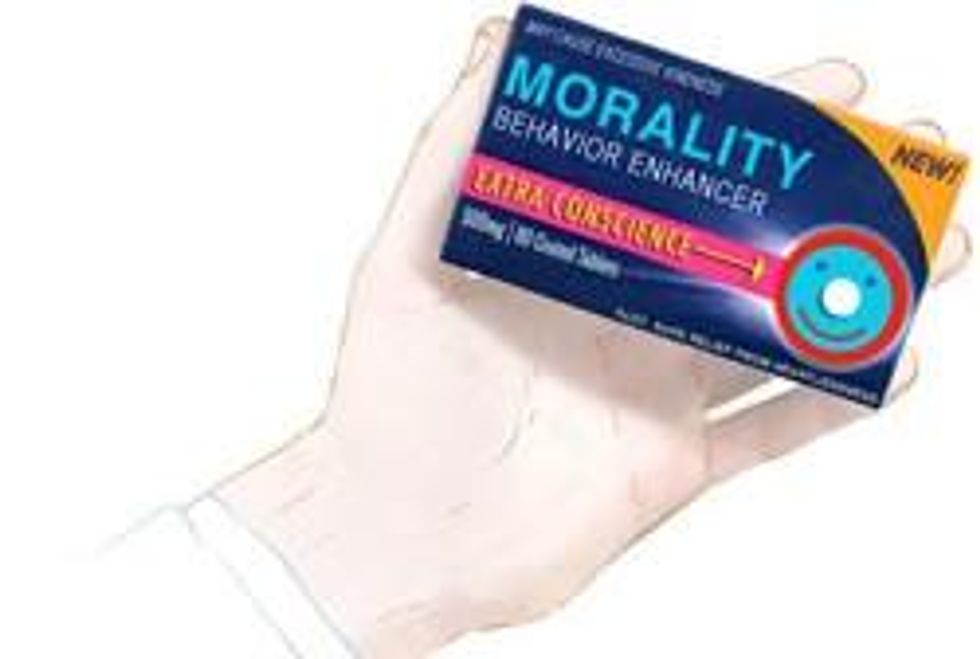
If continuing brain research does in fact show biochemical differences between the brains of those who help others and the brains of those who do not, could this lead to a "morality pill" -- a drug that makes us more likely to help? Given the many other studies linking biochemical conditions to mood and behavior, and the proliferation of drugs to modify them that have followed, the idea is not far-fetched. If so, would people choose to take it? Could criminals be given the option, as an alternative to prison, of a drug-releasing implant that would make them less likely to harm others? Might governments begin screening people to discover those most likely to commit crimes? Those who are at much greater risk of committing a crime might be offered the morality pill; if they refused, they might be required to wear a tracking device that would show where they had been at any given time, so that they would know that if they did commit a crime, they would be detected.
Fifty years ago, Anthony Burgess wrote "A Clockwork Orange," a futuristic novel about a vicious gang leader who undergoes a procedure that makes him incapable of violence. Stanley Kubrick's 1971 movie version sparked a discussion in which many argued that we could never be justified in depriving someone of his free will, no matter how gruesome the violence that would thereby be prevented. No doubt any proposal to develop a morality pill would encounter the same objection.
But if our brain's chemistry does affect our moral behavior, the question of whether that balance is set in a natural way or by medical intervention will make no difference in how freely we act. If there are already biochemical differences between us that can be used to predict how ethically we will act, then either such differences are compatible with free will, or they are evidence that at least as far as some of our ethical actions are concerned, none of us have ever had free will anyway. In any case, whether or not we have free will, we may soon face new choices about the ways in which we are willing to influence behavior for the better.
Last October, in Foshan, China, a 2-year-old girl was run over by a van. The driver did not stop. Over the next seven minutes, more than a dozen people walked or bicycled past the injured child. A second truck ran over her. Eventually, a woman pulled her to the side, and her mother arrived. The child died in a hospital. The entire scene was captured on video and caused an uproar when it was shown by a television station and posted online. A similar event occurred in London in 2004, as have others, far from the lens of a video camera.
A news search for the words "hero saves" will routinely turn up stories of bystanders braving oncoming trains, swift currents and raging fires to save strangers from harm. Acts of extreme kindness, responsibility and compassion are, like their opposites, nearly universal.
Why are some people prepared to risk their lives to help a stranger when others won't even stop to dial an emergency number?
Scientists have been exploring questions like this for decades. In the 1960s and early '70s, famous experiments by Stanley Milgram and Philip Zimbardo suggested that most of us would, under specific circumstances, voluntarily do great harm to innocent people. During the same period, John Darley and C. Daniel Batson showed that even some seminary students on their way to give a lecture about the parable of the Good Samaritan would, if told that they were running late, walk past a stranger lying moaning beside the path. More recent research has told us a lot about what happens in the brain when people make moral decisions. But are we getting any closer to understanding what drives our moral behavior?
Leif Parsons
Here's what much of the discussion of all these experiments missed: Some people did the right thing. A recent experiment (about which we have some ethical reservations) at the University of Chicago seems to shed new light on why.
Researchers there took two rats who shared a cage and trapped one of them in a tube that could be opened only from the outside. The free rat usually tried to open the door, eventually succeeding. Even when the free rats could eat up all of a quantity of chocolate before freeing the trapped rat, they mostly preferred to free their cage-mate. The experimenters interpret their findings as demonstrating empathy in rats. But if that is the case, they have also demonstrated that individual rats vary, for only 23 of 30 rats freed their trapped companions.
The causes of the difference in their behavior must lie in the rats themselves. It seems plausible that humans, like rats, are spread along a continuum of readiness to help others. There has been considerable research on abnormal people, like psychopaths, but we need to know more about relatively stable differences (perhaps rooted in our genes) in the great majority of people as well.
Undoubtedly, situational factors can make a huge difference, and perhaps moral beliefs do as well, but if humans are just different in their predispositions to act morally, we also need to know more about these differences. Only then will we gain a proper understanding of our moral behavior, including why it varies so much from person to person and whether there is anything we can do about it.
If continuing brain research does in fact show biochemical differences between the brains of those who help others and the brains of those who do not, could this lead to a "morality pill" -- a drug that makes us more likely to help? Given the many other studies linking biochemical conditions to mood and behavior, and the proliferation of drugs to modify them that have followed, the idea is not far-fetched. If so, would people choose to take it? Could criminals be given the option, as an alternative to prison, of a drug-releasing implant that would make them less likely to harm others? Might governments begin screening people to discover those most likely to commit crimes? Those who are at much greater risk of committing a crime might be offered the morality pill; if they refused, they might be required to wear a tracking device that would show where they had been at any given time, so that they would know that if they did commit a crime, they would be detected.
Fifty years ago, Anthony Burgess wrote "A Clockwork Orange," a futuristic novel about a vicious gang leader who undergoes a procedure that makes him incapable of violence. Stanley Kubrick's 1971 movie version sparked a discussion in which many argued that we could never be justified in depriving someone of his free will, no matter how gruesome the violence that would thereby be prevented. No doubt any proposal to develop a morality pill would encounter the same objection.
But if our brain's chemistry does affect our moral behavior, the question of whether that balance is set in a natural way or by medical intervention will make no difference in how freely we act. If there are already biochemical differences between us that can be used to predict how ethically we will act, then either such differences are compatible with free will, or they are evidence that at least as far as some of our ethical actions are concerned, none of us have ever had free will anyway. In any case, whether or not we have free will, we may soon face new choices about the ways in which we are willing to influence behavior for the better.

