

SUBSCRIBE TO OUR FREE NEWSLETTER
Daily news & progressive opinion—funded by the people, not the corporations—delivered straight to your inbox.
5
#000000
#FFFFFF
To donate by check, phone, or other method, see our More Ways to Give page.
Daily news & progressive opinion—funded by the people, not the corporations—delivered straight to your inbox.
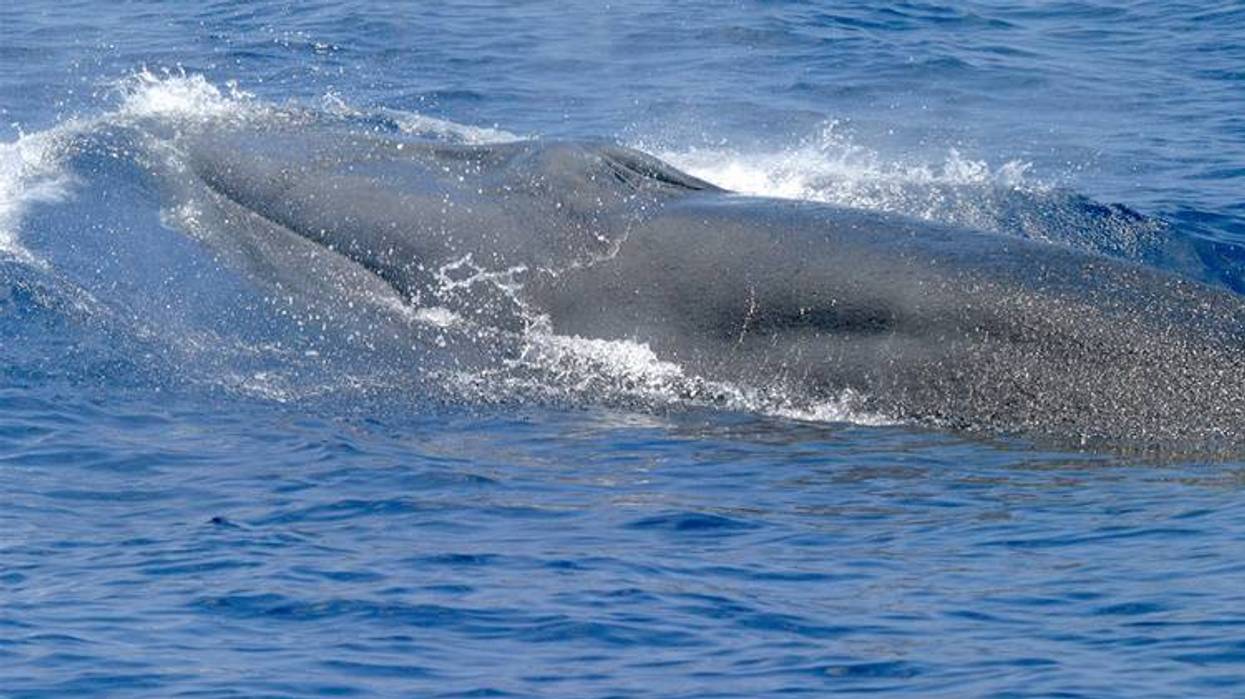
In the war for oil, they are obviously not interested in hearing about collateral damage, including the approximately 50 Rice's whales left in the Gulf of Mexico.
Nicknamed the “God Squad” for its power to rule whether economic or national security interests outweigh the possibility of wiping out an animal species, the Endangered Species Committee has granted two exemptions to the Endangered Species Act since it was created by Congress in 1978. It is composed of the secretaries of the Interior, Agriculture, and the Army, and the heads of the Environmental Protection Agency, the National Oceanic and Atmospheric Administration, and the Council of Economic Advisers.
The last time the committee granted an exemption was in 1992 when it allowed logging in sensitive areas for the northern spotted owl. Public outcry and litigation ultimately led to that requested exemption being withdrawn.
Last month, the committee was convened at the request of Defense Secretary Pete Hegseth. As gasoline prices in the US have soared past $4 a gallon and diesel fuel past $5 during President Donald Trump’s reckless war on Iran, Hegseth told the committee it was “a critical matter of national security” that fossil fuel extraction in the Gulf of Mexico be prioritized over any species at risk of extinction.
Never mind that one of those species is the Rice’s whale, which NOAA itself acknowledges is one of the rarest in the world. The whale exists only in the Gulf, with perhaps 50 or so left.That obviously means nothing to Trump and Hegseth, who are both so maddened that they have become modern Ahabs chasing a Moby Dick. In his right-wing Christian crusade, Hegseth openly prays for every bullet and missile to “find its mark” in war. In the war for oil, he obviously is not interested in hearing about collateral damage, saying: “Disruptions to Gulf oil production doesn’t hurt just us, it benefits our adversaries. We cannot allow our own rules to weaken our standing and strengthen those who wish to harm us. When development in the Gulf is chilled, we are prevented from producing the energy we need as a country and as a department.”
Fifty whales by themselves don’t stand a chance against the rhetoric of keeping gas under $5 a gallon.
Rice’s whale is hardly the only creature that could be decimated with ramped-up oil production. According to NOAA, the gulf is also a habitat for the endangered sperm whale; the endangered hawksbill, leatherback, and Kemp’s ridley sea turtles; and the endangered pillar coral. There is also a host of other animals listed as “threatened,” such as loggerhead and green sea turtles, Nassau grouper, the giant manta ray, and queen conch.The committee, chaired by Interior Secretary Doug Burgum, unanimously granted the exemption, based on Hegseth’s “findings.” Typical of Trump’s government, there is no description of those so-called findings. Burgum did not explain why this country’s pursuit of petroleum justifies further endangering endangered species. All Burgum said in a statement was that oil production in the Gulf “must not be disrupted or held hostage by ongoing litigation.”
The truth is that there is no evidence that the Endangered Species Act has “chilled” oil production in the Gulf of Mexico, let alone held it hostage. During the same week that Burgum’s committee granted that exemption, the Interior Department that Burgum leads announced that 2025 was the best year ever for the production of offshore oil. It is likely we will see a record-breaking output from the Gulf this year.
In fact, any argument that we need to risk eradicating more wildlife for oil was blown away by Trump himself. During last week’s address to the nation regarding his attack on Iran, he told Americans not to fret because “under my leadership, we are the No. 1 producer of oil and gas on the planet.” He said, “We don’t need” oil from the Middle East. He boasted, “We’re now totally independent of the Middle East.”
Even under current protections, wildlife is constantly being sacrificed for oil and gas. The biggest recent single hit to the Rice’s whale’s population was likely the 2010 Deepwater Horizon oil spill. NOAA estimated the population of Rice’s whales may have plummeted 22%, as nearly half its habitat in the eastern Gulf was exposed to oil. The spill, according to NOAA, also killed up to 200,000 adult, juvenile, and hatchling turtles, and the deaths of dolphins, on top of the whales, became the largest cetacean mortality event ever recorded in the Gulf.
Even though Rice’s whales dive during the day as deep as 400 feet to feed, studies cited by NOAA have found that they spend the night within 50 feet of the surface where the hard-to-see creatures can be struck by vessels. NOAA’s website reports that the top threats to the remaining population are vessel strikes and the noise from vessels and energy pollution and says, “For Rice’s whales to recover, we must address existing and emerging threats to the species and their habitat.”
Yet even NOAA yielded to Hegseth’s demand for an exemption.
NOAA Administrator Neil Jacobs promised that despite the exemption, oil and gas activities would still include “various protective measures for the Rice’s Whale.” Given Trump’s crippling of the Environmental Protection Agency and rollbacks of regulations under the Clean Water Act and the Clean Air Act, Jacobs’ statement is about as comforting as the statement from the American Petroleum Institute praising the exemption, claiming with a straight face that the oil and gas industry “has a long track record of protecting wildlife while developing offshore energy responsibly.”
There is reason to be optimistic that, like the ultimate withdrawal of the 1992 spotted owl exemption, this one for the Gulf of Mexico will eventually be blocked by litigation and public protest. The day before Burgum convened the Endangered Species Committee, a federal judge in California invalidated several Endangered Species Act rollbacks concocted during the first Trump administration that allowed agencies to increasingly ignore the harm of projects to wildlife.
The judge, Jon Tigar, said the administration made “serious” errors in an “arbitrary and capricious” effort to gut the Endangered Species Act. Let us hope that the courts continue to find yet more errors with the exemption for the Gulf of Mexico. Fifty whales by themselves don’t stand a chance against the rhetoric of keeping gas under $5 a gallon. The Trump administration is today’s Ahab lunging over its ship with a harpoon. This time, the whale really could be killed in the hunt for oil.
This piece was originally published by MS Now. It is shared here with permission of the author.
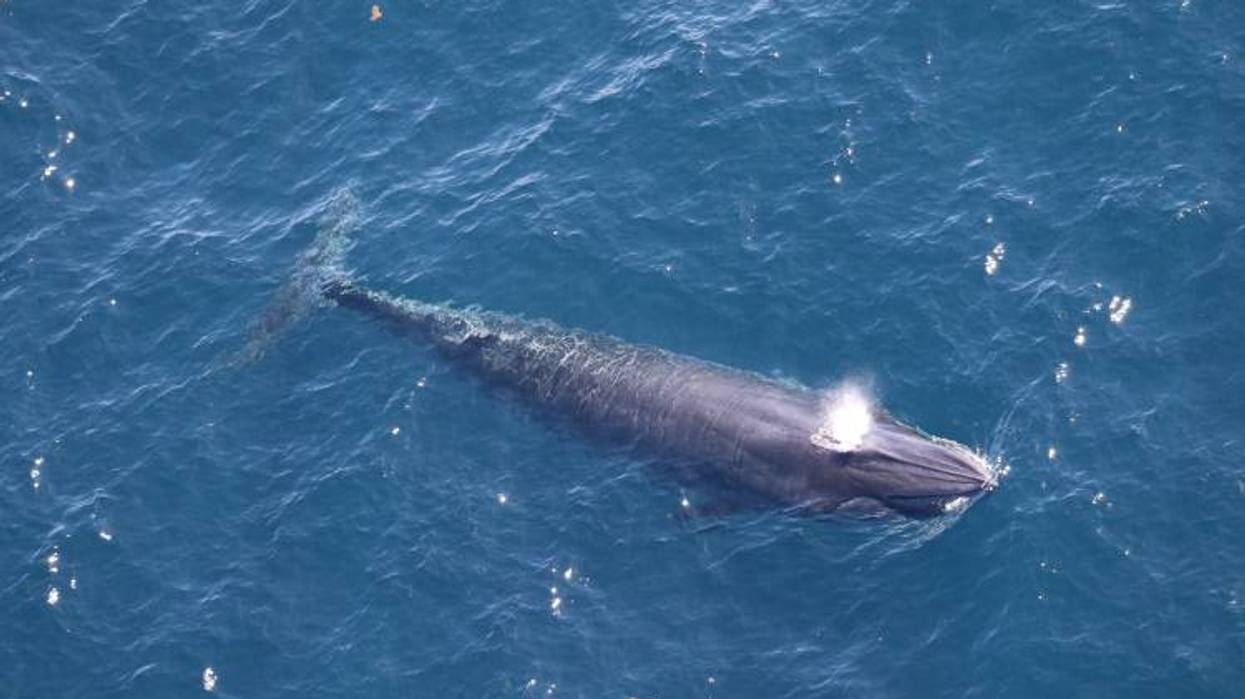
“Burgum’s Extinction Committee is immoral, illegal, and unnecessary,” said the head of the Center for Biological Diversity, which warns it could put the final nail in the coffin of the extremely endangered Rice's whale.
An environmental organization is suing to stop the Trump administration from illegally convening a meeting that could allow oil and gas companies to drive an extremely endangered whale species to extinction.
On Wednesday, the Center for Biological Diversity filed an emergency lawsuit against Secretary of the Interior Doug Burgum in a federal district court in Washington, DC, seeking to block him from convening the Endangered Species Committee, more commonly known as the “Extinction Committee,” on March 31.
This committee is sometimes referred to as the "God Squad" because its members have the power to grant exemptions to the Endangered Species Act that can result in the extinction of imperiled species.
Led by the interior secretary, it has seven total members who can vote to override regulations. Five of them are senior executive officials: the secretaries of agriculture and the Army, the head of the Council of Economic Advisers, and the administrators of the Environmental Protection Agency (EPA) and the National Oceanic and Atmospheric Administration (NOAA). Each affected state also receives a delegate to the committee, but they collectively receive just one vote. Five votes of seven are needed to grant an exemption.
In the federal register, Burgum announced earlier this week that the committee would meet at the end of the month “regarding an Endangered Species Act exemption for Gulf of America oil and gas activities," referring to the Gulf of Mexico by the name preferred by President Donald Trump.
The Center for Biological Diversity said Burgum was seeking to override a requirement for oil and gas companies in the Gulf of Mexico to drive boats at safe speeds in order to protect the nearly extinct Rice’s whale from strikes.
These whales, named after the cetologist Dale Rice, who first recognized them as distinct from other whales in 1965, were not formally recognized as a new species until 2021.
According to the Center for Biological Diversity, only about 51 Rice's whales remain after BP's catastrophic Deepwater Horizon oil spill in 2010, which devastated their population.
Last May, NOAA's National Marine Fisheries Service issued a biological opinion concluding that their continued existence—as well as that of other whale and sea turtle species—was under threat from boat strikes, since Rice's whales spend most of their time in the top 15 meters of water, which often puts them on a collision course with oil vessels.
The agency issued guidance requiring oil industry ships to travel at slower speeds in the eastern Gulf, saying that if they were followed, lethal collisions would be “extremely unlikely to occur” and that the species would be protected.
The Extinction Committee could override this rule, but it has only been convened three times in its history, and not since 1991, when then-President George H.W. Bush used it to open up timber harvests in the Pacific Northwest that endangered the habitats of spotted owls, which were considered threatened under the Endangered Species Act.
The Extinction Committee is invoked so rarely because the circumstances for its use, as outlined in law, are extremely narrow: It can only be convened within 90 days of a biological opinion by the US Fish and Wildlife Service or the National Marine Fisheries Service concluding that a federal action is likely to jeopardize a species. They must also determine that there is no “reasonable and prudent alternative” to the action the government plans to take.
In its lawsuit, the Center for Biological Diversity says that neither of these criteria has been reached, since the Fisheries Service issued its opinion 10 months ago and already established a reasonable alternative: slowing down the boats.
"Slowing boat speeds is not just reasonable, it’s easy, and it’s the absolute minimum the oil and gas industry can do to save Rice’s whales from extinction,” said Kierán Suckling, executive director of the Center for Biological Diversity.
The group said Burgum is also flouting other requirements of the law, including that the meeting be presided over by an administrative judge and have a formal hearing with public comment. No judge has been appointed by Burgum, and the meeting is only scheduled to be livestreamed on YouTube, with no forum for public input.
“Burgum’s Extinction Committee is immoral, illegal, and unnecessary,” Suckling said. “There’s no emergency, no legal basis to convene the committee, and no legal way to approve the extinction of Rice’s whales. This sham is nothing more than Burgum posturing for Trump and saving the fossil fuel industry a few dollars by allowing its boats to drive faster and more recklessly.”
If Rice's whales were to go extinct, they could be the first ever large whale species to be driven out of existence by human activity in recorded history. Earthjustice says that the rollback of boat speed restrictions and other activities by the Trump administration—including the approval of the first BP oil field in the Gulf since the 2010 spill—are putting other species at risk too.
The scheduled March 31 meeting, said the group, "could kick off a months-long process to decide whether to give special treatment to the oil industry by allowing offshore drilling to go forward even if it would lead to the extinction of Gulf species."
“The marine species in the Gulf are our natural heritage. There’s no imaginable justification to sacrifice them,” said Steve Mashuda, Earthjustice's managing attorney for oceans. "It’s beyond reckless even to consider greenlighting the extinction of sea turtles, fish, whales, rays, and corals to further pad the oil industry’s pockets at the public’s expense. Giving carte blanche to industry also takes us further away from renewable energy that is cleaner, cheaper, more reliable, and more efficient than ever before.”
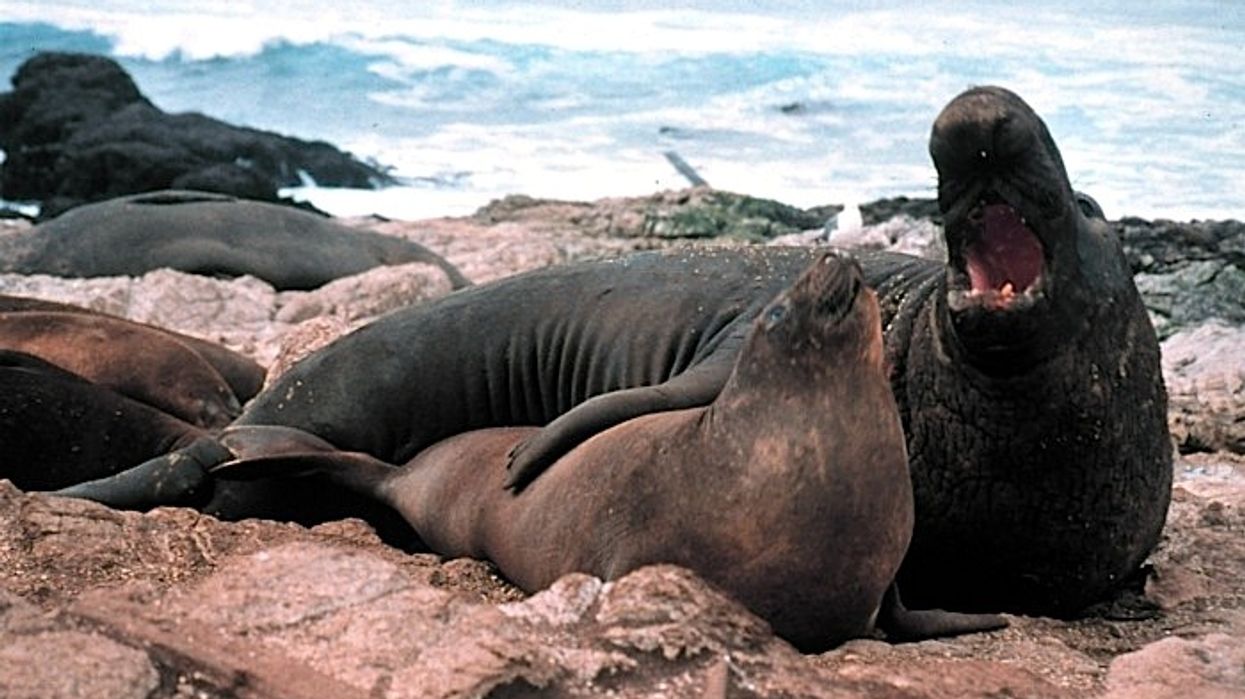
Kirsten Donald, a marine biologist, educator, and advocate with the Pacific Marine Mammal Center, explains why the animals she works with need more protections, not fewer.
In July MAGA Rep. Nick Begich of Alaska introduced draft legislation that aims to gut the 1972 Marine Mammal Protection Act at a time when marine mammals are at greater risk than they've been in decades. It would get rid of protections against "incidental takes" from ship strikes, fishing gear entanglement, or deafening sounds from oil exploration, leaving it illegal only to directly shoot or harpoon a mammal.
Rep. Jared Huffman of California, the top-ranking Democrat on the House Resources Committee, calls these proposed changes "a death sentence" for marine mammals. I decided to have a conversation with someone who deals with marine mammals every day to help clarify the situation. Kirsten Donald is a marine biologist, educator, and advocate with the Pacific Marine Mammal Center (PMMC) in Laguna Beach, California.
It's one of California's leading marine mammal rescue centers where they care for, rehabilitate, and release hundreds of sick and injured animals each year. Before coming to California, Kirsten worked for 18 years at the Dolphin Research Center (DRC) in the Florida Keys. In her 30-year-career she's worked with whales, dolphins, manatees, harbor seals, elephant seals, and sea lions. So thanks, Kirsten.
Kristen Donald (KD): A pleasure. Ever since I was a little girl, I got the thrill of being able to go to the ocean because my family had lived in Maryland for a time and I was just utterly fascinated and I just remember seeing dolphins swimming by and being absolutely enamored by them (and wanting to study marine mammal science).
And then, initially when I went to college, I didn't know what I wanted to do. I was kind of lost and went into communications. And when I was about 26, I had a midlife crisis early and went back to career counseling and realized that I needed to be back in science and reminded myself that I loved animals. I happened to hear about this place called the Dolphin Research Center that offered a program called the Dolphin Lab, which allowed people to come down for a week and interact with their dolphin colony there. So, I traveled all the way down to Florida and I just fell in love with the dolphins and the mission to educate the public to be more compassionate to the issues that we face with these guys in the wild. And after a bit they asked me to apply for a job and that was in 1997 and I've been doing it ever since.
David Helvarg (DH): And the Dolphin Research Center, just so people understand, it's not SeaWorld, it's not all about entertainment?
KD: Oh, no. The, dolphin Research Center has some of the highest standards in the world for the care of the animals.They are an educational, nonprofit, and research facility that has a colony of dolphins that were born there mostly and some retired from other facilities. They also had some that stranded as babies and needed homes because they could not be put back in the wild. And so now the dolphins participate in everything from interactions with humans so people can realize that these animals should be conserved to a significant amount of research on the capabilities of these animals, both acoustically and cognitively so that we can understand the other species in the ocean and the parts they play in the ecosystem. It's a really wonderful place. It's all about the dolphins first.
The stranding coordinator came up to me and said, "You're the only person I have left. Here's a net, here's a kennel (like a dog carrier). Take the car and go to this beach." And I'm like, "I've never done this before."
I remember whenever we would do a session, you come down and if you had something in mind and the dolphins are like, "No," you had to change gears. That was your job, you gotta figure out what they want to do because it's not about making them do anything. But the thing was we made everything a game and exciting and fun. And so, the dolphins were always excited to come over and play. And really the drive behind it is the fact that we are not the owners of this planet. We share it.
I also got involved a bit in the research, whether it was taking behavioral research observations or later on developing a field research program on bottlenosed dolphins in the middle Keys, which had never been done before. And they're still doing that and have expanded that program today, which is really phenomenal. I became the director of education. And I became the director of the College of Marine Mammal Professions, which basically took all of the different Dolphin Lab weeklong classes… to create our own college and be able to grant an associate's degree in marine mammal behavior and care training, which was the first one in the world.
DH: So, you were 18 years there in Florida. What got you connected with the Pacific Marine Mammal Center?
KD: At the time I'd been at DRC for 18 years and believe me, it was the hardest change I ever had to make because all of those dolphins were very much a part of my family. But my daughter was growing up and I wanted her to have more opportunities. The Keys are kind of rural in a way and all of a sudden, this job popped up at Pacific Marine Mammal Center to run the Education Department.
And so, I decided to check it out and it reminded me very much of DRC when I first started. When I started at DRC, there were only 30 employees. And by the time I left there was over a 100 and even more volunteers. When I came to PMMC, we only had about 15 people at the time and just a handful of education programs. And I could see that there were so many opportunities to widen the educational opportunities and really reach a more diverse audience. Also, it gave me the chance to learn more about pinnipeds…We're dealing with the problems that are happening right now in the ocean and so, PMMC rescues typically in any given year, anywhere from like 100 to 200 pinnipeds and a few cetaceans as well.
DH: That would be seals, sea lions, and dolphins.
KD: Exactly. Seals, sea lions, and dolphins. And there have been years also where it was crazy. Like my first year happened to be the worst year on record for strandings. That was back in 2015. And from 2013 to 2016, we had an unusual mortality event because of that warm water blob (a massive marine heatwave known as "the blob") overlapping with the El Niño (cyclical Pacific warming). The waters were ridiculously warm.
And PMMC rescued over 500 animals, much more than we'd typically rescue. And it was due to the fact that since the warm water is there, the fish like colder water. So, they would either go deeper or further out to sea or further up north. And the pups that are on the Channel Islands (breeding colonies off Central California) couldn't swim that far in order to get nutrition. In addition, the mothers that are tied to the islands can't swim very far away because they've got to nurse their pups. And so, it became a situation where mothers were abandoning pups. Pups weren't getting enough to eat, and so there was just a constant influx of these animals.
And it was crazy because my second week at PMMC all the trucks are out, all the rescuers are out. And then the stranding coordinator came up to me and said, "You're the only person I have left. Here's a net, here's a kennel (like a dog carrier). Take the car and go to this beach." And I'm like, "I've never done this before."
"It's fine. You just pick them up and put them in the kennel, you know?" And I'm like, "Okay, I'll give it a try." And so, I went and the sea lion happened to be a very small pup that was on a pier, San Clemente Pier, curled up. Didn't even move when I picked him up, he was so emaciated. And so, I popped him in the kennel and then this lady ran up to me and she's like, "There's another one over there."
And he is really skinny. And you know, I'm from a different background in terms of when you work with animals that are in human-managed care, you introduce them slowly, you know, you let them get to know each other. And I only had one kennel and I'm like, how could I put another animal in this kennel? I can't do that. What should I do? So, I call her and she goes, "Oh no, just get them both. They don't care. Just shove them in. They'll be fine."
DH: This is triage. This is emergency room type activity?
KD: Yeah. And this is also me not being as familiar at the time with sea lion behavior because they do lie over each other. They create piles, especially as pups. And so, this one was going in and out of the water and I had to actually get the net and get between it and the water so I could net it and then put it in the kennel (with the first pup) and bring it back. So, that was my very first rescue, and I named the animals Yin and Yang because they were very different (personalities). And it was quite the experience.
DH: And as you say, it was a traumatic time because the blob was the worst of these major marine heatwaves that we've experienced linked to climate change. So, there was loss of prey, there was starvation at the time. And these marine heatwaves have also supercharged Harmful Algal Blooms (HABs) that can also poison marine mammals.
KD: Exactly. And that's what's happened. This year we have had the worst harmful algal bloom on record. These animals are struggling right now with regard to climate change as well as plastics and chemicals in the ocean. I can give you two really good examples. Number one the gray whale, which was actually a huge success under the Marine Mammal Protection Act (MMPA). It was one of the major successes of the MMPA. They were the first large whale species to be delisted (taken off the Endangered Species Act list) after whaling (was banned). They were almost decimated, and they came back 27,000 strong. And between 2019 and 2023, their population has plummeted down to 13,000 animals. So, half the population is gone and scientists looked into it and discovered that this was very much connected to climate change.
Basically, what was happening is that since the (polar) ice cover was receding earlier and the algae that grows underneath it, instead of falling to the bottom and feeding the amphipods (tiny shrimp-like crustaceans that the whales feed on) the ice would recede. The fish go in and eat up all the algae and the amphipods die. And these guys (the migrating gray whales) go up there to eat the pods but there's not enough up there. And so, they spend longer and longer trying to eat, expending more and more energy. But they're still coming back emaciated. And they are dying in droves all up and down the coast from Canada to Mexico.
I think that's what everything going on in society is telling us, that people really need to step up and get involved.
So, it was an international event. And actually, they closed the Unusual Mortality Event (National Oceanic and Atmospheric Administration designation) after 2023. And just this year we are already having a ton of these animals stranded up north around the Monterey Bay area, starting again. It's considered an unusual mortality event because it's something that we normally don't see and is not a natural cycle. So, they thought it was over in 2023, but just this year, in 2025, it's begun again. So, these guys (gray whales) are not out of trouble. In fact, if they can lose half their population in just a few years, this is the worst time to take away their protections.
The other example is California sea lions that breed around the Channel Islands. And one of the studies that our veterinarian did was in looking at the high levels of DDT in these sea lions because there's DDT that was dumped back in the 60s near those islands (by the Montrose Chemical Corp. and others via LA storm drains).
And DDT is a very toxic persistent organic pollutant, which is basically a fertilizer but it stays in the environment for thousands of years. These animals are accumulating it through nursing as well as the food that they eat. And what we've discovered is that they will develop cancer because the DDT interacts with a herpes virus, which pretty much they all have, and is a catalyst for cancer. And so about 25% of the adult patients that come through PMMC are diagnosed with terminal cancer unfortunately, and that's the highest rate of cancer in any mammal on the planet. So again, we're dealing with, human impacts on these species and so they need the protections. In fact, they need more protections than the MMPA provides currently.
DH: We had a few decades where the Marine Mammal Protection Act was working well. The Florida manatees went from 1,000 to 10,000, right?
KD: The Marine Mammal Protection Act is great. It has helped a lot of species, but there are still species that need even more protection like the North Atlantic right whale. There's only 370 of them left. And the changes that are proposed (in the MMPA) actually will delay any action to help them by reducing entanglements (in fishing gear) or ship strikes which are the two major things that are hurting their population. And they don't have 10 years to wait because they've lost half their population since 2017. So, you can see the trajectory that they're already on.
DH: They're trying to roll back all environmental protections. With something like NEPA, the National Environmental Policy Act, people may not know what it's about, but with the Marine Mammal Protection Act, it's right there in the name. In the 1990s popular movements got us to dolphin-free tuna where they used to put the nets around schools of dolphin knowing tuna where underneath them and they'd kill hundreds of thousands of dolphins along with the tuna. Under this so-called MAGA "reform" of the Marine Mammal Protection Act, there's nothing to stop them from doing that again.
KD: Exactly, and we do need the power of the public right now. I think that's what everything going on in society is telling us, that people really need to step up and get involved.
DH: People need to not only volunteer with the Pacific Marine Mammal Center and other marine animal rescue centers for example but also to call their congresspeople and senators and say, "This is not acceptable."
KD: Exactly, that's something that we talk about all the time, and this is why I am such a big proponent of education, helping people understand that they have power, they have a voice. To stand up and call your congressmen if everybody is doing that and letting them know that they care about these issues. If you're a congressperson and not listening to your constituents, you're probably not going to get reelected. And you're there to represent the people's interest. And so, we need people to express that interest.
DH: And again, there's this disingenuous argument being put forward by Republican sponsors of rolling back the Endangered Species Act and Marine Mammal Protection Act, which is these laws have worked so well that these animals are no longer at risk. And this is simply bunk. Like who are some of your patients right now?
KD: Well, actually our patients are all gone right now. We're very excited. We had a really tough year with the unusual mortality event we went through, with the harmful algal bloom because I gotta tell you, it was very rough. Literally most of the animals that came in, or at least half of them, had to be euthanized because they had too many toxins in their system that damaged their brain. Because that's what happens with domoic acid poisoning. It's produced by the algae, and the fish eat it. And then the sea lions eat the fish and get concentrated doses and that toxin goes to the brain, damages it, and it doesn't allow them to be able to navigate spatially. They do things they're not normally doing…
DH: Wandering up on the highways. There was a lot of publicity recently about a sea lion that was biting surfers.
KD: Exactly. People were up in arms about sea lions biting and they don't normally do that. They normally leave you alone. But the animals were so out of their minds because their brains were damaged, that they were being aggressive. And so, there were quite a number, a large number of animals that we had to euthanize. And what was even sadder is that the majority of California sea lions that came in should be doing what they do every year—breeding.
The biggest help that we can provide is standing up for the Marine Mammal Protection Act and the Endangered Species Act because they're the two strongest, most important (animal protection) acts that have been passed in the United States.
And so many were pregnant. And they were not yet close to term. They were about three-quarters of the way through their pregnancies. But they were having to euthanize these females and in some cases, they'd have to induce abortions to try to save the females because there are so many toxins in the amniotic fluid that the female can reabsorb those unless we induce abortion.
And so, what's even sadder is when they would induce these abortions, some of the pups would try to take a breath, even though that they were not viable yet, they were not fully developed. And so, literally as the babies were coming out, they were brought to the veterinarian who then had to turn around and euthanize them.
It was a really traumatic year for our animal care. And it's really worrisome that again, this is the fourth year in a row that we've had a harmful algal bloom, and this was the worst on record. What are we in store for in the years to come? That's a real concern of ours. So, yes, it was a tough year.
DH: And again, at the federal level, we're both denying the reality of climate change and now trying to deny the reality that marine mammals are in serious trouble.
KD: Right. And when you look at things happening in the ocean, there's no denying climate change anymore. There's absolutely none. It's happening. It's affecting the animals. They're showing it to us. It's sad when we have these animals. We get them back up to speed, they're ready to go out, they're healthy. And then we realize we're releasing them into a damaged home, a broken home that we need to help fix because we broke it. And so, it's really personal to us.
DH: Okay. I really appreciate the work you're doing, and so let's end on a happy note. What was your last release?
KD: The last release I was on, it was great because I got to go with my entire staff and with some animal care people out on a boat release, because sometimes it's better to release the animals off boats (rather than from beaches), especially if they're like adult animals.
We get them further away from the beach so they don't present a hazard to people. That's where they're normally meant to be anyway, further out in the ocean. And so, we had three different animals, and you would basically move the crate up to the edge of the boat and open the kennel and they look around, they dunk their head in the water and look around and then slowly climb in.
And then you just do one after the other. And it's sometimes funny because I've seen elephant seals do the same thing where one will like stick his head in the water, then look at his buddy and wait for the buddy to go in. And then look in the water again and make sure, I'm thinking he's making sure there's no sharks, you know, let his buddy go in first.
So, it's neat and sometimes they'll look back at us too you know, and we like to think it's a "Thank you for helping me." And then they just swim away and do what they're meant to be doing. So, it's really gratifying to see them go home, but it gives us even more motivation to try to help get word out about these issues so that people can take action in their own lives to help, because there are all these simple things that we can do… The biggest help that we can provide is standing up for the Marine Mammal Protection Act and the Endangered Species Act because they're the two strongest, most important (animal protection) acts that have been passed in the United States and that also are unique.
This story is based on my interview with Kirstin Donald for Blue Frontier's Rising Tide Ocean Podcast that aired on August 25, 2025.
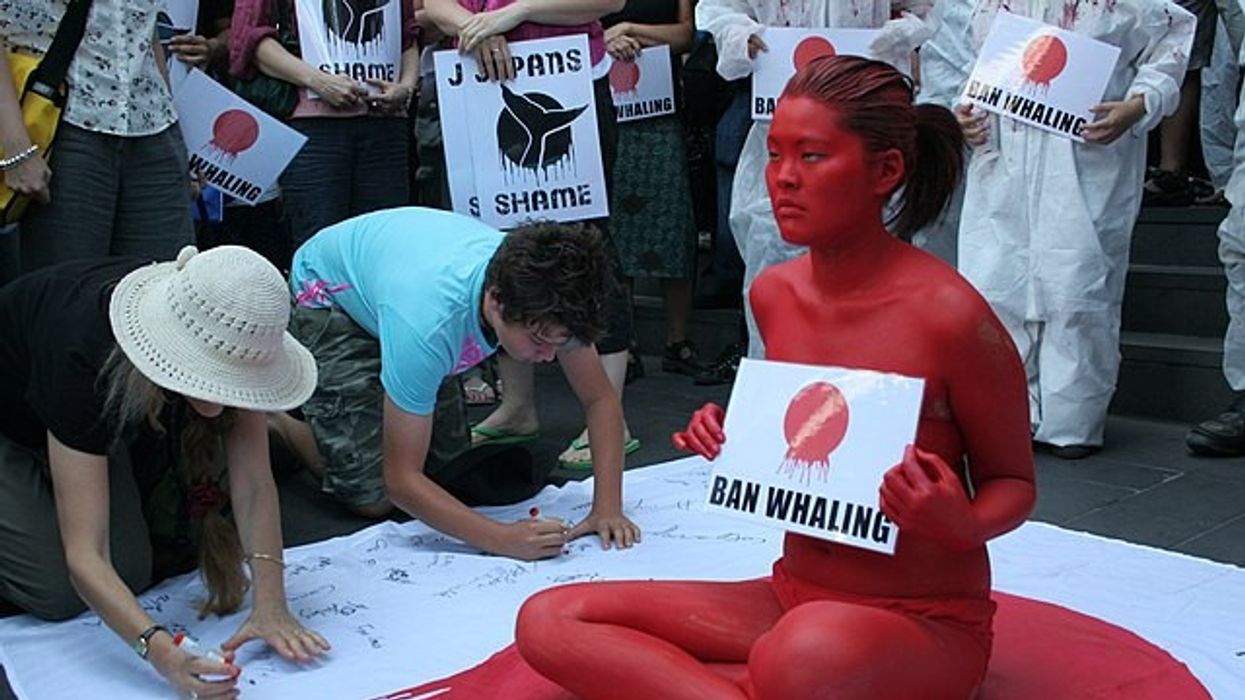
The anti-whaling movement has failed to address the issues underpinning international negotiations over whaling, and now faces its greatest defeat.
Save the Whales. Perhaps the first famous conservation slogan. The end of pelagic commercial whaling was one of the original successes of the conservation movement in international diplomacy. The movement started in the USA, yet now, the two species of whale that are critically endangered are both found in U.S. waters. And we’re about to see the resumption of Antarctic commercial whaling, supported by the U.S. military-industrial-security complex. Crunch time is the meeting of the International Whaling Commission, or IWC later this month. “Lose the whales” is looking more realistic.
To understand how we’ve arrived here, we need to go back to 2010. The year Apple unveiled the first iPad. Taylor Swift released Speak Now. Wikileaks put out the “Collateral Murder” video. U.S. President Barack Obama declared the end of combat operations in Iraq, and Secretary of State Hillary Clinton announced the beginning of the USA’s re-engagement with East Asia. In November 2010, President Obama attended the meeting in Japan of APEC, the Asia-Pacific Economic Cooperation forum.
While there he had individual meetings with the (then) Prime Ministers of Japan, Naoto Kan, and Australia, Julia Gillard, the USA’s most important allies in the region. At the time, Japan and Australia were at loggerheads over whaling. A few months earlier Australia had started proceedings against Japan at the International Court of Justice that it was, with its “scientific whaling,” in breach of its obligations under the International Convention for the Regulation of Whaling (ICRW), the treaty underpinning the IWC. Australia won the case a few years later.
The return of pelagic commercial whaling is imminent.
As part of the movement against whaling, on November 5 2010, conservationists organized the “World Wide Anti-Whaling Day.” In Sydney, Australia, a protest was held at the Japanese Consulate. For the media coverage it received, it may as well not have happened. Concerns about Japanese whaling in Australia’s Antarctic whale sanctuary were running high, so this lack of media interest was unusual. However, the press had just covered another whaling “protest.”
On the evening before, the International Fund for Animal Welfare (IFAW) organized a different action. The video remains available. They set up a fake whale in Sydney Harbor with a generic “stop whaling” message. As the video celebrates, this garnered huge coverage in the Australian media, so the action at the consulate the following day got none. Evidence of the conflict over whaling, between these two major U.S. alliesevaporated just in time for the presidential trip to Asia. Instead, the generic, unfocused “stop whaling” message occupied the airwaves. Organizers of the action at the consulate were livid.
Founded in 1969, IFAW was originally a small and effective NGO. It helped establish non-lethal studies as the way to do science on whales. In 1997 IFAW’s founder passed the organization on to a couple of former government officials, ex-senior managers of Peace Corps programs in Eastern Europe and the Middle East. Under their direction, IFAW grew rapidly, including by taking over smaller NGOs internationally. Most conservation NGOs are short of money, and IFAW, suddenly rich, absorbed them.
The person who was heading IFAW’s whale program at the time of the stunt in Sydney Harbor has an unusual background for an employee of a conservation NGO. He was originally a German and Russian linguist with U.S. Army intelligence, enlisting in the early 1980s. After the army he moved to Mongoven, Biscoe, and Duchin (MBD), a company that specialized at infiltrating environmental NGOs for corporate clients, as detailed in an academic paper on their work for the tobacco industry. The title—“ [MBD]: Destroying Tobacco ControlActivism From the Inside”—tells the story. In a move that was the most radical conversion since Paul on the road to Damascus, he then immediately got the job as head of GLOBE USA, a collaborative of global politicians working on environmental issues. He moved to IFAW in 1996, immediately prior to the leadership changeover there. In 2007, coinciding with a U.S. government decision to come up with a process to “solve” issues in the IWC, he was appointed to IFAW’s new position of Global Whale Program Manager. Unlike other IFAW staff, he had little prior experience with the IWC.
The Sydney stunt is just one example, demonstrating how easy it is to direct media stories. IFAW remains the go-to organization for much of the mainstream media on whaling, and other whale conservation issues. IFAW’s messaging controls the anti-whaling narrative.
The anti-whaling movement has been operating under a set of assumptions over the past couple of decades. These include: whaling is a dying industry running on subsidies; acting forcefully against whaling will encourage a backlash in whaling nations; whaling can be replaced with whale-watching as an economic use of whales; and recently, that the Japanese withdrawal from the IWC was an “elegantly Japanese solution” that meant Japanese whalers would never again engage in pelagic whaling. Note that all but one of these links quote IFAW.
Given the new Japanese quotas for killing fin whales, the new ice-strengthened Japanese whaling factory ship, and the call to shut down the IWC, these assumptions are mistaken. Whaling is just one part of much bigger geopolitical machinations that revolve around the U.S. military maintaining its Japanese bases in the face of pubic anger there at the appalling behavior of some service personnel. And then the Japanese government uses access to bases as leverage to winning on whaling, in order to maintain their control over management of other, more important, pelagic fisheries.
Further, the anti-whaling movement has failed to heed warnings of problems in their midst. These were clear after Wikileaks released documents revealing the dealings between the U.S. IWC commissioner, and the Japanese government in 2009. Also clear from the Wikileaks cables is the way in which Australia and Japan’s relationships were impacted by whaling, and how this was a concern for the U.S. government. The NGO community treat this as irrelevant.
That U.S. IWC commissioner? Prior to her return to government, Monica Medina, also ex-military, also worked at IFAW.
On the Wikileaks documents, IFAW’s whale program leader wrote a blog post back in 2011. It includes: “...as I stare back at his face on the WikiLeaks homepage, that Julian Assange—who doesn’t look so well—is on a one-man mission, that the job he is tryin’ to do on us is about something other than saving whales or even promoting transparency in government, and that he really doesn’t much like us—as in U.S.”
The return of pelagic commercial whaling is imminent. The anti-whaling movement has failed to address the issues underpinning international negotiations over whaling, and now faces its greatest defeat. A major NGO focusing on whaling—one to whom many media outlets turn to for comment—has a track record of employing former U.S. military, and military intelligence, staffers. (And not just for whaling). Have these intelligence professionals failed to comprehend the geopolitical issues driving negotiations over whaling?

Think tanks funded by ultra-conservative donors and fossil fuel companies coopted a coalition of “grassroots” opposition organizations to stop the development of clean energy, despite the fact that oil and gas are the true threats to ocean life.
As a communications director for an environmental nonprofit, much of my job boils down to separating fact from fiction and disseminating the former to the public. That’s why in June, National Ocean Month, at the top of my to-do list has been disentangling a convoluted narrative touted by Republican party officials. They claim offshore wind energy is threatening marine wildlife, begging the question, “Have Trump and his allies turned into unlikely environmental champions sporting ‘Save the Whales’ placards? Or is something more suspect lurking beneath the surface?”
Republicans have run with the myth that offshore wind energy development endangers whales drawing from vague theories about noise and electrical generation and the construction of turbines. This myth has stopped multiple wind projects in their tracks in New York and New Jersey. It has been the fodder of countless viral media moments. And most recently, it has propelled a lawsuit against a Biden administration wind project off the coast of Virginia. Despite the fact that scientists and experts say there is absolutely no evidence linking wind development to whale endangerment, this messaging spin has proliferated.
So how—and why—did the GOP successfully promulgate this false narrative without any scientific backing? Like all successful propagandists, they didn’t act alone. Think tanks funded by ultra-conservative donors and fossil fuel companies coopted a coalition of “grassroots” opposition organizations to stop the development of clean energy. The fossil fuel industry has weaponized its cronies in Congress and “the third sector” to maintain the status quo of oil and gas energy dominance. Where there was blatant climate denial years ago, there were industry-funded politicians parroting Big Oil talking points. And where there is clean energy policy obstruction and interference now, there are the same industry-bought politicians and community “environmentalist” allies with newly outfitted sloganeering.
The fossil fuel industry and its allies will continue to fight to the bloody end for the last drops of oil and the last scraps of profit, and we do not have time to entertain their deceit.
The fact is that investment in renewable energy would actually help whales and other marine species whose habitats are threatened by the effects of the climate crisis. But the richest layer in this ocean of conspiracy is that offshore oil and gas drilling, a major piece of the very industry backing this faux-ecological crusade to save the whales, is a direct threat to a seriously endangered species called Rice’s whale.
With estimates of fewer than 100 individuals in the wild, Rice’s whale is one of the most endangered species in the world and the only baleen whale resident year-round in the Gulf of Mexico. Since its reclassification three years ago, the National Marine Fisheries Service (NMFS) has scrambled to protect its habitat and mitigate its declining numbers. In the NMFS’ list of primary threats to the species, the four most severe are “range curtailment from energy exploration and development, exposure to oil spills and spill response, vessel collisions, [and] anthropogenic noise during seismic survey.” For self-identified champions of marine species welfare, the organizations and think tanks behind the right-wing spin campaign about offshore wind’s endangerment of whales have been curiously silent about Big Oil’s offshore drilling operations that comprise every single one of those threats.
It is understandable that fossil fuel industry mythmaking would obfuscate the real ecological stakes in offshore energy development. Rice’s whale is but one environmental victim of the prolific and extensive fossil fuel industry’s oceanic damage.
When Big Oil drills, Big Oil spills. Since the turn of the century, there have been hundreds of oil tanker spills—spills that have released hundreds of thousands of gallons of oil into the ocean. When Big Oil spills, wildlife populations and communities along the coast suffer. Seabirds, marine mammals, fish, and vegetation can be displaced, injured, or killed at each stage of the drilling process. They are also poisoned by crude oil and hydraulic fluids introduced by the drilling operations, which, once bioaccumulated up the food chain, sicken the people who consume them. Coastal communities also rely on the Gulf, in which offshore oil production accounts for 15% of total U.S. crude oil production, for fishing, boating, recreation, and tourism—to say nothing of the cultural connection they have to the ocean. Big Oil threatens these central facets of coastal life with spills and pollution. Offshore wind does not.
In the narrative battle over energy in the seas, the stakes are high. The fossil fuel industry and its allies will continue to fight to the bloody end for the last drops of oil and the last scraps of profit, and we do not have time to entertain their deceit. As National Ocean Month comes to an end, for the sake of our future, our ocean, and all who rely upon it, the importance of discerning fact from fiction cannot be lost on us.
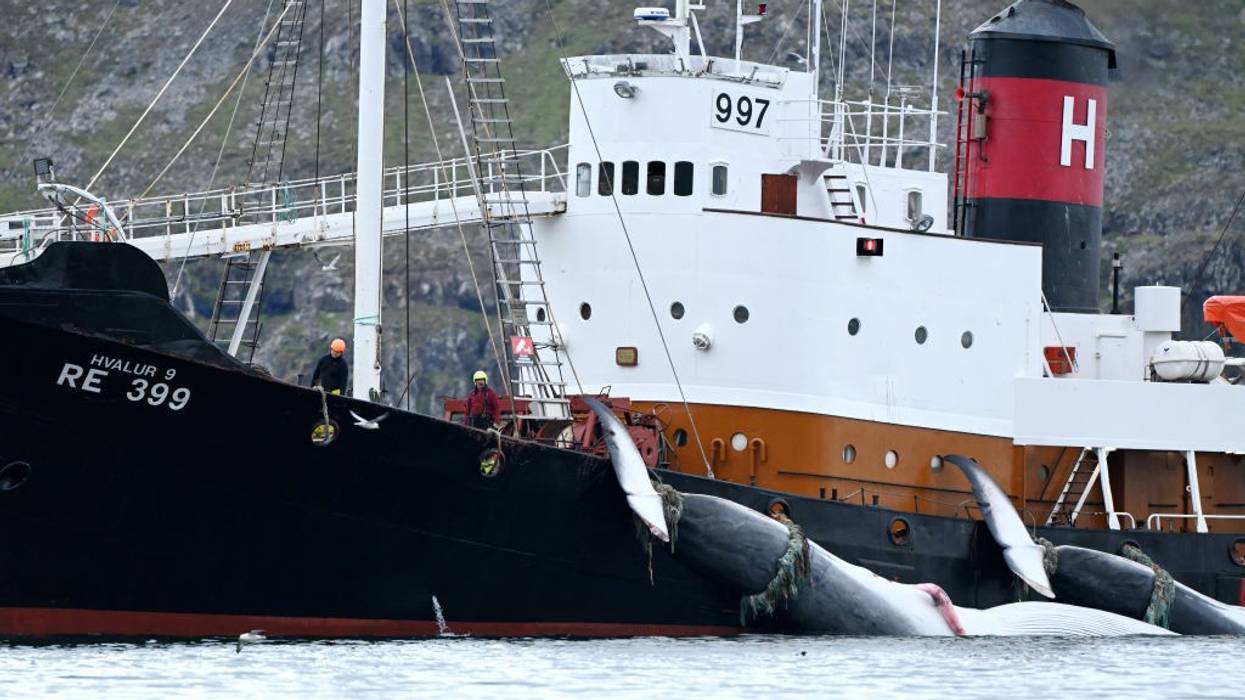
The industry is on the cusp of winning a major victory over the global conservation movement that has fought for decades to bring this murderous practice to an end once and for all.
Whaling is seen as an evil of the past, memorialized in events like ritual recitations of Moby Dick. Or invented as a metaphor for the worst of humanity’s greed—the Tulkun hunts in Avatar: The Way of Water. But commercial whaling hasn’t actually stopped, it’s merely scaled back. Japan, Iceland, and Norway still engage in commercial whaling.
On May 9th, a spokesperson for the Japanese government announced that they were intending to set a hunting quota for fin whales. A week earlier, the Kangei Maru, a brand new, state of the art whaling factory ship, was launched. It’s almost four decades since the Japanese whaling industry felt the need for a new whaling mothership, and this one’s specifications will allow whalers to butcher fin whales on it. Plus, the Kangei Maru has the range and construction to work in Antarctic waters. Coincidentally, on exactly the same day as the Kangei Maru’s launch, a scientific paper was published, presenting the results of surveys conducted in one area of the Southern Ocean. The results suggest that there are around 50,000 fin whales in just that one site.
If the only way to regulate whaling internationally is under some gentlefolks’ non-binding agreements, how did commercial whaling almost disappear?
Then, on June 11th, the council of the Japanese Fisheries Agency announced a quota of 59 fin whales within the Japanese EEZ. On the same day, the Icelandic Minister of Fisheries issued a permit for a hunt of 128 fin whales by Hvalur, the Icelandic whaling company.
Fin whales are known—if they’re known at all—as being the second-largest of the great whales. Only blue whales are larger. Less well known is that they were also the whales hunted in the greatest numbers during industrial commercial whaling through the 20th Century. About 900,000 fin whales were killed across all ocean basins, nearly as many as the sum of all blue (~380,000), humpback (~250,000) and sei whales (~300,000) combined. Given their abundance and individual size, fins were where the real money was in high seas whaling.
This history is lost.
Most fin whales lived in the Southern Ocean, but they’re found throughout the polar and temperate regions of the world. Unlike humpback or right whales, they don’t engage in clearly defined annual migrations from feeding to breeding areas. They’re mostly offshore, beyond the reach of whale-watching operations. And they’re nowhere near as acrobatic as humpbacks. Fins don’t create their own PR value, the way that more visible and demonstrative whales do.
Currently, fin whales worldwide are categorized in the IUCN’s Red List as Vulnerable, one step down from Endangered, based on a review from 2018. However, a more recent (2023) IUCN review of fin whales in European waters listed them as being of Least Concern there. For the few places where data are available, most fin whale populations are increasing. Apart from the recent work showing about 50,000 whales in one small(ish) area of the Antarctic, the International Whaling Commission (IWC) lists about 40,000 fins in one part of the central North Atlantic (for 2015, so the estimate is almost a decade old). The US National Oceanic and Atmospheric Administration (NOAA) provides estimates of around 7,000 off the east coast of North America, and 8,000 in the waters of California and Oregon. Added together, that’s over 100,000 fin whales—and it excludes most of the Southern Ocean, where fins are likely to be most abundant, and where other observations indicate that their numbers are on the rebound.
So, what about the Japanese whalers hunting fin whales? How can this happen? There are two international bodies primarily responsible for managing whaling internationally. The International Whaling Commission (IWC), oversees setting quotas for whaling, and the ways in which whaling is managed. At present, the IWC has quotas for commercial whaling set at zero, a moratorium that’s been in place since the mid-1980s. The other organization is the Convention on International Trade in Endangered Species (CITES) which regulates—as the name suggests—international trade in endangered species. Fin whales are listed under CITES Appendix I, meaning that they are judged to be threatened with extinction, so international trade in their products is prohibited. This is (more or less) based on the Red Listing of fin whales internationally as Vulnerable. Were that status to change, their CITES listing may well change in response.
Japan left the IWC at the end of 2018 and so is no longer bound by IWC regulations. There’s nothing stopping Japan from doing this under IWC rules. What about CITES? Japan has a reservation to the listing of fin whales, as do Iceland and Norway. So these nations are not bound by CITES provisions regarding fin whales, and are free to trade in their products. That’s why Hvalur hf., the Icelandic whaling company, has exported fin whale meat to Japan from the almost 1000 fin whales they’ve killed over the past 15 years.
So, if the only way to regulate whaling internationally is under some gentlefolks’ non-binding agreements, how did commercial whaling almost disappear? Whalers wiped out almost all populations of large whales, which played an important role. There wasn’t much left to hunt. But previously, the threat of US sanctions was also a factor. Under the Pelly Amendment of the US Fishermen's Protective Act, the Secretary of Commerce and/or the Secretary of the Interior, are required to let the President know if “nationals of a foreign country, directly or indirectly, are engaging in trade or taking which diminishes the effectiveness of any international program for endangered or threatened species.” This is supposedly an obligation, and it’s also meant to lead to a ban on importation of fisheries and wildlife products from that country. Needless to say, despite Japanese nationals obviously diminishing the effectiveness of the functioning of both the IWC and CITES, Japan has not been certified. Geopolitics trumps marine conservation.
There was rejoicing back in early 2019 when Japan appeared to be giving up on pelagic whaling. But Japan leaving the IWC was never “good news for whales,” as stated at the time by Patrick Ramage of the International Fund for Animal Welfare. Japanese whalers now get to ignore IWC-based rules on how many whales can be killed, where they can be killed, and who observes that the killing takes place in the manner that is claimed—something that has always been a problem with whaling.
There is nothing to stop Japanese whalers returning to much larger-scale commercial whaling. They are on the cusp of their comprehensive victory over the conservation movement.
Correction: An earlier version of this piece misstated the date of the Japanese Fisheries Agency's June announcement.
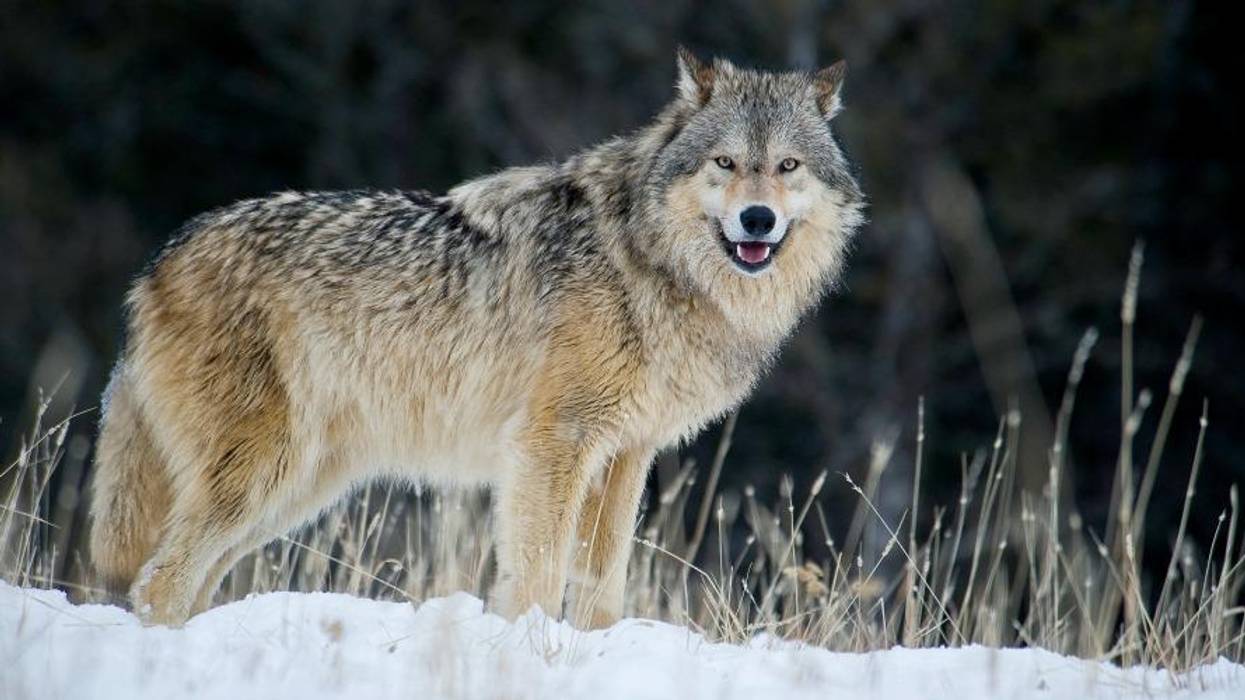
A Center for Biological Diversity found 27 anti-wildlife measures in FY 2024 appropriations bills, the most since the Endangered Species Act was passed 50 years ago.
U.S. Lawmakers, mostly Republicans, have inserted a record number of anti-wildlife measures into the appropriations bills for fiscal year 2024, the Center for Biological Diversityreported Tuesday.
The attack comes despite the fact that scientists warn human activity may be triggering a sixth mass extinction, as species disappear at unprecedented rates. A September study found that vertebrate species groups are dying off at a rate 35 times higher than it would be without anthropogenic pressure.
"Republicans have weaponized the appropriations process to launch a full-blown assault on our natural heritage," Center for Biological Diversity senior policy specialist Stephanie Kurose said in a statement. "These heartless attacks would strip away lifesaving protections from our most imperiled creatures—from wolves to whales to freshwater mussels. If passed, these bills would put multiple species on a direct path to extinction."
"I hope the white-nose syndrome wipes all of them out," Rep. Ralph Norman (R-S.C.) said during a hearing in July. "We won't have to worry about it."
The center's report, titled Paving the Road to Extinction, found that 26 of the 27 "poison pill riders" placed in the appropriations bills were put there by Republicans. The last was introduced by Senate Democrats in an agreement to preserve preexisting measures. The total number of riders is more than Congress has added since the Endangered Species Act was passed 50 years ago.
"Republican members of Congress are trying to kill the Endangered Species Act," the center's endangered species program director Noah Greenwald posted on social media.
The report noted that Republican lawmakers have expressed outright hostility to the survival of endangered species. One rider, for example targeted the recent decision to list northern long-eared bats under the Endangered Species Act. The species has declined by 99% in 20 years due to white-nose syndrome, and human activity puts greater pressure on the survivors. But Rep. Michael Simpson (R-Idaho) added a rider barring any funding from enforcing those protections.
"I hope the white-nose syndrome wipes all of them out," Rep. Ralph Norman (R-S.C.) said during a hearing in July. "We won't have to worry about it."
Six of the measures—the most aimed at any one animal—targeted two critically endangered species of whales: Rice's whales and North Atlantic right whales. There are only around 50 Rice's whales left, and they live only in U.S. waters, while right whales are dying off so quickly they could be functionally extinct by 2040. Despite this, one rider would prevent the National Oceanic and Atmospheric Administration from finalizing a rule that would protect right whales from ship strikes, while another prohibits protections for Rice's whales from both ship strikes and oil and gas activity.
Another rider would effectively strip most gray wolves of Endangered Species Act protections in the Lower 48 states while a third would both end protections for Greater Yellowstone Ecosystem grizzly bears and prevent the courts from intervening.
The center noted that most anti-wildlife riders introduced in previous years were rejected before the bills passed. But it only takes a few to do real harm. To return to right whales, in 2022 Congress approved a measure that would postpone conservation efforts to protect the dwindling population from getting caught in fishing gear.
"With each successful rider, we're losing our ability to end extinction in the United States," Kurose said. "These attacks are deeply unpopular with the American public, who want to see our natural heritage protected for future generations to come."

At the start of the current meeting to decide the fate of deep sea mining, new guidelines appeared on the ISA’s website containing hard restrictions to peaceful protest, documentation, and media scrutiny.
If you’re trying to kick-start an environmentally destructive industry in 2023, with the climate movement stronger and more mainstream than ever, you better hope no one notices.
That was the strategy of the deep sea mining industry.
“We want to assist in getting this very delicate legislation [allowing deep sea mining] in place, and keeping that out of the very public eye will be of benefit to us all I feel,” the CEO of a deep sea mining company wrote to the head of the industry’s regulator in 2017, according to the LA Times. And then people started noticing.
Recently, the threat of deep sea mining became concrete as a result of the Canadian-registered The Metals Company using a legal loophole to try and jam through the start of this industry. Now governments gathered at the International Seabed Authority (ISA) in Kingston have to decide whether to allow it to go ahead. It’s not looking good: New warnings by scientists about what we stand to lose, petitions from Indigenous Peoples, and concerns from the fishing industry have all contributed to over 20 governments now trying to put the brakes on this reckless industry
The problem for deep sea miners is that the genie is out of the bottle. Limiting the ability of journalists to do their job will only make them keener to dig for more inconsistencies and scandals.
Opposition to deep sea mining needed to be controlled and silenced. In the March ISA meeting, two LA Times journalists who previously exposed the ISA Secretary-General Michael Lodge’s proximity to companies were banned from chambers. Some days later Greenpeace-funded billboards calling on governments to take action to stop being the “Irresponsible Seabed Authority” were taken down.
At the start of the current meeting, new guidelines appeared on the ISA’s website: seven pages containing hard restrictions to peaceful protest, documentation, and media scrutiny. Journalists are seemingly now allowed at just one of the three weeks of the meeting while mining companies sit on government delegations. Also, media actions must not engage in “derisory activity or criticism directed at the Authority, its Member States, the Secretariat, the competent authorities of the host government.”
The new rules also now mention protesting outside the conference center while this is not within the competence of the ISA—and forbid it inside the conference center. Ironically, on the first day of the meeting Lodge took the floor to invite everyone to look at the poster exhibition outside the venue. Spoiler: It’s not children’s drawings of deep sea creatures, much less a platform for Pacific activists, it’s “the first Contractors' Poster Exhibition,” a showcase of propaganda for deep sea mining companies. Climate conferences don’t get away with giving advertising space to the fossil fuel industry, so why is this acceptable for deep sea mining?
Scientists warn that if this industry gets a greenlight, it will cause irreversible and unavoidable harm to the oceans. Good job for the companies that it’s pitch-black 4,000 meters deep, and the area they’re targeting are mostly way out on the high seas, hundreds of kilometers from shore. Even with a fleet of ships like the Rainbow Warrior, it’s hard for Greenpeace to keep an eye on what’s happening down there, much less any kind of international watchdog.
In campaigning to protect the oceans from this industry ever starting, we’ve had to rely on tip-offs from concerned whistleblowers, people with privileged information or access to the industry who can bear its encroachment into the oceans no more.
It’s how we broke the story back in 2021 that a Belgian company had got their deep sea mining machine stuck on the seafloor during trials in the middle of the Pacific—for several days. It took inquiries from journalists for the company to confirm this incident publicly, days after the problem started.
Several governments, who make up the ISA, noted that it should not come down to whistleblowers and civil society to expose the problems. So is it any surprise that at this crunch point the ability to scrutinize and protest these negotiations is facing a major clampdown?
For years, campaigners have warned of corporate capture at the ISA, allowing obscure ownership structures of companies to go unquestioned. Michael Lodge made increasingly pro-mining comments, calling the idea of a moratorium “anti-science.”
A safe, respectful, and courteous working environment requires accountability. Governments are making a momentous decision here that requires the active participation of people across the world, bringing diverse perspectives and, where necessary, criticism and warnings. The U.N. human rights commissioner said as much last week.
The problem for deep sea miners is that the genie is out of the bottle. Limiting the ability of journalists to do their job will only make them keener to dig for more inconsistencies and scandals. Revelations that images of test-mining have been kept locked in a corporate archive for 40 years will only beg the question, what else is there to hide?
When the answer is species extinctions, harm to whales, and deepening exploitation of Pacific peoples, you are basically hiding that you are on the way to becoming the fossil fuel industry of the 21st century. And good luck getting any social license or political approval to operate while global temperatures keep breaking records.
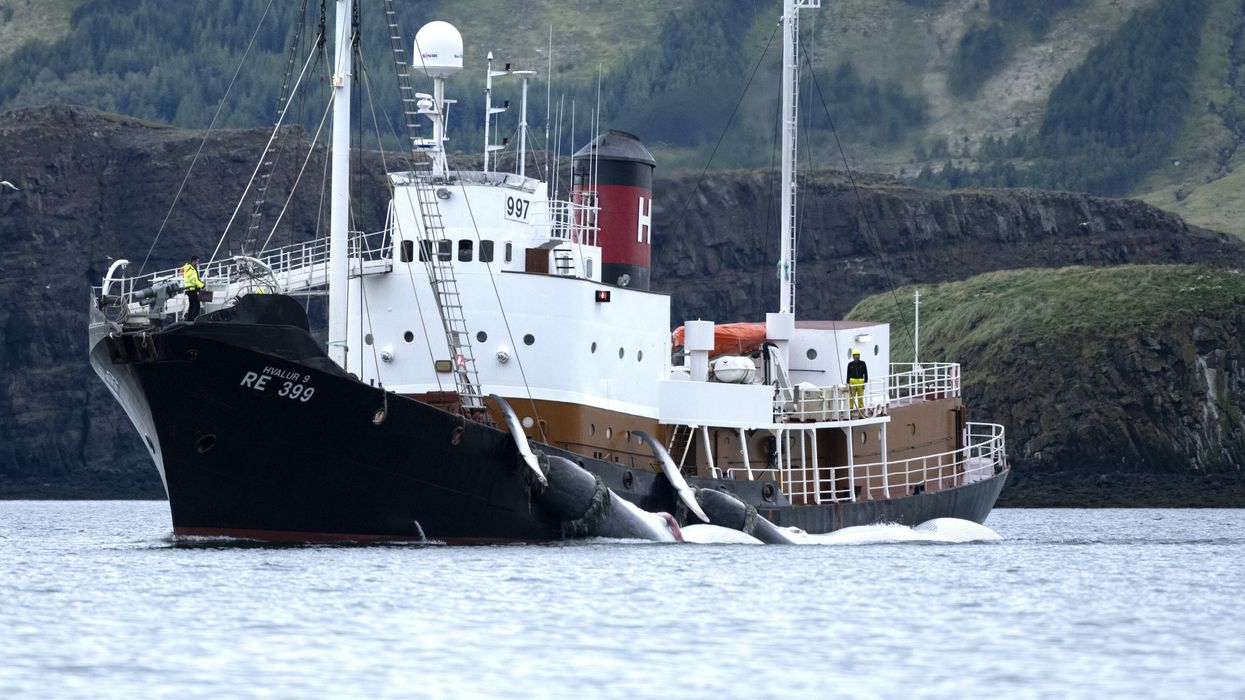
"There is no humane way to kill a whale at sea, and so we urge the minister to make this a permanent ban," said Humane Society International's Europe director.
Citing animal welfare concerns, Iceland's government is suspending this summer's whale hunt through the end of August, a move cheered by marine conservationists—who are pressing for a permanent whaling ban.
Icelandic Minister of Food, Agriculture, and Fisheries Svandís Svavarsdóttir—a member of the Left-Green Movement, which leads a three-party ruling coalition—explained Tuesday that "I have made the decision to temporarily stop whaling in light of the unequivocal opinion of the council of animal welfare specialists," according to a translation by Iceland Review.
"The conditions of the Act on Animal Welfare are inescapable in my mind: If the government and license-holders cannot guarantee welfare requirements, this activity does not have a future," she added, raising whaling opponents' hopes for a permanent ban.
Svavarsdóttir's decision follows the publication this week of a report by the country's Food and Veterinary Authority (MAST) that called last season's whale hunt illegal because it did not meet the standards required by the Icelandic Animal Welfare Act.
"This is a major milestone in compassionate whale conservation. Humane Society International is thrilled at this news and praises Minister Svavarsdóttir for ending the senseless whale killing which will spare hundreds of minke and imperiled fin whales from agonizing and protracted deaths," the advocacy group's Europe executive director Rudd Tombrock said in a statement.
"There is no humane way to kill a whale at sea, and so we urge the minister to make this a permanent ban," Tombrock added. "Whales already face so many serious threats in the oceans from pollution, climate change, entanglement in fish nets, and ship strikes, that ending cruel commercial whaling is the only ethical conclusion."
Speaking after last year's Icelandic whaling season, Sharon Livermore, the director for marine conservation at the Massachusetts-based International Fund for Animal Welfare (IFAW) noted that "studies have shown that it can take up to 25 minutes for a whale to die after being shot with an explosive harpoon."
"This summer, one fin whale was landed with four harpoons in its body. This tragic example indicates that many whales suffer a slow and agonizing death because of whaling," she added. "It is unbearable to imagine how these animals must suffer."
Danny Groves of the U.K.-based group Whale and Dolphin Conservation wrote on Tuesday:
Aside from the issues with the killing methods, the MAST report's expert panel also concluded that it is not possible to determine the sex of a whale from the ship or whether they are about to kill a pregnant female or a lactating mother with a calf. The chances of surviving for motherless whale calves are negligible. Hunting is also not possible without following the whales for some time before shooting, which causes stress and fear, and killing them is not possible in a quick and painless manner.
Referring to Iceland, Robert Read, who heads the U.K. branch of the direct action group Sea Shepherd, said that "if whaling can't be done humanely here... it can't be done humanely anywhere."
"Whales are architects for the ocean," Read added. "They help boost biodiversity, they help fight climate change by affecting the carbon cycling process."
Last summer, Hvalur—the only whaling company still operating in Iceland—slaughtered 148 fin whales in the frigid Atlantic waters around the island nation. This, despite the International Union for Conservation of Nature (IUCN) classifying fin whales as "vulnerable."
The Icelandic government allows the annual slaughter of up to 209 fin whales and 217 minke whales. While the International Whaling Commission (IWC) agreed to a global moratorium on all commercial whaling in 1986, Iceland—which is an IWC member—formally objects to the policy.
IUCN credits bans on whaling—only Iceland, Japan, and Norway allow commercial hunts—for improving the fin whale's status from "endangered" to "vulnerable" in 2018.
Hvalur previously announced that this would be its last whaling season in business, citing a decline in profits, according to Euronews Green.
"Justification is required if whaling is to be allowed," Svavarsdóttir wrote in February 2022. "It must be demonstrated that it is economically justified to renew hunting permits."
"Justification is required if whaling is to be allowed."
The minister asserted that it is "indisputable" that whaling has "not had much economic significance for the national economy in recent years."
"There is little evidence that there is any economic benefit to doing this fishing, as the companies that have a license to do so have been able to catch whales in recent years but have not done it," she continued. "There may be several reasons for this, but perhaps the simplest explanation is that sustained losses from these fisheries are the most likely."
When Japan temporarily stopped hunting whales amid international activist pressure, the country imported whale meat from Iceland. However, Svavarsdóttir noted that "the Japanese now hunt their own whale meat."
"Why, she asked, "should Iceland take the risk of maintaining fisheries that have not produced economic benefits in order to sell a product for which there is little demand?"
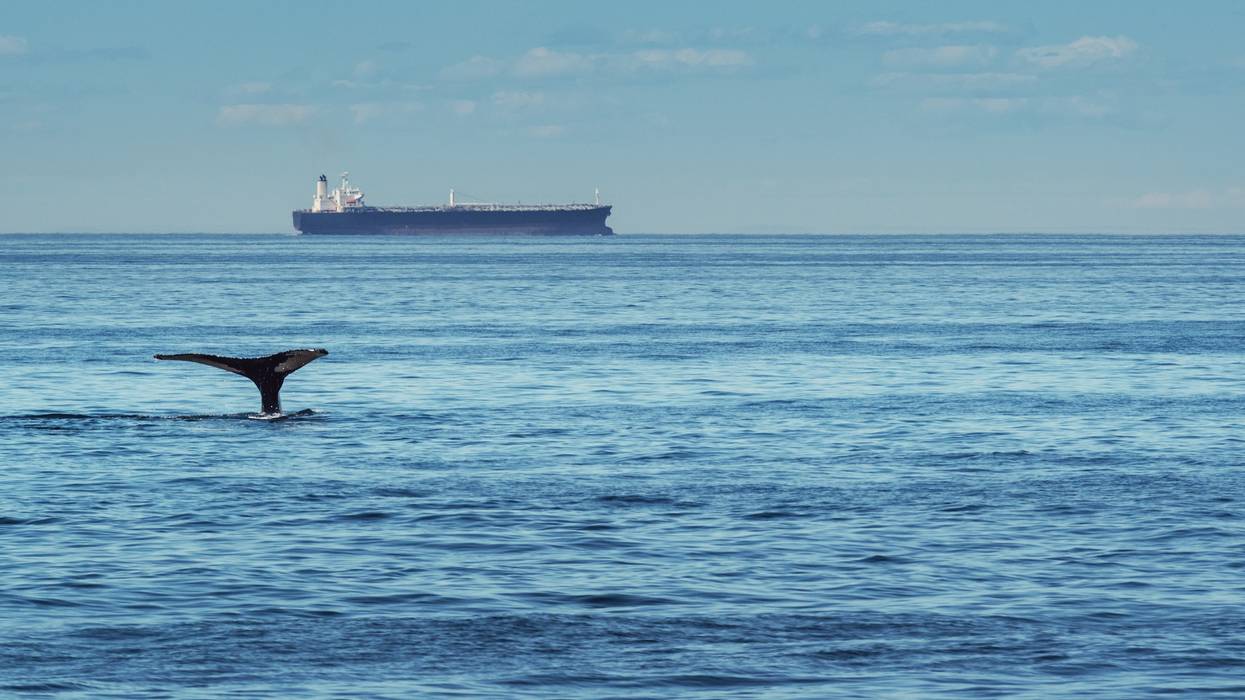
International law recognizes the interest of nations in protection of its living marine resources, including rare and endangered species, and the U.S. has the legal ability to impose speed restrictions.
Whales are the biggest creatures on earth, but they are no match for a supertanker. In recent months there has been a rash of whales washed up on U.S. shores, with broken backs or other mortal injury.
These known deaths are only a fraction of the true toll. Most of the carcasses sink at sea and are never discovered.
But, by all indications, collisions between whales and ships are on the rise, devastating whale populations. At least three large whale species in U.S. waters are on the brink of extinction, with more listed as endangered. These would be the planet’s first large whale species lost in modern history.
The leading cause of death for many of these species is preventable ship strikes. And these deaths are expected to continue growing due to a number of causes. First, global trade has grown almost exponentially driving a huge growth in ship traffic in the world's oceans. Today, there are an estimated four times as many ships at sea than just three decades ago.
Second, this increasing cargo traffic is carried by bigger ships travelling through coastal waters that are primary whale habitats. Since 2006, the size of the largest container ships has more than doubled. Many of today’s ships are so big that they do not know that they have struck a whale. Both the size of ships and cargo volume are both projected to continue spiraling upward
At the same time, containership speeds have steadily grown with speeds now averaging between 20 to 25 knots.
These factors combine to devastating effect. Whales seem to rely on last‐second avoidance. Almost all ships are quieter at lower speeds. Quieter seas allow marine life more leeway to communicate for their essential life functions. The cumulative probability of detecting one of the available “cues” of whale’s presence (and direction of travel) decreases with increased ship-to-whale distances. Moreover, a big ship creates a “bow null effect” that blocks engine noise by the bow, creating a quiet zone in front of the vessel, leaving a whale unaware of the pending threat.
The net result of thousands of massive ships crisscrossing waters which are prime whale habitat is that many of our busiest coastal shipping routes have become death traps. For example, the Southern California shipping lanes to San Francisco cover the two busiest hubs in California and, not coincidentally, are also two epicenters of whale mortality from ship strikes.
Despite looming extinctions of whale populations and increasing vulnerability of whales to ship strikes in U.S. waters, the National Oceanic & Atmospheric Administration lacks a coherent strategy for avoidance of these collisions. Instead, the U.S. has a piecemeal approach, limited by certain species and in certain areas.
In the absence of mandatory restrictions in much of U.S. waters, NOAA and other authorities have depended on voluntary measures, with mixed success. For example, a new analysis of automated ship tracking data shows that nearly 90 percent of vessels transiting mandatory speed zones to protect the highly endangered North Atlantic right whales are violating the speed limits.
In the San Francisco area, cooperation rates with NOAA’s voluntary speed limits have been hovering around 62 percent for the last three years, with compliance varying by company. Maersk, one of the world’s largest shipping companies, has slowed down 79 percent of the time in the Santa Barbara Channel. But ships operated by Matson, a major Pacific shipper, slowed only 16 percent of the time.
Similarly, collision avoidance techniques are mostly voluntary, and these programs are widely ignored by shippers. But these voluntary efforts do demonstrate that application of active whale avoidance techniques by large ships is feasible. Yet the effectiveness of these measures requires some form of mandatory enforcement to ensure widespread compliance.
Last year, Congress directed NOAA to establish a near real-time monitoring and mitigation program to reduce the risk to large cetaceans posed by vessel strikes. My organization is proposing a plan to NOAA that directly responds to this congressional direction. We urge the creation of Whale Safety Zones for all large ships entering or leaving U.S. ports or transiting marine sanctuaries and monuments. While in these Whales Safety Zones, these ships must reduce their speed and take other whale avoidance measures that studies show sharply reduces whale mortality when applied.
International law recognizes the interest of nations in protection of its living marine resources, including rare and endangered species, and the U.S. has the legal ability to impose speed restrictions.
What is required, however, is the political will to adopt mandatory safety measures that will be effective in stemming the rising tide of preventable whale deaths. Unless NOAA acts in a comprehensive fashion we fear the nation will witness the onset of a cascade of whale extinctions.