

SUBSCRIBE TO OUR FREE NEWSLETTER
Daily news & progressive opinion—funded by the people, not the corporations—delivered straight to your inbox.
5
#000000
#FFFFFF
To donate by check, phone, or other method, see our More Ways to Give page.
Daily news & progressive opinion—funded by the people, not the corporations—delivered straight to your inbox.
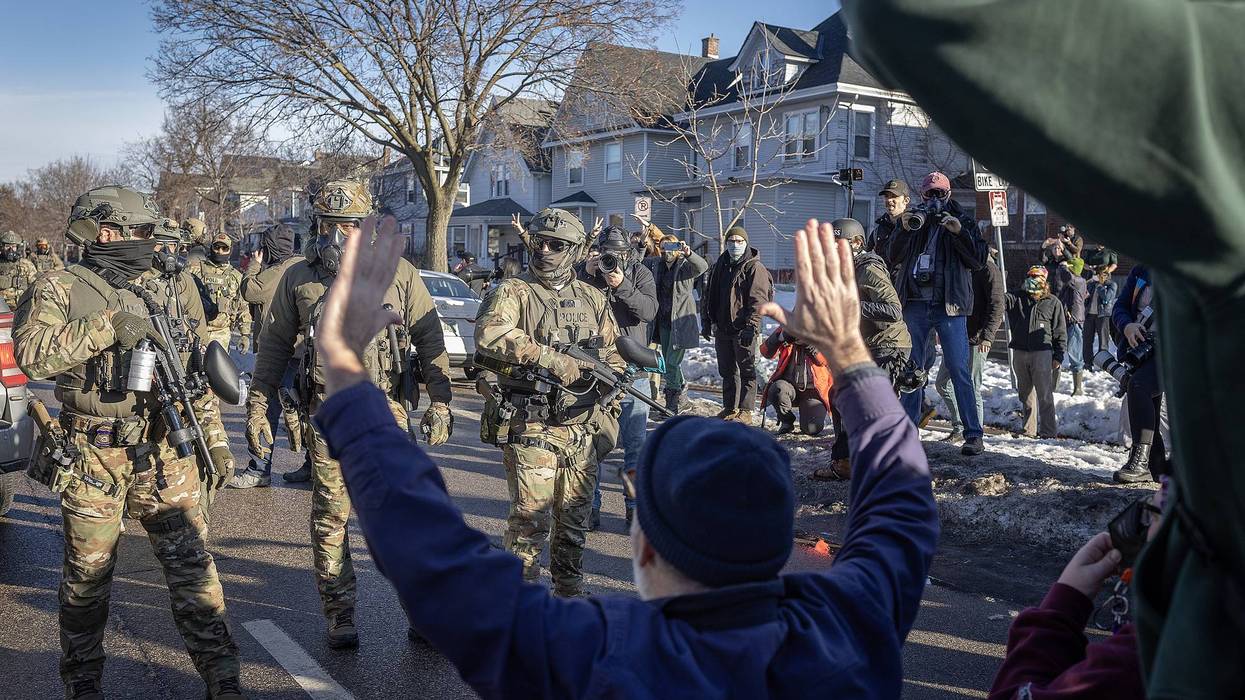
Wake up, America. You're living in a nightmare.
Imagine living in a country that can arrest and imprison you whenever it wants, without any judge or jury deciding you did anything wrong. It can call you a “domestic terrorist” and put you in prison for life. It can even execute you on the basis of nothing more than its own decision that you’re dangerous.
Well, I have bad news for you. You’re living in that country right now.
As he loses power and popularity — and faces mounting resistance abroad and at home — Trump is enlarging his police state.
His regime is having ever more people arrested, imprisoned, and deported without any judge or jury deciding they did anything wrong. It’s using racial profiling in deciding whom to target. It’s making warrantless searches and seizures of people, their cars, and their homes. All of this violates the US Constitution.
Trump’s police state not only continues, but it is growing larger by the day.
According to a new analysis by The New York Times, the regime’s surge in immigration arrests this summer has swept up thousands of people, most of whom have not been charged with or convicted of a crime (less than 4 percent had a past violent criminal conviction).
Those being arrested, imprisoned, and potentially deported include some married to US citizens, others who entered the US legally and are pursuing asylum claims, and some who came here with temporary legal status that the Trump regime has decided to revoke.
In other words, they were all here legally.
If you have temporary protected status because you escaped from inhumane conditions in another country, ICE might now summon you to an ICE office and put a monitor around your ankle — even if you have no criminal history and are in full compliance with your immigration status. The Trump regime has unilaterally revoked temporary protected status and claims the ankle monitors are necessary to track people whom it may want to deport at some point.
You’re not even safe if you’re a US citizen born in America. ProPublica has found that more than 170 US citizens have been wrongfully detained by ICE agents in raids and protests over a recent nine-month span. It described cases involving alleged force and multiday detention without access to counsel or communication.
Some estimates put the number of US citizens subjected to ICE as much higher, but there’s no way of knowing because there’s no legal process for filtering out and protecting American citizens, just as there’s no legal process for protecting anyone else who’s here legally. Trump’s police state is extrajudicial, and it’s being done in secret.
You might even be murdered, without a trial finding you guilty of anything. In addition to Renee Good and Alex Pretti in Minnesota last January, ICE agents have murdered two others just this summer.
One was Lorenzo Salgado Araujo, murdered by ICE in Houston on July 7, 2026. Salgado Araujo had lived in the US for decades. ICE agents pursued him in unmarked cars and shot him while he was driving a work crew to a job site. The Department of Homeland Security claims Salgado Araujo tried to use his vehicle as a weapon against an officer, but witnesses dispute this account.
The other was Johan Sebastian Durán Guerrero, murdered by ICE on July 13, 2026, in Biddeford, Maine. Durán Guerrero was a 25-year-old immigrant from Colombia. Agents pursued him while he was driving to work. The Department of Homeland Security claims its agent feared for public safety as Durán Guerrero tried to drive away, but elected officials and family members dispute this account, noting that Durán Guerrero was not an intended target of the immigration operation.
None of these murders has been fully investigated.
You might also be murdered without a trial if you happen to be on a vessel off Latin America’s Caribbean coast or in the eastern Pacific Ocean. A mere accusation of drug trafficking is enough to kill you, without any evidence presented before any court of law or neutral magistrate.
Historians looking back on this shameful period will wonder how this was allowed.
The US military announced Monday that it had again carried out a strike on a vessel in the eastern Pacific Ocean, killing two people it accused of trafficking drugs — bringing the overall death toll to 223 people killed in 67 strikes during the nearly yearlong US campaign of bombing boats alleged to be smuggling drugs.
Finally, the Trump regime is imprisoning Americans who demonstrate against its police state.
In June, in two federal courts sentenced nine people who protested outside an immigrant detention facility in Texas to 30 to 100 years in prison, after the regime accused them of being members of Antifa. During the protest, a police officer was shot; he survived.
Those sentences are longer than the harshest sentence handed down to any of the convicted rioters in the January 6 attack on the US Capitol in 2021 (all of whom have since received pardons or commutations from Trump).
These cases are the first to incorporate new guidance from the regime that classifies Antifa as a “domestic terrorist organization.” That’s despite the fact that Antifa is a decentralized movement rather than a single organization and that there is no federal charge of domestic terrorism under existing US law.
I want to make three concluding points about all this.
First, Trump’s police state not only continues, but it is growing larger by the day. Kristi Noem’s replacement as secretary of homeland security, Markwayne Mullin, along with his boss in the White House, Stephen Miller, and the secretary of defense, Pete Hegseth, have more money, manpower, and firepower than ever. They are ramping up all of their extrajudicial arrests, detentions, deportations, and murders.
The only difference between last year and now is they’re no longer announcing what they’re doing with fanfare and braggadocio, because the American public has grown wary of it.
Second, none of us is safe from this because the arrests, installations of ankle bracelets, imprisonments, deportations, and murders are made without any judge, jury, or neutral party deciding that the assumptions on which they’re based are adequate and truthful.
Not even “domestic terrorism” arrests and lengthy prison sentences necessitate judicial inquiry into what exactly is meant by “domestic terrorism” and whether defendants have done anything to justify that appellation.
Finally, this growing menace is cruel, inhumane, and likely unconstitutional. It is causing hundreds of thousands of families in our country extreme mental distress; many people are not leaving their homes for fear of being arrested or worse. It is likely chilling First Amendment rights to speak up and protest against these atrocities.
Historians looking back on this shameful period will wonder how this was allowed. How can one maniacal man in the Oval Office, his fanatical assistant, and two suck-up Cabinet secretaries have been so cruel and oblivious to basic human rights? How can their Republican enablers in Congress have been willing to go along? How can the American public have been so quiet?
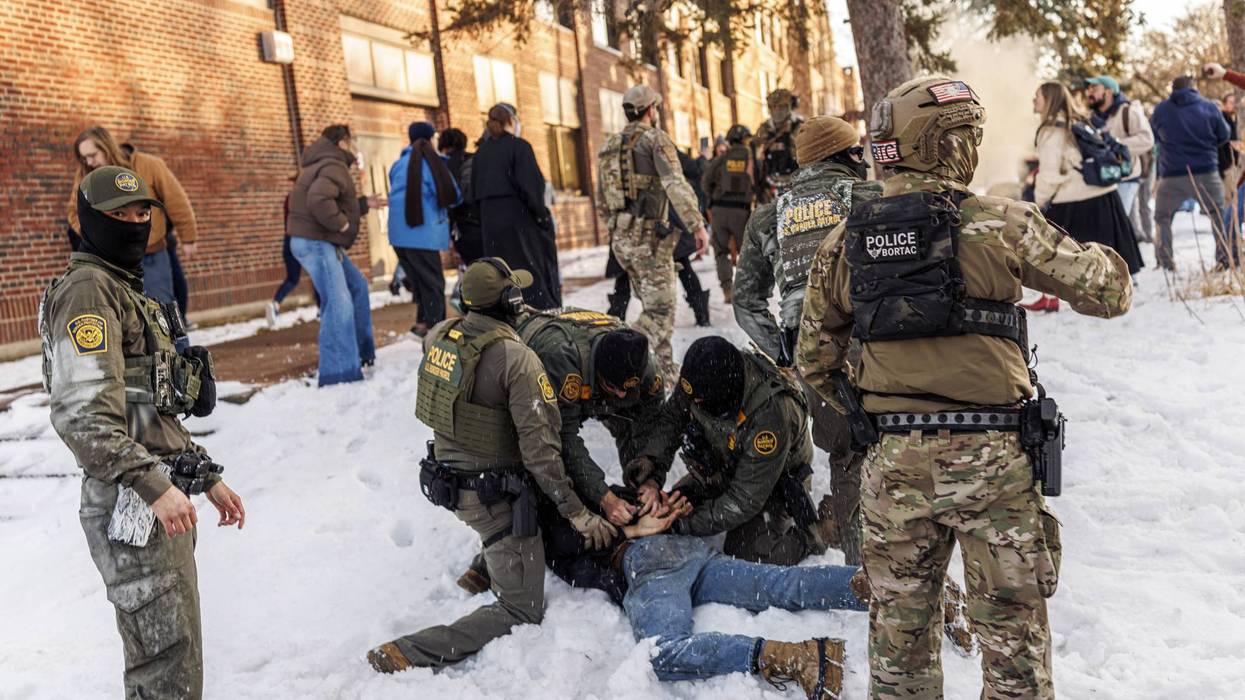
A republic cannot survive this indefinitely. The removal of Donald Trump from office—which is now imperative—is not about vengeance; it is about preservation.
There are moments when the danger facing a nation is not announced by sirens or declarations of war, but by something quieter and more corrosive: fear—abroad and at home—paired with the normalization of lawlessness at the very top of power.
The United States is living through such a moment.
A growing number of economists, constitutional scholars, and foreign-policy experts—including Professor Jeffrey Sachs—have warned that the country is now operating under an effectively unchecked presidency, and this is very dangerous. What once sounded theoretical has become tangible. Executive conduct has crossed from aggressive policy into outright violations of constitutional structure, international law, and basic norms of human dignity—leaving Americans and foreign populations alike unsure where law ends and coercion begins.
Consider Venezuela. A sitting head of state was forcibly apprehended and remains detained despite long-established principles of head-of-state immunity recognized by both international law and US courts. No congressional declaration of war was issued. No authorization for the use of military force was granted. Yet naval deployments, explicit threats of escalation, and coercive demands have proceeded as if constitutional limits were optional.
This is not a policy disagreement. It is a rupture of the separation of powers.
A republic cannot survive this indefinitely.
Under the Constitution, Congress—not the President—decides when the nation enters hostilities. When force is used without that authorization, the injury is not foreign; it is domestic. It alters the legal obligations of service members, bypasses elected representatives, and establishes precedents that future presidents will inherit and may get to expand. What is done once without consequence becomes permissible forever.
The international consequences are equally severe. When restraint is publicly described as conditional on “cooperation,” the message is unmistakable: compliance is demanded under threat. Under international law, consent extracted through coercion is no consent at all. Agreements reached in such conditions are void, unstable, and corrosive to global order. They invite retaliation, miscalculation, and escalation.
Against this backdrop, the President’s own conduct has crossed from provocation into mockery.
Posting a mug-style image of himself online with the caption “Interim President of Venezuela” is not political satire—it is a display of contempt for a population already living under the shadow of military threat. Venezuelan civilians fear for their lives. Survivors of armed attacks have described, in horrific detail, the killing of guards and soldiers by US troops acting like mercenaries with no mercy, aligned with US objectives, sparing only the President and his wife to be taken alive. In that context, ridicule from the most powerful office on earth is not harmless. It is psychological warfare by indifference.
And the fear does not stop at the border.
Inside the United States, many citizens have grown quiet—not because they are indifferent, but because they are afraid. Afraid of retaliation. Afraid of being singled out. Afraid that the institutions meant to protect them are bending rather than holding. Silence, under these conditions, is not consent. It is duress.
That fear is reinforced when the President openly refuses to rule out acquiring foreign territory by force. When Greenland and Denmark rejected his demands, the response was not reassurance but continued ambiguity. Sovereignty, once treated as inviolable, was suddenly spoken of as negotiable—through pressure, leverage, or worse. This is not how democracies speak. It is how empires test boundaries.
What ties these episodes together is not ideology, but the erosion of restraint. Courts are pressured to proceed where jurisdiction is barred. Congress is sidelined in matters of war and peace. Sovereign resources are discussed as assets to be reassigned under coercive conditions. Threats substitute for diplomacy. Mockery substitutes for leadership.
A republic cannot survive this indefinitely.
The Constitution was designed precisely to prevent this concentration of power. War powers were placed in Congress to slow escalation. Immunities were recognized to prevent cycles of retaliation. Diplomacy was meant to replace force, not disguise it. When these guardrails fail, the danger is not merely to foreign nations—it is to the constitutional order itself.
The most alarming feature of the present moment is not outrage, but normalization. Each uncorrected violation lowers the threshold for the next. Each silence under fear teaches power that it need not explain itself.
America is now at a point where clarity is no longer optional. A President who acts beyond constitutional authority must be confronted with the limits of that authority. Violations of the Constitution and of international law must be acknowledged—not obscured, denied, or ridiculed—and immediately remedied through full and lawful redress (as guaranteed by the First Amendment’s right to petition the Government for a redress of grievances). The alternative is not ambiguity. It is consequence.
If redress is refused, if illegality is neither recognized nor corrected, the Constitution provides a final safeguard. Removal from office is not vengeance; it is a mechanism of preservation. It exists precisely for moments when power becomes unmoored from law.
“America Under Siege” does not mean tanks in the streets. It means a nation deciding whether constitutional limits still matter when they become inconvenient. And history is unforgiving to republics that delay that decision for too long.
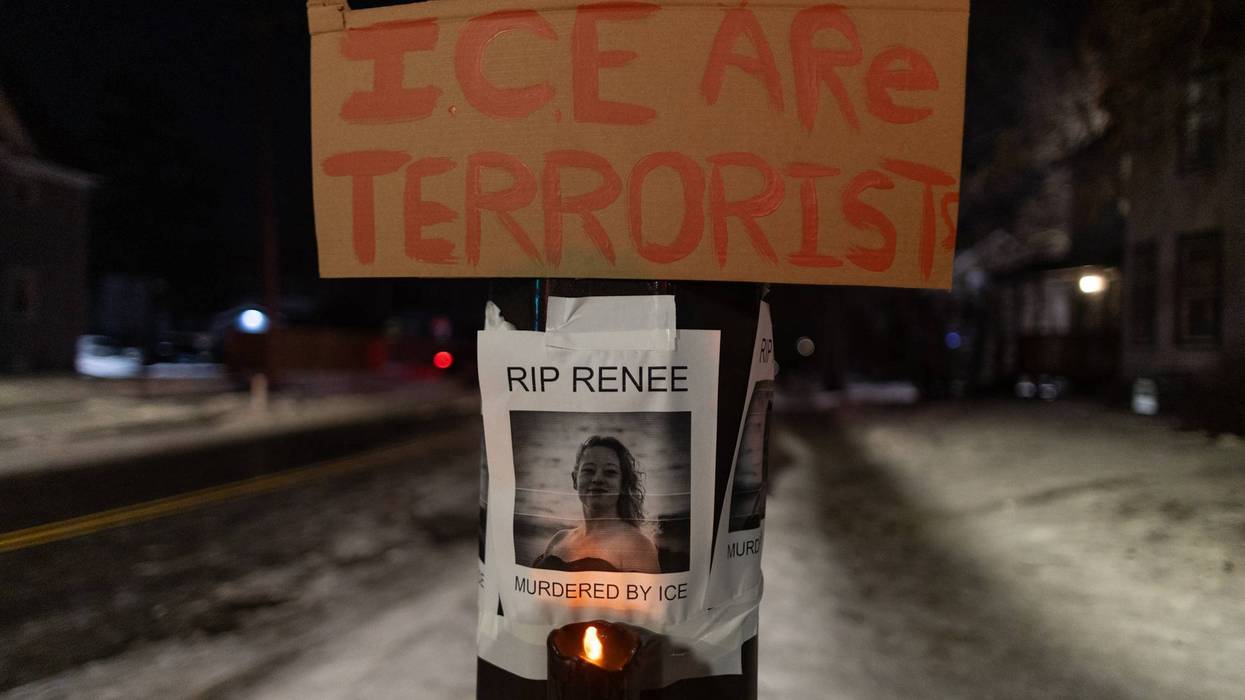
When state authority stops serving the people but instead lords over them, stops being questioned by the media and the people, and stops fearing consequences because it lives behind a shield of immunity, a police state is inevitable.
When I read that the young mother who was executed at point-blank range by one of President Donald Trump’s Immigration and Customs Enforcement goons on Wednesday was named Renee Nicole Good, it sent a chill down my spine.
As the pain and outrage was washing through me, it also struck me as almost too much of a coincidence that she was there protesting state violence and Ben Franklin had been using the name “Silence Dogood”—as in “Do Good”—to warn American colonists about the very same dangers of state violence.
When 16-year-old Franklin slipped his first Silence Dogood essay under the door of his brother’s print shop in 1722, America had few police departments, no body cameras, no qualified immunity, and few militarized patrols prowling city streets. But young Franklin already understood the danger.
Writing as a fictional widow, Franklin warned that “nothing makes a man so cruel as the sense of his own superiority.” The remark was in the context of self-important ministers, magistrates, and petty officials, but he was also talking about raw state power itself as we saw with the execution of Renee Nicole Good.
If we want to live in the democratic republic Franklin, Paine, and Madison imagined where power is given by “the consent of the governed,” then outrage isn’t enough.
Power that is insulated, Franklin taught, answers only to itself and believes its very authority excuses the violence it uses.
Franklin’s insight didn’t die on the printed page but, rather, became the moral backbone of the American Revolution. As Do-Good, he repeatedly cautioned us that power breeds cruelty when it’s insulated from consequence, that authority becomes violent when it believes itself superior, and that free speech is usually the first casualty of abusive rule.
In "Essay No. 6", in 1722, Dogood wrote:
Whoever would overthrow the Liberty of a Nation must begin by subduing the Freeness of Speech.
Renee Nicole Good was on that Minneapolis street to express her freedom of speech, her outrage at the crimes, both moral and legal, being committed by ICE on behalf of Donald Trump, Tom Homan, Kristi Noem, and Stephen Miller.
Thomas Paine took Franklin’s warning and sharpened it into a blade. Government, Paine said, is a “necessary evil” but when it turns its legally authorized violence against its own people, it becomes “intolerable.” Authority doesn’t legitimize force, Paine argued; instead, the ability to use force without accountability inevitably corrupts authority.
And here we are. This is the ninth time ICE agents have shot into a person‘s car, and the second time they’ve killed somebody in the process.
For Paine, violence by agents of the state isn’t an aberration, it’s the default outcome when power concentrates without clear accountability. Where Franklin warned about cruelty born of a sense of superiority (as armed, masked white ICE officers search for brown people as if they were the Klan of old), Paine warned us that force will always be directed against the governed unless that power is aggressively constrained.
James Madison—the “Father of the Constitution”—then took both men at their word. He didn’t design a constitution that assumed virtue; instead, he designed one that assumed abuse.
“If men were angels, no government would be necessary,” he wrote in Federalist 51, adding, “You must first enable the government to control the governed; and in the next place oblige it to control itself.”
Because we and our politicians and police aren’t angels, Madison pointed out, state power must be restrained, divided, watched, and continuously challenged. Which is why the Framers of the Constitution adopted the checks-and-balances system—splitting the government into three co-equal parts—that Montesquieu recommended, based on what he had learned from the Iroquois (as I lay out in The Hidden History of American Democracy).
Franklin himself became even clearer about the threat of unaccountable state-imposed violence as he aged. Governments, he repeatedly warned, always claim violence is necessary for safety and we saw that Wednesday when puppy-killer Kristi Noem claimed that Renee Good was a “domestic terrorist.” Her comment is the perfect illustration of Franklin’s assertion that state violence, once normalized, always tries to claim justification.
To add insult to murder, Trump pathetically waddled over to his Nazi-infested social media site and claimed:
The woman driving the car was very disorderly, obstructing and resisting, who then violently, willfully, and viciously ran over the ICE Officer, who seems to have shot her in self defense. Based on the attached clip, it is hard to believe he is alive, but is now recovering in the hospital… [T]he reason these incidents are happening is because the Radical Left is threatening, assaulting, and targeting our Law Enforcement Officers and ICE Agents on a daily basis.”
Silence Dogood would have confronted him head-on, as she-Franklin repeatedly did with the petty, self-important officials of colonial New England. He repeatedly noted that surrendering liberty for a little temporary security not only doesn’t prevent state brutality but actually it invites it. In a 1759 letter, Franklin explicitly warned us about men like Donald Trump and the siren song of “law and order”:
Those who would give up essential Liberty, to purchase a little temporary Safety, deserve neither Liberty nor Safety.
Once a state teaches its agents that force is the solution, force becomes their habit. That’s how police states are formed out of democracies, as the citizens of Russia, Hungary, and Venezuela have all learned. And now, it appears, we’re learning as America becomes the world’s most recent police state.
This isn’t an uniquely American problem: It’s older than our republic. And Franklin told us exactly how it happens: When state authority stops serving the people but instead lords over them, stops being questioned by the media and the people, and stops fearing consequences because it lives behind a shield of immunity, a police state is inevitable.
As Minnesota Gov. Tim Walz noted Wednesday, the killing of Renee Nicole Good in Minneapolis wasn’t a “tragic anomaly.” It was the predictable outcome of systems Franklin would have recognized instantly; the kind of corrupt strongman systems that reward domination, excuse cruelty, and punish dissent.
Trump wants us on the “radical left” to shut up and go away. But Ben Franklin taught us that silence in the face of power isn’t neutrality but is, instead, an extension of permission. He wrote as Silence Dogood precisely because he understood that abuse flourishes when citizens turn their eyes away and lower their voices.
If we want to live in the democratic republic Franklin, Paine, and Madison imagined where power is given by “the consent of the governed,” then outrage isn’t enough. We must demand accountability, insist on transparency, and refuse to accept state violence and a firehose of official lies as the price of order.
Three centuries ago, a teenage printer’s apprentice warned us that silence enables abuse. He was right then. He is right now.
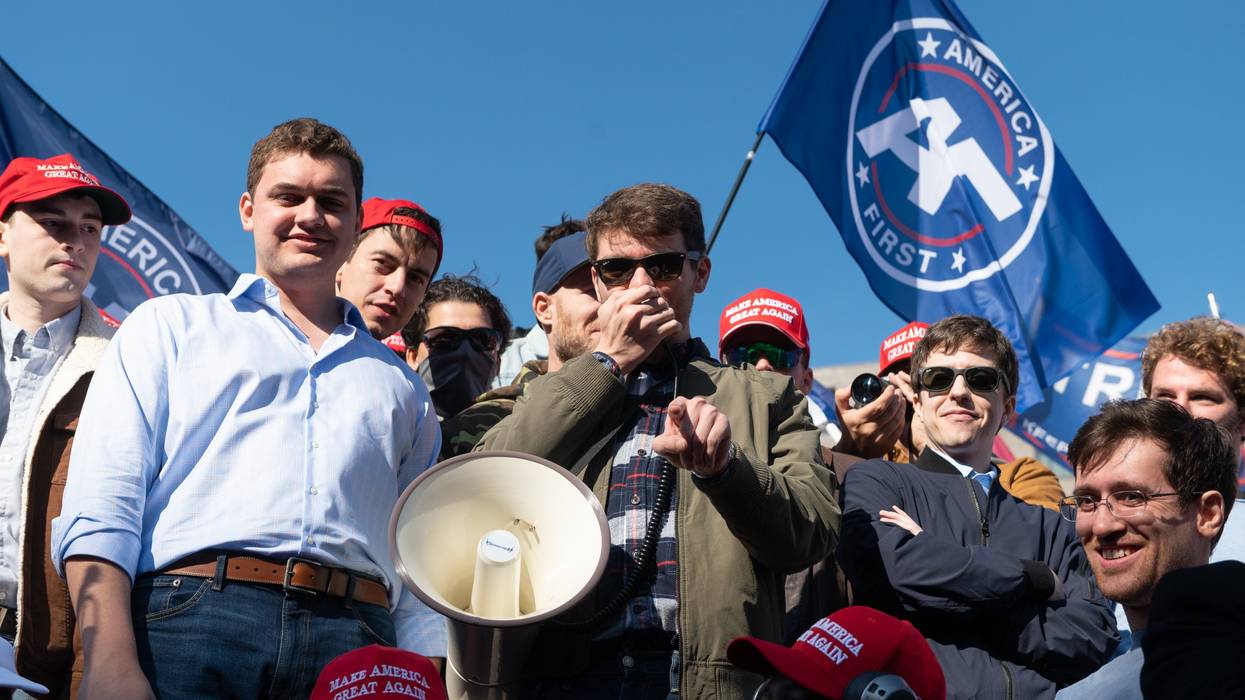
By declaring all opposition to themselves anti-fascism, MAGA isn’t leaving much mystery about their leanings.
For the last few weeks, Republican Party leadership has been carrying out a campaign to, essentially, classify the word “fascist” as hate speech against right-wingers. But while some Republicans shy away from the term, plenty of others, particularly among their base and their influencers, find it edgy and hip. Some have even begun to wear it as a badge of honor.
Most notably, last week, members of the Republican Youth—er, Young Republicans—were caught in a group chat declaring their love of Adolf Hitler and expressing fondness for his policy of mass extermination in gas chambers.
The incident caused some drama and led to some repercussions, but not as much as you might hope. Vice President JD Vance dismissed the story, saying, “Kids do stupid things, especially young boys… They tell edgy, offensive jokes. And I really don’t want us to grow up in a country where a kid telling a… very offensive, stupid joke is cause to ruin their lives.” By and large, that seems to be the tack most Republicans are taking, certainly from the top down.
Vance’s attempt to downplay the chats as just kids being edgy may work for some, but the truth is that many members of the chat were grown men well into their 30s, nearly Vance’s age, who occupied positions of political influence. Maybe they were joking, but it’s not clear where the irony or the punchlines were—and it’s a poor choice of comedic material if the party wants to shake the fascist label.
Ever since President Donald Trump’s takeover of the GOP, Republicans have struggled with this fascist comparison. Actually, the left has used the term to describe far-right policies since long before Trump, but Trump’s Mussolini-like mannerisms, dictatorial ambitions, and cult of personality have made the term feel like a natural fit and brought it into more common use, especially in his second term.
After the assassination of Charlie Kirk in September, Republicans like Trump and Speaker of the House Mike Johnson (R-La.) blamed the casual use of the word for inspiring Kirk’s murder and other acts of violence. Johnson said: “Calling people Nazis and fascists is not helpful… There are some deranged people in society, and when they see leaders using that kind of language… it spurs them on to action. We have to recognize that reality and address it appropriately.”
Simple compassion might, in fact, be regarded as an unlawful, anti-fascist, terrorist thoughtcrime.
It was also around this time that they began to escalate their campaign against “antifa,” characterizing it as a political organization and threatening to go after its organizers and funders. In truth, though, there is no formal group called antifa. Antifa is short for anti-fascism, and it exists only as an opposition to fascism. So Trump’s position of anti-anti-fascism, if you reduce the double negative, is simply fascism.
Maybe the most dramatic step so far in this anti-antifa campaign was Trump’s issuance of NSPM-7, a presidential memo that accuses people of using the word “fascist” as an excuse to “justify and encourage acts of violent revolution,” and further identifies “anti-Americanism, anti-capitalism, and anti-Christianity; support for the overthrow of the United States Government; extremism on migration, race, and gender; and hostility towards those who hold traditional American views on family, religion, and morality” as indicia of potential terroristic inclinations and activities.
One can only guess how the administration is defining these terms, but if their actions to date are anything to go by, simple compassion might, in fact, be regarded as an unlawful, anti-fascist, terrorist thoughtcrime, and anyone who holds such views can be subject to, at a minimum, investigation, surveillance, and harassment by law enforcement—all of which sounds like anti-anti-fascism, to be sure.
At this point, it’s important to examine just what, exactly, fascism is. The term has certainly been abused in America. For many, “fascist” has just become shorthand for “someone I don’t like,” or, more specifically, “someone who’s making me do something I don’t want to do.” To wit: Speed limits are fascism. No-smoking signs are fascism. Mask mandates during a pandemic are fascism. Taxes are fascism. And so on.
Alas, few historians would describe such basic laws or civic norms as fascism. While the word doesn’t have any one universally agreed upon definition, and even self-identified fascist societies differ in significant ways, there are a few hallmarks that distinguish fascism from other philosophies. The more of these qualities a government or a society has, the more fascistic it is:
Any honest observer can see how much of the definition fits. Not all of it is unique to Trump, but he does tick more boxes than the average politician. Soon enough, though, simply pointing that out might land you in a heap of trouble. Unless, of course, Republicans shift gears and decide to embrace the term, as at least some of them are beginning to do.
Back in July, before Trump ratcheted up his campaign against antifa, Fox News comedian Greg Gutfeld went on a revealing rant about his feelings on the word Nazi and how it relates to him. Gutfeld said on his show: “The criticism doesn’t matter to us when you call us Nazis. Nazi this and Nazi that… We need to learn from the Blacks. The way they were able to remove the power from the n-word by using it. So from now on it’s, ‘What up, my Nazi?’”
Gutfeld’s show is intended as a comedy, though you might not recognize it as one. Still, it’s a peculiar joke to make, and frightening to consider who it might resonate with. And this attitude on the right is being more openly embraced: that fascism is hip or edgy and that all the progress made on freedoms and rights for gays, trans people, minorities, and women needs to be rolled back. For instance:
Republican influencers and the MAGA base are racing to the bottom, fast. It’s known as vice signaling: Each one trying to outdo the next in depravity to prove they are as un-woke and un-PC as possible, even if it reverts them back to plain-old KKK and neo-Nazi hatred and barbarism. It’s hard to say what abuse, constitutional violation, or act of violence they won’t enthusiastically push for, as long as it’s coming from the right side and being inflicted on an enemy. These aren’t ideas we have to debate. This is fascism, and civilized society already won the argument against it in World War II.
Sadly, fascism is probably appealing to a lot of Americans, even if most are still hesitant to embrace the term. It’s in our national DNA. Our Jim Crow laws and citizenship standards even provided a model for Hitler’s antisemitic campaigns. There have always been bigoted, violent people in this country, and they appreciate a ruler who reflects them. And just as they were in the 1930s, the giant industrialists who shape our politics and society are all too happy to ally themselves with fascist forces, because they know a repressive state can protect their own power from being challenged.
But there are also strains of anti-fascism in our DNA. My grandpa, a veteran of World War II, was antifa, as were many members of the Greatest Generation. And it’s heartening to see older folks and veterans declare themselves antifa, even in the face of Trump’s threats. It should be a source of pride that we’ve overcome many of our bigotries and xenophobias. Despite all the loud fascist voices in right-wing media and social platforms, I still believe the vast majority of people believe in basic human rights for all. The No Kings protests on October 18 were a good showing of this solidarity.
As this administration goes further off the deep end—deploying the military against American citizens; sending masked Immigration and Custom Enforcement agents to terrorize poor and immigrant communities; profiling, detaining, and abusing people, including American citizens, on mere suspicion of being “illegal;” and disappearing people with no trial to God-knows-where—it’s no accident that they have declared anti-fascism their greatest enemy.
Maybe those 38-year-old kids in the Young Republicans chat were just joking about gas chambers and loving Hitler. But given everything else this administration is doing and everything their propagandists are saying, it falls a bit too close for comfort to, “It’s funny because it’s true.”
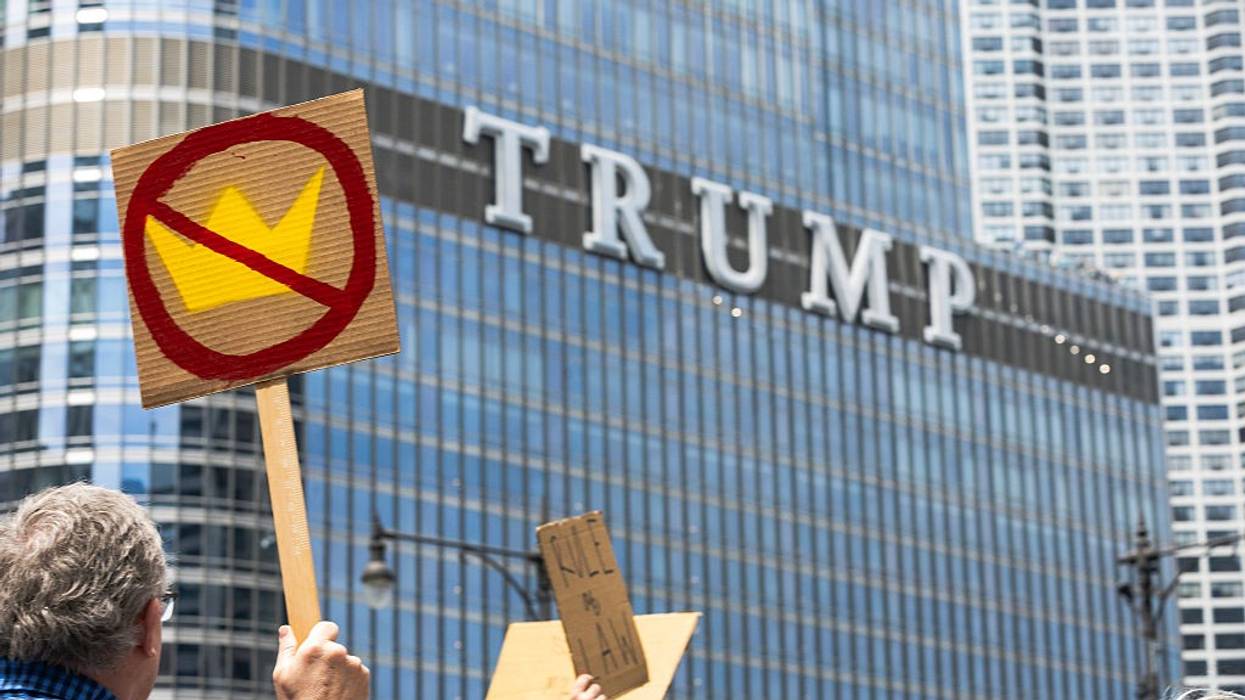
"The order appears to be a green light to law enforcement and intelligence to spy on and investigate left-wing political speech," said one First Amendment advocate.
The executive order issued by US President Donald Trump Monday evening claimed a legal authority that the president doesn't have to designate the "antifa" movement as a "domestic terrorist organization," despite the fact that no central group exists to assign the designation to—but rights advocates said Trump's claims about antifa weren't the point of the order.
"This isn’t an attack on antifa," said Melanie D'Arrigo, executive director of the Campaign for New York Healthcare. "It’s an attack on our rights."
The executive order states that antifa, a portmanteau of the term "anti-fascist," will be designated a "domestic terrorist organization." The movement is comprised of autonomous individuals and loosely affiliated groups who oppose fascism, but has no central organizational structure or leaders. People associated with the movement mobilized in 2017 to oppose the white nationalist "Unite the Right" rally in Charlottesville, Virginia, where a nonviolent anti-racist protester, Heather Heyer, was killed by a white supremacist who rammed a car into a group of demonstrators.
In the order, the president pinned blame for a "pattern of political violence" on anti-fascist protesters and organizers and pledged that the executive branch will "utilize all applicable authorities to investigate, disrupt, and dismantle any and all illegal operations—especially those involving terrorist actions—conducted by Antifa or any person claiming to act on behalf of Antifa."
The order was written so broadly, said journalist Prem Thakker of Zeteo, that it suggests "someone recording masked agents snatching people off the streets, or asking these agents what they're doing, can be deemed a 'terrorist.'"
The president has ordered US citizens, he added, "to be anti-antifa."
With no central organization to assign the "domestic terrorist organization" to, said rights advocates, the executive order will likely be used to crack down on a wide range of left-wing protest activity and speech.
Aaron Reichlin-Melnick, senior fellow at the American Immigration Council, was among those who noted that no US law or statute gives the president the authority "to designate anything as a 'domestic terrorist organization.'"
All 219 groups that have been designated as terrorist organizations, such as ISIS and al-Qaeda, are foreign entities, and the designation makes it possible for people who provide material support to those groups to be prosecuted by the federal government.
"This would appear to have no direct legal effect beyond acting as a statement of policy for the executive branch," said Reichlin-Melnick.
Chip Gibbons, policy director at the First Amendment advocacy group Defending Rights and Dissent, said that while the order "is without statutory basis, a close read of the language mirrors existing FBI powers, such as 'terrorist enterprise investigations' into 'anarchist extremists.'"
"The order appears to be a green light to law enforcement and intelligence to spy on and investigate left-wing political speech," said Gibbons. "Given the FBI’s current guidelines, which encourage preventative intelligence in the name of counterterrorism, the FBI will have no problem continuing its sordid history of preemptively investigating political speech under the pretext of thwarting terrorism.”
At The Conversation, Dafydd Townley, a University of Portsmouth teaching fellow, wrote that the classification of antifa "as a terrorist organization could have profound effects on the First Amendment rights of large numbers of law-abiding US citizens."
"It would be a serious danger to American democracy if US citizens were unable to voice their protest and exercise their right to free speech because of this classification," Townley wrote.
The designation was announced amid widespread public opposition to many of Trump's policies, including the deployment of federal troops to US cities to crack down on unhoused populations, immigrant communities, and what the president has claimed is a wave of violent crime—despite statistics showing crime is on the decline in all the cities he's targeted.
Immigration and Customs Enforcement agents have already responded violently to people protesting raids and arrests of immigrant neighbors, including last week when an ICE agent was filmed throwing US congressional candidate Kat Abughazaleh to the ground at a protest in the Chicago suburbs.
"This isn’t about 'antifa'—whatever that is," said journalist Erin Overbey on Tuesday. "Trump’s new executive order is written so that anyone protesting against the US government, ICE, or even top politicians can potentially be deemed a terrorist."
"It’s federal weaponization against free speech and the right to protest itself. Full stop," she said. "And it’s un-American as hell."
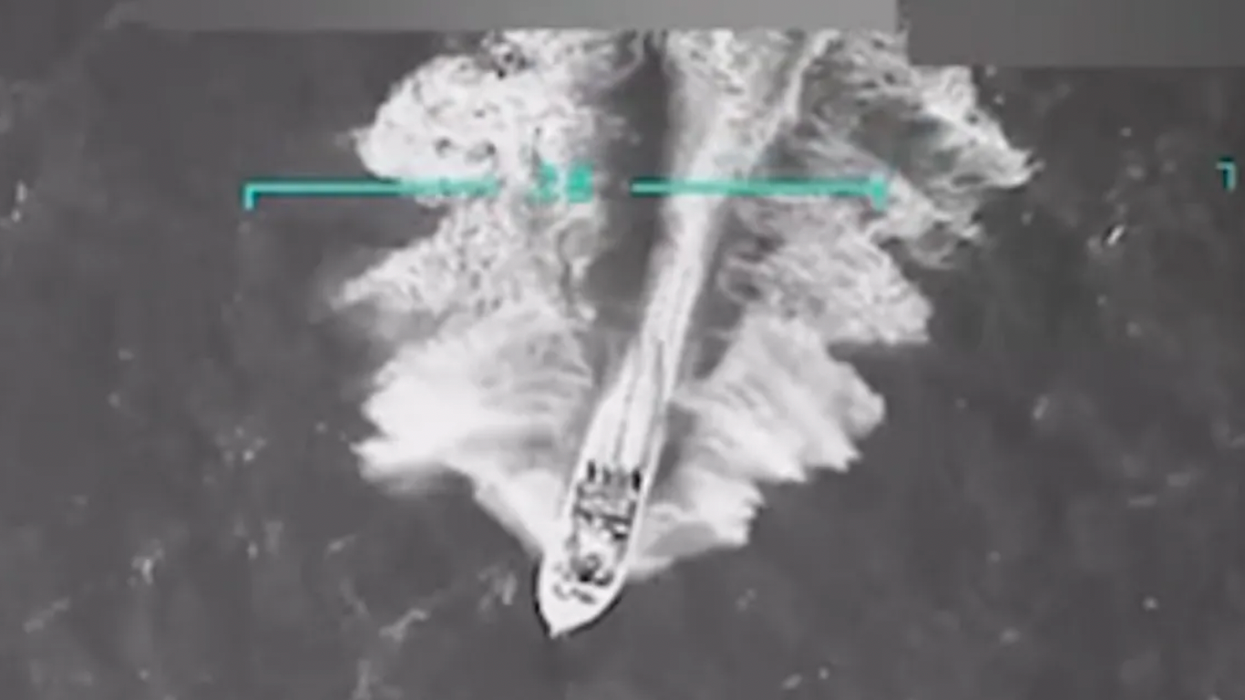
The recent massacre in the Caribbean was a step toward making America a police state under President-for-Life Trump.
Why is Donald Trump committing murder on the high seas?
Last week President Trump bragged that “On my Orders,” the Navy destroyed a speedboat with eleven people aboard, claiming that those slain were “Tren de Aragua Narco terrorists . . . transporting illegal narcotics, heading for the United States.”
The legal procedure for dealing with drug traffickers on the high seas is actually for the Navy or Coast Guard to stop and board the suspect vessel, confirm it is carrying illegal drugs, then arrest and prosecute those on board.
Instead, Trump treated what should have been an (alleged) criminal law enforcement matter as open warfare and, without any need, killed everyone aboard. Why? Because Trump wants the lethal use of military firepower on supposed foreign “bad guys” to serve as a model for militarizing American cities – in the name of stopping an imaginary crime wave.
One week after the Caribbean Sea attack, Trump and the Defense Department have yet to provide evidence the vessel was carrying drugs to America. But even if had been, summarily killing eleven civilians is still murder.
Killing eleven people in Venezuela was Donald Trump’s out-of-town tryout. Trump’s militarization of our cities, if not resisted, could lead to the termination of free elections in America.
Calling a criminal gang a “foreign terrorist organization” does not make it legal to slay alleged gang members without a trial – particularly when the gang has not been linked to acts of political terrorism, as confirmed by the fact that the Justice Department’s two indictments of gang members include no charges of terrorism.
Still less does tagging them “Narco terrorists” mean that the United States is in “armed conflict” with a gang, to which the laws of war might apply. Gangs aren’t enemy nations and they’re not fighting for a political ideology – they’re in it for the money. Suppressing them isn’t warfare. The Navy was not engaged in a naval battle with a speedboat.
A former State Department attorney specializing in counterterrorism, Brian Finucane, put it succinctly. “Outside of armed conflict, we have a word for the premeditated killing of people. That word is murder.”
Annie Shiel, the U.S. advocacy director of the Center for Civilians in Conflict, confirmed the point. “Using lethal force in this way, outside of any recognizable armed conflict and without due process, is an extrajudicial execution, not an act of war.” Myriad legal experts confirm that obvious conclusion.
But Secretary of State Marco Rubio sought to justify the slayings by asserting “interdiction doesn't work.” “What will stop them is when you blow them up, when you get rid of them.”
Secretary of Defense Pete Hegseth echoed the sentiment. “Anyone trafficking in those waters who we know is a deadly terrorist will face the same fate.”
But if our military is allowed to blow up people on unproven assertions of drug dealing, the same logic would justify the military engaging in summary executions of those they deem “bad guys” in the United States itself. Which is perhaps the point.
Drug trafficking is not a capital offense in the United States. The alleged crimes would not warrant execution even if Trump’s targets were found to be cartel drug smugglers..
In reality, there is little reason to credit Trump’s claims about who the people on board were and what they were doing.
Nonetheless, Trump prefers the drug smuggling story because it is part of his strategy to conflate immigration, crime and gangs to justify sending troops into American cities.
Trump’s claim that undocumented immigrants have brought rampant crime to America is false. Few of those Trump is deporting have committed a serious crime, and immigrants as a group are actually less likely to commit crimes than native born Americans. But Trump has repeated his phony charge hundreds of times, and it has had an impact.
Drug-running gangs enjoy little sympathy, and Trump expects few people to worry about whether the eleven individuals he ordered killed were drug traffickers or actually the gang’s victims. But if he gets away with having the Navy blow them up, he hopes Americans will come to see troops on our streets as acceptable, even desirable, since they are (purportedly) fighting the same drug dealing villains.
Trump himself drew the direct connection between his war powers as commander in chief and his claim that military force is the solution to crime in the U.S. when he recently threatened, “Chicago about to find out why it’s called the Department of WAR.”
He will not immediately order unrestrained violence against alleged criminals (or opponents) as freely as he did in the Caribbean Sea off Venezuela. But he has begun the process of legitimizing law-free military “law enforcement,” first abroad and eventually in America.
Where will it end?
Trump has declared emergency after emergency, many of them focusing on his deportation agenda, and all of them stretching – and breaching – the lawful limits of presidential power. Trump has correctly concluded that if he is to swiftly deport millions of immigrants without considering their possible right to be here, his targets must be deprived of the due process of law which our Constitution guarantees to everyone in America.
But eliminating due process rights does not enjoy broad popular support, and Trump’s deportation efforts have repeatedly been stymied by the courts. Enter the concocted “Narco terrorist” boat incident. In Trump’s narrative – never mind truth or evidence – the U.S. Navy eliminates “bad guys” on the high seas without bothersome legal process.
It’s political theater. But not just theater.
The legal theories are those Trump’s Justice Department has asserted with little success in federal court: First, that Trump is entitled to use the military for “law enforcement” because we are being “invaded.” Second, that alleged gang members can be summarily deported and imprisoned (and now killed) because we are “at war” with cartels. Trump may not be able to persuade the courts that these outlandish legal theories are correct, but he can act on them with impunity in the waters off Venezuela, by ordering the Navy to dole out death.
Trump’s ultimate end is plain enough: unlimited power.
Donald Trump was the only president in the life of the Republic to refuse to surrender office after losing an election. Donald Trump was the only president to unleash an insurrection to try to hold onto office. And now, having lawfully returned to power, he has not concealed his desire to remain after his current term ends.
During the 2024 campaign, Trump promised his followers that if he was elected, things would be “fixed so good” that “in four years, you don't have to vote again.” And, after predicting his election to a second four-year term, Trump told another audience “we’re probably entitled to another four after that.”
Trump has said he is “not joking.” “A lot of people want me to do it,” he told NBC News this Spring. “There are methods which you could do it.”
What method does Trump have in mind? Here are some ways Trump could use the military to unconstitutionally retain power:
Arrest or detain voters. Recall Trump’s baseless assertion that undocumented immigrants are voting en masse in American elections. With the military placed in key cities as a “crime fighting” force, Trump could use the soldiers and his masked ICE agents to remove Hispanics and other “suspect” voters from polling places, on the claim the soldiers are “ensuring election integrity.” Troops at polling places arresting people would certainly also frighten others away from the polls.
Seize voting machines. In 2020 Trump explored having Homeland Security or the Defense Department take control of voting machines in swing states. Attorney General Robert Barr reportedly shot down the suggestion.
But loyal sycophants Attorney General Pam Bondi or “War” Department Secretary Hegseth might well direct their departments to obey Trump’s orders to confiscate voting machines – and later report Trump’s amazing, landslide electoral victory.
Cancel elections because of an “emergency.” Donald Trump is the master of emergencies. He might manufacture one to justify suspending elections.
Trump claimed a handful of disruptive protests against ICE raids in Los Angeles constituted a “rebellion,” requiring a military response. And he falsely asserted crime was “totally out of control in the District of Columbia” to rationalize the troop takeover of the nation’s capital. Now he threatens to send troops into Chicago, Baltimore and other cities that tend to vote Democratic.
As Trump prepares to rig the 2028 election as best he can, millions of Americans will take to the streets against his illegal candidacy. Trump has little tolerance for the constitutional right to assemble and protest. In June 2025 he warned: “For those people who want to protest, they’re going to be met with very big force.” During the widespread peaceful demonstrations over the murder of George Floyd in 2020, Trump asked his Defense Secretary about protestors near the White House. “Can't you just shoot them? Just shoot them in the legs or something?”
The Defense Secretary at the time did not grant Trump’s wish. But loyalist Hegseth is not likely to oppose any Trump suggestion.
A president who whipped up a mob to seize the Capitol in January 2021 could mobilize right-wing militias and MAGA forces for political violence before an election, and Trump might assert that elections had to be suspended until “order” was (someday) restored. Troops would enforce “calm” as the election was dismantled.
These scenarios only seem far-fetched because we still find it difficult to contemplate an American president engaging in naked, lethal dictatorial action.
Killing eleven people in Venezuela was Donald Trump’s out-of-town tryout. Trump’s militarization of our cities, if not resisted, could lead to the termination of free elections in America.
Mobilizing for the next election is not enough. The danger is now and we must resist now. We must withhold our cooperation from Trump’s authoritarian moves, refuse to obey in advance, pressure the institutions we are associated with to stand up for our constitutional democracy, and peacefully take to the streets to demonstrate the scope of the resistance. It is not too late. But if democracy is to be rescued, we must be the rescuers ourselves.
Don’t just blow your horn. Get out of the car and join the protest.
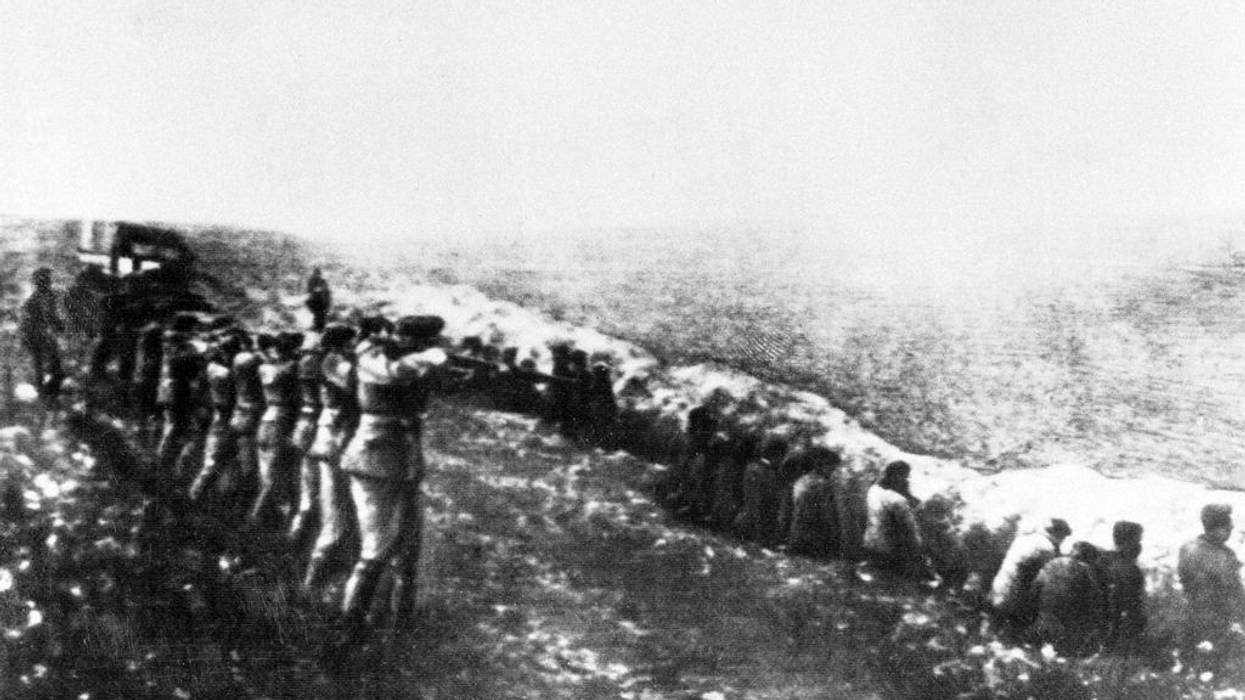
The deepest similarity between what Trump is doing now and what Hitler was able to achieve lies in the bureaucratic ability to render extraordinary measures administratively ordinary.
In the last month, ICE has launched a recruitment campaign of unusual scale and persistence. Reports document emails sent to county deputies in Florida, outreach to FEMA personnel, targeted solicitations to retired federal workers, and policy changes that expand the age range for applicants well past forty. The campaign is not framed as an emergency measure but as a permanent expansion, made possible by a $170 billion appropriation for immigration enforcement under the Trump administration. ICE’s leadership has portrayed this as necessary to fulfill the agency’s mission. Local law enforcement leaders, particularly in Florida, have voiced both irritation and unease, objecting to the federal government’s bypassing of their command structures and raising concerns about losing trained officers to ICE’s ranks.
The practical explanation is straightforward: ICE is attempting to rapidly scale up its workforce to meet the Trump administration’s stated political goal of removing an estimated 20 million Latino people from the United States. In 2024, Donald Trump described these individuals as “poisoning the blood” of the country. The recruitment model—its targets, its institutional framing, its bypassing of local intermediaries—mirrors patterns visible in the historical record of the Einsatzgruppen, the Nazi mobile killing units deployed in Eastern Europe during the Second World War. The comparison is not rhetorical excess. It is a study in method. The question is not whether ICE today is equivalent to the Einsatzgruppen. It is whether the logic of building a force for extraordinary enforcement has recurring features that should trigger historical alarm.
The Einsatzgruppen emerged from the SS security apparatus as Germany prepared for the invasion of the Soviet Union in 1941. According to Richard Rhodes in Masters of Death, they were formed from an existing pool of police officers, security agents, and civil servants. Recruitment was highly targeted. Men with experience in policing, intelligence, and military command were sought out for their capacity to operate under orders and within a rigid hierarchy. History makes clear that these were not simply volunteer fanatics. Many were approached through professional networks, offered postings that promised status and advancement, and placed within a structure that normalized their assignments as legitimate state work.
The current ICE recruitment drive is not a historical aberration. It is a recognizable pattern in the history of state enforcement agencies preparing for expansive and potentially coercive missions.
Stefan Kühl, in Ordinary Organizations, underscores that the Einsatzgruppen operated according to the routines of bureaucratic administration. Orders were written in formal language, couched in terms of security and order maintenance. Missions were framed as operational tasks rather than moral questions. Men were told they were combating “banditry” or “partisan activity,” categories that erased the civilian status of their victims. This was a central mechanism for recruiting and retaining participation: the transformation of killing into a technical job, embedded in the standard practices of an organization.
Zygmunt Bauman’s Modernity and the Holocaust identifies this as a hallmark of modern bureaucratic violence. The Holocaust was not an eruption of irrational savagery but the product of systems designed to translate political directives into manageable administrative processes. The Einsatzgruppen were a case study in how to assemble a killing force from ordinary professionals, train them to think in technical rather than moral terms, and deploy them with minimal overt coercion.
The contours of ICE’s recent recruitment push follow a comparable bureaucratic logic. The recruitment targets a pre-screened pool of law enforcement and security professionals. Florida deputies, FEMA personnel, and retired federal agents are not random job seekers. They are individuals whose careers have conditioned them to follow formal orders, work within hierarchical structures, and frame their actions in procedural rather than purely moral language. This mirrors the Nazi recruitment strategy: draw from those already trained to execute state directives.
ICE is actively lowering entry barriers. The policy change lifting the maximum age limit above forty broadens the eligible pool in a way that signals volume as the overriding goal. In Nazi recruitment, similar expansions occurred when the need for personnel outpaced the available pool, with the result that older men or those with less ideal physical profiles were nonetheless brought into field operations. ICE is also leveraging bureaucratic legitimacy. The agency’s recruitment messages describe “enforcement opportunities” and “critical response positions” in terms that emphasize lawful authority, federal mandate, and organizational purpose. This is the same language of legitimization that Kühl and Bauman document in the Einsatzgruppen’s framing: orders presented as components of a rational plan, embedded in established institutional structures.
The campaign shows a willingness to bypass local institutional intermediaries. Florida sheriffs’ complaints that ICE directly contacted their deputies without coordination recalls historical cases in which Nazi units were introduced into territories without consulting local military or police commanders. In both cases, central authority overrode local norms in pursuit of a larger strategic objective.
The deepest similarity lies in the bureaucratic ability to render extraordinary measures administratively ordinary. Bauman warns that this capacity is intrinsic to modern organizations. The division of labor fragments moral responsibility. Language reframes acts of violence as technical assignments. In the Einsatzgruppen, mass shootings of civilians were described as “executions” or “security operations,” terms that masked the nature of the task from the participant’s own conscience.
In ICE’s case, the recruitment pitch itself functions as this kind of framing device. Potential hires are told they will be part of “national security” and “public safety” operations. In the context of an administration that has already pursued mass deportations, family separations, and expanded detention, such language situates controversial or coercive actions within the acceptable vocabulary of law enforcement.
Franklin Mixon’s concept of the “entrepreneurial bureaucrat” sharpens this point. Bureaucracies, and the officials within them, seek opportunities to expand their remit. ICE’s leadership has seized on a political moment—backed by unprecedented funding—to expand its manpower. In historical terms, the Einsatzgruppen leadership did the same within the SS apparatus, enlarging their operational scope whenever political conditions permitted.
The United States is not operating under the same conditions as the Nazi Reich in 1941, but the present safeguards are functionally nonexistent. Judicial review now functions as a rubber stamp for the Trump administration, with courts repeatedly validating executive actions that stretch or disregard statutory limits. Congressional oversight is, in practice, nonexistent, with leadership unwilling to confront or even meaningfully question enforcement policy.
The United States is not operating under the same conditions as the Nazi Reich in 1941, but the present safeguards are functionally nonexistent.
National media outlets remain cautious to the point of self-censorship, their corporate owners fearing retaliatory measures against other business holdings. In this environment, the assumption that legal and institutional checks will restrain an expanded, specially recruited force is untenable. Political leadership can and does issue directives that push beyond the law’s original intent, and the mechanisms designed to resist such directives have already shown their willingness to accommodate them. When that reality is combined with a rapidly enlarging enforcement body trained to operate under centralized command, the potential for escalation is immediate and concrete.
The modern state’s capacity for violence is not determined by the moral character of its personnel but by the institutional and political boundaries within which it functions. Ordinary organizational processes can adapt to deliver extraordinary harm when circumstances shift. The Einsatzgruppen were assembled and deployed in exactly this way, with bureaucratic procedures serving as the mechanism rather than an afterthought.
The current ICE recruitment drive is not a historical aberration. It is a recognizable pattern in the history of state enforcement agencies preparing for expansive and potentially coercive missions. Its targeting of trained law enforcement personnel, lowering of entry barriers, bypassing of local intermediaries, and reliance on bureaucratic framing are all features visible in the assembly of past forces that went on to commit atrocities. To note this is not to equate the present with the past in outcome. It is to recognize the continuity in method, and to understand that method as a warning. The Einsatzgruppen remind us that the path from “ordinary” enforcement to extraordinary violence is often paved with administrative memos, recruitment drives, and appeals to professionalism. The time to interrogate such patterns is before the mission expands and the boundaries shift.
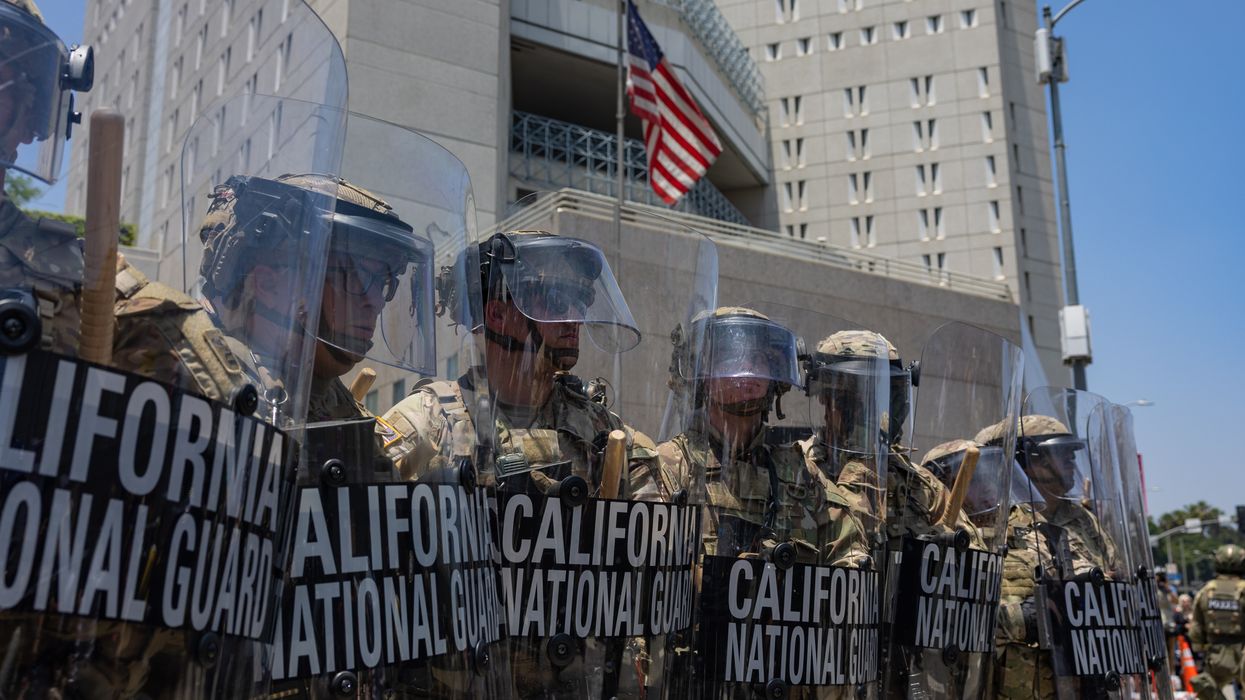
They're not even hiding it anymore.
After a couple of wannabe carjackers punched out Big Balls in DC, Trump used it as an excuse to threaten to take over the city and bring in the National Guard to police it, in a clear violation of the Posse Comitatus Act. This despite the fact that crime in Washington DC is at a 30-year low and the city already has the largest police force, per capita, of any municipality in America.
None of that matters; Trump wants to turn America into a police state, just like every other dictator in the world does when they get ahold of a democracy. They steal from the people, enrich their cronies, break laws with impunity, and then use police agencies to terrorize the general populace, judges, and legislators into docility and submission when they object.
In fact, they told us this was their goal. They showed us. They planned it in writing.
You may not see it in the headlines. But if you read the memos — and watch the deployments — you’ll see it plain as day. The military is no longer on the sidelines. It’s here.
A leaked memo from inside the Department of Homeland Security reveals what many of us feared but hoped we were wrong about: that the military is no longer a last resort in American governance. It’s now a first tool. A central player. A political weapon, just like in Russia.
And they’re not even hiding it anymore.
This isn’t some vague speculation or dystopian what-if. This isn’t a shadowy plot hatched in secrecy. The document was written, circulated, and discussed at the highest levels of DHS and the Department of Defense and it spells out, in clinical, terrifying language, a plan to normalize and expand the use of the United States military within our own country, on our own soil, against our own people.
The memo, obtained by The New Republic, outlines a coordinated strategy to embed military forces into immigration enforcement not just at the border but across American cities. It calls for replicating the recent Los Angeles deployment “for years to come.” It uses phrases like “homeland defense” and paints immigration threats as akin to Al Qaeda or ISIS. It pushes for “new ideas” on how DHS and DoD can work together on “national security” threats inside the United States.
— This isn’t about law enforcement. It’s about militarization.
— This isn’t about safety. It’s about power.
— This isn’t about stopping crime. It’s about building a political machine with boots and guns that can intimidate or even subdue any opposition.
And it’s already happening. America is rapidly turning into an authoritarian police state.
Over the past two months, Trump has done what no modern president has dared. He sent 4,000 National Guard troops — federalized, not state-controlled — into Los Angeles to back up ICE raids. He followed that with 700 active-duty Marines from the 2nd Battalion, 7th Marines.
These weren’t weekend warriors. These were combat-trained infantry troops deployed to performatively surround federal buildings and “support” immigration enforcement while pro-democracy protestors filled the streets.
Marines. In American cities. In June and July. “Guarding” federal offices and intimidating demonstrators.
And now, we’ve learned that smaller units have been sent to Florida and are prepping for deployment to Texas and Louisiana. The memo wasn’t a warning. It was a blueprint. A playbook for turning the world’s most powerful military force inward and turning constitutionally protected First Amendment political dissent into a “national security threat.”
Don’t believe Trump’s PR spin or the media’s pretending this isn’t as illegal and anti-democracy as it is. Don’t let the uniforms fool you into thinking this is routine.
This is not normal.
This is not legal.
This is not American.
This memo, which Hegseth and friends didn’t intend you and I would ever be able to read:
— Urges DHS to persuade top military brass to view immigration enforcement as a “homeland defense mission.”
— Seeks to embed armed, kill-trained military personnel inside ICE and CBP to “increase information sharing” and support “nationwide operational planning.”
— Frames transnational gangs and cartels as equivalent to Al Qaeda, a dangerous, dishonest leap that pretends to justify extreme, deadly force.
— And it admits, in its own words, that due to the “sensitive nature” of the meeting it documents, “minimal written policy or background” should be preserved.
Translation: They know what they’re doing is legally and morally criminal. So they’re minimizing the paper trail.
Carrie Lee, a senior fellow at the German Marshall Fund, put it bluntly:
“This speaks to the intent to use the military within the United States at a level not seen since Japanese internment.”
I’d add, also not seen since the Civil War, when Americans turned their guns on each other and 700,000 of us died. And outlawed a decade after that war with the Posse Comitatus Act. And after the Kent State massacre, we resolved, “Never again.”
Joseph Nunn at the Brennan Center warned that this could create a permanent “domestic Forever War,” a campaign of endless militarization justified by fear and manufactured crises. Soldiers — including armed, masked ICE agents answerable only to the president — terrifying civilians on their own streets and in their own homes: a military occupation of The United States of America.
And that’s exactly the point. It’s all part of the classic dictator’s playbook.
You gin up fear about migrants and minorities. You call them invaders, terrorists, cartel assassins. You blur the line between protest and insurrection. You say cities are out of control. Then you send in the troops. Not to protect, but to occupy. And you call it “national security.”
This isn’t just Trumpism. This is textbook authoritarianism in the mold of Putin’s Russia and Orbán’s Hungary. It embodies the early stages of all the horror stories of 1930s Europe.
And let’s not forget the power grab embedded in all this. When Trump federalized the California National Guard, he did it against the will of Governor Newsom.
The state fought back in court. A federal judge ruled in California’s favor, but the administration appealed, and for now, the troops can remain under federal control.
That’s not just a skirmish over jurisdiction. That’s an open attack on the sovereignty of states, the Ninth and Tenth Amendments to the Constitution. That’s a president saying, “Your Guard is my army now.”
This moment is a test. Of our Constitution. Of our institutions. Of our will.
Because if we let this stand — if we normalize Marines in our cities, Guard troops on our streets, soldiers surveilling residential communities — then we’ve already surrendered.
What happens when the next protest erupts? What happens when a city pushes back against federal immigration policy? What happens when a journalist, a mayor, or a movement becomes “too disruptive”?
Do we really think they’ll hesitate to send in the troops again?
And what kind of soldier will say no, when DHS and DoD have spent months telling them they’re defending the “homeland” against “enemy cells” within?
The line between foreign combat and domestic suppression is being erased. On purpose. By design.
The Founders of this country were obsessed with avoiding a standing army for precisely this reason.
It’s why they wrote the Second Amendment into the Constitution requiring a “well regulated militia” at the state level and that same Constitution, in Article 1, Section 7 bars Congress from appropriating money for the Army for any period longer than two years. (“The Congress shall have Power To … raise and support Armies, but no Appropriation of Money to that Use shall be for a longer Term than two Years;”)
They had seen what happened when monarchs used soldiers to police dissent. They knew the threat; not just to liberty, but to the very idea of a democratic republic. They wanted to keep the military on a very, very short leash.
So they built guardrails. Laws. Norms. Civilian command. Posse Comitatus. State control over Guard units. Strict separation between military and police roles.
All of that is being unraveled right now.
You may not see it in the headlines. But if you read the memos — and watch the deployments — you’ll see it plain as day.
The military is no longer on the sidelines.
It’s here.
And unless we act — loudly, urgently, relentlessly — it will become a permanent force in American civic life. Not a protector of freedom, but a tool of control, just like in Orbán’s Hungary or Putin’s Russia.
We are not at war with ourselves, at least yet. But our democracy is under siege.
And the troops have already landed.
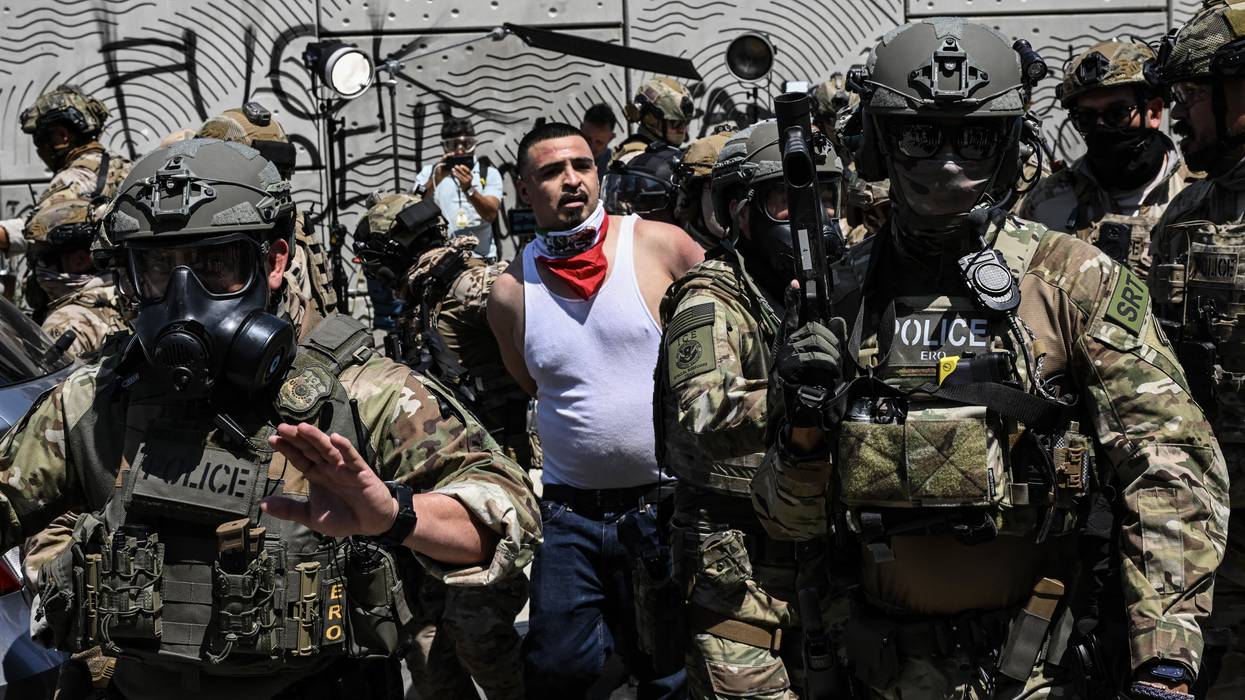
In cities large and small, his masked agents are now kidnapping local people, holding them without access to family or lawyers.
After only six months in office, the Trump regime has lost popular support to an astonishing degree. According to a June Quinnipiac poll of U.S. registered voters, how well is Donald Trump managing his job as president? 54% disapproval. His handling of immigration, 54% disapproval; the economy, 56% disapproval; trade, 57% disapproval; universities, 54% disapproval; Russia-Ukraine war, 57% disapproval.
Despite his dismal ratings, the president is urging the Senate to enact another hugely unpopular proposal (“One Big Beautiful Bill Act”), which would restrict Medicaid, end health insurance for 7 million families, and eliminate food assistance for 40 million low-income people, including 16 million children.
Politically, this is nuts. The president’s popular support is already in “loser” territory and yet he’s pushing to pass a new law that will cost him even more support, just 17 months before an election that will decide control of the House of Representatives. What is going on?
Trump does seem to be running police-state experiments in smaller cities now, perhaps to get us all used to his methods for intimidating and dominating local people.
Leading up to the 2024 election, Trump said many times that, if he won, his supporters would never have to vote again because the system would be “fixed.” He has refused to back down from this strange stance.
Trump has also said several times that he may run for a third term as president, in direct violation of the 22nd Amendment to the Constitution. “There are methods you could do it,” he told NBC News on March 25, 2025. When asked to reveal more about those “methods,” he responded simply, “No.”
Last week in Los Angeles, we witnessed Trump toying with methods for keeping himself and other Republicans in power indefinitely.
Since taking office in 2017, Trump has tested various crisis proclamations, declaring a “national emergency” 21 times (8 of them in 2025), far more than any president before him.
Using his favorite issue—immigration—last week, Trump provoked a confrontation in Los Angeles to create a crisis: He sent masked Immigration and Customs Enforcement (ICE) agents into LA without judicial warrants to kidnap hundreds of working people, put them in chains, imprison them in the basement of a federal building without food or water, and deny them contact with family or lawyers. Real police-state stuff.
Then, predictably, hundreds of Angelinos took to the streets in protest. City officials (mayor and chief of police) insisted repeatedly that they had the situation well under control, but Trump insisted on manufacturing an emergency. The president declared that the enormous City of Los Angeles (area: 498 square miles, population: 3.8 million) would be “burned to the ground” and “completely obliterated” if he didn’t act to “liberate” the city from the “Migrant Invasion” of “Illegal Aliens and Criminals.” Next, without consulting the governor or the mayor, he mobilized 4,000 National Guard troops and 700 Marines to take over police functions. Then, predictably, street protests intensified.
At a press conference, Kristi Noem, secretary of Homeland Security, contradicted the president. She explained matter-of-factly that the purpose of Trump’s troops was to overthrow local elected leaders, or, as she put it, to “liberate” Los Angeles from its “socialist” leaders, California Gov. Gavin Newsom and Mayor Karen Bass.
Historian Heather Cox Richardson reported June 9 that, as popular opinion has turned against Trump, he has become decidedly more authoritarian: “There is no doubt that as their other initiatives have stalled and public opinion is turning against the administration on every issue, the Trump regime is trying to establish a police state,” Richardson wrote.
This raises a question: Does Trump have the resources to send ICE into cities all across the country to create “emergencies” that then “require” the president to send in the military, to take over the basic functions of local and state governments?
This brings us full circle, back to the One Big Beautiful Bill Act (“The BBB”), that Trump and his Republican friends are so eager to enact into law.
The BBB provides more than a $100 billion of new money for immigration crackdowns like the one in Los Angeles: $75 billion in supplemental funding for ICE to expand enforcement in the nation’s interior; another $45 billion for expanding adult immigration detention; an additional $14.4 billion for ICE transportation and removal operations; $10 billion more to hire more ICE agents; plus $2.4 billion to reward local law enforcement for participating in ICE activities—a total of $146.8 billion in new money for ICE to repeat its invasion of Los Angeles in dozens more cities simultaneously.
Writing in The Atlantic, David Frum argues that events in Los Angeles were Trump’s dress rehearsal for creating a police state, which could unfold in three steps before the midterm election in November 2026:
Step 1: Use federal powers in ways to provoke some kind of made-for-TV disturbance—flames, smoke, loud noises, waving of foreign flags.
Step 2: Invoke the disturbance to declare a state of emergency and deploy federal troops.
Step 3: Seize control of local operations of government—policing in June 2025; voting in November 2026.
“If Trump can incite disturbances in blue states before the midterm elections, he can assert emergency powers to impose federal control over the voting process, which is to say his control,” Frum writes.
Trump does seem to be running police-state experiments in smaller cities now, perhaps to get us all used to his methods for intimidating and dominating local people.
On June 11, Washington Post reporter Catherine Rampell described the arrival of six unidentified masked men into Great Barrington, Massachusetts (population: 7,245), with “guns hanging all over them.” The burly men were “dressed as though they had parachuted into a war zone,” claiming to be ICE agents. They arrived in unmarked cars, some with out-of-state plates. When asked by local businesspeople to identify themselves, they refused to offer identification, or arrest warrants, or the names of any criminals they were supposedly hunting. Instead, they accused their questioners of promoting lawlessness. The men then snatched up a gardener, stuffed him into the back seat of a car, and drove away. The kidnapped gardener is rumored to be imprisoned in an ICE detention facility near Boston, but Rampell has tried to locate him without success.
No one knows whether the six kidnappers in Great Barrington were actually ICE agents. They may have been some other brand of federal secret police, or they may have been “a ragtag vigilante group arbitrarily snatching brown-looking people off the street,” Rampell writes. In any case, they served to terrify local people and send the message that no town is safe from Trump’s new Los-Angeles-style tactics.
After enough experiments have shown Trump that he or his vigilantes can dominate any city he chooses, what comes next? A full-blown nationwide police state? To make America great again, establish martial law, suspend civil liberties, enhance state surveillance, further weaken judicial oversight, and suppress dissent by force?
These would be surefire “methods” for getting an unpopular president “elected” a third time, the Constitution be damned.

Dictators can’t be dictators without first cowing the people, terrifying even elected officials, and asserting their absolute and unlimited power to use violence any where, any time, and under any circumstances they choose.
We’re now living in an early-stage police state.
After California Sen. Alex Padilla was assaulted for saying, “I’m Senator Alex Padilla and I have question for the Secretary,” Department of Homeland Security Secretary and notorious puppy murderer Kristi Noem went on Fox “News” and lied to the American people, saying that he hadn’t identified himself, she didn’t know who he was, and that he was “lunging into the room.”
The violence inflicted on Padilla was the point. And it’s being celebrated in real time by MAGA, Fox, and the Trump administration.
After all, dictators can’t be dictators without first cowing the people, terrifying even elected officials, and asserting their absolute and unlimited power to use violence any where, any time, and under any circumstances they choose.
“We are not going away,” Noem said in a snarling comment that provoked the question from Padilla. “We are staying here to liberate this city from the socialist and the burdensome leadership that this governor [Gavin Newsom] and that this mayor [Karen Bass] have placed on this country.”
For the record, the job of the federal government is not to “liberate“ cities from the leaders they themselves have elected. That’s what Russian President Vladimir Putin did when he forced all the elected governors of the Russian states (oblasts) to resign and replaced them with men he had appointed. Even suggesting it is deeply and profoundly un-American.
This is the Trump administration once again nakedly asserting that they are above the law, are committed to acting without ethical or moral restraint, and that they have no obligation to honor the constitutionally-defined oversight role of members of Congress. That they are intent on running a dictatorship here in America, not a democratic republic.
They have arrested and are prosecuting a member of the House of Representatives who was simply doing her job at an immigration detention center. They are ignoring explicit orders by federal judges and the Supreme Court. They are literally disappearing people, including American citizens, off the streets of our cities. And now they’ve taken an United States senator to the ground.
This is not what the people who fought and died to create and sustain this country had in mind.
The genius of the Founders was Montesquieu’s idea of three branches of government with checks on each other’s power. It’s essential to democracy.
President Donald Trump (second branch) has been trashing judges (third branch) and has now violently attacked a congresswoman and a U.S. senator (first branch). He’s spitting on the graves of the Framers of our Constitution.
And to emphasize their ignoring the Constitution and its requirement that both Congress and the courts can exercise oversight of the president, White House Press Secretary Karoline Leavitt said:
The courts should have no role here. There is a troubling and dangerous trend of unelected judges inserting themselves into the presidential decision-making process.
Similarly, they refuse to respect the right of American citizens to protest that’s laid out in the First Amendment, “the right of the people peaceably to assemble, and to petition the government for a redress of grievances.” Trump came right out and said that if anybody in Washington, D.C. tries to protest his birthday parade, he will meet them with violence:
For those people that want to protest, they’re going to be met with very big force. Very big force!
That wasn’t a threat against vandals or even people who might try to disrupt Dear Leader’s birthday celebration: It was a threat against people who may “protest.”
This echoes the behavior of Hitler’s goons in the early 1930s as they set out to violently intimidate anybody—particularly members of Parliament—who may challenge him. Or Bull Connor as he bloodied protestors in Birmingham in the 1950s and 1960s.
Under Trump and Noem, federal agents have been given carte blanche to use violence against nonwhite people (it’s probably no coincidence that Sen. Padilla is a brown-skinned son of Mexican immigrants), including kidnapping them in broad daylight and sending them to foreign concentration camps with no access to due process whatsoever.
Noem could easily have taken the senator’s question, or just said, “I’m happy to meet with you after this press conference.“ Instead, she chose escalation and violence, which is why Democrats are calling on her to resign.
Right now the only people who can stop America’s descent into tyranny are the Republicans in the House and Senate. If just a small handful grow a spine, Trump could be stopped in his tracks.
Now, in response to the violence Noem and the FBI directed against a U.S. senator, the professional propagandists at Fox “News” are peddling rationalizations and repeating Noem’s lie that she didn’t know who Padilla was. FBI Deputy Director Dan Bongino issued a statement “thanking” the men who beat Padilla to the ground. House Speaker Mike Johnson (R-La.) implied Padilla was trying to inflict violence on Noem and called for him to be censured by the Senate.
It appears that Republicans are circling the wagons, defending the assault on Padilla, Trump’s illegal infliction of armed troops on the streets of Los Angeles over the objections of the governor and mayor, and his and Noem’s efforts to stir up trouble in California that they can then exploit Reichstag Fire-style.
Are there any John McCain Republicans left? Any patriots who revere the Constitution and respect the rule of law? Any who are willing to call out Trump’s brutal dictator-inspired corruption and excesses?
The question is an urgent one, because right now the only people who can stop America’s descent into tyranny are the Republicans in the House and Senate. If just a small handful grow a spine, Trump could be stopped in his tracks.
Will it happen? History suggests that massive public opinion holds the answer to that question. It ended, for example, both the presidency of Richard Nixon and the Vietnam War.
As Abraham Lincoln famously said in his debate with Stephen Douglas:
In this age, in this country, public sentiment is everything. With it, nothing can fail; against it, nothing can succeed. Whoever molds public sentiment goes deeper than he who enacts statutes or pronounces judicial decisions.
Saturday will be this era’s most visible expression of public opinion. Stay tuned and stay peacefully active.