SUBSCRIBE TO OUR FREE NEWSLETTER
Daily news & progressive opinion—funded by the people, not the corporations—delivered straight to your inbox.
5
#000000
#FFFFFF
To donate by check, phone, or other method, see our More Ways to Give page.
Daily news & progressive opinion—funded by the people, not the corporations—delivered straight to your inbox.
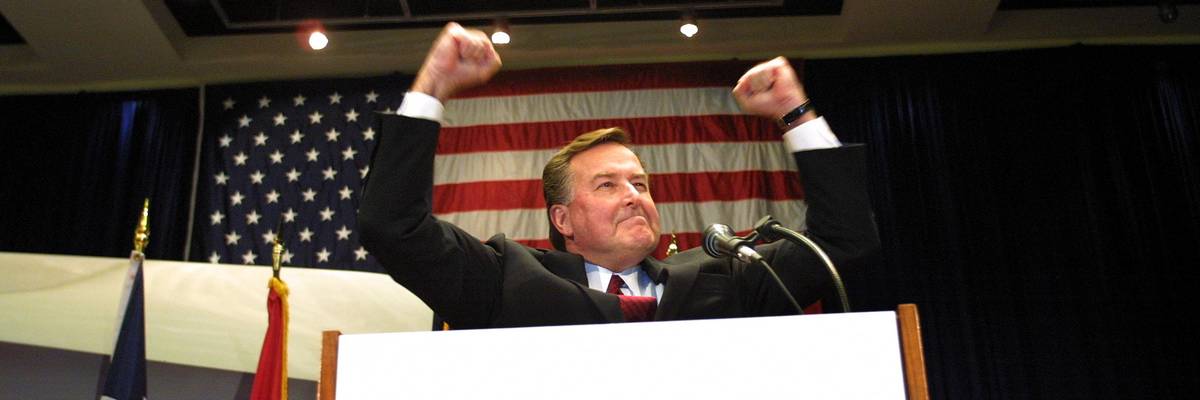
Former President of Lockheed Martin Aeronautics Company, Dain Hancock pumps his fist in the air after it was announced that they won a bid to build the Joint Strike Fighter on October 26, 2001 at Lockheed Martin in Fort Worth, TX. (Photo: Ronald Martinez/Getty Images)
Major U.S. arms companies accounted for no less than 54 percent of all weapons sales of the world's 100 biggest arms suppliers in 2020, according to a new report, the latest in an annual series published by the Stockholm International Peace Research Institute.
The report noted that the new total--an increase of 17 percent over 2015 sales--marked the sixth year in a row of growth in arms sales.
Despite pressure on many countries to divert already-strained budgets to deal with the COVID-19 pandemic, as well as the subsequent global recession, sales of arms and military services by the 100 biggest companies increased by 1.3 percent compared to 2019 and totaled $531 billion dollars, according to the report.
The report noted that the new total--an increase of 17 percent over 2015 sales--marked the sixth year in a row of growth in arms sales. 2015 was the first year in which Chinese companies were included in what SIPRI refers to as the "Top 100."
"The industry giants were largely shielded by sustained government demand for military goods and services," according to Alexandra Marksteiner, Researcher with the SIPRI Military Expenditure and Arms Production Programme. "In much of the world, military spending grew and some governments even accelerated payments to the arms industry in order to mitigate the (economic) impact of the Covid-19 crisis."
As in the recent past, U.S. companies dominated the top ranks. Lockheed Martin Corp. ranked number one, followed by Raytheon Technologies, Boeing, Northrop Grunmman Corp, and General Dynamics Corp. Together, those five top companies accounted for more than $180 billion in sales during 2020, or about one third of all sales by the biggest 100 companies.
Thirty-six other U.S. companies included on the list added another $100 billion in sales, bringing the total U.S. share to $285 billion, a 1.9 percent increase over 2019's total.
The five Chinese companies that were included in the Top 100 came to $66.8 billion in 2020, or 13 percent of the global total. That marked an increase of 1.5 percent over 2019, according to the report.
"In recent years, Chinese arms companies have benefited from the country's military modernization programs and focus on military-civil fusion," said Dr Nan Tian, SIPRI Senior Researcher. "They have become some of the most advanced military technology producers in the world." NORINCO, said SIPRI, co-developed the BeiDou military-civil navigation satellite system, "deepening its involvement in emerging technologies."
Led by British companies that together sold $37.5 billion in 2020, 26 European arms companies that made the list accounted for 21 percent of total arms sales, or $109 billion. That marked an increase of 6.2 percent over 2019. Britain's BAE Systems, which ranked sixth overall behind the big five U.S. companies, accounted for $24 billion, or nearly two thirds of the Europe's share.
While French company arms sales actually fell by 7.7 percent compared to 2019, sales by the four German in the Top 100 increased by 1.3 percent over the year, reaching nearly $9 billion, or 1.7 percent of total sales.
Russian companies, on the other hand suffered some of the sharpest drops in sales, in part due to delays in delivery schedules caused in major part by the pandemic.
Of the weapons firms based outside the United States, China, Europe and Russia, the three Israeli companies that made the list performed the best with $10.4 billion in sales, or two percent of the total.
Israel was followed by the five listed Japanese companies that together sold $9.9 billion worth of military goods and services and by the four listed South Korean firms whose combined sales came to $6.5 billion dollars.
Dear Common Dreams reader, It’s been nearly 30 years since I co-founded Common Dreams with my late wife, Lina Newhouser. We had the radical notion that journalism should serve the public good, not corporate profits. It was clear to us from the outset what it would take to build such a project. No paid advertisements. No corporate sponsors. No millionaire publisher telling us what to think or do. Many people said we wouldn't last a year, but we proved those doubters wrong. Together with a tremendous team of journalists and dedicated staff, we built an independent media outlet free from the constraints of profits and corporate control. Our mission has always been simple: To inform. To inspire. To ignite change for the common good. Building Common Dreams was not easy. Our survival was never guaranteed. When you take on the most powerful forces—Wall Street greed, fossil fuel industry destruction, Big Tech lobbyists, and uber-rich oligarchs who have spent billions upon billions rigging the economy and democracy in their favor—the only bulwark you have is supporters who believe in your work. But here’s the urgent message from me today. It's never been this bad out there. And it's never been this hard to keep us going. At the very moment Common Dreams is most needed, the threats we face are intensifying. We need your support now more than ever. We don't accept corporate advertising and never will. We don't have a paywall because we don't think people should be blocked from critical news based on their ability to pay. Everything we do is funded by the donations of readers like you. When everyone does the little they can afford, we are strong. But if that support retreats or dries up, so do we. Will you donate now to make sure Common Dreams not only survives but thrives? —Craig Brown, Co-founder |
Major U.S. arms companies accounted for no less than 54 percent of all weapons sales of the world's 100 biggest arms suppliers in 2020, according to a new report, the latest in an annual series published by the Stockholm International Peace Research Institute.
The report noted that the new total--an increase of 17 percent over 2015 sales--marked the sixth year in a row of growth in arms sales.
Despite pressure on many countries to divert already-strained budgets to deal with the COVID-19 pandemic, as well as the subsequent global recession, sales of arms and military services by the 100 biggest companies increased by 1.3 percent compared to 2019 and totaled $531 billion dollars, according to the report.
The report noted that the new total--an increase of 17 percent over 2015 sales--marked the sixth year in a row of growth in arms sales. 2015 was the first year in which Chinese companies were included in what SIPRI refers to as the "Top 100."
"The industry giants were largely shielded by sustained government demand for military goods and services," according to Alexandra Marksteiner, Researcher with the SIPRI Military Expenditure and Arms Production Programme. "In much of the world, military spending grew and some governments even accelerated payments to the arms industry in order to mitigate the (economic) impact of the Covid-19 crisis."
As in the recent past, U.S. companies dominated the top ranks. Lockheed Martin Corp. ranked number one, followed by Raytheon Technologies, Boeing, Northrop Grunmman Corp, and General Dynamics Corp. Together, those five top companies accounted for more than $180 billion in sales during 2020, or about one third of all sales by the biggest 100 companies.
Thirty-six other U.S. companies included on the list added another $100 billion in sales, bringing the total U.S. share to $285 billion, a 1.9 percent increase over 2019's total.
The five Chinese companies that were included in the Top 100 came to $66.8 billion in 2020, or 13 percent of the global total. That marked an increase of 1.5 percent over 2019, according to the report.
"In recent years, Chinese arms companies have benefited from the country's military modernization programs and focus on military-civil fusion," said Dr Nan Tian, SIPRI Senior Researcher. "They have become some of the most advanced military technology producers in the world." NORINCO, said SIPRI, co-developed the BeiDou military-civil navigation satellite system, "deepening its involvement in emerging technologies."
Led by British companies that together sold $37.5 billion in 2020, 26 European arms companies that made the list accounted for 21 percent of total arms sales, or $109 billion. That marked an increase of 6.2 percent over 2019. Britain's BAE Systems, which ranked sixth overall behind the big five U.S. companies, accounted for $24 billion, or nearly two thirds of the Europe's share.
While French company arms sales actually fell by 7.7 percent compared to 2019, sales by the four German in the Top 100 increased by 1.3 percent over the year, reaching nearly $9 billion, or 1.7 percent of total sales.
Russian companies, on the other hand suffered some of the sharpest drops in sales, in part due to delays in delivery schedules caused in major part by the pandemic.
Of the weapons firms based outside the United States, China, Europe and Russia, the three Israeli companies that made the list performed the best with $10.4 billion in sales, or two percent of the total.
Israel was followed by the five listed Japanese companies that together sold $9.9 billion worth of military goods and services and by the four listed South Korean firms whose combined sales came to $6.5 billion dollars.
Major U.S. arms companies accounted for no less than 54 percent of all weapons sales of the world's 100 biggest arms suppliers in 2020, according to a new report, the latest in an annual series published by the Stockholm International Peace Research Institute.
The report noted that the new total--an increase of 17 percent over 2015 sales--marked the sixth year in a row of growth in arms sales.
Despite pressure on many countries to divert already-strained budgets to deal with the COVID-19 pandemic, as well as the subsequent global recession, sales of arms and military services by the 100 biggest companies increased by 1.3 percent compared to 2019 and totaled $531 billion dollars, according to the report.
The report noted that the new total--an increase of 17 percent over 2015 sales--marked the sixth year in a row of growth in arms sales. 2015 was the first year in which Chinese companies were included in what SIPRI refers to as the "Top 100."
"The industry giants were largely shielded by sustained government demand for military goods and services," according to Alexandra Marksteiner, Researcher with the SIPRI Military Expenditure and Arms Production Programme. "In much of the world, military spending grew and some governments even accelerated payments to the arms industry in order to mitigate the (economic) impact of the Covid-19 crisis."
As in the recent past, U.S. companies dominated the top ranks. Lockheed Martin Corp. ranked number one, followed by Raytheon Technologies, Boeing, Northrop Grunmman Corp, and General Dynamics Corp. Together, those five top companies accounted for more than $180 billion in sales during 2020, or about one third of all sales by the biggest 100 companies.
Thirty-six other U.S. companies included on the list added another $100 billion in sales, bringing the total U.S. share to $285 billion, a 1.9 percent increase over 2019's total.
The five Chinese companies that were included in the Top 100 came to $66.8 billion in 2020, or 13 percent of the global total. That marked an increase of 1.5 percent over 2019, according to the report.
"In recent years, Chinese arms companies have benefited from the country's military modernization programs and focus on military-civil fusion," said Dr Nan Tian, SIPRI Senior Researcher. "They have become some of the most advanced military technology producers in the world." NORINCO, said SIPRI, co-developed the BeiDou military-civil navigation satellite system, "deepening its involvement in emerging technologies."
Led by British companies that together sold $37.5 billion in 2020, 26 European arms companies that made the list accounted for 21 percent of total arms sales, or $109 billion. That marked an increase of 6.2 percent over 2019. Britain's BAE Systems, which ranked sixth overall behind the big five U.S. companies, accounted for $24 billion, or nearly two thirds of the Europe's share.
While French company arms sales actually fell by 7.7 percent compared to 2019, sales by the four German in the Top 100 increased by 1.3 percent over the year, reaching nearly $9 billion, or 1.7 percent of total sales.
Russian companies, on the other hand suffered some of the sharpest drops in sales, in part due to delays in delivery schedules caused in major part by the pandemic.
Of the weapons firms based outside the United States, China, Europe and Russia, the three Israeli companies that made the list performed the best with $10.4 billion in sales, or two percent of the total.
Israel was followed by the five listed Japanese companies that together sold $9.9 billion worth of military goods and services and by the four listed South Korean firms whose combined sales came to $6.5 billion dollars.