SUBSCRIBE TO OUR FREE NEWSLETTER
Daily news & progressive opinion—funded by the people, not the corporations—delivered straight to your inbox.
5
#000000
#FFFFFF
To donate by check, phone, or other method, see our More Ways to Give page.
Daily news & progressive opinion—funded by the people, not the corporations—delivered straight to your inbox.
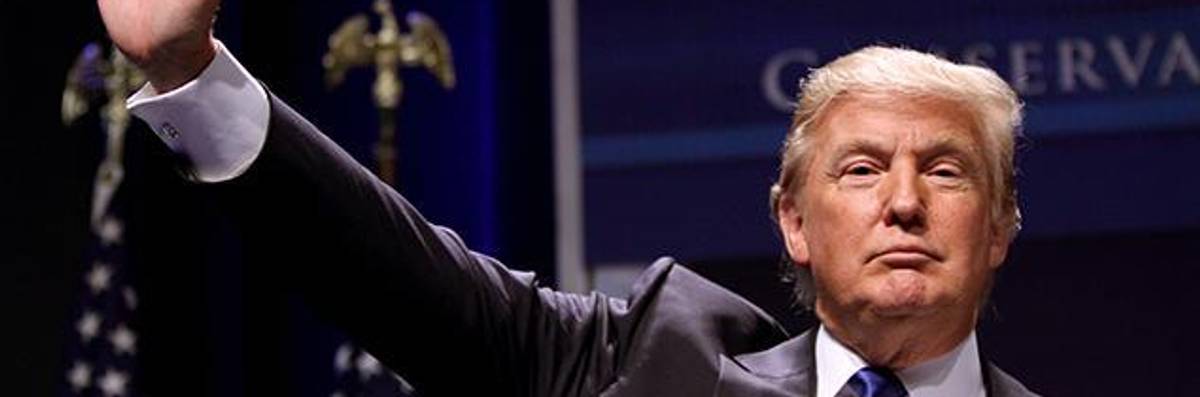
"If the ruling stands, it could result in an unprecedented level of public disclosure about Trump's businesses, something he has fiercely resisted." (Photo: Gage Skidmore/flickr)
Given the controversy-every-news-cycle of the Trump administration, it can be hard to recognize when something truly important happens. Such an event occurred July 25, when a federal district court ruled that a suit could move forward alleging President Trump is violating the Constitution because of the money he earns from his Washington, D.C., hotel.
If the ruling stands, it could result in an unprecedented level of public disclosure about Trump's businesses, something he has fiercely resisted.
The decision marks the first time a federal court has interpreted whether and how the Constitution's anti-corruption clauses apply to the president. The reason why no court considered the question in the nearly 230 years of the republic is that there was no need to. Every president since John F. Kennedy has put their assets into some form of a blind trust.
But Trump has a propensity for venturing into uncharted constitutional territory. Although a tax partner from a major law firm was trotted out at Trump's first press conference as president-elect to announce his assets were being placed in a trust, later filings showed he can withdraw money from the trust at any time for any reason. In other words, the trust is paper-thin. "Has he put [his business] out of his control and out of his personal benefit? The answer is no," Beth Shapiro Kaufman, a lawyer who worked for the Treasury Department's Office of Tax Policy for six years, told The Washington Post.
At issue are what is known as "the Foreign and Domestic Emoluments Clauses" of the Constitution.
The foreign emoluments clause, which does not specifically name the president, says that no government official "shall, without the Consent of Congress, accept of any present, Emolument, Office, or Title, of any kind whatever, from any King, Prince or foreign State."
The domestic emoluments clause says the president will be compensated while in office, the compensation can't change during the president's term, and "he shall not receive within that Period any other Emolument from the United States, or any of them."
The first chapter of this litigation, brought by District of Columbia and Maryland, consisted of two parts. The first was whether these plaintiffs had any right to sue to begin with.
Their argument was Trump has an unfair competitive advantage because officials may patronize his D.C. hotel to curry his favor. Taxpayers in both jurisdictions could be damaged since each government has stakes in convention centers that compete with Trump's hotel for meeting business. In addition, other local competitors, such as the Ritz-Carlton, may lose business because of the president's continued interest in the D.C. property.
For instance, the plaintiffs claimed that both the governments of Bahrain and Kuwait moved events booked at other D.C. venues to Trump's establishment after he was elected. And, the plaintiffs alleged, officials from the state of Maine (including Gov. Paul LePage) used Trump's hotel when visiting Washington on official business. As the Center for Responsive Politics has been cataloging, lots of politicians and their related committees have shown up at Trump-owned properties, totaling $3.2 million so far this year alone.
Without ruling on the merits of the claims, Judge Peter Messitte found in March they were sufficient. Trump's D.C. hotel, the judge ruled, "has had and almost certainly will continue to have an unlawful effect on competition," the judge wrote. D.C. and Maryland are "quite plausibly trying to protect a large segment of their commercial residents and hospitality industry employees from economic harm."
Even this decision was of note. Other attempts to sue Trump under the emoluments clause have failed because judges have found that the plaintiffs lack standing. That's what happened when Citizens for Responsibility and Ethics in Washington (CREW) sued in New York. And another suit over emoluments, brought by 30 Democratic Senators and 166 House members in D.C. federal court, is awaiting a ruling on standing. However, courts are often reluctant to grant standing to members of Congress if Congress itself could resolve a legal dispute by acting.
In his most recent decision, Messitte had to decide just what "emoluments" mean. Not surprisingly, Trump's Justice Department defenders argued for a narrow construction of the term. They said the prohibitions against emoluments weren't designed to prohibit the president from conducting private business, and in any case, the Founders intended emoluments to mean only outright bribes -- an explicit quid pro quo for presidential action.
Trump's lawyers warned that the plaintiffs' definition of emoluments could lead to "absurd consequences," such as a federal official violating the foreign emoluments clause if they hold stock in a company that derived some of its earnings from a foreign government.
The judge bought none of it. He said the Founders intended the emoluments clauses to "function as broad anti-corruption provisions." Messitte wrote:
The Court finds the President is subject to both Emoluments Clauses of the Constitution and that the term 'emolument' in both Clauses extends to any profit, gain, or advantage of more than de minimis value, received by him, directly or indirectly, from foreign, the federal, or domestic governments. This includes profits from private transactions, even those involving services given at fair market value. [ital. added]
As of this writing, Trump's taxpayer-funded lawyers have not said whether they will appeal the decision and make anew their argument that it's perfectly acceptable for someone in the Oval Office to profit from governments scrambling to patronize his business to cultivate his favor. However, should the case proceed, one can expect some presidential Twitter storms about a "PARTISAN WITCH HUNT!"
Dear Common Dreams reader, It’s been nearly 30 years since I co-founded Common Dreams with my late wife, Lina Newhouser. We had the radical notion that journalism should serve the public good, not corporate profits. It was clear to us from the outset what it would take to build such a project. No paid advertisements. No corporate sponsors. No millionaire publisher telling us what to think or do. Many people said we wouldn't last a year, but we proved those doubters wrong. Together with a tremendous team of journalists and dedicated staff, we built an independent media outlet free from the constraints of profits and corporate control. Our mission has always been simple: To inform. To inspire. To ignite change for the common good. Building Common Dreams was not easy. Our survival was never guaranteed. When you take on the most powerful forces—Wall Street greed, fossil fuel industry destruction, Big Tech lobbyists, and uber-rich oligarchs who have spent billions upon billions rigging the economy and democracy in their favor—the only bulwark you have is supporters who believe in your work. But here’s the urgent message from me today. It's never been this bad out there. And it's never been this hard to keep us going. At the very moment Common Dreams is most needed, the threats we face are intensifying. We need your support now more than ever. We don't accept corporate advertising and never will. We don't have a paywall because we don't think people should be blocked from critical news based on their ability to pay. Everything we do is funded by the donations of readers like you. When everyone does the little they can afford, we are strong. But if that support retreats or dries up, so do we. Will you donate now to make sure Common Dreams not only survives but thrives? —Craig Brown, Co-founder |
Given the controversy-every-news-cycle of the Trump administration, it can be hard to recognize when something truly important happens. Such an event occurred July 25, when a federal district court ruled that a suit could move forward alleging President Trump is violating the Constitution because of the money he earns from his Washington, D.C., hotel.
If the ruling stands, it could result in an unprecedented level of public disclosure about Trump's businesses, something he has fiercely resisted.
The decision marks the first time a federal court has interpreted whether and how the Constitution's anti-corruption clauses apply to the president. The reason why no court considered the question in the nearly 230 years of the republic is that there was no need to. Every president since John F. Kennedy has put their assets into some form of a blind trust.
But Trump has a propensity for venturing into uncharted constitutional territory. Although a tax partner from a major law firm was trotted out at Trump's first press conference as president-elect to announce his assets were being placed in a trust, later filings showed he can withdraw money from the trust at any time for any reason. In other words, the trust is paper-thin. "Has he put [his business] out of his control and out of his personal benefit? The answer is no," Beth Shapiro Kaufman, a lawyer who worked for the Treasury Department's Office of Tax Policy for six years, told The Washington Post.
At issue are what is known as "the Foreign and Domestic Emoluments Clauses" of the Constitution.
The foreign emoluments clause, which does not specifically name the president, says that no government official "shall, without the Consent of Congress, accept of any present, Emolument, Office, or Title, of any kind whatever, from any King, Prince or foreign State."
The domestic emoluments clause says the president will be compensated while in office, the compensation can't change during the president's term, and "he shall not receive within that Period any other Emolument from the United States, or any of them."
The first chapter of this litigation, brought by District of Columbia and Maryland, consisted of two parts. The first was whether these plaintiffs had any right to sue to begin with.
Their argument was Trump has an unfair competitive advantage because officials may patronize his D.C. hotel to curry his favor. Taxpayers in both jurisdictions could be damaged since each government has stakes in convention centers that compete with Trump's hotel for meeting business. In addition, other local competitors, such as the Ritz-Carlton, may lose business because of the president's continued interest in the D.C. property.
For instance, the plaintiffs claimed that both the governments of Bahrain and Kuwait moved events booked at other D.C. venues to Trump's establishment after he was elected. And, the plaintiffs alleged, officials from the state of Maine (including Gov. Paul LePage) used Trump's hotel when visiting Washington on official business. As the Center for Responsive Politics has been cataloging, lots of politicians and their related committees have shown up at Trump-owned properties, totaling $3.2 million so far this year alone.
Without ruling on the merits of the claims, Judge Peter Messitte found in March they were sufficient. Trump's D.C. hotel, the judge ruled, "has had and almost certainly will continue to have an unlawful effect on competition," the judge wrote. D.C. and Maryland are "quite plausibly trying to protect a large segment of their commercial residents and hospitality industry employees from economic harm."
Even this decision was of note. Other attempts to sue Trump under the emoluments clause have failed because judges have found that the plaintiffs lack standing. That's what happened when Citizens for Responsibility and Ethics in Washington (CREW) sued in New York. And another suit over emoluments, brought by 30 Democratic Senators and 166 House members in D.C. federal court, is awaiting a ruling on standing. However, courts are often reluctant to grant standing to members of Congress if Congress itself could resolve a legal dispute by acting.
In his most recent decision, Messitte had to decide just what "emoluments" mean. Not surprisingly, Trump's Justice Department defenders argued for a narrow construction of the term. They said the prohibitions against emoluments weren't designed to prohibit the president from conducting private business, and in any case, the Founders intended emoluments to mean only outright bribes -- an explicit quid pro quo for presidential action.
Trump's lawyers warned that the plaintiffs' definition of emoluments could lead to "absurd consequences," such as a federal official violating the foreign emoluments clause if they hold stock in a company that derived some of its earnings from a foreign government.
The judge bought none of it. He said the Founders intended the emoluments clauses to "function as broad anti-corruption provisions." Messitte wrote:
The Court finds the President is subject to both Emoluments Clauses of the Constitution and that the term 'emolument' in both Clauses extends to any profit, gain, or advantage of more than de minimis value, received by him, directly or indirectly, from foreign, the federal, or domestic governments. This includes profits from private transactions, even those involving services given at fair market value. [ital. added]
As of this writing, Trump's taxpayer-funded lawyers have not said whether they will appeal the decision and make anew their argument that it's perfectly acceptable for someone in the Oval Office to profit from governments scrambling to patronize his business to cultivate his favor. However, should the case proceed, one can expect some presidential Twitter storms about a "PARTISAN WITCH HUNT!"
Given the controversy-every-news-cycle of the Trump administration, it can be hard to recognize when something truly important happens. Such an event occurred July 25, when a federal district court ruled that a suit could move forward alleging President Trump is violating the Constitution because of the money he earns from his Washington, D.C., hotel.
If the ruling stands, it could result in an unprecedented level of public disclosure about Trump's businesses, something he has fiercely resisted.
The decision marks the first time a federal court has interpreted whether and how the Constitution's anti-corruption clauses apply to the president. The reason why no court considered the question in the nearly 230 years of the republic is that there was no need to. Every president since John F. Kennedy has put their assets into some form of a blind trust.
But Trump has a propensity for venturing into uncharted constitutional territory. Although a tax partner from a major law firm was trotted out at Trump's first press conference as president-elect to announce his assets were being placed in a trust, later filings showed he can withdraw money from the trust at any time for any reason. In other words, the trust is paper-thin. "Has he put [his business] out of his control and out of his personal benefit? The answer is no," Beth Shapiro Kaufman, a lawyer who worked for the Treasury Department's Office of Tax Policy for six years, told The Washington Post.
At issue are what is known as "the Foreign and Domestic Emoluments Clauses" of the Constitution.
The foreign emoluments clause, which does not specifically name the president, says that no government official "shall, without the Consent of Congress, accept of any present, Emolument, Office, or Title, of any kind whatever, from any King, Prince or foreign State."
The domestic emoluments clause says the president will be compensated while in office, the compensation can't change during the president's term, and "he shall not receive within that Period any other Emolument from the United States, or any of them."
The first chapter of this litigation, brought by District of Columbia and Maryland, consisted of two parts. The first was whether these plaintiffs had any right to sue to begin with.
Their argument was Trump has an unfair competitive advantage because officials may patronize his D.C. hotel to curry his favor. Taxpayers in both jurisdictions could be damaged since each government has stakes in convention centers that compete with Trump's hotel for meeting business. In addition, other local competitors, such as the Ritz-Carlton, may lose business because of the president's continued interest in the D.C. property.
For instance, the plaintiffs claimed that both the governments of Bahrain and Kuwait moved events booked at other D.C. venues to Trump's establishment after he was elected. And, the plaintiffs alleged, officials from the state of Maine (including Gov. Paul LePage) used Trump's hotel when visiting Washington on official business. As the Center for Responsive Politics has been cataloging, lots of politicians and their related committees have shown up at Trump-owned properties, totaling $3.2 million so far this year alone.
Without ruling on the merits of the claims, Judge Peter Messitte found in March they were sufficient. Trump's D.C. hotel, the judge ruled, "has had and almost certainly will continue to have an unlawful effect on competition," the judge wrote. D.C. and Maryland are "quite plausibly trying to protect a large segment of their commercial residents and hospitality industry employees from economic harm."
Even this decision was of note. Other attempts to sue Trump under the emoluments clause have failed because judges have found that the plaintiffs lack standing. That's what happened when Citizens for Responsibility and Ethics in Washington (CREW) sued in New York. And another suit over emoluments, brought by 30 Democratic Senators and 166 House members in D.C. federal court, is awaiting a ruling on standing. However, courts are often reluctant to grant standing to members of Congress if Congress itself could resolve a legal dispute by acting.
In his most recent decision, Messitte had to decide just what "emoluments" mean. Not surprisingly, Trump's Justice Department defenders argued for a narrow construction of the term. They said the prohibitions against emoluments weren't designed to prohibit the president from conducting private business, and in any case, the Founders intended emoluments to mean only outright bribes -- an explicit quid pro quo for presidential action.
Trump's lawyers warned that the plaintiffs' definition of emoluments could lead to "absurd consequences," such as a federal official violating the foreign emoluments clause if they hold stock in a company that derived some of its earnings from a foreign government.
The judge bought none of it. He said the Founders intended the emoluments clauses to "function as broad anti-corruption provisions." Messitte wrote:
The Court finds the President is subject to both Emoluments Clauses of the Constitution and that the term 'emolument' in both Clauses extends to any profit, gain, or advantage of more than de minimis value, received by him, directly or indirectly, from foreign, the federal, or domestic governments. This includes profits from private transactions, even those involving services given at fair market value. [ital. added]
As of this writing, Trump's taxpayer-funded lawyers have not said whether they will appeal the decision and make anew their argument that it's perfectly acceptable for someone in the Oval Office to profit from governments scrambling to patronize his business to cultivate his favor. However, should the case proceed, one can expect some presidential Twitter storms about a "PARTISAN WITCH HUNT!"