SUBSCRIBE TO OUR FREE NEWSLETTER
Daily news & progressive opinion—funded by the people, not the corporations—delivered straight to your inbox.
5
#000000
#FFFFFF
To donate by check, phone, or other method, see our More Ways to Give page.
Daily news & progressive opinion—funded by the people, not the corporations—delivered straight to your inbox.
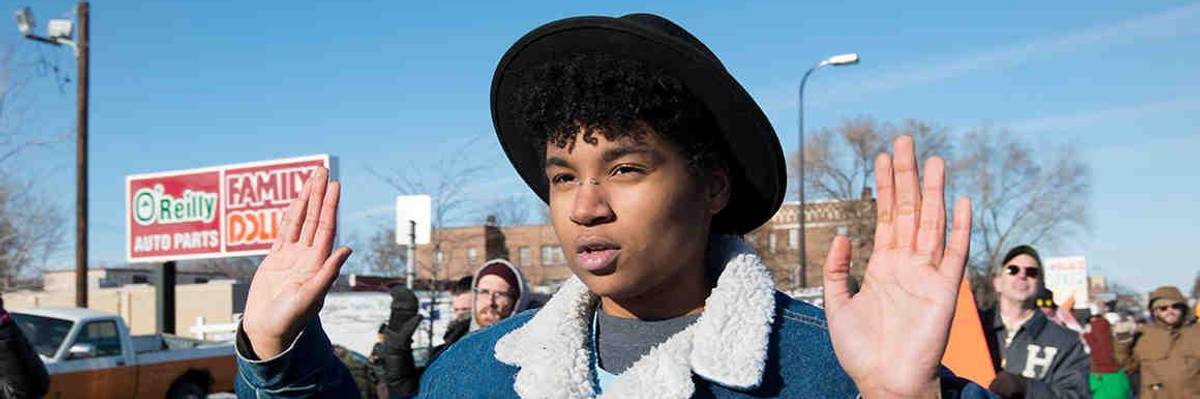
"I can't breathe" -- repeated 11 times while half a dozen officers did nothing to intervene -- helped fuel a movement for police accountability that continues today. (Photo: Fibonacci blue/ flickr/ cc)
Yesterday, the city announced that, after waiting more than three years for a federal investigation into Garner's killing to conclude, it will move forward with its own inquiry into Garner's death. In a letter to the Department of Justice, NYPD Deputy Commissioner Lawrence Byrne wrote that if the Justice Department does not publicly announce whether it will bring charges against Pantaleo by August 31, the city will serve Pantaleo with departmental charges and try him in an administrative trial in early 2019.
The announcement on the eve of the anniversary of Garner's death was almost certainly designed to help Mayor Bill de Blasio avoid criticism from Garner's family and other advocates, who have been pushing the city to take action. This decision by the city, while welcome, does not excuse the administration for taking so long to do anything and also proves that the excuses for not taking action were flimsy at best.
To fully understand why this delay has been so frustrating, we should look back at how we got here.
A month after Garner's death on Staten Island, then Richmond County District Attorney Daniel Donovan failed to secure an indictment against Pantaleo. Since then, Garner's supporters' hopes for accountability have hinged on an ongoing federal investigation launched in 2014 by the Justice Department. The investigation began under Attorney General Eric Holder, continued under Attorney General Loretta Lynch, and is now proceeding under the current head of the Justice Department, Jeff Sessions.
In April, The New York Times reported that civil rights attorneys for the Justice Department recommended filing charges against Pantaleo, but top Justice Department officials expressed doubts about the case. Nearly three-and-a-half years after it opened a civil rights investigation into Garner's death, there is no sign a decision from the Justice Department, one way or the other, is coming anytime soon.
Under New York state law, only police commissioners have the authority to discipline police officers, meaning O'Neill can completely disregard the CCRB's recommendations.
As the federal investigation drags on, leaders in New York City refused, until yesterday, to take action. The Justice Department had asked the city to refrain from conducting its own investigation while the federal inquiry was ongoing. The city's top lawyer, Zachary Carter, told The New York Times in February that, while New York is under no obligation to hold off on investigating, the city agreed to wait.
Last year, however, the Civilian Complaint Review Board, the independent agency charged with investigating NYPD officer misconduct, conducted its own investigation into the Garner killing. The board found that charges should be brought against Pantaleo and recommended that he should face the stiffest punishments possible: suspension or termination. This was the third finding of abuse against Pantaleo by the CCRB, including two cases that happened prior to his role in the killing of Eric Garner.
If the Justice Department doesn't announce the results of its investigation by the end of August, CCRB prosecutors, according to Deputy Commissioner Byrne, will present an administrative case against Pantaleo next year. The board could then make a recommendation to NYPD Chief James O'Neill, who will have the ultimate say in what punishment, if any, Pantaleo receives. You read that correctly. Under New York state law, only police commissioners have the authority to discipline police officers, meaning O'Neill can completely disregard the CCRB's recommendations.
There is no reason the city should not have taken these steps much sooner. Not doing so gives the appearance of complete impunity at the NYPD, which, given its size and influence, has a ripple effect on police departments across the country.
Since Garner's unnecessary and avoidable death, his family has fought tirelessly, even as they experienced additional tragedy. In December 2017, Garner's daughter Erica, who fiercely fought for justice for her father, died suddenly. On Dec. 30, Mayor de Blasio joined activists and family members in mourning her loss, tweeting, "I am praying for her family, who have already been through so much."
De Blasio's decision yesterday proves that the mayor can do much more than pray for Garner's family. Meanwhile, Pantaleo remains on the NYPD payroll, and Eric Garner's family continues to wait for justice.
Dear Common Dreams reader, It’s been nearly 30 years since I co-founded Common Dreams with my late wife, Lina Newhouser. We had the radical notion that journalism should serve the public good, not corporate profits. It was clear to us from the outset what it would take to build such a project. No paid advertisements. No corporate sponsors. No millionaire publisher telling us what to think or do. Many people said we wouldn't last a year, but we proved those doubters wrong. Together with a tremendous team of journalists and dedicated staff, we built an independent media outlet free from the constraints of profits and corporate control. Our mission has always been simple: To inform. To inspire. To ignite change for the common good. Building Common Dreams was not easy. Our survival was never guaranteed. When you take on the most powerful forces—Wall Street greed, fossil fuel industry destruction, Big Tech lobbyists, and uber-rich oligarchs who have spent billions upon billions rigging the economy and democracy in their favor—the only bulwark you have is supporters who believe in your work. But here’s the urgent message from me today. It's never been this bad out there. And it's never been this hard to keep us going. At the very moment Common Dreams is most needed, the threats we face are intensifying. We need your support now more than ever. We don't accept corporate advertising and never will. We don't have a paywall because we don't think people should be blocked from critical news based on their ability to pay. Everything we do is funded by the donations of readers like you. When everyone does the little they can afford, we are strong. But if that support retreats or dries up, so do we. Will you donate now to make sure Common Dreams not only survives but thrives? —Craig Brown, Co-founder |
Yesterday, the city announced that, after waiting more than three years for a federal investigation into Garner's killing to conclude, it will move forward with its own inquiry into Garner's death. In a letter to the Department of Justice, NYPD Deputy Commissioner Lawrence Byrne wrote that if the Justice Department does not publicly announce whether it will bring charges against Pantaleo by August 31, the city will serve Pantaleo with departmental charges and try him in an administrative trial in early 2019.
The announcement on the eve of the anniversary of Garner's death was almost certainly designed to help Mayor Bill de Blasio avoid criticism from Garner's family and other advocates, who have been pushing the city to take action. This decision by the city, while welcome, does not excuse the administration for taking so long to do anything and also proves that the excuses for not taking action were flimsy at best.
To fully understand why this delay has been so frustrating, we should look back at how we got here.
A month after Garner's death on Staten Island, then Richmond County District Attorney Daniel Donovan failed to secure an indictment against Pantaleo. Since then, Garner's supporters' hopes for accountability have hinged on an ongoing federal investigation launched in 2014 by the Justice Department. The investigation began under Attorney General Eric Holder, continued under Attorney General Loretta Lynch, and is now proceeding under the current head of the Justice Department, Jeff Sessions.
In April, The New York Times reported that civil rights attorneys for the Justice Department recommended filing charges against Pantaleo, but top Justice Department officials expressed doubts about the case. Nearly three-and-a-half years after it opened a civil rights investigation into Garner's death, there is no sign a decision from the Justice Department, one way or the other, is coming anytime soon.
Under New York state law, only police commissioners have the authority to discipline police officers, meaning O'Neill can completely disregard the CCRB's recommendations.
As the federal investigation drags on, leaders in New York City refused, until yesterday, to take action. The Justice Department had asked the city to refrain from conducting its own investigation while the federal inquiry was ongoing. The city's top lawyer, Zachary Carter, told The New York Times in February that, while New York is under no obligation to hold off on investigating, the city agreed to wait.
Last year, however, the Civilian Complaint Review Board, the independent agency charged with investigating NYPD officer misconduct, conducted its own investigation into the Garner killing. The board found that charges should be brought against Pantaleo and recommended that he should face the stiffest punishments possible: suspension or termination. This was the third finding of abuse against Pantaleo by the CCRB, including two cases that happened prior to his role in the killing of Eric Garner.
If the Justice Department doesn't announce the results of its investigation by the end of August, CCRB prosecutors, according to Deputy Commissioner Byrne, will present an administrative case against Pantaleo next year. The board could then make a recommendation to NYPD Chief James O'Neill, who will have the ultimate say in what punishment, if any, Pantaleo receives. You read that correctly. Under New York state law, only police commissioners have the authority to discipline police officers, meaning O'Neill can completely disregard the CCRB's recommendations.
There is no reason the city should not have taken these steps much sooner. Not doing so gives the appearance of complete impunity at the NYPD, which, given its size and influence, has a ripple effect on police departments across the country.
Since Garner's unnecessary and avoidable death, his family has fought tirelessly, even as they experienced additional tragedy. In December 2017, Garner's daughter Erica, who fiercely fought for justice for her father, died suddenly. On Dec. 30, Mayor de Blasio joined activists and family members in mourning her loss, tweeting, "I am praying for her family, who have already been through so much."
De Blasio's decision yesterday proves that the mayor can do much more than pray for Garner's family. Meanwhile, Pantaleo remains on the NYPD payroll, and Eric Garner's family continues to wait for justice.
Yesterday, the city announced that, after waiting more than three years for a federal investigation into Garner's killing to conclude, it will move forward with its own inquiry into Garner's death. In a letter to the Department of Justice, NYPD Deputy Commissioner Lawrence Byrne wrote that if the Justice Department does not publicly announce whether it will bring charges against Pantaleo by August 31, the city will serve Pantaleo with departmental charges and try him in an administrative trial in early 2019.
The announcement on the eve of the anniversary of Garner's death was almost certainly designed to help Mayor Bill de Blasio avoid criticism from Garner's family and other advocates, who have been pushing the city to take action. This decision by the city, while welcome, does not excuse the administration for taking so long to do anything and also proves that the excuses for not taking action were flimsy at best.
To fully understand why this delay has been so frustrating, we should look back at how we got here.
A month after Garner's death on Staten Island, then Richmond County District Attorney Daniel Donovan failed to secure an indictment against Pantaleo. Since then, Garner's supporters' hopes for accountability have hinged on an ongoing federal investigation launched in 2014 by the Justice Department. The investigation began under Attorney General Eric Holder, continued under Attorney General Loretta Lynch, and is now proceeding under the current head of the Justice Department, Jeff Sessions.
In April, The New York Times reported that civil rights attorneys for the Justice Department recommended filing charges against Pantaleo, but top Justice Department officials expressed doubts about the case. Nearly three-and-a-half years after it opened a civil rights investigation into Garner's death, there is no sign a decision from the Justice Department, one way or the other, is coming anytime soon.
Under New York state law, only police commissioners have the authority to discipline police officers, meaning O'Neill can completely disregard the CCRB's recommendations.
As the federal investigation drags on, leaders in New York City refused, until yesterday, to take action. The Justice Department had asked the city to refrain from conducting its own investigation while the federal inquiry was ongoing. The city's top lawyer, Zachary Carter, told The New York Times in February that, while New York is under no obligation to hold off on investigating, the city agreed to wait.
Last year, however, the Civilian Complaint Review Board, the independent agency charged with investigating NYPD officer misconduct, conducted its own investigation into the Garner killing. The board found that charges should be brought against Pantaleo and recommended that he should face the stiffest punishments possible: suspension or termination. This was the third finding of abuse against Pantaleo by the CCRB, including two cases that happened prior to his role in the killing of Eric Garner.
If the Justice Department doesn't announce the results of its investigation by the end of August, CCRB prosecutors, according to Deputy Commissioner Byrne, will present an administrative case against Pantaleo next year. The board could then make a recommendation to NYPD Chief James O'Neill, who will have the ultimate say in what punishment, if any, Pantaleo receives. You read that correctly. Under New York state law, only police commissioners have the authority to discipline police officers, meaning O'Neill can completely disregard the CCRB's recommendations.
There is no reason the city should not have taken these steps much sooner. Not doing so gives the appearance of complete impunity at the NYPD, which, given its size and influence, has a ripple effect on police departments across the country.
Since Garner's unnecessary and avoidable death, his family has fought tirelessly, even as they experienced additional tragedy. In December 2017, Garner's daughter Erica, who fiercely fought for justice for her father, died suddenly. On Dec. 30, Mayor de Blasio joined activists and family members in mourning her loss, tweeting, "I am praying for her family, who have already been through so much."
De Blasio's decision yesterday proves that the mayor can do much more than pray for Garner's family. Meanwhile, Pantaleo remains on the NYPD payroll, and Eric Garner's family continues to wait for justice.