SUBSCRIBE TO OUR FREE NEWSLETTER
Daily news & progressive opinion—funded by the people, not the corporations—delivered straight to your inbox.
5
#000000
#FFFFFF
To donate by check, phone, or other method, see our More Ways to Give page.
Daily news & progressive opinion—funded by the people, not the corporations—delivered straight to your inbox.
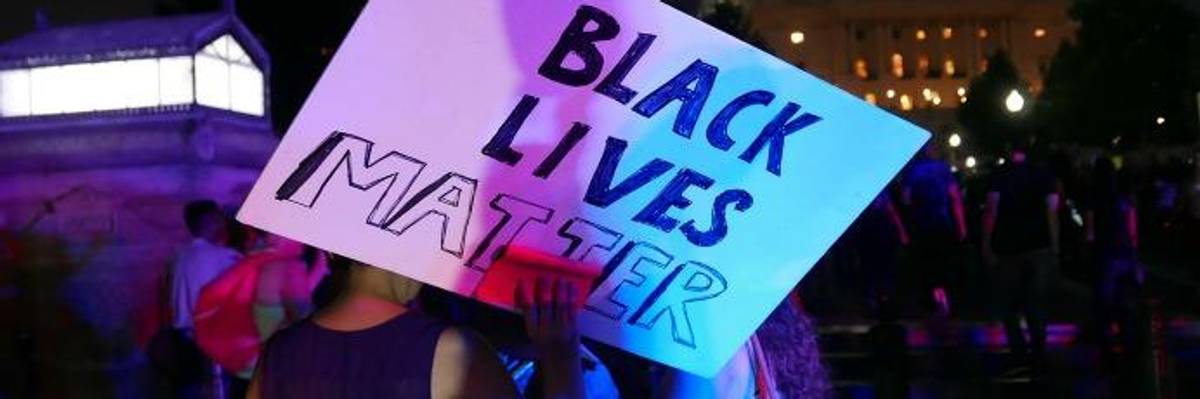
Alton "Sterling's death is a glaring reminder that police officers too often use aggressive tactics and excessive force, informed by implicit bias rather than community protection," the author writes. (Photo: Susan Melkisethian/flickr/cc)
On March 27, Louisiana Attorney General Jeff Landry announced that his office would not bring criminal charges against the two police officers who shot and killed Alton Sterling as he lay pinned by them to the ground in front of a convenience store in Baton Rouge.
Attorney General Landry's decision is two contradictory things: It is shocking, and it is unsurprising. The decision sends a clear message about policing in America today, and highlights the continuing crisis of accountability when it comes to unlawful use of excessive and deadly force by police.
The failure to hold police accountable for the killings of Black men and boys is standard practice at both the local and federal level. Last year, Attorney General Jeff Sessions, the nation's so-called "top cop," and his Department of Justice concluded there was insufficient evidence to bring federal civil rights charges against the officers involved in Sterling's death. And, while the Baton Rouge Police Chief said disciplinary hearings would be held for the officers this week, the officers who killed Sterling, and whose killing of Sterling was caught on video, both remain employed by the Baton Rouge Police Department.
Sterling was one of 233 Black people shot and killed by the police in 2016. And while the national media spotlight on police violence has faded, the death toll has remained steady. TheWashington Post Police Shooting Database records show 2934 people shot and killed by police between 2015 and 2017. That's nearly 1000 deaths per year. Earlier this month, police officers in Sacramento fired 20 rounds at Stephon Clark, who was unarmed and standing in his own backyard. He died of the wounds inflicted on him by law enforcement. As did Danny Ray Thomas, another unarmed Black man, a man in mental distress, who was killed by police in Harris County, Texas, just days ago.
Sterling's death is a glaring reminder that police officers too often use aggressive tactics and excessive force, informed by implicit bias rather than community protection. Upon first arriving at the scene, one of the officers reportedly put a gun to Sterling's head and said "I'll kill you, bitch." The AG's report describes the officer as giving Sterling a "stern" warning: "Don't fucking move or I'll shoot you in your fucking head."
A death threat is not an acceptable warning. And, coming from police and directed at Black and brown people, it is too often a promise. The ACLU of Louisiana and partner organizations are working to reform police practices to combat these killings.
Some reforms are already under way. In November 2016, the Baton Rouge Police Department, the East Baton Rouge Parish Sheriff's Office, the Louisiana State Police, and the City of Baton Rouge committed to use only the level of force objectively reasonable to bring an incident under control, and use deescalation techniques when dealing with protesters. Baton Rouge Mayor Sharon Weston Broome, who took office in January 2017, has successfully pushed for implicit bias training, a stronger use-of-force policy, and expanded the use of body cameras to the entire police force.
That the officers who killed Sterling have not been charged is by no means the end of this fight. There are questions that must be answered about Sterling's death, and we demand that all body camera and surveillance footage of the incident be released. We demand accountability, equal justice, and an end to racialized policing.
Alton Sterling didn't have to die on the pavement that night. The Baton Rouge police officers chose aggression. They chose to shoot Sterling six times. We must address and dismantle the conditions that led the officers to use deadly force when it was not needed or legal. We must end the epidemic of police violence once and for all -- and bring accountability to this broken system.
Dear Common Dreams reader, It’s been nearly 30 years since I co-founded Common Dreams with my late wife, Lina Newhouser. We had the radical notion that journalism should serve the public good, not corporate profits. It was clear to us from the outset what it would take to build such a project. No paid advertisements. No corporate sponsors. No millionaire publisher telling us what to think or do. Many people said we wouldn't last a year, but we proved those doubters wrong. Together with a tremendous team of journalists and dedicated staff, we built an independent media outlet free from the constraints of profits and corporate control. Our mission has always been simple: To inform. To inspire. To ignite change for the common good. Building Common Dreams was not easy. Our survival was never guaranteed. When you take on the most powerful forces—Wall Street greed, fossil fuel industry destruction, Big Tech lobbyists, and uber-rich oligarchs who have spent billions upon billions rigging the economy and democracy in their favor—the only bulwark you have is supporters who believe in your work. But here’s the urgent message from me today. It's never been this bad out there. And it's never been this hard to keep us going. At the very moment Common Dreams is most needed, the threats we face are intensifying. We need your support now more than ever. We don't accept corporate advertising and never will. We don't have a paywall because we don't think people should be blocked from critical news based on their ability to pay. Everything we do is funded by the donations of readers like you. When everyone does the little they can afford, we are strong. But if that support retreats or dries up, so do we. Will you donate now to make sure Common Dreams not only survives but thrives? —Craig Brown, Co-founder |
On March 27, Louisiana Attorney General Jeff Landry announced that his office would not bring criminal charges against the two police officers who shot and killed Alton Sterling as he lay pinned by them to the ground in front of a convenience store in Baton Rouge.
Attorney General Landry's decision is two contradictory things: It is shocking, and it is unsurprising. The decision sends a clear message about policing in America today, and highlights the continuing crisis of accountability when it comes to unlawful use of excessive and deadly force by police.
The failure to hold police accountable for the killings of Black men and boys is standard practice at both the local and federal level. Last year, Attorney General Jeff Sessions, the nation's so-called "top cop," and his Department of Justice concluded there was insufficient evidence to bring federal civil rights charges against the officers involved in Sterling's death. And, while the Baton Rouge Police Chief said disciplinary hearings would be held for the officers this week, the officers who killed Sterling, and whose killing of Sterling was caught on video, both remain employed by the Baton Rouge Police Department.
Sterling was one of 233 Black people shot and killed by the police in 2016. And while the national media spotlight on police violence has faded, the death toll has remained steady. TheWashington Post Police Shooting Database records show 2934 people shot and killed by police between 2015 and 2017. That's nearly 1000 deaths per year. Earlier this month, police officers in Sacramento fired 20 rounds at Stephon Clark, who was unarmed and standing in his own backyard. He died of the wounds inflicted on him by law enforcement. As did Danny Ray Thomas, another unarmed Black man, a man in mental distress, who was killed by police in Harris County, Texas, just days ago.
Sterling's death is a glaring reminder that police officers too often use aggressive tactics and excessive force, informed by implicit bias rather than community protection. Upon first arriving at the scene, one of the officers reportedly put a gun to Sterling's head and said "I'll kill you, bitch." The AG's report describes the officer as giving Sterling a "stern" warning: "Don't fucking move or I'll shoot you in your fucking head."
A death threat is not an acceptable warning. And, coming from police and directed at Black and brown people, it is too often a promise. The ACLU of Louisiana and partner organizations are working to reform police practices to combat these killings.
Some reforms are already under way. In November 2016, the Baton Rouge Police Department, the East Baton Rouge Parish Sheriff's Office, the Louisiana State Police, and the City of Baton Rouge committed to use only the level of force objectively reasonable to bring an incident under control, and use deescalation techniques when dealing with protesters. Baton Rouge Mayor Sharon Weston Broome, who took office in January 2017, has successfully pushed for implicit bias training, a stronger use-of-force policy, and expanded the use of body cameras to the entire police force.
That the officers who killed Sterling have not been charged is by no means the end of this fight. There are questions that must be answered about Sterling's death, and we demand that all body camera and surveillance footage of the incident be released. We demand accountability, equal justice, and an end to racialized policing.
Alton Sterling didn't have to die on the pavement that night. The Baton Rouge police officers chose aggression. They chose to shoot Sterling six times. We must address and dismantle the conditions that led the officers to use deadly force when it was not needed or legal. We must end the epidemic of police violence once and for all -- and bring accountability to this broken system.
On March 27, Louisiana Attorney General Jeff Landry announced that his office would not bring criminal charges against the two police officers who shot and killed Alton Sterling as he lay pinned by them to the ground in front of a convenience store in Baton Rouge.
Attorney General Landry's decision is two contradictory things: It is shocking, and it is unsurprising. The decision sends a clear message about policing in America today, and highlights the continuing crisis of accountability when it comes to unlawful use of excessive and deadly force by police.
The failure to hold police accountable for the killings of Black men and boys is standard practice at both the local and federal level. Last year, Attorney General Jeff Sessions, the nation's so-called "top cop," and his Department of Justice concluded there was insufficient evidence to bring federal civil rights charges against the officers involved in Sterling's death. And, while the Baton Rouge Police Chief said disciplinary hearings would be held for the officers this week, the officers who killed Sterling, and whose killing of Sterling was caught on video, both remain employed by the Baton Rouge Police Department.
Sterling was one of 233 Black people shot and killed by the police in 2016. And while the national media spotlight on police violence has faded, the death toll has remained steady. TheWashington Post Police Shooting Database records show 2934 people shot and killed by police between 2015 and 2017. That's nearly 1000 deaths per year. Earlier this month, police officers in Sacramento fired 20 rounds at Stephon Clark, who was unarmed and standing in his own backyard. He died of the wounds inflicted on him by law enforcement. As did Danny Ray Thomas, another unarmed Black man, a man in mental distress, who was killed by police in Harris County, Texas, just days ago.
Sterling's death is a glaring reminder that police officers too often use aggressive tactics and excessive force, informed by implicit bias rather than community protection. Upon first arriving at the scene, one of the officers reportedly put a gun to Sterling's head and said "I'll kill you, bitch." The AG's report describes the officer as giving Sterling a "stern" warning: "Don't fucking move or I'll shoot you in your fucking head."
A death threat is not an acceptable warning. And, coming from police and directed at Black and brown people, it is too often a promise. The ACLU of Louisiana and partner organizations are working to reform police practices to combat these killings.
Some reforms are already under way. In November 2016, the Baton Rouge Police Department, the East Baton Rouge Parish Sheriff's Office, the Louisiana State Police, and the City of Baton Rouge committed to use only the level of force objectively reasonable to bring an incident under control, and use deescalation techniques when dealing with protesters. Baton Rouge Mayor Sharon Weston Broome, who took office in January 2017, has successfully pushed for implicit bias training, a stronger use-of-force policy, and expanded the use of body cameras to the entire police force.
That the officers who killed Sterling have not been charged is by no means the end of this fight. There are questions that must be answered about Sterling's death, and we demand that all body camera and surveillance footage of the incident be released. We demand accountability, equal justice, and an end to racialized policing.
Alton Sterling didn't have to die on the pavement that night. The Baton Rouge police officers chose aggression. They chose to shoot Sterling six times. We must address and dismantle the conditions that led the officers to use deadly force when it was not needed or legal. We must end the epidemic of police violence once and for all -- and bring accountability to this broken system.