SUBSCRIBE TO OUR FREE NEWSLETTER
Daily news & progressive opinion—funded by the people, not the corporations—delivered straight to your inbox.
5
#000000
#FFFFFF
To donate by check, phone, or other method, see our More Ways to Give page.
Maybe instead of chalking Black Friday mania up to rampant greed we should be looking at the ever increasing gap between the rich and the poor--and the economic policies that are forcing people to participate in a Hunger Games-like spectacle in order to provide for themselves and their families.
But as I watched video of people camped out on sidewalks in the freezing cold this year and mobs violently pushing through doors, consumerism seemed at best a partial explanation.
CNN scolds castigated them for being consumed by greed and treating Black Friday shopping as a "sport," but these people didn't look like they were having fun. They looked poor. And desperate.
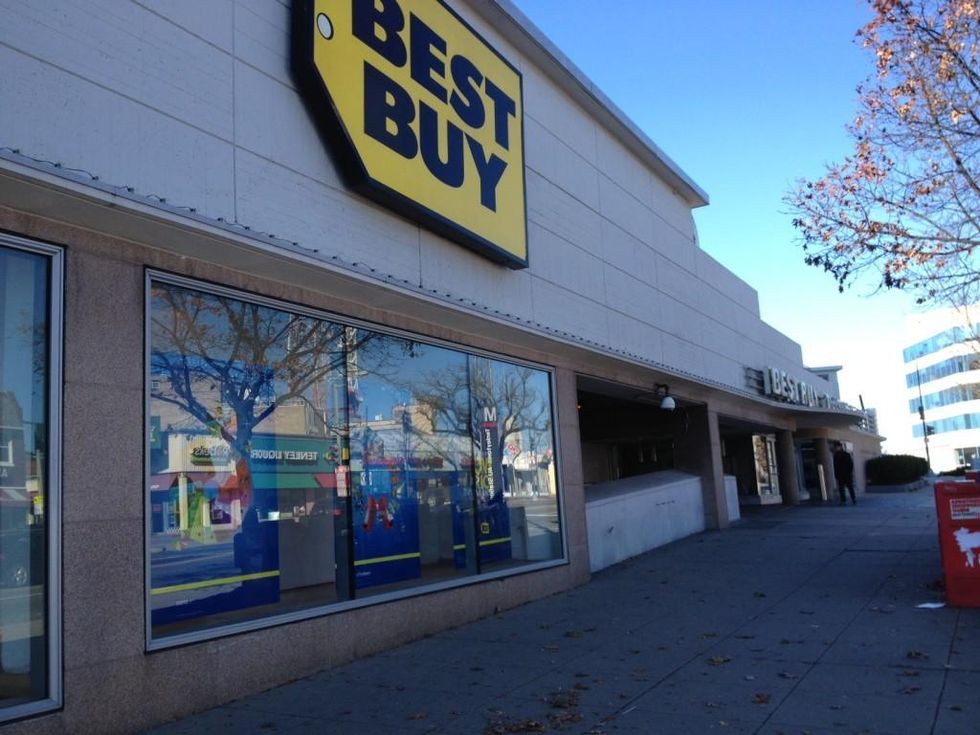
If CNN was right, and this was all great fun, then there should be just as many people outside Best Buys in wealthy areas as there are in places where people are struggling. So the dogs and I hopped in the car and went to a Best Buy in a well-to-do area of DC to see how long the lines are.
And, of course, there was no line. Unless one person could be considered a line. A woman was sitting just inside the main door and had organized a short list of people (22) who would return later in the day and assume an orderly place in line.
She asked me not to publish the location of the store because she came from a not-so-affluent part of town and said that this store was "the best kept secret in town."
I asked her why she thought nobody was camped out here like they were in other places. "Because people here are rich and they don't need to" she said.
Maybe instead of chalking Black Friday mania up to rampant greed we should be looking at the ever increasing gap between the rich and the poor--and the economic policies that are forcing people to participate in a Hunger Games-like spectacle in order to provide for themselves and their families.
Maybe instead of chalking Black Friday mania up to rampant greed we should be looking at the ever increasing gap between the rich and the poor--and the economic policies that are forcing people to participate in a Hunger Games-like spectacle in order to provide for themselves and their families.
But as I watched video of people camped out on sidewalks in the freezing cold this year and mobs violently pushing through doors, consumerism seemed at best a partial explanation.
CNN scolds castigated them for being consumed by greed and treating Black Friday shopping as a "sport," but these people didn't look like they were having fun. They looked poor. And desperate.
If CNN was right, and this was all great fun, then there should be just as many people outside Best Buys in wealthy areas as there are in places where people are struggling. So the dogs and I hopped in the car and went to a Best Buy in a well-to-do area of DC to see how long the lines are.
And, of course, there was no line. Unless one person could be considered a line. A woman was sitting just inside the main door and had organized a short list of people (22) who would return later in the day and assume an orderly place in line.
She asked me not to publish the location of the store because she came from a not-so-affluent part of town and said that this store was "the best kept secret in town."
I asked her why she thought nobody was camped out here like they were in other places. "Because people here are rich and they don't need to" she said.
Maybe instead of chalking Black Friday mania up to rampant greed we should be looking at the ever increasing gap between the rich and the poor--and the economic policies that are forcing people to participate in a Hunger Games-like spectacle in order to provide for themselves and their families.
Maybe instead of chalking Black Friday mania up to rampant greed we should be looking at the ever increasing gap between the rich and the poor--and the economic policies that are forcing people to participate in a Hunger Games-like spectacle in order to provide for themselves and their families.
But as I watched video of people camped out on sidewalks in the freezing cold this year and mobs violently pushing through doors, consumerism seemed at best a partial explanation.
CNN scolds castigated them for being consumed by greed and treating Black Friday shopping as a "sport," but these people didn't look like they were having fun. They looked poor. And desperate.
If CNN was right, and this was all great fun, then there should be just as many people outside Best Buys in wealthy areas as there are in places where people are struggling. So the dogs and I hopped in the car and went to a Best Buy in a well-to-do area of DC to see how long the lines are.
And, of course, there was no line. Unless one person could be considered a line. A woman was sitting just inside the main door and had organized a short list of people (22) who would return later in the day and assume an orderly place in line.
She asked me not to publish the location of the store because she came from a not-so-affluent part of town and said that this store was "the best kept secret in town."
I asked her why she thought nobody was camped out here like they were in other places. "Because people here are rich and they don't need to" she said.
Maybe instead of chalking Black Friday mania up to rampant greed we should be looking at the ever increasing gap between the rich and the poor--and the economic policies that are forcing people to participate in a Hunger Games-like spectacle in order to provide for themselves and their families.