


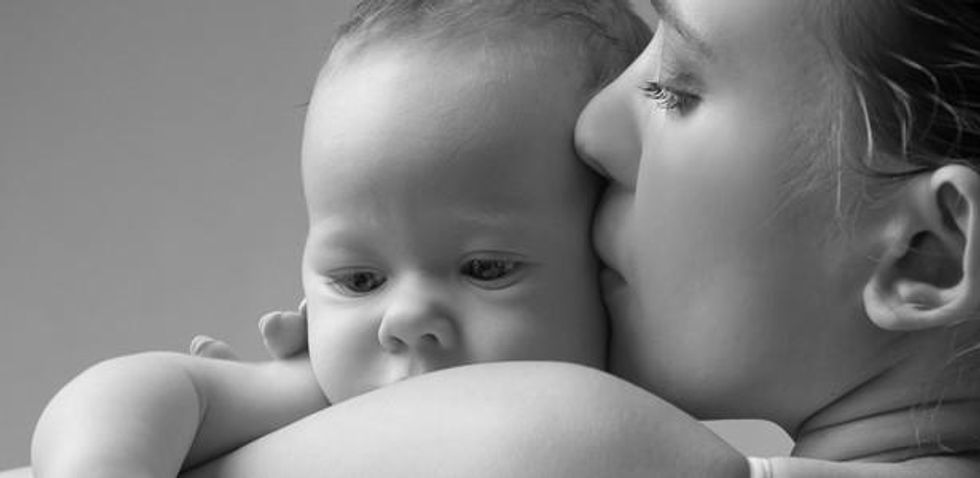
It's less widely understood just how globally out of whack we are. To get a sense, consider the countries we trail in terms of laws that support women's ability to physically recover from birth and bond with a child: Afghanistan, which has a 26 percent literacy rate and 9 million people living on less than one dollar a day, yet still manages to provide new mothers with 12 weeks off with pay; Djibouti, an African nation plagued by civil war and drought that is home to many nomadic herders and still manages to guarantee 14 weeks of paid maternity leave; and the Democratic Republic of Congo, one of the poorest nations in the world--if not the very poorest--which nevertheless offers mothers 15 weeks off with full pay.
What's still unknown at this point is whether the U.S. is closer to joining the rest of the world in providing this basic human decency now that Obama has won a second term. Advocates are gearing up to finally get leave laws passed. And they have reason to be optimistic.
While Republican lawmakers--many of whom seem to reflexively oppose any legislation that appears to take the side of human need over that of business--still control the House of Representatives, Obama won the presidency handily, and Democrats are still in control of the Senate. Perhaps most important, voters from both parties want family and medical leave.
Family and medical leave not only makes for happier workers who can fulfill their family responsibilities, it also allows those folks to stay in their jobs.
Seventy-three percent of Republicans said they think it is important that the new Congress and the president consider laws that help secure working families, such as paid family leave and paid sick days, according to an exit poll conducted by Celinda Lake and released today by the National Partnership for Women and Families. Support for these policies is, not surprisingly, even higher among independents (87 percent) and Democrats (96 percent), according to the poll.
No doubt this bi-partisan enthusiasm stems from the fact that most people realize that, without paid time off, they could well be financially ruined by having an illness in the family or new baby to care for. Nearly three-quarters of voters (72 percent) polled, including 78 percent of independent and Republican-leaning women, said they would likely face significant financial hardships in such a situation.
In this grim economic climate, in which a baby can seem more like a jumble of bills than a bundle of joy, it's easy to see why there is renewed enthusiasm about the possibility of getting paid leave through in the next four years. Family and medical leave not only makes for happier workers who can fulfill their family responsibilities, it also allows those folks to stay in their jobs.
Toward that end, the National Partnership is now working with Rep. Rosa DeLauro to draft a paid family and medical leave bill that is based on expanding the principles behind Social Security into a national system that provides paid time off to workers caring for a sick family member or new baby.
Realists may take note of the fiscal cliff and other paralysis-inducing arguments now consuming Washington and point to the fact that, as yet, there's no obvious Republican sponsor for such a bill. But if there won't necessarily be immediate movement on paid family and medical leave in Washington, there will undoubtedly be some in the states.
In January, the Washington state legislature will be considering a bill that would expand the parental leave legislation that passed in 2007 but was never funded. The new law would cover illnesses as well as the birth or adoption of a baby. And, because it also creates a funding mechanism, advocates are hopeful that, this time, it will actually go into effect.
Meanwhile, in New York, a coalition of public health, labor, and women's groups is launching its own campaign to get family and medical leave insurance passed. In part because New York already has a state-wide disability insurance system in place (the kind that Washington lacked), optimism is running high.
"This is the right moment for a program that will help working families," says Sherry Leiwant, co-president and co-founder of A Better Balance, one of the organizations spearheading New York's push. "We are hopeful that the governor and state legislature will agree."
If they do, the state may soon join New Jersey and California in providing paid time off to workers who have new babies or sick relatives - and hopefully leading the entire country out of the family-policy dark ages.
It's less widely understood just how globally out of whack we are. To get a sense, consider the countries we trail in terms of laws that support women's ability to physically recover from birth and bond with a child: Afghanistan, which has a 26 percent literacy rate and 9 million people living on less than one dollar a day, yet still manages to provide new mothers with 12 weeks off with pay; Djibouti, an African nation plagued by civil war and drought that is home to many nomadic herders and still manages to guarantee 14 weeks of paid maternity leave; and the Democratic Republic of Congo, one of the poorest nations in the world--if not the very poorest--which nevertheless offers mothers 15 weeks off with full pay.
What's still unknown at this point is whether the U.S. is closer to joining the rest of the world in providing this basic human decency now that Obama has won a second term. Advocates are gearing up to finally get leave laws passed. And they have reason to be optimistic.
While Republican lawmakers--many of whom seem to reflexively oppose any legislation that appears to take the side of human need over that of business--still control the House of Representatives, Obama won the presidency handily, and Democrats are still in control of the Senate. Perhaps most important, voters from both parties want family and medical leave.
Family and medical leave not only makes for happier workers who can fulfill their family responsibilities, it also allows those folks to stay in their jobs.
Seventy-three percent of Republicans said they think it is important that the new Congress and the president consider laws that help secure working families, such as paid family leave and paid sick days, according to an exit poll conducted by Celinda Lake and released today by the National Partnership for Women and Families. Support for these policies is, not surprisingly, even higher among independents (87 percent) and Democrats (96 percent), according to the poll.
No doubt this bi-partisan enthusiasm stems from the fact that most people realize that, without paid time off, they could well be financially ruined by having an illness in the family or new baby to care for. Nearly three-quarters of voters (72 percent) polled, including 78 percent of independent and Republican-leaning women, said they would likely face significant financial hardships in such a situation.
In this grim economic climate, in which a baby can seem more like a jumble of bills than a bundle of joy, it's easy to see why there is renewed enthusiasm about the possibility of getting paid leave through in the next four years. Family and medical leave not only makes for happier workers who can fulfill their family responsibilities, it also allows those folks to stay in their jobs.
Toward that end, the National Partnership is now working with Rep. Rosa DeLauro to draft a paid family and medical leave bill that is based on expanding the principles behind Social Security into a national system that provides paid time off to workers caring for a sick family member or new baby.
Realists may take note of the fiscal cliff and other paralysis-inducing arguments now consuming Washington and point to the fact that, as yet, there's no obvious Republican sponsor for such a bill. But if there won't necessarily be immediate movement on paid family and medical leave in Washington, there will undoubtedly be some in the states.
In January, the Washington state legislature will be considering a bill that would expand the parental leave legislation that passed in 2007 but was never funded. The new law would cover illnesses as well as the birth or adoption of a baby. And, because it also creates a funding mechanism, advocates are hopeful that, this time, it will actually go into effect.
Meanwhile, in New York, a coalition of public health, labor, and women's groups is launching its own campaign to get family and medical leave insurance passed. In part because New York already has a state-wide disability insurance system in place (the kind that Washington lacked), optimism is running high.
"This is the right moment for a program that will help working families," says Sherry Leiwant, co-president and co-founder of A Better Balance, one of the organizations spearheading New York's push. "We are hopeful that the governor and state legislature will agree."
If they do, the state may soon join New Jersey and California in providing paid time off to workers who have new babies or sick relatives - and hopefully leading the entire country out of the family-policy dark ages.
It's less widely understood just how globally out of whack we are. To get a sense, consider the countries we trail in terms of laws that support women's ability to physically recover from birth and bond with a child: Afghanistan, which has a 26 percent literacy rate and 9 million people living on less than one dollar a day, yet still manages to provide new mothers with 12 weeks off with pay; Djibouti, an African nation plagued by civil war and drought that is home to many nomadic herders and still manages to guarantee 14 weeks of paid maternity leave; and the Democratic Republic of Congo, one of the poorest nations in the world--if not the very poorest--which nevertheless offers mothers 15 weeks off with full pay.
What's still unknown at this point is whether the U.S. is closer to joining the rest of the world in providing this basic human decency now that Obama has won a second term. Advocates are gearing up to finally get leave laws passed. And they have reason to be optimistic.
While Republican lawmakers--many of whom seem to reflexively oppose any legislation that appears to take the side of human need over that of business--still control the House of Representatives, Obama won the presidency handily, and Democrats are still in control of the Senate. Perhaps most important, voters from both parties want family and medical leave.
Family and medical leave not only makes for happier workers who can fulfill their family responsibilities, it also allows those folks to stay in their jobs.
Seventy-three percent of Republicans said they think it is important that the new Congress and the president consider laws that help secure working families, such as paid family leave and paid sick days, according to an exit poll conducted by Celinda Lake and released today by the National Partnership for Women and Families. Support for these policies is, not surprisingly, even higher among independents (87 percent) and Democrats (96 percent), according to the poll.
No doubt this bi-partisan enthusiasm stems from the fact that most people realize that, without paid time off, they could well be financially ruined by having an illness in the family or new baby to care for. Nearly three-quarters of voters (72 percent) polled, including 78 percent of independent and Republican-leaning women, said they would likely face significant financial hardships in such a situation.
In this grim economic climate, in which a baby can seem more like a jumble of bills than a bundle of joy, it's easy to see why there is renewed enthusiasm about the possibility of getting paid leave through in the next four years. Family and medical leave not only makes for happier workers who can fulfill their family responsibilities, it also allows those folks to stay in their jobs.
Toward that end, the National Partnership is now working with Rep. Rosa DeLauro to draft a paid family and medical leave bill that is based on expanding the principles behind Social Security into a national system that provides paid time off to workers caring for a sick family member or new baby.
Realists may take note of the fiscal cliff and other paralysis-inducing arguments now consuming Washington and point to the fact that, as yet, there's no obvious Republican sponsor for such a bill. But if there won't necessarily be immediate movement on paid family and medical leave in Washington, there will undoubtedly be some in the states.
In January, the Washington state legislature will be considering a bill that would expand the parental leave legislation that passed in 2007 but was never funded. The new law would cover illnesses as well as the birth or adoption of a baby. And, because it also creates a funding mechanism, advocates are hopeful that, this time, it will actually go into effect.
Meanwhile, in New York, a coalition of public health, labor, and women's groups is launching its own campaign to get family and medical leave insurance passed. In part because New York already has a state-wide disability insurance system in place (the kind that Washington lacked), optimism is running high.
"This is the right moment for a program that will help working families," says Sherry Leiwant, co-president and co-founder of A Better Balance, one of the organizations spearheading New York's push. "We are hopeful that the governor and state legislature will agree."
If they do, the state may soon join New Jersey and California in providing paid time off to workers who have new babies or sick relatives - and hopefully leading the entire country out of the family-policy dark ages.